
Close Menu
    Facebook X (Twitter) Instagram
    SciTechDaily
    • Biology
    • Chemistry
    • Earth
    • Health
    • Physics
    • Science
    • Space
    • Technology
    Facebook X (Twitter) Pinterest YouTube RSS
    SciTechDaily
    Home»Science»New Biochemical Research Shows Past Tropical Forest Changes Drove Megafauna and Hominin Extinctions
    Science

    New Biochemical Research Shows Past Tropical Forest Changes Drove Megafauna and Hominin Extinctions

    By Max Planck Institute for the Science of Human HistoryOctober 7, 2020No Comments4 Mins Read
    Facebook Twitter Pinterest Telegram LinkedIn WhatsApp Email Reddit
    Share
    Facebook Twitter LinkedIn Pinterest Telegram Email Reddit
    Savannah Middle Pleistocene Southeast Asia
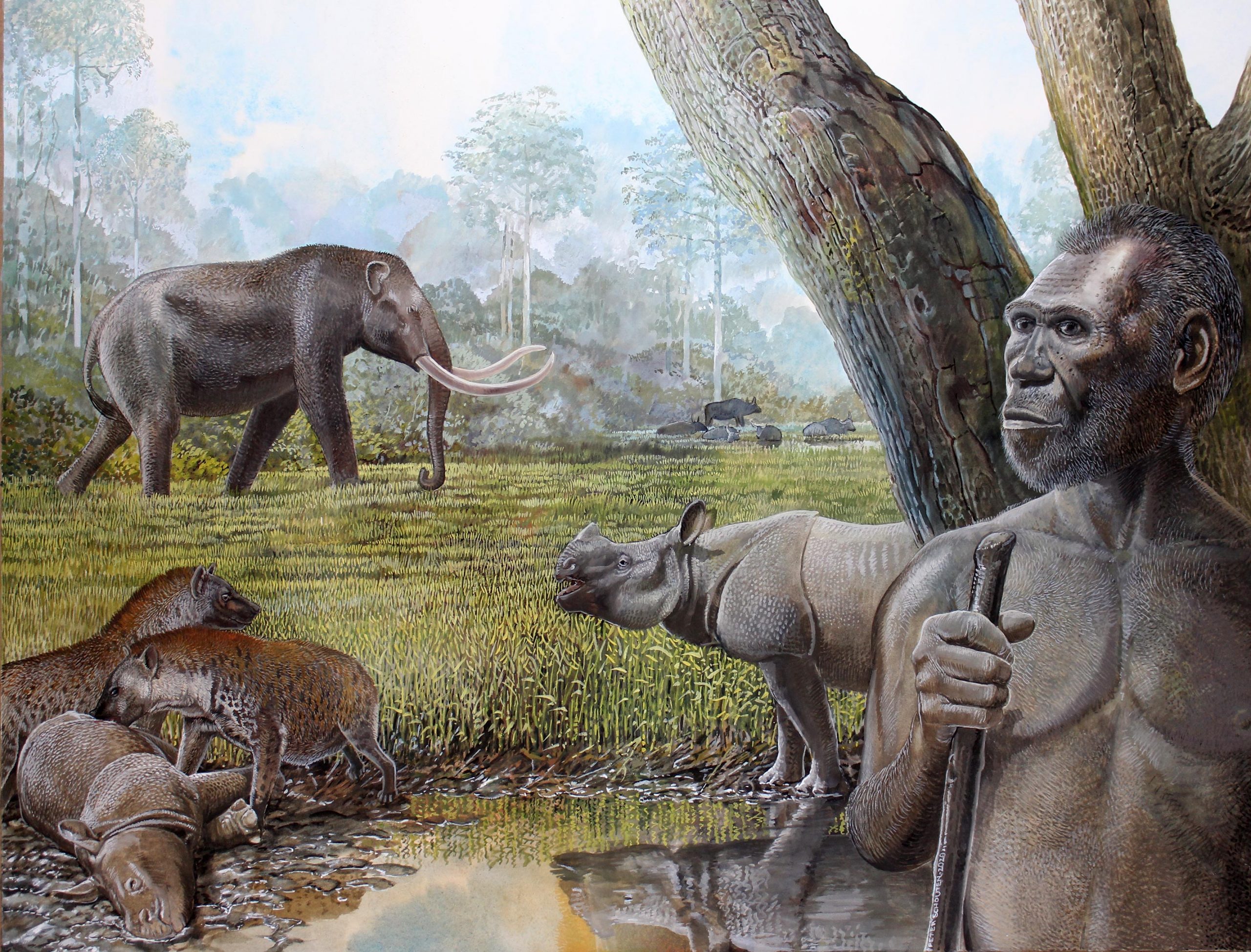
    Artist’s reconstruction of a savannah in Middle Pleistocene Southeast Asia. In the foreground Homo erectus, stegodon, hyenas, and Asian rhinos are depicted. Water buffalo can be seen at the edge of a riparian forest in the background. Credit: Peter Schouten

    New biochemical research shows significant turnovers in Southeast Asian environments and animals during the Pleistocene.

    In a paper published today in the journal Nature, scientists from the Department of Archaeology at MPI-SHH in Germany and Griffith University’s Australian Research Centre for Human Evolution have found that the loss of these grasslands was instrumental in the extinction of many of the region’s megafauna, and probably of ancient humans too.

    “Southeast Asia is often overlooked in global discussions of megafauna extinctions,” says Associate Professor Julien Louys who led the study, “but in fact it once had a much richer mammal community full of giants that are now all extinct.”

    By looking at stable isotope records in modern and fossil mammal teeth, the researchers were able to reconstruct whether past animals predominately ate tropical grasses or leaves, as well as the climatic conditions at the time they were alive. “These types of analyses provide us with unique and unparalleled snapshots into the diets of these species and the environments in which they roamed,” says Dr. Patrick Roberts of the MPI-SHH, the other corresponding author of this study.
    Museum Collection Mammal Skulls Southeast Asia
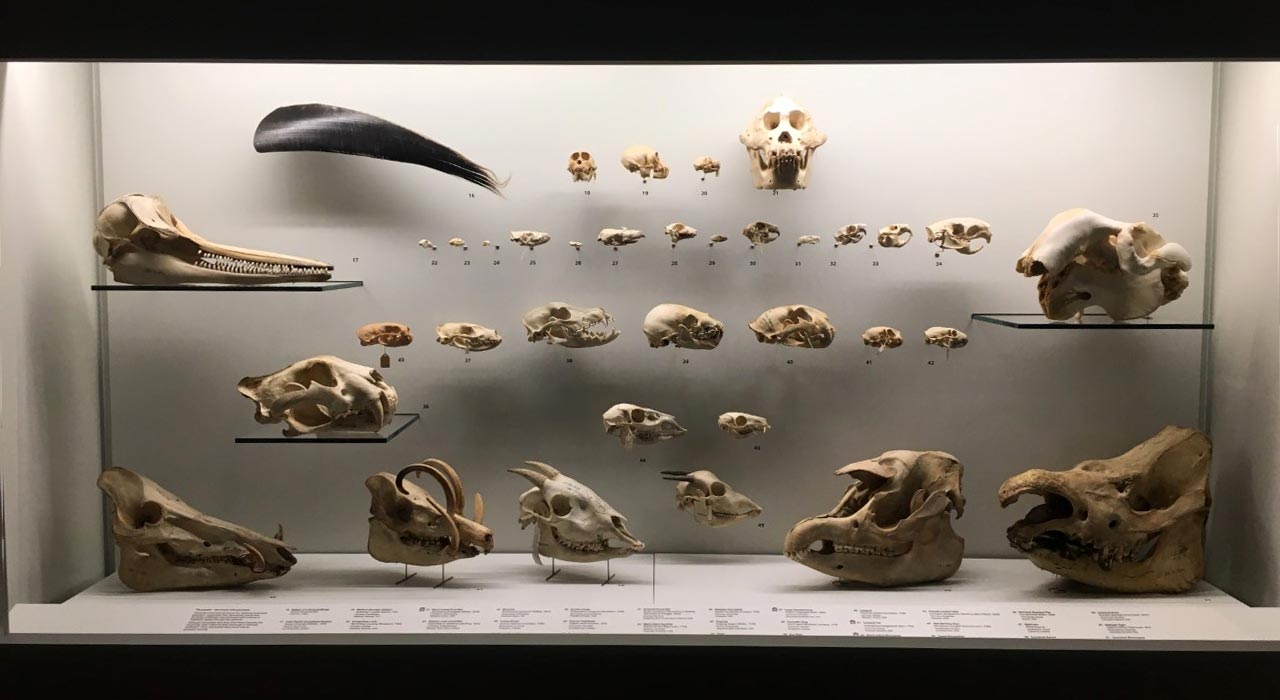
    A collection of mammal skulls of species endemic to Southeast Asia. Credit: Julien Louys

    The researchers compiled these isotope data for fossil sites spanning the Pleistocene, the last 2.6 million years, as well as adding over 250 new measurements of modern Southeast Asian mammals representing species that had never before been studied in this way.

    They showed that rainforests dominated the area from present-day Myanmar to Indonesia during the early part of the Pleistocene but began to give way to more grassland environments. These peaked around a million years ago, supporting rich communities of grazing megafauna such as the elephant-like stegodon that, in turn, allowed our closest hominin relatives to thrive. But while this drastic change in ecosystems was a boon to some species, it also lead to the extinction of other animals, such as the largest ape ever to roam the planet: Gigantopithecus.

    However, as we know today, this change was not permanent. The tropical canopies began to return around 100,000 years ago, alongside the classic rainforest fauna that are the ecological stars of the region today.

    Modern Rainforest Southeast Asia
    Modern day rainforest in Southeast Asia. Credit: Julien Louys

    The loss of many ancient Southeast Asian megafauna was found to be correlated with the loss of these savannah environments. Likewise, ancient human species that were once found in the region, such as Homo erectus, were unable to adapt to the re-expansion of forests.

    “It is only our species, Homo sapiens, that appears to have had the required skills to successfully exploit and thrive in rainforest environments,” says Roberts. “All other hominin species were apparently unable to adapt to these dynamic, extreme environments.”

    Ironically, it is now rainforest megafauna that are most at risk of extinction, with many of the last remaining species critically endangered throughout the region as a result of the activities of the one surviving hominin in this tropical part of the world.

    “Rather than benefitting from the expansion of rainforests over the last few thousand years, Southeast Asian mammals are under unprecedented threat from the actions of humans,” says Louys. “By taking over vast tracts of rainforest through urban expansion, deforestation and overhunting, we’re at risk of losing some of the last megafauna still walking the Earth.”

    Reference: “Environmental drivers of megafauna and hominin extinction in Southeast Asia” by Julien Louys and Patrick Roberts, 7 October 2020, Nature.
    DOI: 10.1038/s41586-020-2810-y

    Never miss a breakthrough: Join the SciTechDaily newsletter.
    Follow us on Google and Google News.

    Anthropology Archaeology Climate Change Extinction Max Planck Institute Popular
    Share. Facebook Twitter Pinterest LinkedIn Email Reddit

    Related Articles

    Surprise Discovery of African “Climate Seesaw” Changes View of Human Evolution

    Africa’s Oldest Human Burial Site Uncovered: 78,000-Year-Old Remains Reveal How Stone Age Populations Interacted With the Dead

    Oldest Modern Human Genome Reconstructed Using DNA From 45,000-Year-Old Skull

    Archaeologists Discover Neanderthals and Homo sapiens Used Identical Nubian Technology

    The “Last Eden?” First Human Culture Lasted 20,000 Years Longer Than Thought

    Humanity’s Oldest Sculptures: Researchers New Theory on “Venus” Figurines May Have Solved Mystery

    Vast Stone Monuments Discovered in Saudi Arabia Were Constructed in 7,000 Years Ago

    DNA of Bones Found in Cave Reveals Major Cultural Transition in Europe Took Place Earlier Than Thought

    Detailed Insights on the Disappearance of the World’s Largest Mammals From Microscopic Evidence

    Leave A Reply Cancel Reply

    • Facebook
    • Twitter
    • Pinterest
    • YouTube

    Don't Miss a Discovery

    Subscribe for the Latest in Science & Tech!

    Trending News

    Breakthrough Bowel Cancer Trial Leaves Patients Cancer-Free for Nearly 3 Years

    Natural Compound Shows Powerful Potential Against Rheumatoid Arthritis

    100,000-Year-Old Neanderthal Fossils in Poland Reveal Unexpected Genetic Connections

    Simple “Gut Reset” May Prevent Weight Gain After Ozempic or Wegovy

    2.8 Days to Disaster: Scientists Warn Low Earth Orbit Could Suddenly Collapse

    Common Food Compound Shows Surprising Power Against Superbugs

    5 Simple Ways To Remember More and Forget Less

    The Atomic Gap That Could Cost the Semiconductor Industry Billions

    Follow SciTechDaily
    • Facebook
    • Twitter
    • YouTube
    • Pinterest
    • Newsletter
    • RSS
    SciTech News
    • Biology News
    • Chemistry News
    • Earth News
    • Health News
    • Physics News
    • Science News
    • Space News
    • Technology News
    Recent Posts
    • Early Cannabis Use May Stall Key Brain Skills in Teens
    • Popular Vitamin D Supplement Has “Previously Unknown” Negative Effect, Study Finds
    • Powerful Antioxidant Found To Play a Key Role in Proper Protein Folding
    • MIT Laser Breakthrough Lets Scientists Watch Drugs Enter the Brain in Real Time
    • Study Reveals Malaria’s Hidden Role in Human Evolution
    Copyright © 1998 - 2026 SciTechDaily. All Rights Reserved.
    • Science News
    • About
    • Contact
    • Editorial Board
    • Privacy Policy
    • Terms of Use

    Type above and press Enter to search. Press Esc to cancel.