
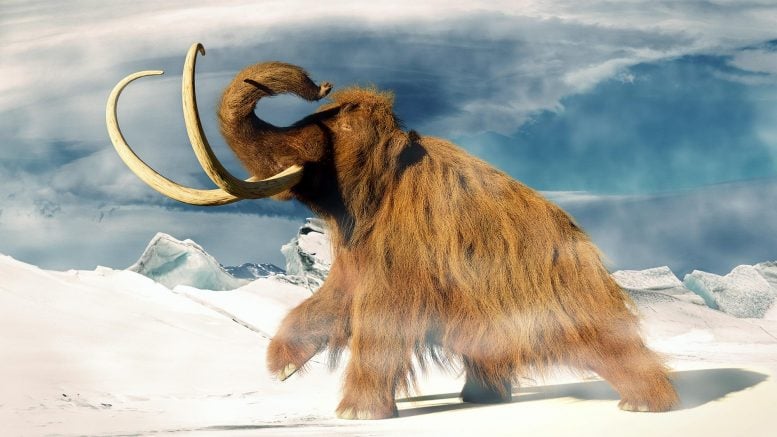
New, state-of-the-art methods provide detailed insights into the timing and causes of ‘megafauna’ extinctions in the past.
Understanding the causes and consequences of Late Quaternary megafaunal extinctions is increasingly important in a world of growing human populations and climate change. A new review, led by scholars at the Bernice Pauahi Bishop Museum and the Max Planck Institute for the Science of Human History, highlights the role that cutting-edge scientific methods can play in broadening the discussions about megafaunal extinction and enabling more localized insights into ecosystems and species-specific responses to climate change and human activities.
The disappearance of many of the world’s largest mammal species occurred around the same time that two other major transformations in Earth’s history were unfolding: dramatic climatic change at the Pleistocene-Holocene boundary (c. 10,000 B.P.) and the dispersal of Homo sapiens to new continents. Untangling the role each of these played in Late Quaternary megafaunal extinctions has been the subject of intense scholarly debate for decades. However, recent advances in archaeological and paleontological science methods have helped demonstrate that megafaunal extinctions are more complex than any single humans-versus-climate answer can provide.

The new article, published in BioScience on October 2, 2019, emphasizes contributions from five different approaches: radiocarbon dating, stable isotope analysis, ancient DNA, ancient proteins, and microscopy. These techniques can offer robust, high-resolution insights into climate change and extinction chronologies, past habitat transformations, ecological relationships, and species diet and ranging. Especially when used in combination, these advanced methods offer unprecedented levels of detail that can help to better understand the causes of extinctions in the past, which can then be applied to contemporary animal management aims, including risk assessments and rewilding efforts.
The review is an international and multidisciplinary collaboration between leading experts in megafaunal extinction research and emerging laboratory science methods. “When we started this collaboration, we were worried that we’d never get everyone to see eye-to-eye on megafaunal extinctions,” says Jillian Swift, lead author and archaeologist at the Bernice Pauahi Bishop Museum. “But it was easy to agree on the urgency of understanding deep-time human impacts to Earth systems, so that we can continue to make informed conservation decisions for our future.”
“Approaches to extinctions of ‘megafauna’ in the past are often based on sweeping narratives that assume that all species are equally vulnerable to external threats such as environmental change and human hunting,” says Patrick Roberts, of the Department of Archaeology, Max Planck Institute for the Science of Human History and co-author on the study. “Archaeological science methods allow us to get past these generalizations and explore how the diets, demography, and mobility of individual species and populations changed through time, providing a far more complex, and accurate, picture of past ecosystems.”
“We believe that large, multidisciplinary collaborations such as this offer the best way to approach questions of such magnitude as ‘megafaunal extinctions’,” says Nicole Boivin, Director of the Department of Archaeology, Max Planck Institute for the Science of Human History and co-author. “It is only by coming together, from a variety of fields and backgrounds, that we can apply very different expertise and methodologies to build up more detailed understandings of the past that have major, pressing implications for present-day processes and threats.”
Reference: “Micro Methods for Megafauna: Novel Approaches to Late Quaternary Extinctions and Their Contributions to Faunal Conservation in the Anthropocene” by Jillian A Swift, Michael Bunce, Joe Dortch, Kristina Douglass, J Tyler Faith, James A Fellows Yates, Judith Field, Simon G Haberle, Eileen Jacob, Chris N Johnson, Emily Lindsey, Eline D Lorenzen, Julien Louys, Gifford Miller, Alexis M Mychajliw, Viviane Slon, Natalia A Villavicencio, Michael R Waters, Frido Welker, Rachel Wood, Michael Petraglia, Nicole Boivin and Patrick Roberts, 2 October 2019, BioScience.
DOI: 10.1093/biosci/biz105
Never miss a breakthrough: Join the SciTechDaily newsletter.
Follow us on Google and Google News.