
Close Menu
    Facebook X (Twitter) Instagram
    SciTechDaily
    • Biology
    • Chemistry
    • Earth
    • Health
    • Physics
    • Science
    • Space
    • Technology
    Facebook X (Twitter) Pinterest YouTube RSS
    SciTechDaily
    Home»Physics»40 Years of Superconductor Science Just Got Turned Upside Down by a Stunning Discovery
    Physics

    40 Years of Superconductor Science Just Got Turned Upside Down by a Stunning Discovery

    By University of WarwickOctober 20, 20266 Comments3 Mins Read
    Facebook Twitter Pinterest Telegram LinkedIn WhatsApp Email Reddit
    Share
    Facebook Twitter LinkedIn Pinterest Telegram Email Reddit
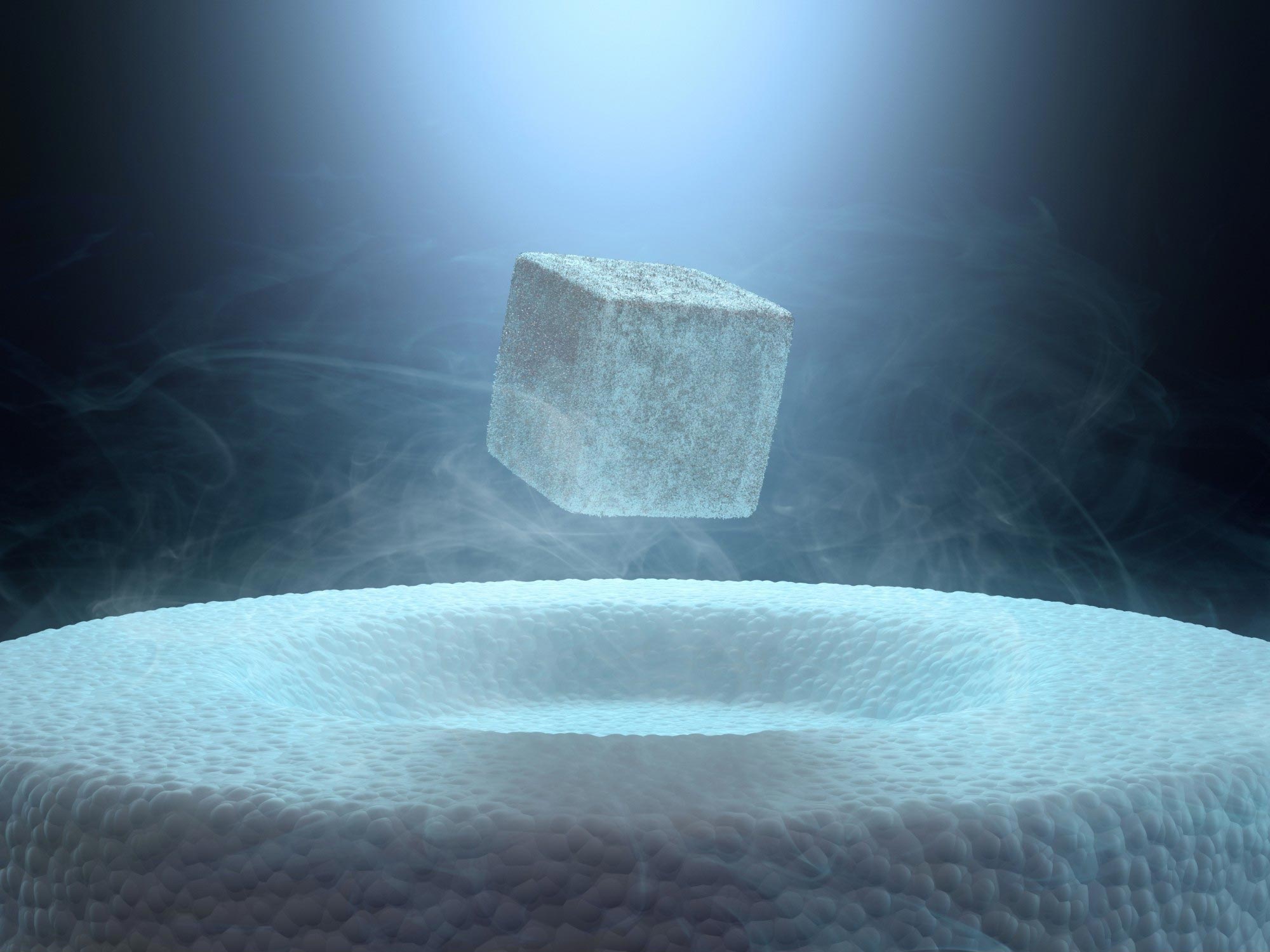
    Superconductor Levitation Illustration
    Superconductors are remarkable materials that can conduct electricity with zero resistance when cooled below a critical temperature. They hold enormous potential for revolutionizing energy transmission, medical imaging, powerful magnets, and quantum computing. Credit: stock

    A material that carries electricity without resistance may be held back by its own structure, challenging 40 years of assumptions about copper-based superconductors.

    A crystal that scientists thought had the same structure throughout is actually a patchwork of two subtly different arrangements of atoms. The boundaries between those regions are hundreds of times wider than expected, so broad that they behave almost like a structure in their own right rather than a simple dividing line.

    The material belongs to a family called cuprates, copper-based superconductors that can carry electricity without resistance at unusually high temperatures for superconductivity, although those temperatures are still very cold. High-temperature superconductivity underpins research into future power grids, medical scanners, and quantum computers. Its promise also includes magnets far more powerful than those possible today.

    X-rays reveal the crystal’s internal divisions

    To examine the crystal’s interior, researchers in the University of Warwick’s Department of Chemistry worked with the European Synchrotron Radiation Facility (ESRF) in France. They used scanning 3D X-ray diffraction, a technique that works somewhat like a medical CT scan but maps the arrangement of atoms inside a crystal. This allowed the team to build a three-dimensional picture deep within the material for the first time, revealing structural differences throughout its bulk. The study was published in Physical Review Letters.
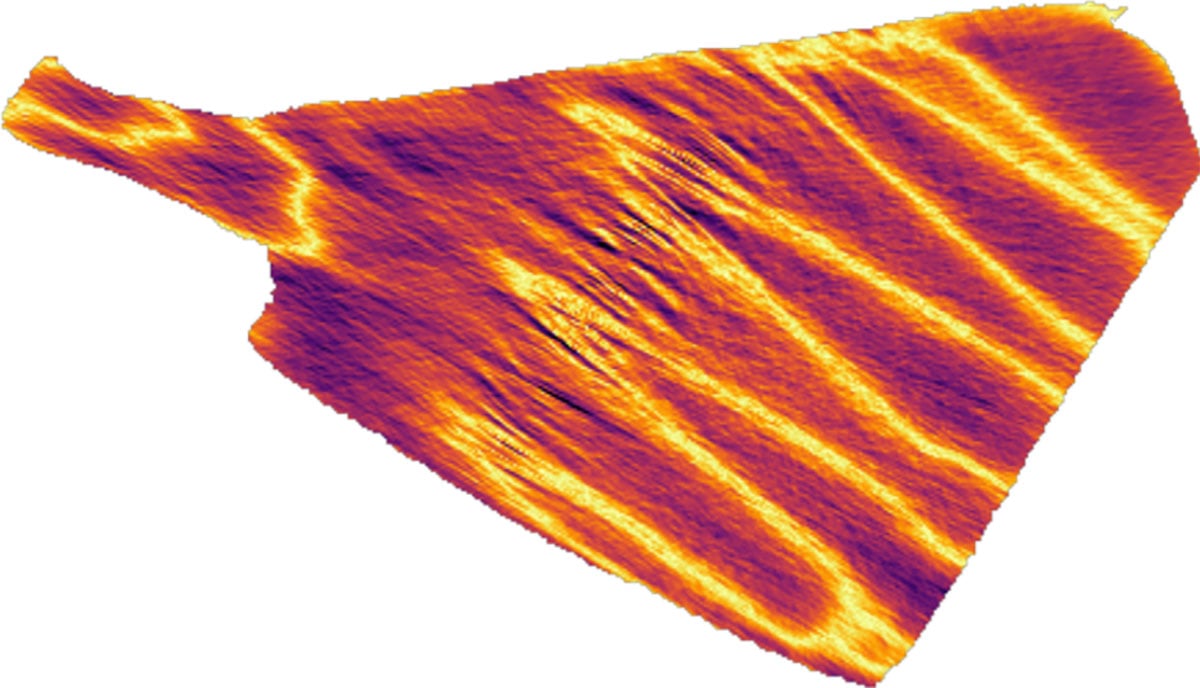
    3D X Ray Reconstruction of Cuprate Superconductor
    3D X-ray reconstruction revealing regions of different crystal structures in a 214 cuprate superconducting material. Dark regions have the expected structure, while lighter regions show a different structure. The boundary regions between them are approximately 150 nm wide. Credit: Professor Mark Senn / University of Warwick

    A recent €150 million upgrade to the ESRF made the technique possible. The researchers see its reach extending beyond superconductors, allowing scientists to examine a wide range of materials in three dimensions at a previously inaccessible level of detail and investigate how their internal structures shape their behavior.

    Crystal boundaries may hinder superconductivity

    Within superconductivity research, the team suspects that this hidden structural complexity is common across the wider cuprate family. It may also occur in related materials being explored for superconductivity under extreme pressure.

    Professor Mark Senn, of the University of Warwick’s Department of Chemistry, who led the study, said, “For 40 years, the working assumption has been that these materials are the same all the way through, and nearly all the theory is built on that picture. We’ve shown it doesn’t hold. The crystal is fundamentally patchworked and textured, with unusually wide boundary regions that likely work against superconductivity rather than just sitting alongside it.

    “This might explain why some materials perform better than others and means some existing bulk measurements will need to be reinterpreted and future theoretical models built that incorporate this structural complexity.”

    Reference: “Giant Domain Walls and Intrinsic Heterogeneity in 214 Cuprate Superconductors” by Evie Ladbrook, Jon P. Wright and Mark S. Senn, 17 September 2026, Physical Review Letters.
    DOI: 10.1103/r62x-kt5j

    Never miss a breakthrough: Join the SciTechDaily newsletter.
    Follow us on Google and Google News.

    Crystals Materials Science Popular Quantum Physics Superconductivity University of Warwick
    Share. Facebook Twitter Pinterest LinkedIn Email Reddit

    Related Articles

    The Holy Grail of Physics: Scientists Discover New Path to Room-Temperature Superconductors

    Unlocking Superconductivity: MIT Physicists Trap Electrons in a 3D Crystal for the First Time

    Twisting Physics: MIT’s Quasicrystal Superconductivity Breakthrough

    Bending the Laws of Physics: Time Crystals “Impossible” but Obey Quantum Physics

    An International Team of Scientists Uncovered Exotic Quantum Properties Hidden in Magnetite

    Long-Standing Quantum Physics Prediction Proven: Bethe Strings Experimentally Observed

    Existence of Exotic Particles – Sought for Decades – Evidenced In Newly-Discovered Superconductor

    The Experimental Design of a Space-Time Crystal

    New Insights Into How Superconducting Materials Interact With Magnetic Ones

    6 Comments

    1. Jojo on October 20, 2026 8:23 pm

      I regularly see gushing story after story about superconductor advances.

      but have any of these advances actually made it to real life products or are they just announcements so researchers can keep their grants?

      How have these updates advanced the science work they are tied to?

      Reply
    2. Russ Ramirez on October 21, 2026 12:23 pm

      Almost nothing in nature is as it’s described in theory. Engineers and Experimental Physicists know this all too well, Theoretical Scientists in academia not so much.

      Reply
      • Bao-hua Zhang on October 21, 2026 2:56 pm

        Thank you for your comment.

        Theory is important, it is almost one of the main differences between humans and other animals on Earth. Just for nearly a century, it has been corrupted by the filth and ugliness of the American Physical Society and some called peer-reviewed publications.

        某些所谓的同行评审出版物早已不知道何谓肮脏和丑陋!

        Reply
        • Bao-hua Zhang on October 21, 2026 4:29 pm

          The American Physical Society (APS) and its publications packaged observational data asymmetry as a physical law of parity nonconservation and widely disseminated it. Such a practice has already gone beyond ordinary academic disagreement and constitutes a serious harm to scientific norms and academic credibility.

          Reply
    Leave A Reply Cancel Reply

    • Facebook
    • Twitter
    • Pinterest
    • YouTube

    Don't Miss a Discovery

    Subscribe for the Latest in Science & Tech!

    Trending News

    Just Two Days on a Vegan Diet Triggered Unexpected Changes in the Liver

    Antarctica’s “Doomsday Glacier” Could Raise Sea Levels Twice As Much as Scientists Feared

    Snakebites Are Far Deadlier Than We Thought, New Study Reveals

    Scientists Studied 865 Humpback Whales and Found They Grow Faster Than Expected

    Archaeologists May Have Just Discovered the World’s Oldest Shipwreck

    Researchers Find That Arthritis May Leave a Hidden Memory in Your Joints

    These Giant-Headed Ants Are Breaking a Fundamental Rule of Biology

    Scientists Discover a Hidden Cholesterol Switch That Could Change How We Treat Heart Disease

    Follow SciTechDaily
    • Facebook
    • Twitter
    • YouTube
    • Pinterest
    • Newsletter
    • RSS
    SciTech News
    • Biology News
    • Chemistry News
    • Earth News
    • Health News
    • Physics News
    • Science News
    • Space News
    • Technology News
    Recent Posts
    • Beyond Bad Cholesterol: Scientists Uncover a Hidden Driver of Heart Disease
    • Drinking Tea May Lower Your Risk of Vascular Disease – but There’s a Catch
    • A Routine Blood Test Could Predict Dementia Risk 15 Years in Advance
    • A New Chemistry Breakthrough Could Change How Scientists Build Quantum Computers
    • The Ocean’s Mysterious “Snow” Could Be Hiding a Powerful Climate Secret
    Copyright © 1998 - 2026 SciTechDaily. All Rights Reserved.
    • Science News
    • About
    • Contact
    • Editorial Board
    • Privacy Policy
    • Terms of Use

    Type above and press Enter to search. Press Esc to cancel.