
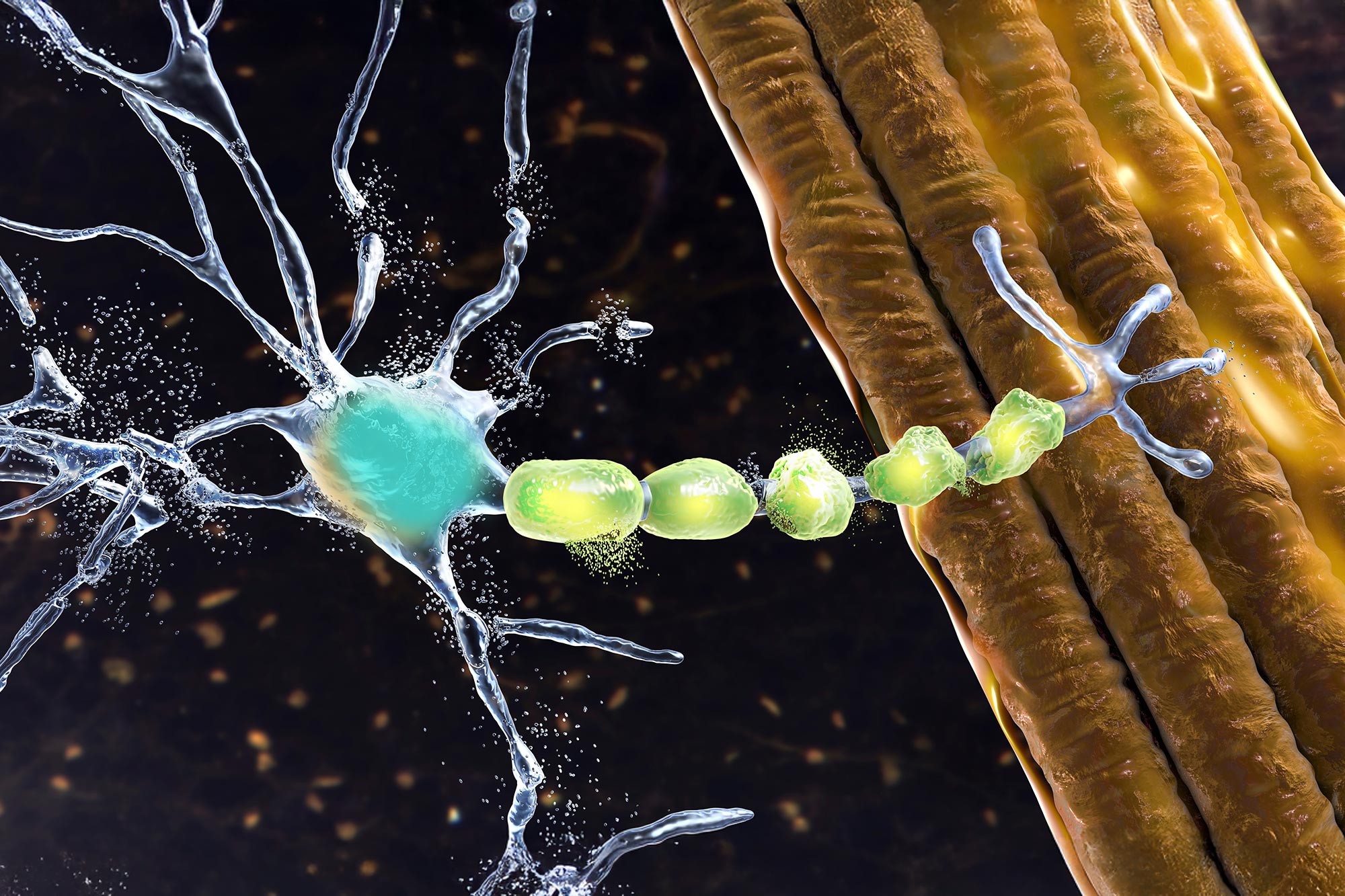
Researchers at the University of Missouri have uncovered a promising way to help surviving nerve cells compensate for damage caused by ALS and other motor neuron diseases.
The loss of tongue control in amyotrophic lateral sclerosis (ALS) can affect far more than speech. It can make swallowing increasingly difficult and interfere with breathing during sleep. Now, researchers at the University of Missouri have discovered that tongue exercise can increase the activity of surviving nerve cells in a preclinical model, potentially offering a new approach to preserving these essential functions.
ALS, also called Lou Gehrig’s disease, progressively damages the motor neurons responsible for muscle movement and currently has no cure. However, not all neurons controlling the tongue are lost, particularly during the early stages. Researchers are investigating whether these surviving cells can compensate for damaged neurons and help maintain muscle function.
How Exercise Helps Surviving Nerve Cells
The findings center on neuroplasticity, the nervous system’s ability to adapt to damage or changing conditions. In the preclinical model, tongue exercise increased the activity of surviving motor neurons, suggesting that targeted training may help the remaining cells compensate for those lost to disease. Scientists have not yet determined exactly how exercise produces this response.

“This adaptation is called neuroplasticity, meaning the nervous system changes how it operates to compensate for damage, and this finding offers hope for those with motor neuron diseases,” said Nicole Nichols, an associate professor in the College of Veterinary Medicine and coauthor of the study. “By boosting the activity of the surviving neurons, we can help preserve the quality of life for those with ALS, spinal muscular atrophy and other motor neuron diseases.”
Why Preserving Tongue Function Matters
The tongue plays a central role in speaking, moving food during swallowing, and keeping the airway open during sleep. As the muscles weaken in people with ALS, eating can become difficult enough to require a feeding tube. Reduced tongue muscle function can also contribute to sleep apnea, a condition in which breathing repeatedly stops and starts during sleep.
“For those with ALS, preserving swallowing function not only reduces the chance of developing sleep apnea, it could also mean the difference between needing a feeding tube or continuing to eat normally,” she said. “That’s incredibly meaningful for quality of life.”
Could Future Treatments Reproduce the Effects of Exercise?
Although the results are promising, the benefits have so far been demonstrated only in a preclinical model. Researchers now want to understand the biological mechanisms that allow tongue exercise to increase neuronal activity. Identifying those mechanisms could eventually support the development of medications that reproduce the effects of exercise without requiring patients to perform physical training.
“If we can figure out exactly how and why the tongue exercise helps the remaining neurons function better, that can help the development of treatments that mimic the benefits,” Nichols said. “For example, for someone with a very poor prognosis who may not be able to do tongue exercise, is there an injectable that we can give them that would activate those surviving motor neurons to improve their function? While both tongue exercise as a therapy and an injectable would require human clinical trials in the future, this finding is a step in the right direction.”
Nichols and her colleagues hope to advance tongue exercise toward human clinical trials within the next several years through collaborations at Mizzou’s NextGen Precision Health.
Reference: “Impact of tongue exercise on hypoglossal axis survival, structure, and output in a rodent model of hypoglossal motor neuron degeneration” by Amy N. Keilholz, Stephanie Lopez, Minasadat Attari, Nguyen P. Nguyen, Jay Henry, Catherine L. Smith, Ashley Feldberg, Kate L. Osman, Mojgan Golzy, Filiz Bunyak, Teresa E. Lever and Nicole L. Nichols, 12 May 2026, Journal of Neurophysiology.
DOI: 10.1152/jn.00631.2024
Never miss a breakthrough: Join the SciTechDaily newsletter.
Follow us on Google and Google News.