
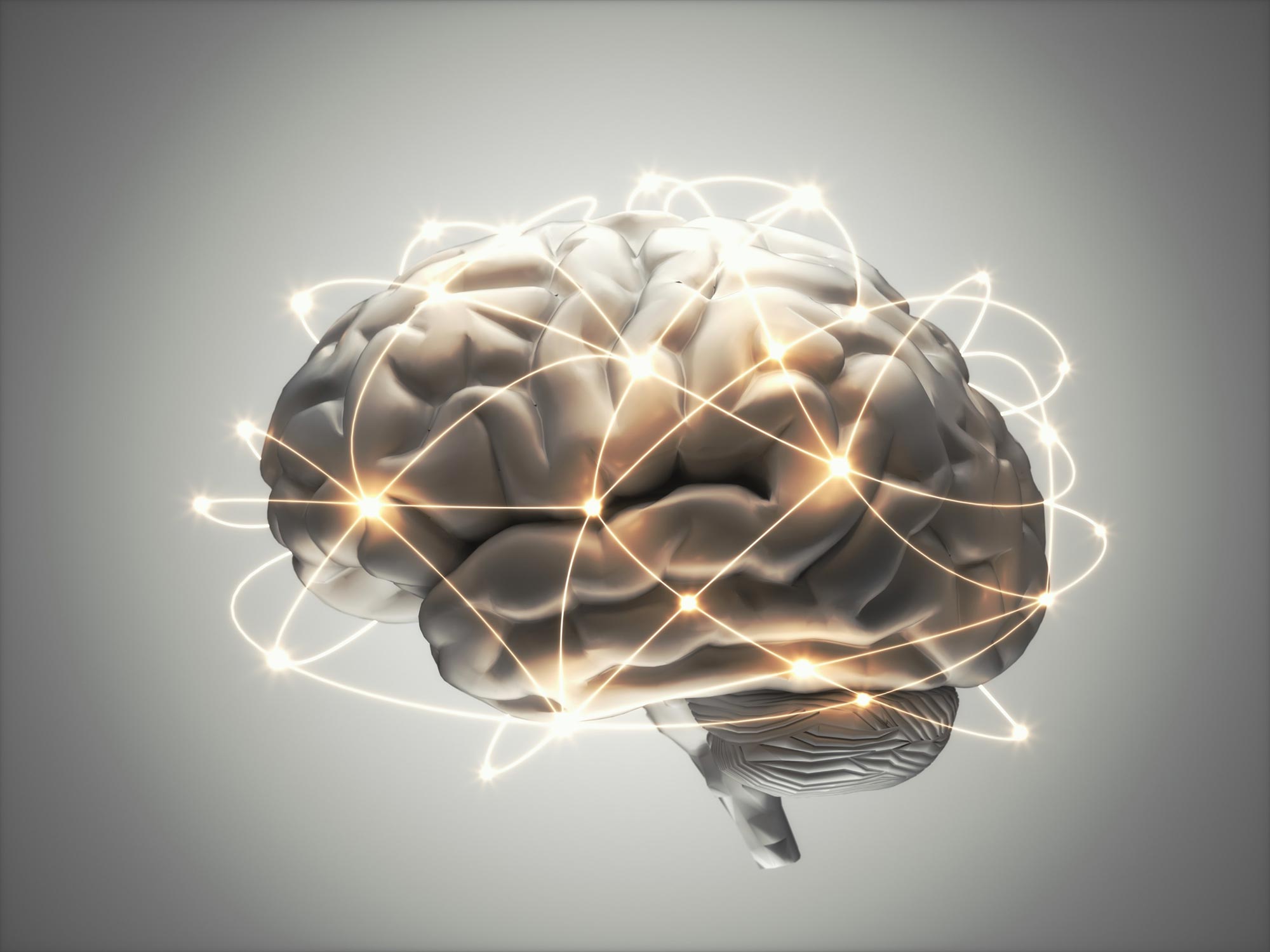
Mizzou researchers discovered that switching to a high-fat, low-carb diet may help improve brain health in people at increased risk for Alzheimer’s disease.
There may be a way to keep the brain energized and thinking clearly, and the answer could start with what’s on your plate. Foods like fish and seafood, meat, non-starchy vegetables, berries, nuts, seeds, eggs, and even high-fat dairy products are under scientific scrutiny for their potential to support brain function.
At the University of Missouri, researchers are exploring how effective these foods can be. Their work suggests that a high-fat, low-carbohydrate eating plan, known as the ketogenic diet, might help maintain brain health and possibly slow or prevent cognitive decline in people who face a greater risk of Alzheimer’s disease.
Inside the Roy Blunt NextGen Precision Health building, Ai-Ling Lin, a professor in the School of Medicine, and doctoral student Kira Ivanich are focusing on whether the ketogenic diet provides special benefits for people born with the APOE4 gene (the strongest known genetic risk factor for late-onset Alzheimer’s disease).
In a recent mouse study, Lin and Ivanich found that females carrying the APOE4 gene developed healthier gut bacteria and showed higher brain energy levels when following a ketogenic diet compared with a control group that ate more carbohydrates. Males, however, did not experience the same changes. These findings are helping scientists understand which individuals might gain the most from adopting a ketogenic diet.
How the Brain Fuels Itself
That’s because the diet changes how the brain fuels itself.
“When we eat carbs, our brains convert the glucose into fuel for our brains, but those with the APOE4 gene — particularly females — struggle to convert the glucose into brain energy, and this can lead to cognitive decline down the road,” Ivanich said. “By switching to a keto diet, ketones are produced and used as an alternative fuel source. This may decrease the chance of developing Alzheimer’s by preserving the health of brain cells.”
The results highlight the importance of precision nutrition — tailoring diets and interventions to those who would benefit most.
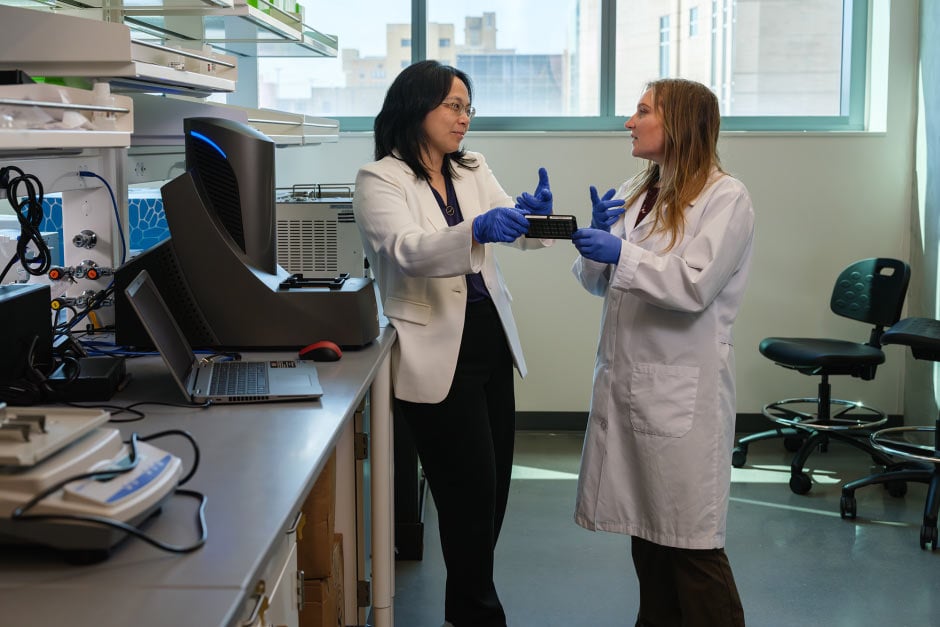
“Instead of expecting one solution to work for everyone, it might be better to consider a variety of factors, including someone’s genotype, gut microbiome, gender, and age,” Lin said. “Since the symptoms of Alzheimer’s — which tend to be irreversible once they start — usually appear after age 65, the time to be thinking about preserving brain health is well before then, so hopefully our research can offer hope to many people through early interventions.”
Lin came to Mizzou for interdisciplinary collaboration and the state-of-the-art imaging equipment in the NextGen Precision Health building and at the University of Missouri Research Reactor.
Collaboration and Cutting-Edge Tools
“We can do a lot of things in-house here that at other places we would have to outsource,” Lin said. “This is team science. The impact we make will be much better when we work together than by ourselves.”
With cutting-edge imaging equipment and both research and clinical spaces under the same roof, the NextGen Precision Health building allows Mizzou to move quickly from preclinical models to human trials.
For Ivanich, that real-world impact is personal.
“When my grandmother got Alzheimer’s, that sparked my interest in this topic, so being able to make an impact to help people preserve their brain health is very rewarding,” she said. “With Mizzou being a leading research university and having a tight-knit community feel, I know I’m at the right place.”
“Ketogenic diet modulates gut microbiota-brain metabolite axis in a sex-and genotype-specific manner in APOE4 mice” was published in the Journal of Neurochemistry.
Reference: “Ketogenic Diet Modulates Gut Microbiota–Brain Metabolite Axis in a Sex- and Genotype-Specific Manner in APOE4 Mice” by Kira Ivanich, Andrew Yackzan, Abeoseh Flemister, Ya-Hsuan Chang, Xin Xing, Anna Chen, Lucille M. Yanckello, McKenna Sun, Chetan Aware, Maalavika Govindarajan, Skyler Kramer, Aaron Ericsson and Ai-Ling Lin, 1 September 2025, Journal of Neurochemistry.
DOI: 10.1111/jnc.70216
Never miss a breakthrough: Join the SciTechDaily newsletter.
Follow us on Google and Google News.