
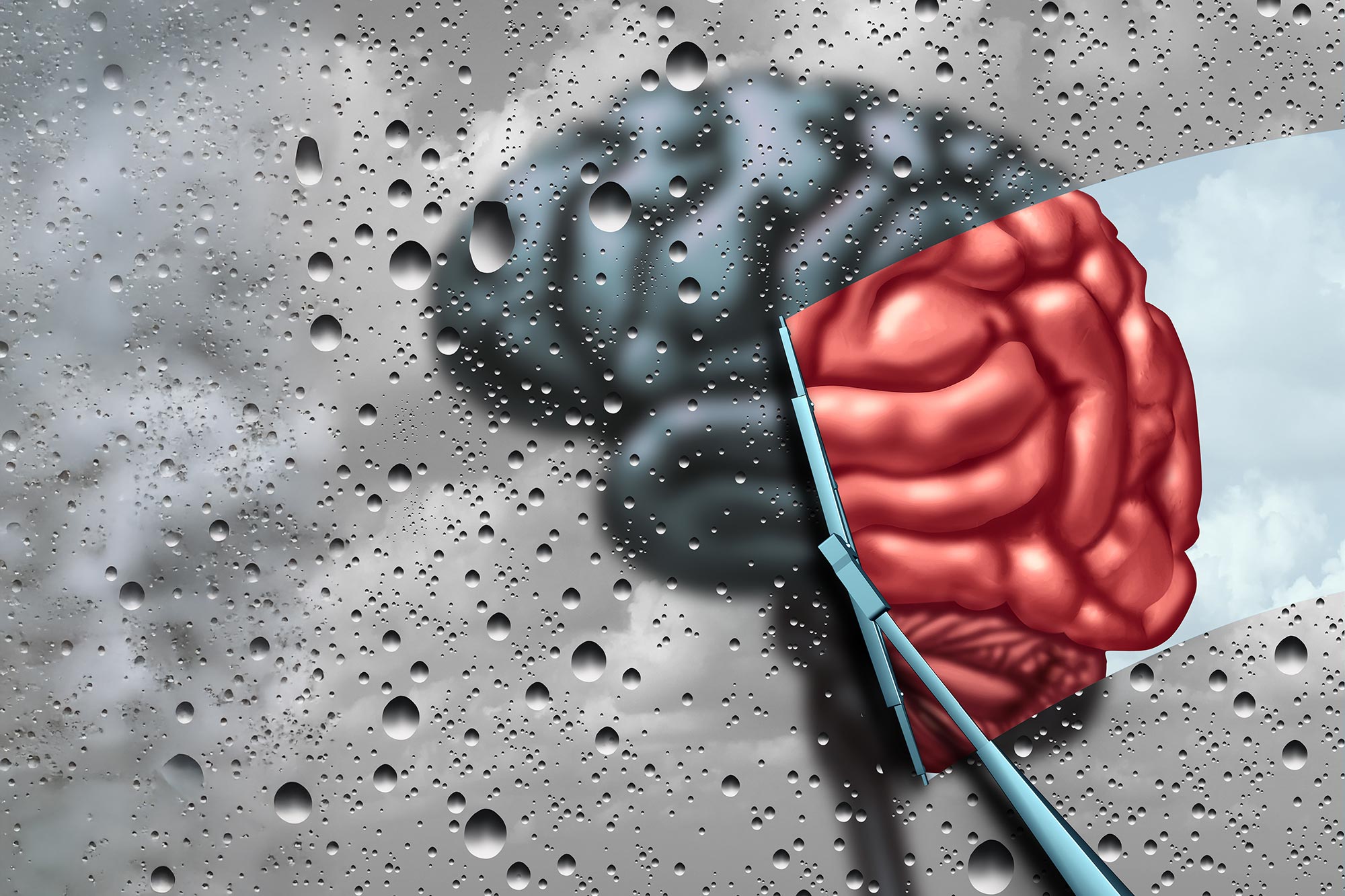
The treatment eliminates harmful protein buildup linked to Alzheimer’s disease.
Scientists at the University of California, Irvine, have uncovered a potential non-drug approach that revitalizes aging brain cells and removes the harmful protein buildup linked to Alzheimer’s disease.
Their findings, published in the journal GeroScience, describe how two natural compounds, nicotinamide (a form of vitamin B3) and epigallocatechin gallate (an antioxidant found in green tea), help restore guanosine triphosphate, a key molecule that fuels energy production in brain cells. In laboratory experiments on neurons, this treatment not only reversed age-related cellular decline but also enhanced the cells’ ability to clear away amyloid protein clusters, a defining feature of Alzheimer’s.
“As people age, their brains show a decline in neuronal energy levels, which limits the ability to remove unwanted proteins and damaged components,” said lead author Gregory Brewer, adjunct professor of biomedical engineering at UC Irvine. “We found that restoring energy levels helps neurons regain this critical cleanup function.”
The researchers used a genetically encoded fluorescent sensor called GEVAL to track live guanosine triphosphate levels in neurons from aged Alzheimer’s model mice. They discovered that free GTP levels declined with age – particularly in mitochondria, the cells’ energy hubs – leading to impaired autophagy, the process by which cells eliminate damaged components.
Reversing Cellular Decline
But when aged neurons were treated for just 24 hours with nicotinamide and epigallocatechin gallate, GTP levels were restored to those typically seen in younger cells. This revival triggered a cascade of benefits: improved energy metabolism; activation of key GTPases involved in cellular trafficking, Rab7 and Arl8b; and efficient clearance of amyloid beta aggregates. Oxidative stress, another contributor to neurodegeneration, was also reduced.
“This study highlights GTP as a previously underappreciated energy source driving vital brain functions,” Brewer said. “By supplementing the brain’s energy systems with compounds that are already available as dietary supplements, we may have a new path toward treating age-related cognitive decline and Alzheimer’s disease.”
He cautioned, “More work is going to be required to find the best way to administer this treatment, since a recent clinical trial involving UC Irvine researchers showed that oral nicotinamide was not very effective because of inactivation in the bloodstream.”
Reference: “Treatment of age-related decreases in GTP levels restores endocytosis and autophagy” by R. A. Santana, J. M. McWhirt and G. J. Brewer, 2 August 2025, GeroScience.
DOI: 10.1007/s11357-025-01786-4
Never miss a breakthrough: Join the SciTechDaily newsletter.
Follow us on Google and Google News.
7 Comments
sooooo. temporarily suppress enzimatics to prevent conversion before metabolization?
The answer is to get the electronic charged with white blood cells with oxygen alloys directly into the brain. Probably a laser. I’ll do some thinking
All we have to do is inject Au, Gold, into the neurons to stabilize normal functions.
Interesting
Green Tea is good to drink? I am a 69- year old, white male. I am taking niacin tablets(one tablet a day in the morning) at 100mg.
Please hurry up because Alzheimer’s is epidemic now. We know exercise helps. Ok try niain and green tea and ginko biloba.
Some of the class is not paying attention.! Niacin while similar B3 is not Nicotinamide. Different pathway’s.