
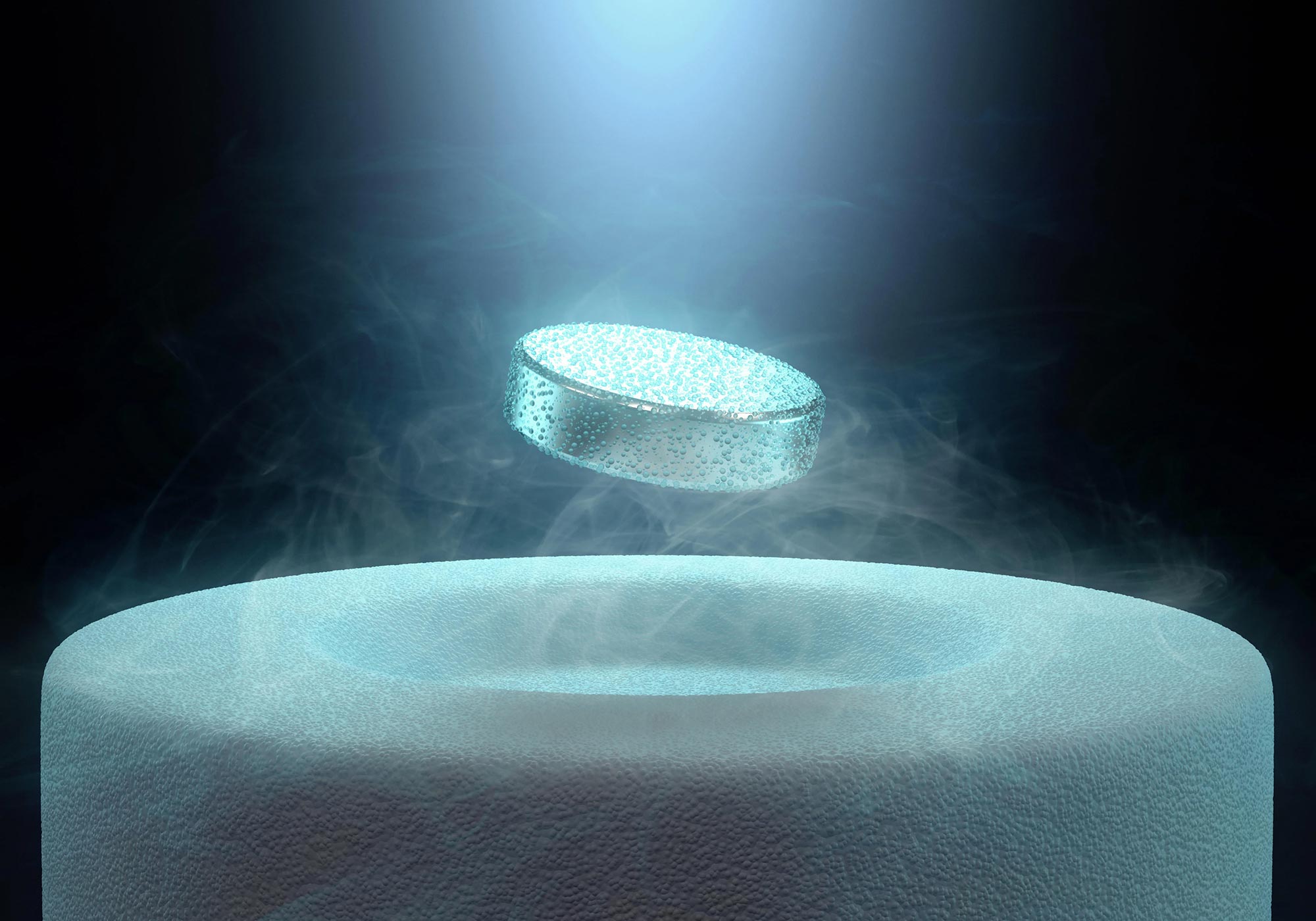
The search for more efficient power grids could benefit from understanding a hidden rivalry inside copper-based superconductors, where a mysterious quantum state appears to compete with superconductivity.
When researchers used a pulse of light to temporarily suppress superconductivity in a copper-based material, a mysterious quantum state emerged. As superconductivity returned, that state faded. The experiment offers new evidence in a decades-old debate about how certain materials can carry electricity without losing energy.
These materials, known as cuprates, were discovered in 1986, a breakthrough that earned Bednorz and Müller the Nobel Prize in Physics the following year. Their ability to become superconducting at relatively high temperatures has made them especially promising for future technologies, including more efficient power grids, medical equipment, and quantum computers. Yet nearly 40 years later, scientists still do not fully understand what makes their remarkable properties possible.
Does the pseudogap help superconductivity?
One of the biggest uncertainties involves the pseudogap, a poorly understood quantum state that appears in cuprates. Scientists have long debated whether it helps superconductivity emerge or competes with it.
“The pseudogap is one of the greatest mysteries in condensed-matter physics. Understanding how it interacts with superconductivity is essential if we want to explain why these materials can carry electricity without energy loss at unusually high temperatures,” says Fabio Boschini, a professor at INRS and specialist in ultrafast spectroscopy of quantum condensed matter.
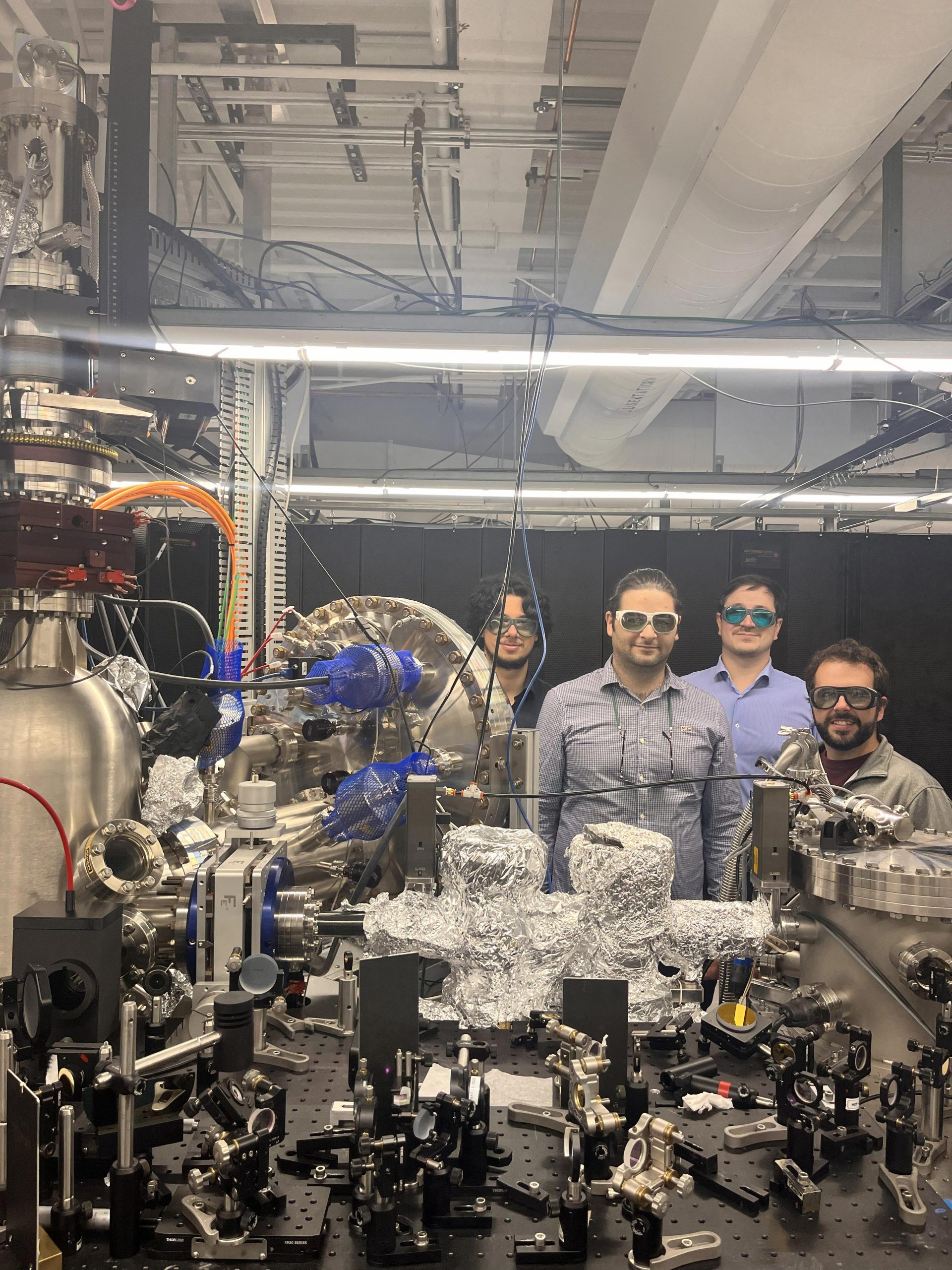
Boschini, who led the research, holds the Canada Research Chair in Quantum Materials’ Dynamics and is a recipient of an Alfred P. Sloan Research Fellowship.
Light reveals a hidden quantum state
To investigate the relationship between the two states, his team used a pulse of light to briefly suppress superconductivity and then tracked how the material’s electrons behaved as it recovered. The researchers used time- and angle-resolved photoemission spectroscopy (TR-ARPES), a technique that allows scientists to observe rapid changes in the electronic properties of materials.
The experiments took place at the INRS Énergie Matériaux Télécommunications Research Centre, using the TR-ARPES endstation at the Advanced Laser Light Source (ALLS).
The measurements revealed electronic states that had remained hidden from conventional techniques. For the first time, researchers directly observed a temporary pseudogap induced by light. When superconductivity was suppressed, the pseudogap emerged in its place. As the material regained its superconducting properties, the pseudogap gradually faded.
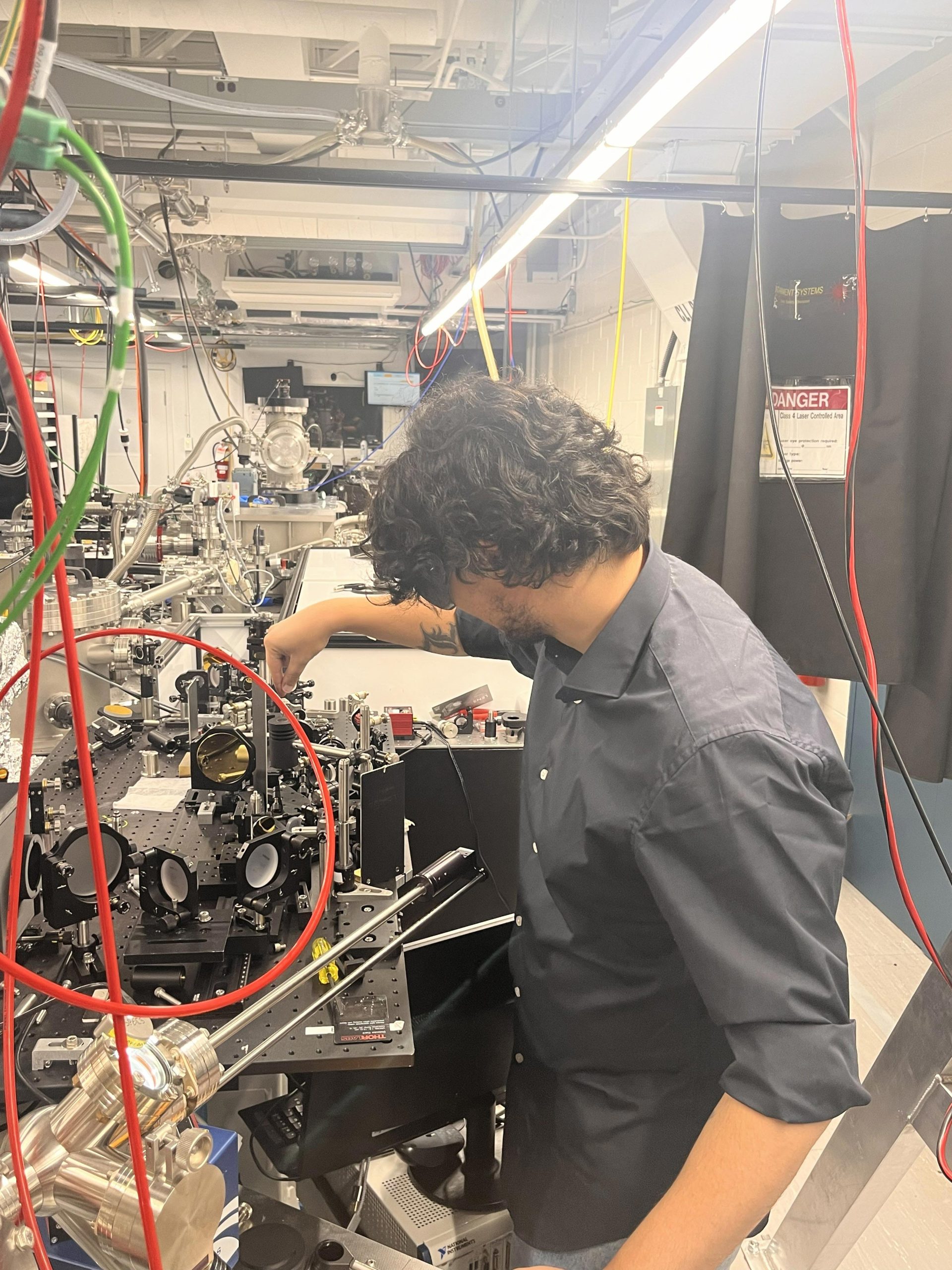
“Thanks to the unique capabilities of the TR-ARPES system at the ALLS laboratory at INRS, we were able to directly observe what happens when superconductivity temporarily disappears and then re-emerges. It is a bit like uncovering missing frames from a film that scientists have been trying to piece together for decades,” says Dario Armanno, a PhD student at INRS and first author of the study.
Evidence against the precursor theory
Published in Nature Physics, the findings support the idea that the pseudogap and superconductivity compete rather than cooperate. This challenges the long-standing hypothesis that the pseudogap acts as a precursor, or an earlier state that helps superconductivity develop.
The project also involved international collaborators, including the Center for Computational Quantum Physics at the Flatiron Institute in New York.
“The pseudogap and superconducting states in cuprates are among the most complex phenomena to reproduce theoretically. Our study reveals that they compete with one another and provides new insight into their behavior when both are excited simultaneously,” said Olivier Gingras, Associate Research Scientist at the Flatiron Institute’s Center for Computational Quantum Physics.
Although the work is fundamental research rather than a demonstration of a new technology, a clearer understanding of these competing quantum states could help guide the development of next-generation superconductors and more energy-efficient technologies.
“This research is essential to advancing the quantum technologies of the future. It contributes to the training of highly qualified personnel in a field that is critical to Canada’s technological sovereignty and to the implementation of its National Quantum Strategy,” says François Légaré, Director of the INRS Énergie Matériaux Télécommunications Research Centre.
Reference: “Light-induced asymmetric pseudogap below the critical temperature in cuprates” by D. Armanno, O. Gingras, F. Goto, J.-M. Parent, A. Longa, A. Jabed, B. Frimpong, R. D. Zhong, J. Schneeloch, G. D. Gu, G. Jargot, H. Ibrahim, F. Légaré, B. J. Siwick, N. Gauthier, A. Georges, A. J. Millis and F. Boschini, 20 October 2026, Nature Physics.
DOI: 10.1038/s41567-026-03446-6
The work at ALLS was supported by the Canada Foundation for Innovation’s (CFI) Major Science Initiatives Fund. We acknowledge support from the Alfred P. Sloan Foundation, the Natural Sciences and Engineering Research Council of Canada (NSERC), the Canada Research Chairs Program, the Fonds de recherche du Québec – Nature et technologies (FRQNT), the Québec Ministry of Economy, Innovation and Energy, PRIMA Québec, and the Gordon and Betty Moore Foundation’s EPiQS Initiative.
Never miss a breakthrough: Join the SciTechDaily newsletter.
Follow us on Google and Google News.