
New research suggests that dietary phosphate may influence blood vessel damage and lifespan, with important implications for people with chronic kidney disease.
A newly identified role for a protein in the kidneys could help explain why excess phosphate in the blood contributes to hardened arteries and shorter lifespans. Researchers at the University of Colorado Anschutz School of Medicine found that animals lacking this protein developed more calcium deposits in their blood vessels and died earlier, particularly when consuming a diet high in phosphate.
The study, published in October 2026, identified TMEM174 as an important regulator of blood phosphate levels. Reducing dietary phosphate lessened some of the harmful effects in animals deficient in the protein. The findings point to a potential treatment target for chronic kidney disease (CKD), a condition that makes it difficult for the body to eliminate excess phosphate.
How a Kidney Protein Controls Phosphate Levels
The kidneys continuously filter phosphate from the bloodstream, removing excess amounts through urine while retaining enough to support essential functions such as bone formation. A protein called NPT2A helps maintain this balance by reabsorbing approximately three-quarters of the filtered phosphate and returning it to the blood.
The researchers discovered that TMEM174 acts as a counterbalance to NPT2A. By binding to NPT2A and reducing its activity, TMEM174 helps prevent excessive phosphate reabsorption. In animal models lacking TMEM174, phosphate regulation became disrupted, vascular calcification increased, and lifespan was significantly reduced.
“We don’t fully understand how yet, but somehow TMEM174 is destabilizing NPT2A,” says Makoto Miyazaki, PhD, a research professor in the Division of Renal Diseases and Hypertension and senior author of the study. “And without enough TMEM174, homeostasis is disrupted.”
Why Excess Phosphate Can Harden Blood Vessels
Phosphorus is an essential nutrient found in meat, fish, dairy products, nuts, legumes, and whole grains. It is also commonly added to processed foods and beverages to improve flavor and extend shelf life. Unlike many naturally occurring phosphorus compounds, phosphate additives are generally absorbed more efficiently by the digestive system.
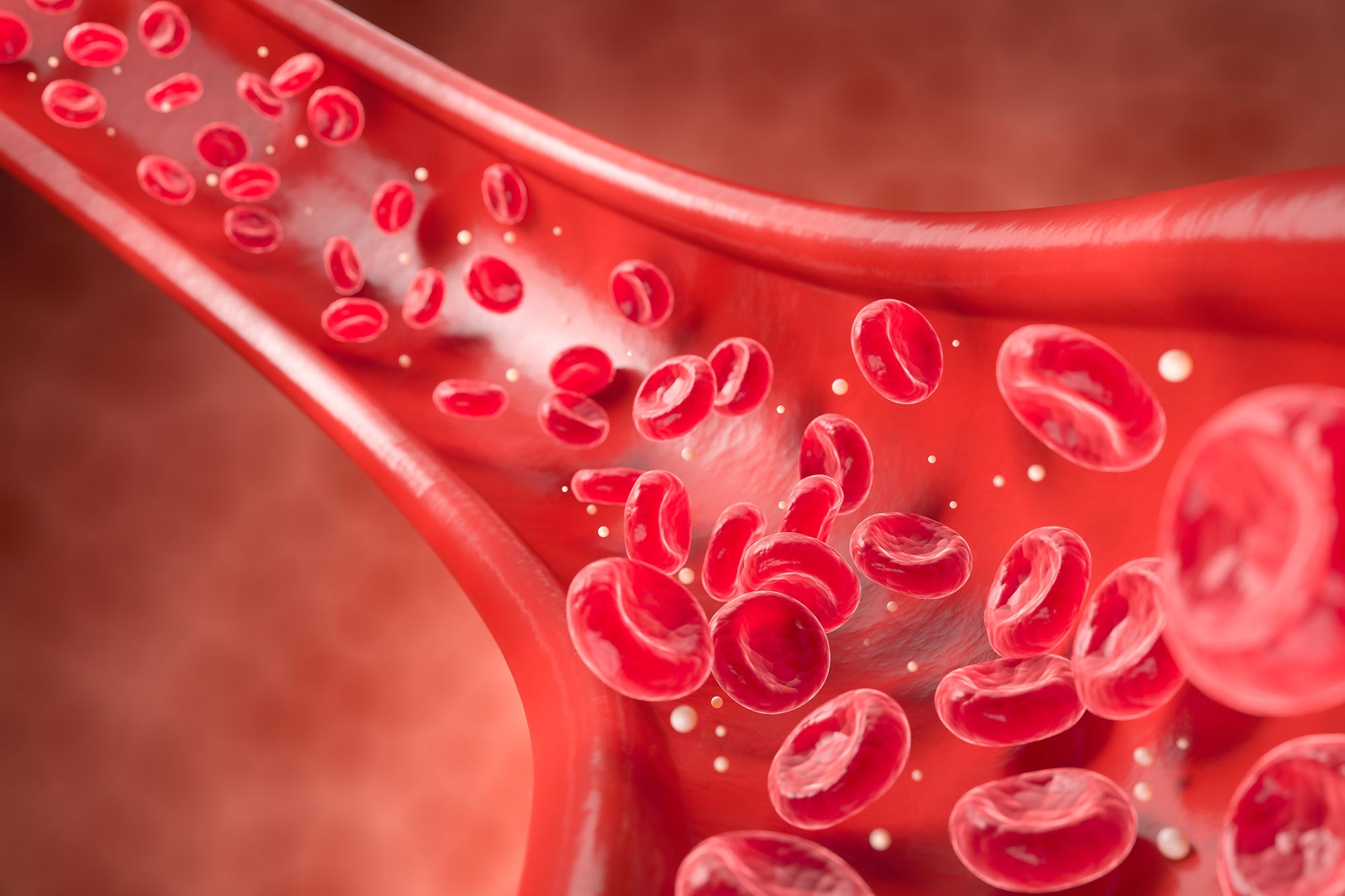
Although the body needs phosphorus, persistently elevated blood phosphate (hyperphosphatemia) can damage the cardiovascular system. Excess phosphate can cause smooth muscle cells in blood vessel walls to develop characteristics of bone-forming cells. These altered cells promote the accumulation of calcium phosphate crystals, causing blood vessels to stiffen (or calcify).
Healthy arteries expand and contract in response to changing blood flow. Calcification reduces that flexibility, contributing to vascular aging and increasing cardiovascular risks. In the new study, the combination of TMEM174 deficiency and a phosphate-rich diet accelerated this process in animals.
“Phosphate is really underestimated in terms of longevity in all mammals. The higher the concentration of phosphate in the blood, the shorter the lifespan,” says Miyazaki.
Why Chronic Kidney Disease Raises the Risk
Elevated blood phosphate is relatively uncommon in the general population because healthy kidneys can usually remove the excess. In people with CKD, however, declining kidney function reduces phosphate excretion, allowing the mineral to accumulate in the bloodstream.
This impaired phosphate regulation can contribute to vascular calcification, which is particularly common in people with kidney disease. The newly discovered role of TMEM174 suggests another potential source of vulnerability. Although TMEM174 deficiency appears to be primarily genetic rather than caused by CKD, researchers suspect that people affected by both conditions could face additional cardiovascular risks.
The experiments established a connection between TMEM174 deficiency, abnormal phosphate regulation, vascular calcification, and reduced survival in animal models. Whether differences in TMEM174 activity have comparable effects on cardiovascular health or lifespan in humans remains to be determined.
Could Targeting TMEM174 Lead to New Treatments?
The findings suggest that treatments affecting TMEM174 or its interaction with NPT2A might help the kidneys eliminate more phosphate instead of returning it to the bloodstream. Such an approach could eventually provide another way to manage phosphate levels in people with CKD.
Dietary changes may also help. The researchers found that reducing phosphate intake partially protected animals lacking TMEM174 from harmful effects. Miyazaki notes that limiting phosphate-rich processed foods, including fast food, deli meats, and sodas, could be beneficial. However, phosphate occurs naturally in so many foods that dietary restrictions alone may be insufficient, particularly for people with impaired kidney function.
Future research will examine how TMEM174 interacts with other proteins and hormones involved in phosphate regulation. Miyazaki also hopes to investigate why calcium deposits are so prevalent in the blood vessels of people with CKD.
“Scientists have been studying phosphate homeostasis for over 100 years, so to still find a new protein that regulates phosphate is kind of unique,” says Miyazaki.
Reference: “TMEM174 deficiency reduces longevity by promoting phosphate-driven vascular calcification” by Jose G. Miranda, Judith Blaine and Makoto Miyazaki, 2 October 2026, Scientific Reports.
DOI: 10.1038/s41598-026-74353-2
Never miss a breakthrough: Join the SciTechDaily newsletter.
Follow us on Google and Google News.