
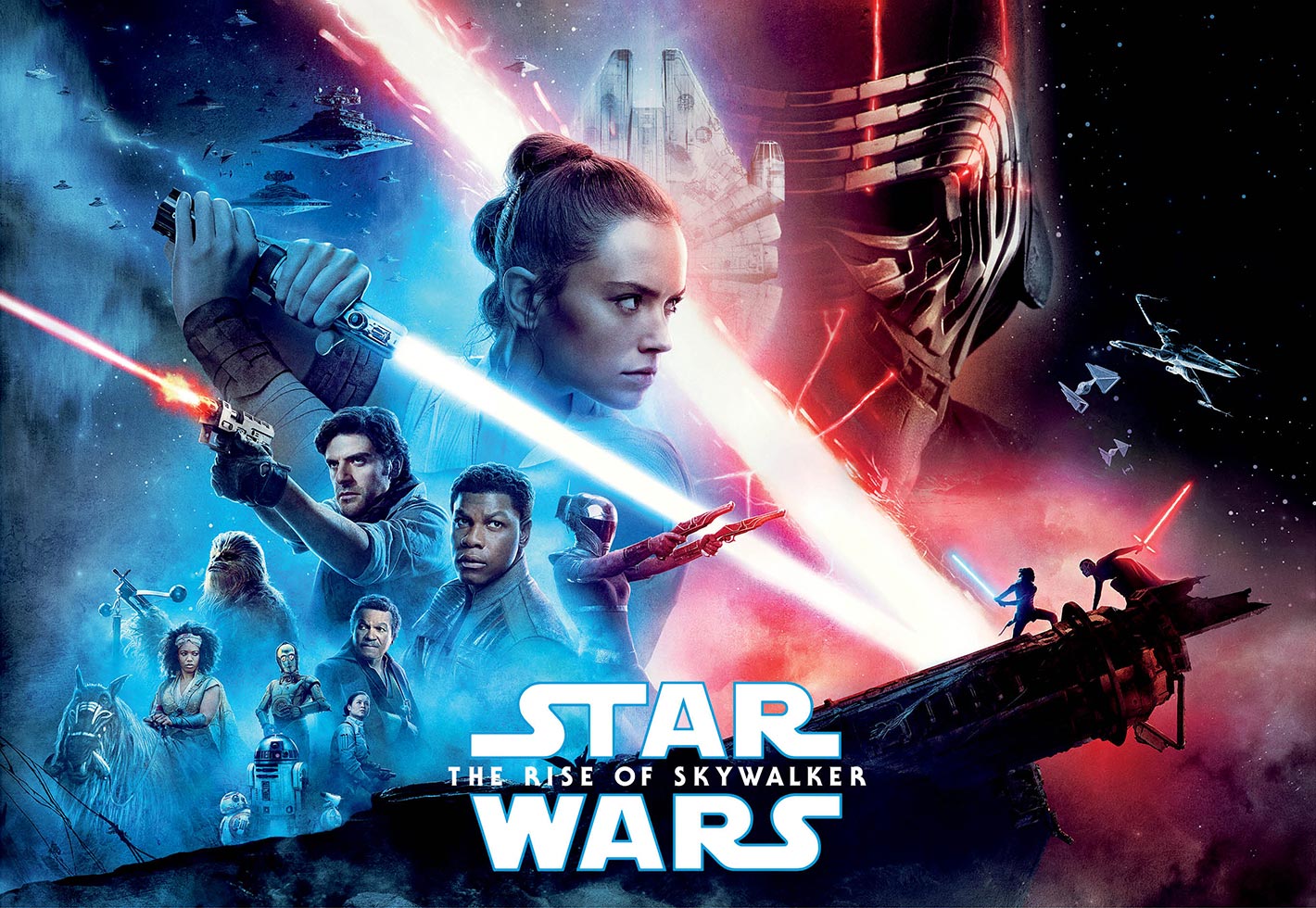
Study surveyed people before and after they saw The Last Jedi.
How much you enjoy the new Star Wars movie will depend a lot on your expectations going in, a new study suggests.
Researchers surveyed 441 people before and after they saw the last episode in the popular franchise, Star Wars VIII: The Last Jedi, released in 2017. They wanted to see how audiences’ expectations affected their actual enjoyment of the movie.
The findings suggest that it is probably best not to go into Star Wars: The Rise of Skywalker thinking you’re really going to love it or really going to hate it, said James Alex Bonus, co-author of the study and assistant professor of communication at The Ohio State University.
As you might expect, people who had the highest expectations for The Last Jedi but were disappointed in the movie had the lowest enjoyment of anyone taking the survey.
But what was most interesting, Bonus said, were people who expected very little from the movie but ended up feeling intensely happy after seeing the film. Their overall enjoyment was lower than those who felt similarly joyful but who went into the movie with higher expectations.
“It wasn’t really helping people to go in with those low expectations,” Bonus said.
“The negative bias going in dragged them down and even if they were pleasantly surprised by the movie, they still didn’t like it as much as other people did.”
The study was published online this month in the Journal of Media Psychology.
The results show how much our expectations can influence our enjoyment of a movie, particularly one in a franchise like Star Wars, where audiences have a history with the characters or storyline.
“It becomes a lot less about what is in the movie and a lot more about what you expected it to be,” Bonus said.
In this study, online participants recruited through Amazon Mechanical Turk were interviewed three weeks before the release of The Last Jedi in 2017. They were asked to rate on a 7-point scale how happy, sad, and nostalgic they thought the film would make them feel.
Three weeks later, those who had seen the movie were asked how happy, sad, and nostalgic seeing the movie had made them feel. They also rated their enjoyment and appreciation of the movie.
Results showed that many people weren’t very accurate at predicting how they would react to seeing The Last Jedi, Bonus said. That goes along with other research that shows people are bad at predicting how various experiences will make them feel.
In this study, about 55 percent of participants did not accurately predict how the movie would make them feel. Most of them didn’t get their prediction entirely wrong, such as saying the movie would make them happy when it didn’t.
But many were off in the strength of their feelings, predicting, for example, the movie would make them very happy when it made them only somewhat happy.
“We are really bad at predicting how future events will make us feel,” Bonus said.
One other interesting fact from the study: People who in the first survey expected that The Last Jedi would make them feel nostalgic were more likely to have seen the movie when re-interviewed three weeks later. Expectations about how happy they would feel did not predict viewing behavior.
“That shows the important role nostalgia plays for audiences of established franchises like Star Wars,” Bonus said.
Study co-authors were Nicholas Matthews, a visiting assistant professor of communication at Ohio State, and Tim Wulf, a postdoctoral researcher at LMU Munich in Germany.
Reference: “The Cost of Clairvoyance: Enjoyment and Appreciation of a Popular Movie as a Function of Affective Forecasting Errors” by James Alex Bonus, Tim Wulf and Nicholas L. Matthews, 16 December 2019, Journal of Media Psychology.
DOI: 10.1027/1864-1105/a000268
Never miss a breakthrough: Join the SciTechDaily newsletter.
Follow us on Google and Google News.