
Dialing Up the Heat on Nanoparticles
The ability of metallic nanoparticles to harvest and control light is transforming scientific research, according to physicists from the University of Bath.
Rapid progress in the field of metallic nanotechnology is sparking a scientific revolution that is likely to impact all areas of society, according to professor of physics Ventsislav Valev and his team at the University of Bath.
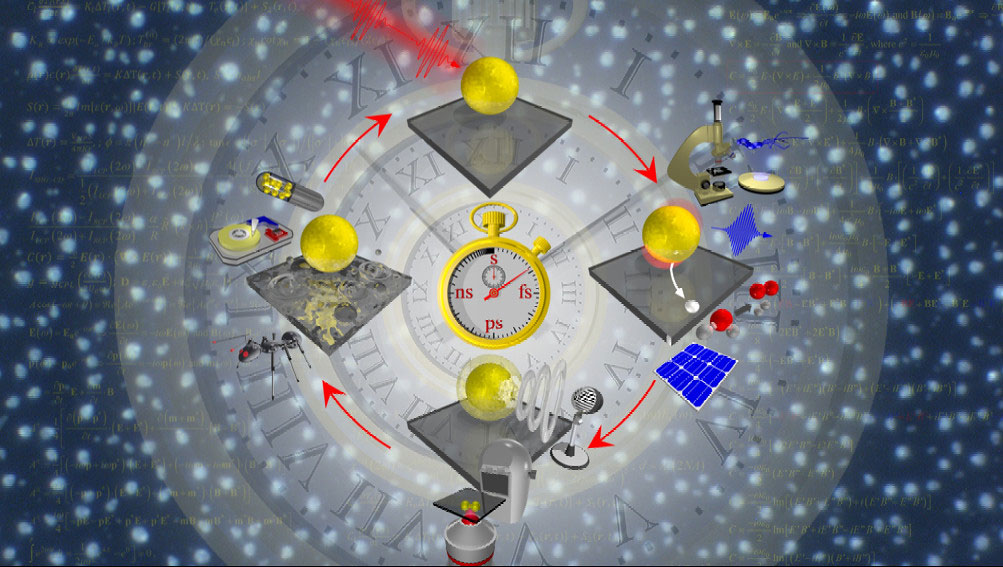
Metallic nanotechnology is an area that allows microscopic particles of metals, such as gold and silver, to be manipulated with heat and light. The potential applications are vast, ranging from optimizing the way we harvest renewable energy to overhauling our treatment of cancerous tumors.
Writing in the journal Advanced Optical Materials, Prof Valev’s team reviews the current state of nanotechnology research and discusses its likely applications in the near and medium future.
Ph.D. student Lukas Ohnoutek sees nanomedicine – a branch of medicine that uses nanotechnology to improve the diagnosis and treatment of disease – as a particularly buoyant area of research. On-command delivery of drugs has already proven successful in several animal trials, he says. Using this technology, medicines encapsulated in nanomaterials are directed to a specific site in the body before releasing their active ingredients in a highly controlled manner.
“It is crucial to increase the efficiency of drugs and to reduce side effects, and this is something that can be achieved with on-command drug delivery,” said Mr. Ohnoutek. “By illuminating metal nanoparticles, it is possible to control the location, time, and amount of drug released in a patient.”
Research fellow Dr. Kristina Rusimova says dramatic improvements are expected in the treatment of cancer, thanks both to on-command drug delivery and photothermal cancer therapy (PTT). PTT involves injecting nanoparticles into a patient’s body, where they accumulate in the tumor. When the particles are then subjected to radiation, they heat up and destroy the tumor with very little damage to surrounding tissue. In animal trials, advanced tumors have completely disappeared following photothermal therapy.
“We have looked at animal trials conducted on mice, cats, and dogs,” said Dr. Rusimova. “In each case, the treatment seemed successful, which is very encouraging for treatment in humans. We know that human trials have been approved and are currently ongoing, so we are cautiously optimistic.”
Other research is focused on finding nanotechnology solutions to the climate crisis. There is hope that non-radiative plasmonic decay will provide a new method for improving solar cells and for producing hydrogen fuel directly from water. This process is known as ‘water splitting.’ The result will be an efficient and economical low-carbon fuel, particularly suitable for heating homes and other spaces.
Other tantalizing applications for metallic nanoparticles technology include advanced biomedical imaging, improved magnetic storage, and nanorobotics, where robots are manufactured with components on the nanoscale.
Prof Valev said: “The tiniest metal pieces can now be formed, cut and joined with light. This allows us to integrate humanity’s knowledge of metal working with our understanding of molecular self-assembly and nanoscale biotechnology. This research field offers some truly amazing perspectives for the future.”
These prospects are all built around the ability of metallic nanoparticles to harvest and control light at the subwavelength scale.
Reference: ““Hot” in Plasmonics: Temperature‐Related Concepts and Applications of Metal Nanostructures” by Christian Kuppe, Kristina R. Rusimova, Lukas Ohnoutek, Dimitar Slavov and Ventsislav K. Valev, 26 November 2019, Advanced Optical Materials.
DOI: 10.1002/adom.201901166
Never miss a breakthrough: Join the SciTechDaily newsletter.
Follow us on Google and Google News.