
A calf’s return to her herd showed how elephant family bonds, long-term research, and landscape protection are deeply connected.
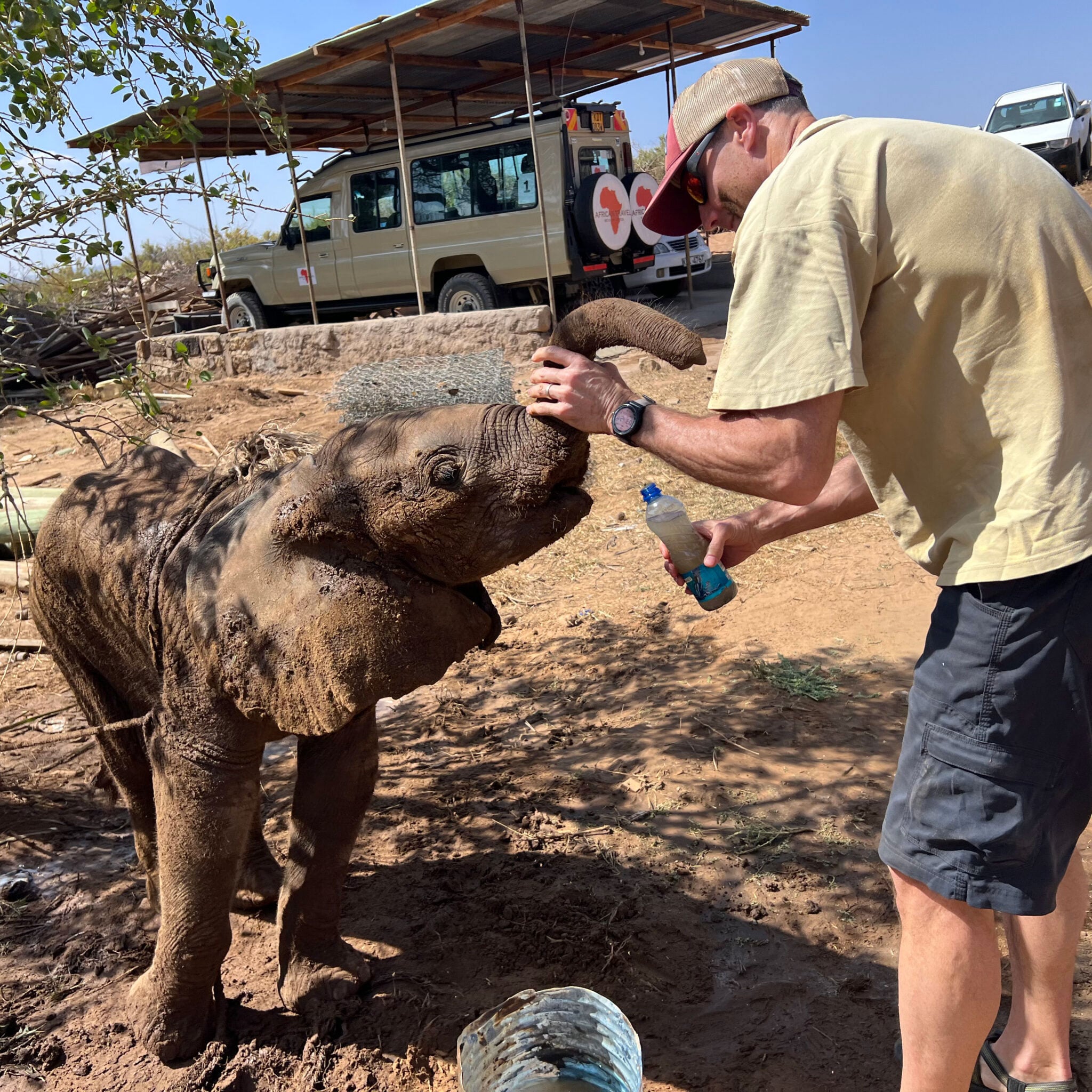
A 4-month-old elephant calf, orphaned and unsettled after a rough truck ride, did not immediately approach the elephants nearby. Earlier the same day, she had entered a tourist camp in northern Kenya, where campsite staff, trying to help, tied her to a tree and contacted a research group led by Colorado State University Professor George Wittemyer, who has studied elephants in the region for nearly three decades.
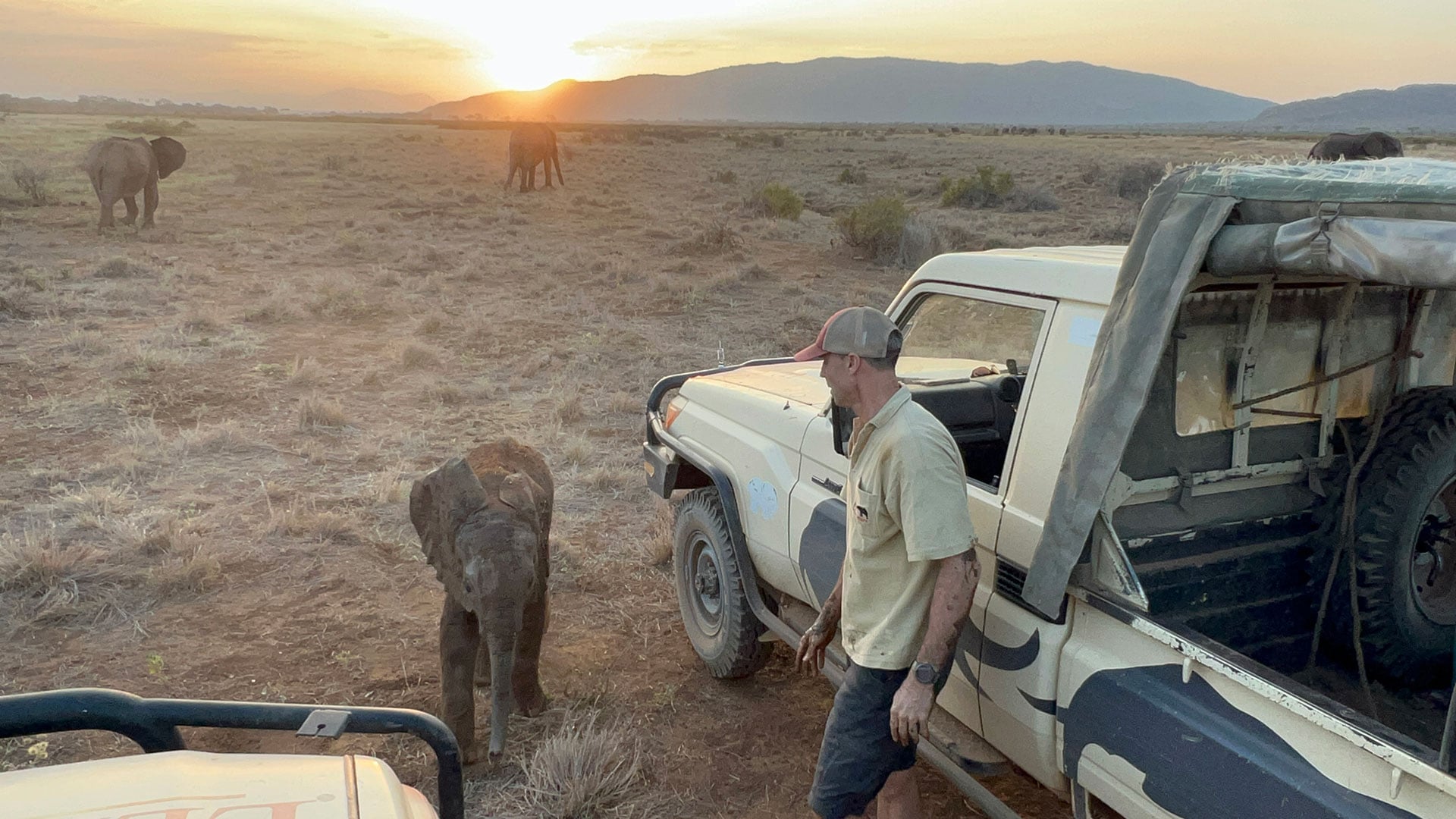
Wittemyer and his team searched intensively through Samburu National Reserve to find the herd that had lost a calf. Once they identified the family they believed was hers, they brought the young elephant to them.
The question was whether the herd would know her and accept her. The researchers watched closely, waiting for the family’s response.
Adelaide, the calf’s aunt and an elephant well known to the researchers, spotted the baby and moved closer. Adelaide called out, and the calf answered. That exchange quickly spread through the herd. The whole family rumbled, trumpeted, and gathered around the calf, enclosing her in what Wittemyer described as the greeting ceremony elephants use after a long separation.
“Elephants are highly social, forming powerful bonds between each other that last a lifetime,” Wittemyer said. “Similar to our societies, these bonds make up the social fabric of elephant society and underpin the rich behaviors elephants exhibit.”
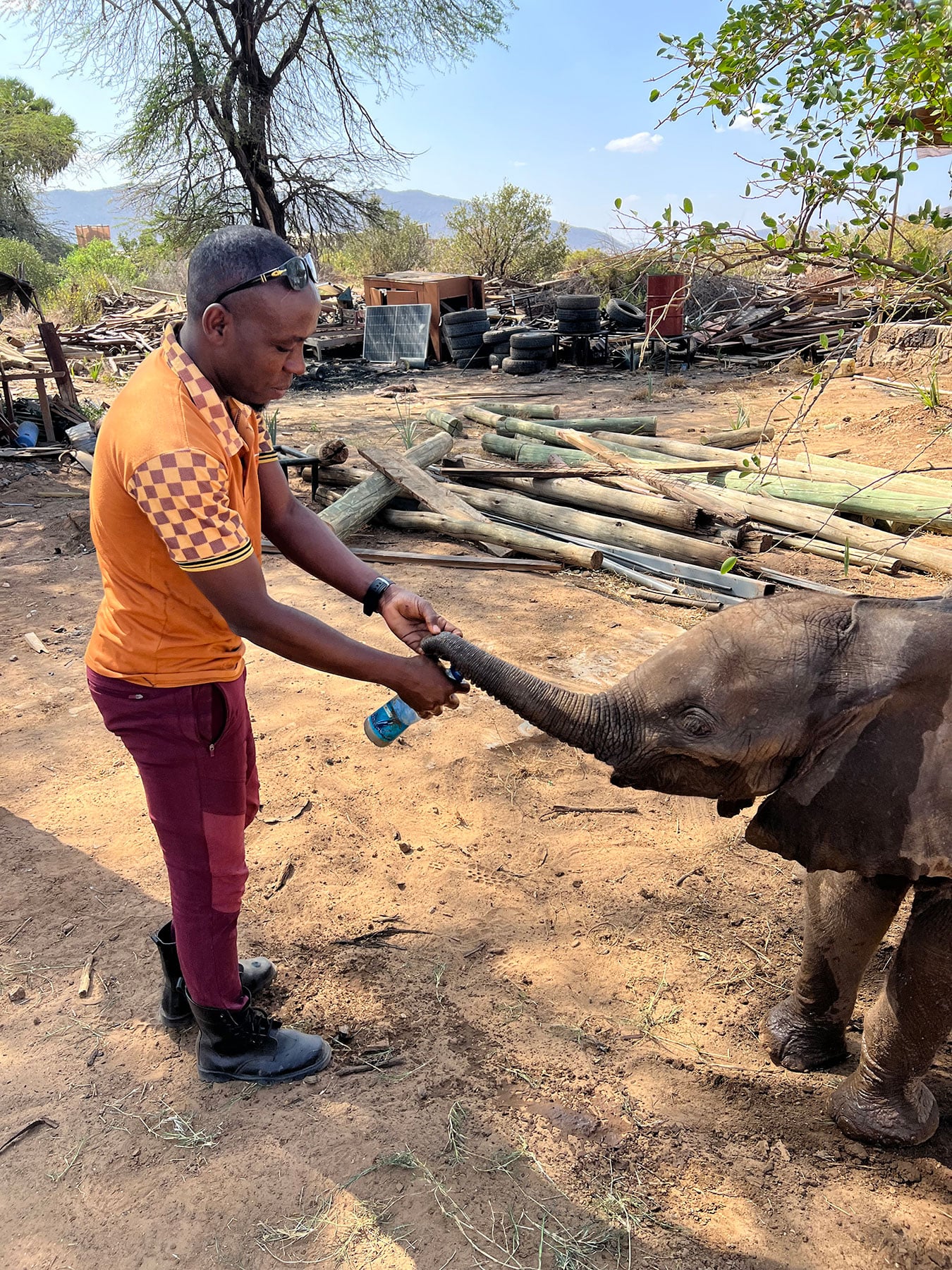
The rescue interrupted the researchers’ planned work on landscape protection for the species. Still, after giving the calf water, cooling her with a mud bath, and bringing her back to her herd, the vocal exchange confirmed that returning her to the family was the right decision. The team later found the body of her mother, who presumably had died of natural causes.
Wittemyer and his colleagues at Save the Elephants, a nonprofit conservation organization, monitor the elephants of Samburu National Reserve in detail, recording births, deaths, and the remarkable complexity of their social lives and behavior. That long-term fieldwork made it possible to identify the lost calf and return her to her family, and it remains central to protecting African elephants.
Research to save all elephants
Wittemyer has devoted his career to studying and conserving African elephants across the continent. Each year, he spends two to four months in Africa conducting research as a CSU faculty member and as chief scientist for Save the Elephants. His work with collaborators has produced groundbreaking discoveries about the species, including evidence that elephants call one another by name.
“My work focuses on understanding the rich and complex social lives of elephants, so we can better understand their needs and engender fascination and interest in their lives among the people living with them and the global public,” Wittemyer said.
His current research explores the information carried in elephant vocalizations, how leadership works within elephant groups, what causes elephant deaths, and how to protect the corridors that connect populations across landscapes undergoing rapid change.
On his most recent trip, Wittemyer and his team used drones to examine herd movement and leadership. They also fitted one elephant in each group with a GPS radio collar to follow how the groups move together. Each collar carried an acoustic recorder to capture the animals’ complex and varied calls, with the goal of better understanding what elephants are communicating. The collars are solar-powered and designed to detach after the four-and-a-half-year study, although they often fall off earlier because of wear, tear, and harsh environmental conditions.
The researchers record where elephants travel on unprotected lands beyond the park to identify areas that matter most to the animals and to guide conservation planning. Wittemyer and his colleagues have tracked elephant movements inside and outside the reserve for more than two decades. Over that period, the elephants’ range has shrunk in places where human populations have grown, and wild land has been converted for human use.
Elephants, the largest land mammals, require extensive space. They can also damage property and pose risks to people, which makes it especially important to protect heavily used elephant routes before development creates more opportunities for conflict.
“Landscape integrity and protection is critical for the species’ survival, given projections about human population growth in Africa over the next 80 years,” Wittemyer said. “At the same time, we need solutions that reduce the challenges of living alongside elephants while helping people appreciate the remarkable lives these animals lead.”
Wittemyer, widely regarded as one of the leading experts on African elephants, is a member of the International Union for Conservation of Nature’s African Elephant Specialist Group. He regularly meets with national government officials to discuss conservation strategies aimed at protecting this endangered animal from habitat loss, illegal hunting, and ivory poaching.
From field to classroom
When Wittemyer is not working on an African savanna or using scientific evidence to support conservation policy, he teaches in the Department of Fish, Wildlife, and Conservation Biology in CSU’s Warner College of Natural Resources. He received a 2026 Best Teacher Award after being nominated by students, faculty, and alumni.
“He makes certain every student walks away with a better understanding of systems as a whole, from the environment to the policies that influence conservation,” undergraduate student Elizabeth Parker said. “He wants his students to represent CSU and one of the best fish, wildlife, and conservation biology programs in the world.”
Back on the reserve
The calf that had been rescued belonged to the family of a matriarch the researchers called Sylvia. More than 10 years earlier, Sylvia had suffered a jaw injury from a gunshot. She also had a pattern of becoming separated from her group during difficult seasons, and she had been missing for roughly two weeks when the calf was brought back.
Elephant families and communities are closely bonded, and the calf’s aunts, Adelaide and Markle, took over care after her mother died. Markle had lost her own calf earlier that year, and she even nursed the hungry returned calf.
The next morning, the reunion briefly seemed to have taken a tragic turn. After the family moved to higher ground, the calf was seen lying still in a river depression, and the research team worried she had died overnight.
Roughly an hour later, the calf woke from a nap and began calling. Her family heard her and returned, with Adelaide leading the group into the river to gather around the calf and then guide her up the embankment. The moment offered a vivid example of elephant social intelligence and the kind of complex behavior that motivates Wittemyer’s work to understand and protect them.
“Elephants are one of the most sentient and, therefore, relatable animals we share this planet with,” Wittemyer said. “But they are big and need space and resources as a result. Only with determination and foresight can we ensure the protection and survival of elephants – something I have faith we will accomplish.”
Never miss a breakthrough: Join the SciTechDaily newsletter.
Follow us on Google and Google News.