
New research indicates the Oropouche virus has spread far more widely than reported, exposing major gaps in disease surveillance.
Until recently, few people had heard of the Oropouche virus. But after a massive 2023 outbreak swept across Brazil, infecting tens of thousands of people, causing the country’s first confirmed death, and spreading far beyond its traditional Amazonian range, the virus quickly became an international concern.
The World Health Organization (WHO) has since urged the rapid development of new tools to improve surveillance, prevention, and control.
Two studies published in Nature Medicine and Nature Health suggest that Oropouche virus has affected far more people than official figures show. By combining mathematical modeling, historical data, and blood bank analysis, the researchers estimate that the virus has infected about 9.4 million people across Latin America and the Caribbean since 1960. Brazil alone may account for roughly 5.5 million infections.
The illness causes fever and symptoms that can resemble dengue. In some cases, it can trigger severe complications, including neurological conditions such as meningitis and meningoencephalitis, as well as microcephaly when the virus passes from a mother to a fetus.
“We’re facing a disease of much greater magnitude than previously imagined, which requires greater attention. We estimate that one in every thousand diagnosed cases progresses to serious complications such as neurological disorders, microcephaly, miscarriages, and liver complications, raising the priority level for public health,” says José Luiz Proença Módena, coordinator of the Laboratory for the Study of Emerging Viruses (LEVE) at the State University of Campinas (UNICAMP) and co-author of the studies, which were supported by FAPESP.
Manaus, the epicenter of the crisis
In Manaus, the largest city in the Amazon region, an estimated 300,000 people were infected between 2023 and 2024. That figure is nearly 260 times higher than the confirmed case count. According to the researchers, antibodies against the virus rose from 11.4% of the population in November 2023 to 25.7% in November 2024, a sign that transmission was widespread.
“The capital of the state of Amazonas is a city with over two million inhabitants and is considered the gateway to the Amazon region. The striking underreporting occurred due to several factors, mainly because the virus circulated silently before reaching the outskirts of the urban center, with many cases being asymptomatic or mild and going undiagnosed,” says William de Souza, a professor at the University of Kentucky in the United States and co-author of the study.
That pattern helps explain how Oropouche virus reached all Brazilian states and spread into neighboring countries, leading the WHO to issue an international alert.
The situation is especially difficult in remote parts of the Amazon, where access to medical care can be slow and logistically complex. “Patients in remote regions of the Amazon often face travel times of more than 24 hours to reach a healthcare facility. That means that many cases likely went undiagnosed, allowing the virus to circulate silently until it reached the outskirts of a major urban center,” Souza says.
The researchers found that Oropouche virus can keep circulating continuously, often at levels too low for standard surveillance systems to detect. “In our study, we identified two major Oropouche virus outbreaks in the Amazonian capital: one in the 1980s and one in 2023. Each one infected more than 12% of the population,” says Módena.
They also found that people infected in the 1980s were still able to neutralize the newer viral strain. “That suggests long-lasting cross-protection, which could inform future vaccination strategies,” Souza explains.
A bush virus
The 2023 return of Oropouche virus confirmed that the disease had spread widely across Brazil. Espírito Santo recorded the highest cumulative rate, with 318 cases per 100,000 people. The Southeast became the new center of reported transmission, accounting for 57.9% of cases.
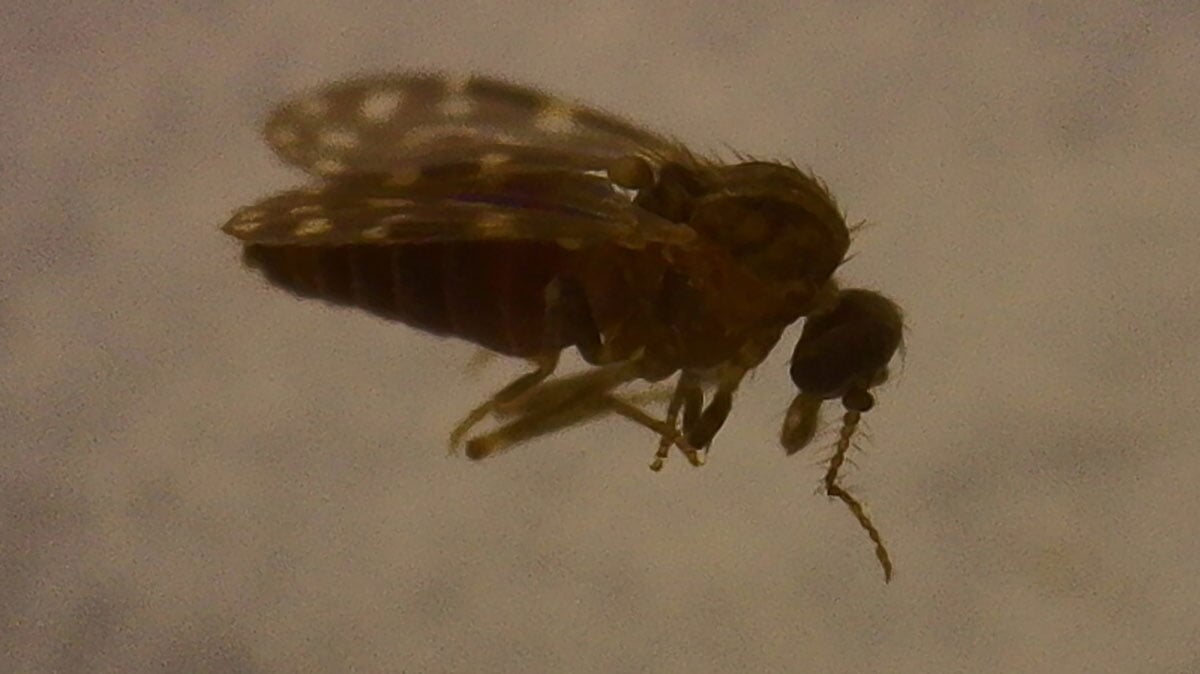
Oropouche differs from better-known arboviruses because it is spread by the gunpowder midge (Culicoides paraensis). The disease was 11 times more common in rural areas than in cities.
“Unlike Aedes aegypti [the mosquito that transmits dengue, Zika, and chikungunya], which breeds in standing water, the gunpowder midge lays its eggs in moist soil rich in organic matter. It’s a bush mosquito found in humid areas. That’s why cases are predominantly found in rural rather than urban areas,” Souza explains.
“Historically, this disease was closely linked to areas with banana and cocoa plantations, but by studying the ecology of the virus, we found that the issue isn’t the fruit itself but rather the ideal conditions of moist soil rich in organic matter. High temperatures and rainfall are also conducive to the spread of the midge,” says the researcher.
The rural profile of the disease changes what public health responses need to look like. “Combating the disease is very different from other mosquito-borne arboviruses, which are more urban. Strategies such as fumigation in squares and on paved streets are likely ineffective against Oropouche. The gunpowder midge doesn’t live in household drains but rather in the humidity of forested areas and the vegetation on the outskirts of cities,” Souza explains.
The gunpowder midge is also about three times smaller than an ordinary mosquito, small enough to pass through many mosquito nets. But the outbreak’s aggressive resurgence appears to involve more than climate. The researchers also point to a new viral recombination, or reassortment.
In the study, the researchers identified a new viral lineage created through genetic reassortment, which happens when two different viruses infect the same cell. This process can help the virus replicate more efficiently and make it more difficult for antibodies from past infections to neutralize it. As a result, the pathogen may be better equipped to expand into new areas.
“The reemergence of Oropouche shows us that we can’t combat all arboviruses with the same approach because the gunpowder midge doesn’t follow the same rules as Aedes. That makes current surveillance against the Oropouche virus insufficient and drastically underestimates the true scale of the disease,” says Módena.
Módena argues that surveillance needs to reach beyond large urban centers. “Although long-term immunity appears to exist for those who have already been infected, the speed with which the virus has spread across all Brazilian states shows that the healthcare system needs new detection systems, including those focused on surveillance far from major urban centers,” he states.
The researchers call for structural changes in how Oropouche virus is monitored. They emphasize continuous serological studies, the use of blood banks as early warning systems, and the integration of digital and genomic tools to track outbreaks and mutations. They also highlight the need to decentralize laboratory testing and build active, permanent surveillance that combines environmental, serological, and genomic data to anticipate risks and guide vaccination strategies.
References:
“Transmission dynamics of Oropouche virus in Latin America and the Caribbean” by Erika R. Manuli, Xinyi Hua, Gabriel C. Scachetti, Julia Forato, Ingra M. Claro, Geovana M. Pereira, Livia Sacchetto, Oscar Cortes-Azuero, Ana Carolina Bernardo, Cláudia F. Resende, Natália B. S. Bacarov, Ligia Capuani, Shirlene T. S. de Lima, Ronaldo de Jesus, Rodrigo B. Kato, Bárbara B. Salgado, Carolina M. L. Singh, Nadielle C. Pereira, Renato S. Reis, Sérgio R. L. Albuquerque, Richard Stanton, Vanderson S. Sampaio, Ana I. Bento, Marielton P. Cunha, Oliver Ratmann, Nuno R. Faria, Scott C. Weaver, Pritesh J. Lalwani, Henrik Salje, Allyson G. Costa, José Luiz Proenca-Modena, Ester C. Sabino and William M. de Souza, 24 March 2026, Nature Medicine.
DOI: 10.1038/s41591-026-04221-z
“Ecological and demographic drivers of Oropouche virus transmission” by Xinyi Hua (华心怡), Laura W. Alexander, Ingra M. Claro, Yucai Shao, Ronaldo de Jesus, Shirlene T. S. de Lima, Paulo C. Ventura, Rodrigo B. Kato, Marco Ajelli, André B. B. Wilke, Marc A. Suchard, Nuno R. Faria, José Luiz Proenca-Modena, Laura B. Dickson, Ana I. Bento and William M. de Souza, 24 March 2026, Nature Health.
DOI: 10.1038/s44360-026-00065-6
The research was funded by the National Council for Scientific and Technological Development (CNPq), which is affiliated with Brazil’s Ministry of Science, Technology, and Innovation; the Todos Pela Saúde Institute; the U.S. National Institutes of Health (NIH); and the British philanthropic organization the Wellcome Trust.
Never miss a breakthrough: Join the SciTechDaily newsletter.
Follow us on Google and Google News.
1 Comment
It could also be that we’re missing those cases because they didn’t happen. Right?
It seems that the epidemiologists are desperately trying to cook up another pandemic scare because they’re missing the spotlight that the covid one gave them.