
Close Menu
    Facebook X (Twitter) Instagram
    SciTechDaily
    • Biology
    • Chemistry
    • Earth
    • Health
    • Physics
    • Science
    • Space
    • Technology
    Facebook X (Twitter) Pinterest YouTube RSS
    SciTechDaily
    Home»Earth»Seeing the COVID-19 Pandemic From Space
    Earth

    Seeing the COVID-19 Pandemic From Space

    By Abigail Seadler, NASA Earth ScienceJanuary 11, 2021No Comments3 Mins Read
    Facebook Twitter Pinterest Telegram LinkedIn WhatsApp Email Reddit
    Share
    Facebook Twitter LinkedIn Pinterest Telegram Email Reddit
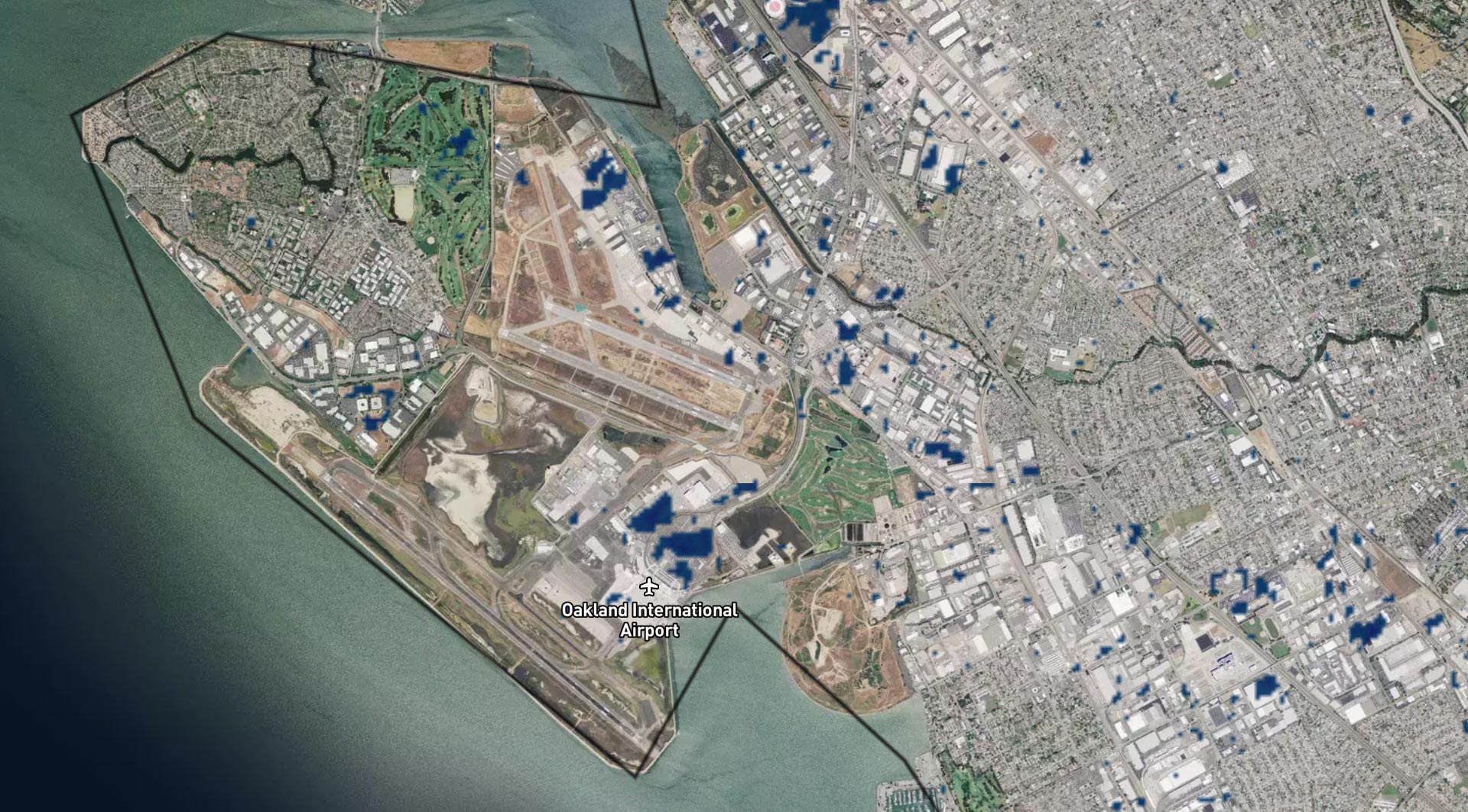
    San Francisco Bay Area COVID 19 Transportation Slowdown
    The San Francisco Bay Area experienced significant drops in surface transportation during the initial onset of the COVID-19 pandemic. The blue areas indicate areas of greatest slowdown. Credit: NASA and Planet Labs

    NASA’s COVID-19 Dashboard tracks environmental changes caused by pandemic shutdowns. It reveals patterns like cooler city surfaces and reduced pollution, helping scientists study the Earth’s response to reduced human activity.

    Economic and social shutdowns in response to the COVID-19 pandemic have led to noticeable changes in Earth’s environment, at least for the short term. NASA researchers are using satellite and ground-based observations to track these impacts on our air, land, water, and climate. These datasets have been collected in a free and openly available online dashboard.

    The NASA COVID-19 Dashboard features data collected by Earth-observing satellites, instruments aboard the International Space Station, and sensitive ground-based networks. The global maps are searchable by several categories of observable change, including economic indicators, such as shipping and construction activity, and environmental factors, such as water quality and climate variations. Investigate the data layers yourself or take a guided tour of how NASA Earth scientists are studying – and learning about – the pandemic’s effects on the Earth system.

    San Francisco Nitrogen Dioxide Levels Pre COVID 19
    Nitrogen dioxide (NO2), an air pollutant, decreased significantly over urban areas during the pandemic. This image above shows average NO2 levels over San Francisco for the past 5 years, and the image below shows NO2 levels over San Francisco in March 2020. Data is from NASA’s Ozone Monitoring Instrument (OMI). Credit: NASA COVID-19 Dashboard

    NASA scientists use many different tools, datasets, and methods to investigate COVID-related changes in the Earth system. Comparing complementary datasets on the dashboard helps reveal a deeper story of how the environment is changing due to COVID-related shutdowns.
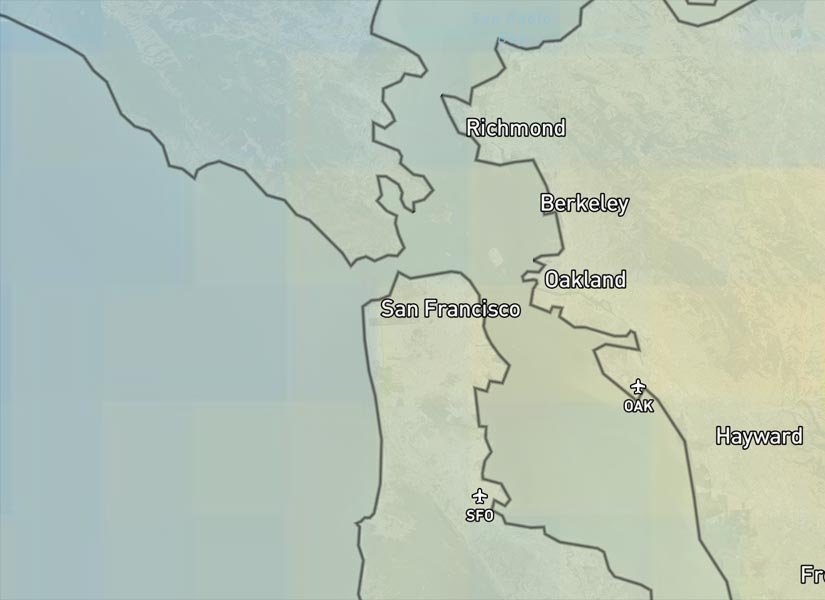
    San Francisco Nitrogen Dioxide Levels COVID 19
    NO2 levels over San Francisco in March 2020. Data is from NASA’s Ozone Monitoring Instrument (OMI). Credit: NASA COVID-19 Dashboard

    For example, scientists at NASA’s Ames Research Center discovered that emptier parking lots near closed, non-essential businesses, in combination with cleaner air from less surface transportation, meant that heat from the sun radiating off dark asphalt and cement surfaces did not stay trapped near the ground as long. Instead, heat dissipated quickly, cooling the urban environment. Comparing the data to pre-pandemic years, scientists found that large parking lots, highway corridors, and commercial rooftops were, on average, 10-15 degrees Fahrenheit (about 5-8 degrees Celsius) cooler from March to May 2020.
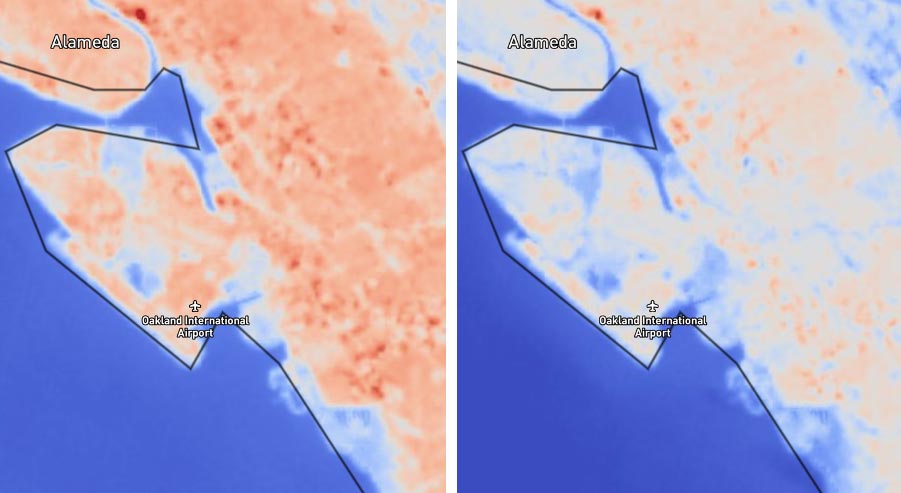
    San Francisco Bay Area COVID 19 Thermal Data
    Thermal data from the joint NASA-U.S. Geological Survey Landsat satellite show decreases in the urban heat island effect, a phenomenon where urban areas are significantly warmer than adjacent rural areas, during the pandemic. The left image shows temperatures over San Francisco in April 2018, while the right image shows temperatures over San Francisco in April 2020. Scientists found that large parking lots, highway corridors, and commercial rooftops were on average 10-15 degrees Fahrenheit (5-8 degrees Celsius) cooler from March to May 2020, compared to previous years. Credit: NASA COVID-19 Dashboard

    The NASA COVID-19 Dashboard will be updated with more data and discoveries throughout the pandemic and beyond.

    Never miss a breakthrough: Join the SciTechDaily newsletter.
    Follow us on Google and Google News.

    COVID-19 NASA Pollution
    Share. Facebook Twitter Pinterest LinkedIn Email Reddit

    Related Articles

    COVID-19 Lockdowns Cut Pollution, but Not All of It – “It Was Kind of a Surprise”

    NASA Finds Local COVID-19 Lockdowns Brought Unexpectedly Fast Global Ozone Reductions

    NASA Model Reveals How Much Pollution Levels Changed Due to COVID-19 Lockdowns

    Dramatic NASA Satellite Images Show 30% Drop in Air Pollution Over Northeast U.S. From COVID-19 Lockdown

    NASA Satellite Captures a Dimming China Due to COVID-19 Shutdown

    Satellite Captures Stunning Drop in Pollution Across Europe From COVID-19 Lockdown

    Shocking Video Shows Dramatic Nitrogen Dioxide Drop Over China Due to COVID-19 Lockdown

    Jaw-Dropping Video Shows Nitrogen Dioxide Emissions Drop Over Italy Due to Coronavirus

    NASA’s New Global View of CO2, Critical Step for Carbon-Cycle Science

    Leave A Reply Cancel Reply

    • Facebook
    • Twitter
    • Pinterest
    • YouTube

    Don't Miss a Discovery

    Subscribe for the Latest in Science & Tech!

    Trending News

    Once-in-a-Century Impact: NASA Just Found a Massive New Crater on the Moon

    Anak Krakatau Just Blasted Ash 50,000 Feet Into the Sky

    NASA’s Chandra Reveals Galaxies Being Torn Apart, Blasted by Black Holes, and Reborn in Stars

    Ozempic’s Active Ingredient Shows Surprising Anti-Aging Effects

    Scientists Discover Canada’s First Dinosaur Tracks From a Rarely Documented Cretaceous Age

    Astronomers Just Caught a Giant Planet in the Act of Forming

    Two Dead Stars Are Racing Around Each Other Every 6.2 Minutes

    Natural Compound May Help Protect the Brain and Heart From Excess Salt

    Follow SciTechDaily
    • Facebook
    • Twitter
    • YouTube
    • Pinterest
    • Newsletter
    • RSS
    SciTech News
    • Biology News
    • Chemistry News
    • Earth News
    • Health News
    • Physics News
    • Science News
    • Space News
    • Technology News
    Recent Posts
    • They Flew Around the Moon. Now NASA Has a New Mission for Them
    • NASA’s Roman Telescope Opens Its 300-Megapixel Eye on the Universe
    • This Strange Planet Is Going Backwards – and Scientists Don’t Know Why
    • Losing the Same Weight Didn’t Produce the Same Health Benefits
    • Feeling Lonely Could Take Nearly 6 Years From Your Healthy Lifespan
    Copyright © 1998 - 2026 SciTechDaily. All Rights Reserved.
    • Science News
    • About
    • Contact
    • Editorial Board
    • Privacy Policy
    • Terms of Use

    Type above and press Enter to search. Press Esc to cancel.