
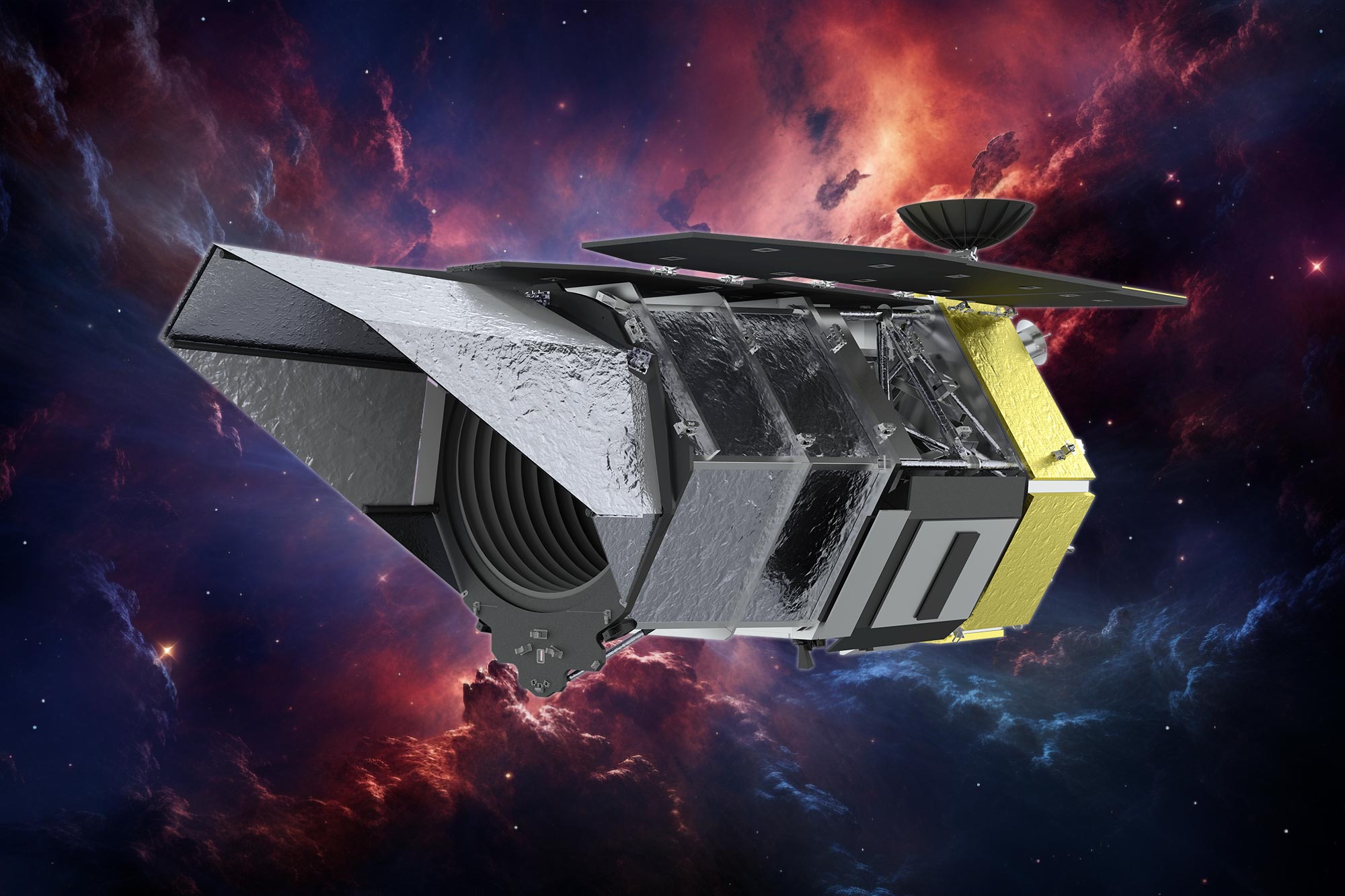
NASA’s Roman Space Telescope has powered up its 300-megapixel cosmic camera, bringing its first sweeping views of the universe closer than ever.
NASA’s Nancy Grace Roman Space Telescope has reached an important milestone after successfully switching on its Wide Field Instrument, a 300-megapixel infrared camera designed to survey enormous areas of the universe quickly while still capturing exceptional detail.
Roman’s planet-imaging Coronagraph Instrument also completed an early series of digital, electronic, and mechanical checks after waking up earlier this month.
The tests are part of a months-long commissioning process that will continue as Roman travels roughly one million miles toward its final destination at the second Lagrange point, L2.
Roman’s 300-Megapixel Camera Comes Online
The Wide Field Instrument, or WFI, is built to combine a very broad view of space with the sharpness associated with observatories such as NASA’s Hubble Space Telescope. Each image will cover a section of sky larger than the apparent size of the full moon.
That wide and detailed perspective will allow scientists to survey the cosmos on a massive scale. Roman will search for new clues about planets beyond our solar system, investigate major questions surrounding dark energy, and chart how matter is arranged throughout the universe. Its expansive observations will also provide a valuable dataset for many other kinds of additional scientific studies.
“After years of effort to build and test the instrument on the ground, we now have confirmation that it is operational in space. This is a huge milestone for the team at Goddard, our industry teams at BAE Systems, Inc. and Teledyne, and our science centers,” said Josh Schlieder, the Wide Field Instrument scientist at NASA’s Goddard Space Flight Center in Greenbelt, Maryland. “There is much to do, but we are on our way to groundbreaking science.”
Cooling Roman’s Infrared Detectors
Before engineers could power up the WFI, the instrument first had to remain idle for 10 days so it could dry out and decontaminate. During that period, its detectors were kept at a relatively warm (compared to their final operating temperature) minus 85 degrees Fahrenheit, or minus 65 Celsius.
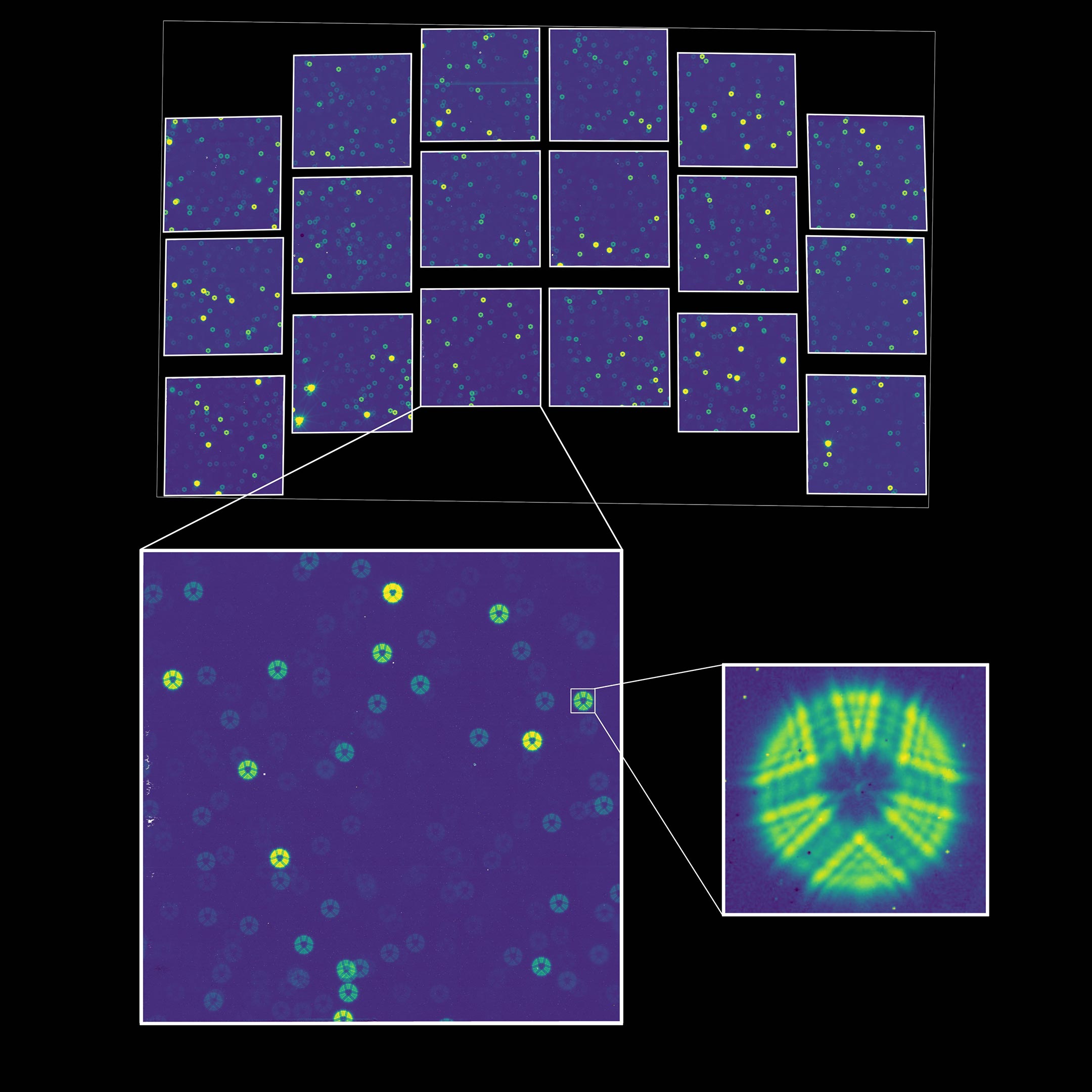
On the morning of September 11, engineers shut off the instrument heater and allowed the WFI to cool to minus 225 Fahrenheit (minus 143 Celsius). Once it reached that temperature, the team activated Roman’s 18 infrared detectors. Together, those detectors have a light-sensing area roughly comparable to the size of a laptop screen.
Later that night, engineers turned on the instrument’s calibration system. By the following morning, they were using it to send test data through the WFI and back to teams on Earth.
Testing Filters, Prisms, and Focus
On Saturday evening, engineers began testing the element wheel, a collection of filters, prisms, and other optical components that control which wavelengths of light reach the detectors. The system can also separate light from cosmic objects into individual colors. This marked the first time the mechanism had been tested in a weightless environment.
By Sunday morning, the team moved on to the WFI’s focusing mechanism and confirmed that it was operating correctly. The system will be responsible for keeping the hundreds of thousands of images Roman is expected to capture properly focused.
Throughout these tests, the detectors continued cooling until they reached their final operating temperature of about minus 300 Fahrenheit (minus 183 Celsius).
The results showed that the Wide Field Instrument is functioning as expected. Roman remains on schedule to release its first science images by early 2027.
Roman’s Coronagraph Passes Early Checks
Roman’s Coronagraph Instrument is designed to demonstrate some of the most advanced technologies ever flown in space for directly imaging planets orbiting other stars.
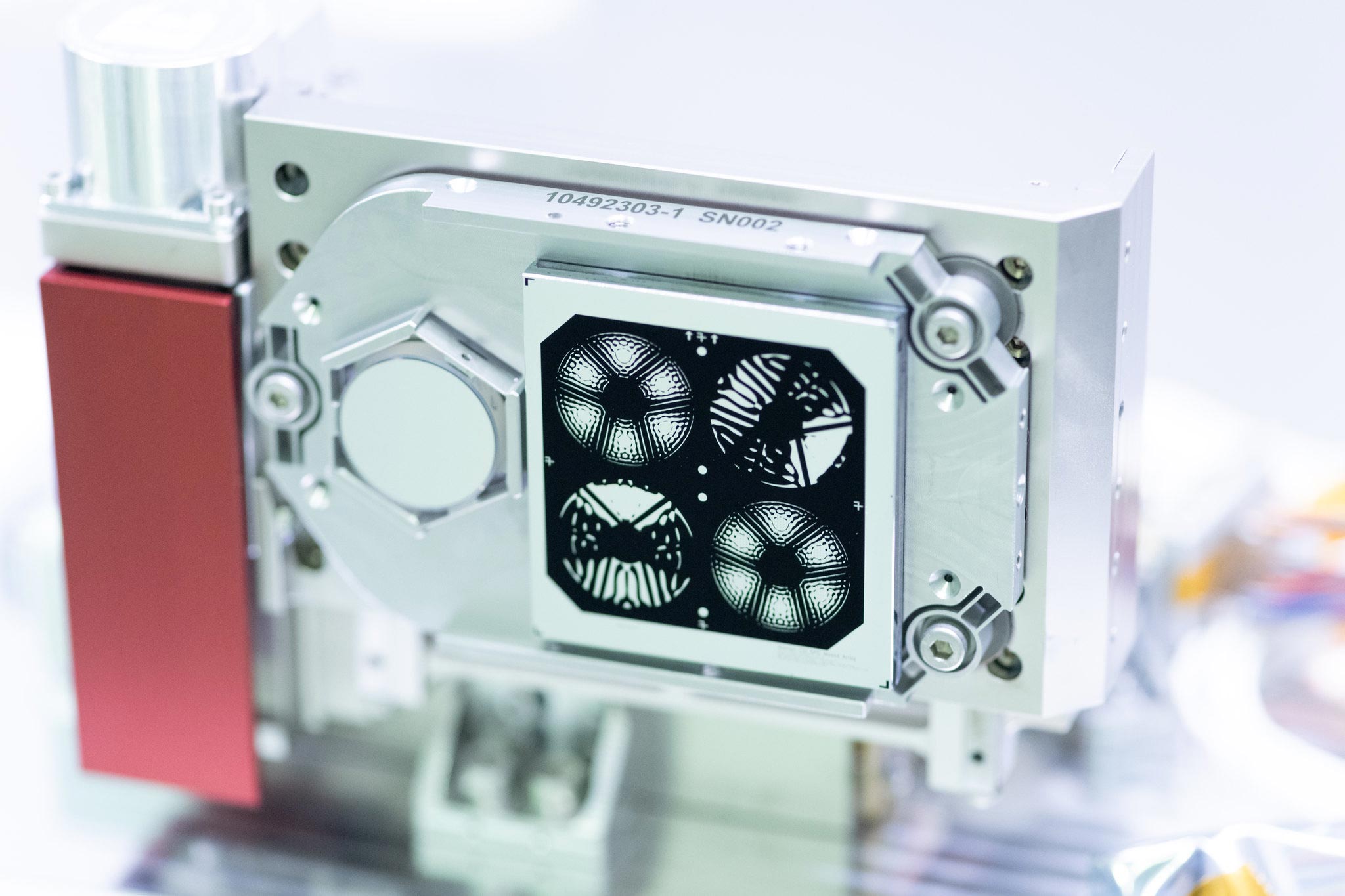
The system uses optics, masks, self-flexing mirrors, and sensors to suppress the intense glare of a star. By blocking that overwhelming light, the coronagraph is intended to make the much fainter reflected glow of orbiting planets visible.
Scientists and engineers working from the Coronagraph Commanding Center at Caltech/IPAC in Pasadena, California, confirmed that they can successfully communicate with every major part of the instrument. Those systems include its software, temperature controls, mechanisms, cameras, and the avionics that operate them.
In practical terms, the test showed that controllers on Earth can remotely operate the instrument’s major functions, including the moving mechanisms that position its masks, color filters, lenses, and prisms.
Preparing the Planet Imager for Science
Engineers also confirmed that the coronagraph’s thermal control system is functioning properly. The hardware was warmed to its normal operating temperature of 72 degrees Fahrenheit (22 Celsius).
With the exception of its detectors, the coronagraph is designed to operate near room temperature. That makes the instrument easier to test and helps ensure that the material properties of its deformable mirrors match the conditions expected during operation.
“Now that this test is complete, we’ve been decontaminating: sitting idle with our detectors warm so anything that’s stuck to the surface, such as water or trace chemicals, will tend to leave it,” said Eric Cady, an optical engineer leading commissioning efforts for the Roman Coronagraph at NASA’s Jet Propulsion Laboratory in Southern California. “This will continue for 30 days, with occasional stops to do other early calibration activities.”
Never miss a breakthrough: Join the SciTechDaily newsletter.
Follow us on Google and Google News.
12 Comments
Wonderful and exciting success!
Wow what a great time to be alive man! Always looking up.
She was a real pioneer and if you take into consideration women were not well accepted into the field it makes her even more of a hero and it is well this amazining instrument is named for her. Thank God it’s too late for Trump to get his mitts on it.
Don’t count on it until his heart stops long enough to destroy his selfish brain!
He probably thinks that this amazing telescope is a hoax. Seriously.
No. He’ll just take credit for it and say no one had done it before he came up with the idea.
What an amazing scientific achievement!
I can’t wait to see the next batch of photos.
You have to hand it to the engineering teams behind the Roman Space Telescope—getting a 300-megapixel infrared eye assembled, tested, and ready to look deep into the cosmos is no walk in the park. After years of grinding through design reviews, late nights in cleanrooms, and endless hardware headaches, watching them finally set up shop and get the hardware working is a massive milestone. They earned every bit of that pride.
Of course, as they start peering across billions of light-years to map out galaxy clusters, they are going to find themselves staring right into a massive, interconnected web of cosmic structure. Whether they call it dark energy or graph networks, the universe has a funny way of keeping researchers on their toes after all these years of heavy lifting. Hats off to the team for getting the bird in the air—now the real fun begins watching what their shiny new lens actually reveals out there.
(Primary Documentation Reference: Torsion-Hill-Framework-Master-Ref: 1TIuQESrA-mJao6h7rBiv_sXv_DjDAJbPEnGQJxh9IaQ)
Torsion Hill Architectural
Core Mechanics: High-resolution wide-field surveys capture macro-scale continuum phenomena that mainstream models attempt to explain via statistical point-particle distributions. True field architecture views large-scale cosmic structuring and galactic distribution as continuous topological responses within a stressed 3D manifold, governed by rotational nodes and boundary impedance gradients.
Watching NASA pivot the Roman Telescope toward exoplanet hunting using gravitational microlensing is where things get genuinely interesting. For years, planet-hunting relied on catching tiny dimming shadows or struggling to blot out blinding star glare with brute-force optics. Now, they are using entire cosmic gravitational fields as natural magnifying glasses to scan millions of stars toward the galactic center.
When a foreground star and its planetary companion bend light across space, mainstream astronomy treats it as a neat optical trick caused by mass attraction. But what they are actually mapping are localized field distortions and density gradients within the continuum. Every magnification spike and secondary planetary perturbation is just a visible signature of rotational nodes interacting across a stressed 3D manifold. They might be calling it microlensing, but they are essentially watching the structural tension of the medium itself reveal hidden worlds.
Torsion Hill Architectural
Core Mechanics: Exoplanet detection via gravitational microlensing exposes the continuous field-mediated nature of space, far beyond standard point-particle transit models. True field architecture interprets gravitational magnification and stellar lensing anomalies as localized topological strain responses within a stressed 3D manifold, governed entirely by rotational nodes and boundary impedance gradients.
He probably thinks that this amazing telescope is a hoax. Seriously.
None of us will end up on another planet in our lifetimes. What’s the point of this unless someone can get to another planet-solar system. Putting the cart in front of the horse.
Absolutely crossing another engineering milestone for the team at NASA and remembering the achievements and hard work by one of their own the Spectacular Nancy Grace Roman. Her lifetime contributions to the study of space exploration and many more like it were nothing short of Genius. A women whose entire heart and soul were dedicated to NASA and finally getting a richly deserved reward in naming this Telescope in her honor. Thanks to the Entire Team for making this endeavor a reality; can’t wait to see the finished images it sends back so Via con dios Nancy Grace Roman we are all cheering for you.