
Close Menu
    Facebook X (Twitter) Instagram
    SciTechDaily
    • Biology
    • Chemistry
    • Earth
    • Health
    • Physics
    • Science
    • Space
    • Technology
    Facebook X (Twitter) Pinterest YouTube RSS
    SciTechDaily
    Home»Space»NASA’s Powerful New Roman Space Telescope Is Cleared for Launch
    Space

    NASA’s Powerful New Roman Space Telescope Is Cleared for Launch

    By NASAAugust 27, 2026No Comments2 Mins Read
    Facebook Twitter Pinterest Telegram LinkedIn WhatsApp Email Reddit
    Share
    Facebook Twitter LinkedIn Pinterest Telegram Email Reddit
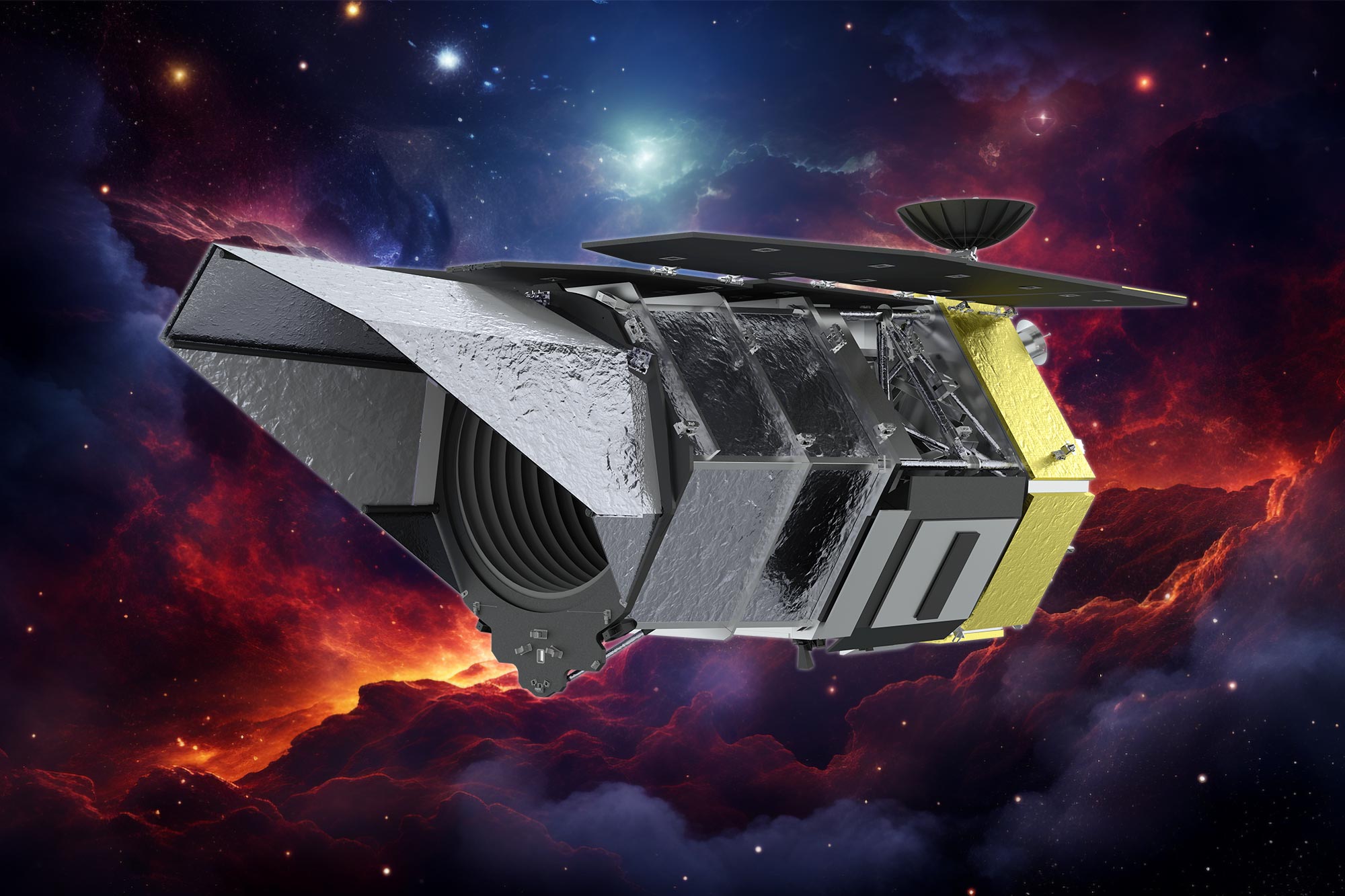
    NASA Roman Space Telescope Art
    NASA’s Roman Space Telescope has passed its Flight Readiness Review and is moving into final launch preparations. Credit: NASA’s Goddard Space Flight Center, Background: SciTechDaily.com

    NASA’s Nancy Grace Roman Space Telescope has cleared a key milestone ahead of launch after mission managers from NASA and SpaceX completed a Flight Readiness Review at Kennedy Space Center in Florida.

    During the review, teams examined the spacecraft, rocket, mission systems, and overall launch status. After receiving updates from across the mission, managers certified Roman to move into its final phase of launch preparations.

    Roman Targets an August 30 Launch

    NASA and SpaceX are aiming to launch Roman no earlier than 7:26 a.m. EDT Sunday, August 30. The observatory will ride to space aboard a SpaceX Falcon Heavy rocket from Launch Complex 39A at Kennedy Space Center.

    A Flight Readiness Review is one of the final major checks before a mission can proceed toward liftoff. Engineers and mission leaders use the review to confirm that the spacecraft, launch vehicle, ground systems, and supporting teams are prepared for the next steps.

    Over the coming days, Roman will be moved while enclosed inside Falcon Heavy’s fairing, the protective shell that surrounds a spacecraft during launch. Teams will transport the encapsulated observatory to SpaceX’s hangar at pad 39A, where technicians will connect it to the Falcon Heavy rocket.

    Once that work is complete, the fully assembled launch vehicle will be moved out to the launch pad for the final preparations before liftoff.

    A New Telescope Built to Survey the Universe

    Roman is NASA’s newest space telescope and is designed to give astronomers a much broader view of the cosmos. Its observations will help scientists investigate how the universe has evolved over billions of years and explore one of modern astronomy’s biggest mysteries: what is causing the expansion of the universe to accelerate.

    The telescope will also study exoplanets, which are planets orbiting stars beyond our solar system. By surveying large regions of the sky, Roman is expected to help researchers learn more about the variety of planetary systems throughout the galaxy.

    Together, those capabilities are intended to give scientists new tools for studying both the large-scale history of the universe and the distant worlds scattered throughout it.

    Never miss a breakthrough: Join the SciTechDaily newsletter.
    Follow us on Google and Google News.

    Astronomy Astrophysics NASA Roman Space Telescope
    Share. Facebook Twitter Pinterest LinkedIn Email Reddit

    Related Articles

    NASA’s Roman Telescope Will Search 100 Million Stars for New Worlds

    NASA’s Roman Space Telescope Could Finally Find the Milky Way’s Missing Neutron Stars

    NASA’s Roman Telescope Set to Map Billions of Galaxies and Hunt Rogue Planets

    NASA’s Roman Space Telescope Gets Cosmic “Sneak Peek” From Supercomputers

    From the Dawn of Time: Hunting for Primordial Black Holes With NASA’s Roman Space Telescope

    Echoes of Creation: The Roman Telescope’s Quest for Primordial Black Holes

    Discrepancies in the Hubble Constant Have Vexed Astronomers – NASA’s Roman Space Telescope Could Help Resolve the Puzzle

    NASA’s Roman Space Telescope Will Probe Galaxy’s Core for Hot Jupiters and Brown Dwarfs

    Major Milestone for NASA’s Roman Space Telescope Mission

    Leave A Reply Cancel Reply

    • Facebook
    • Twitter
    • Pinterest
    • YouTube

    Don't Miss a Discovery

    Subscribe for the Latest in Science & Tech!

    Trending News

    A SpaceX Falcon 9 Rocket Hit the Moon and Blasted Open a 60-Foot Crater

    Study Reveals Your Organs May Be Aging at Very Different Speeds

    Scientists Finally Solve a 20-Year Mystery About Diamond Melting

    Ultra-Processed Foods Linked to 30% Higher Prostate Cancer Risk

    More Screen Time, Better Thinking? An 8-Year Study Finds a Surprising Link

    Cleaner Cars May Be Hiding a New Pollution Problem

    Common Plant Chemical Linked to Widespread Organ Damage in Aquatic Animals

    Dogs and Humans May Share a Surprising Biological Secret to Longevity

    Follow SciTechDaily
    • Facebook
    • Twitter
    • YouTube
    • Pinterest
    • Newsletter
    • RSS
    SciTech News
    • Biology News
    • Chemistry News
    • Earth News
    • Health News
    • Physics News
    • Science News
    • Space News
    • Technology News
    Recent Posts
    • NASA’s Powerful New Roman Space Telescope Is Cleared for Launch
    • Scientists Reveal How Cells Tame One of Biology’s Most Dangerous Metals
    • Hurricane Forecast Maps Are Getting Better – but One Big Problem Remains
    • Blackbirds Somehow Know When a Snake Is Too Dangerous To Attack
    • Scientists Find a Clue to Making Brain Stimulation More Reliable
    Copyright © 1998 - 2026 SciTechDaily. All Rights Reserved.
    • Science News
    • About
    • Contact
    • Editorial Board
    • Privacy Policy
    • Terms of Use

    Type above and press Enter to search. Press Esc to cancel.