
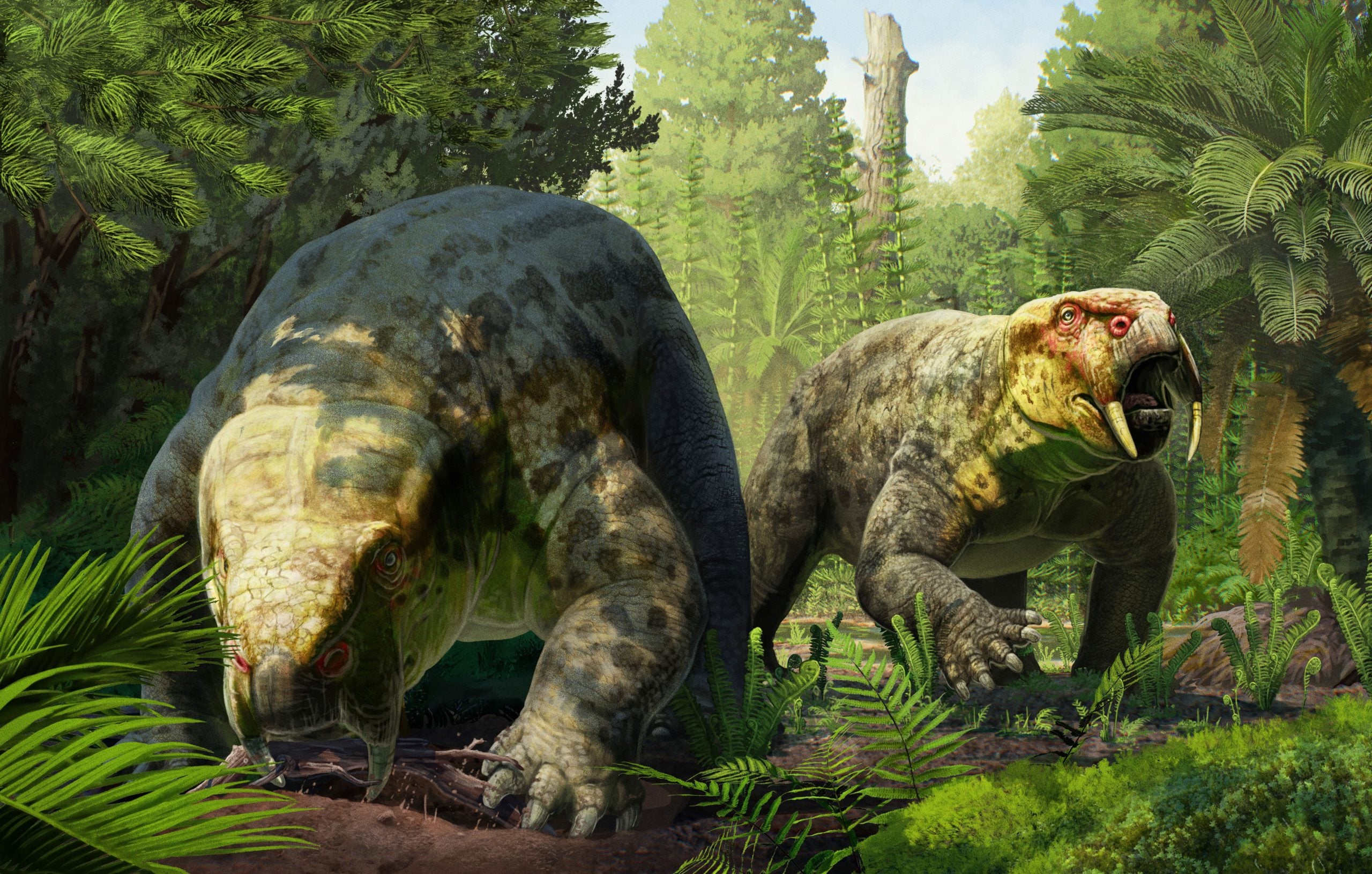
A newly identified mammal relative suggests that Tanzania’s possible early dinosaur fossils may be younger than previously thought.
Dinodontosaurus isiyavamanda, a newly identified plant-eating relative of mammals from Tanzania, may change the age assigned to some of the world’s oldest possible dinosaur fossils. The animal lived around 240 million years ago during the Triassic period, and its remains come from the same rocks as those dinosaur candidates.
An international team led by the University of Bristol identified the animal as a species of Dinodontosaurus, a genus previously known only from South America. Its presence on both continents gives researchers a new way to compare the ages of fossil-bearing rocks, with implications for when and where dinosaurs first evolved.
Tanzania’s dinosaur candidates may be younger
The age previously assigned to the Tanzanian deposits rested partly on comparisons with South African rocks. Researchers thought the two locations shared some fossil genera, or groups of closely related species, and considered the South African rocks to be Middle Triassic in age.
The connection with South America points to a younger age for the Tanzanian deposits. Recent radiometric dating, which estimates age by measuring the decay of radioactive elements, suggests that the South American rock sequences are up to 10 million years younger than the South African ones. The finding adds evidence against treating the Tanzanian dinosaur candidates as the oldest known.
Hady George, the study’s lead author and a PhD student in the University of Bristol’s School of Earth Sciences, said: “Our discovery marks the first confirmed record of the genus Dinodontosaurus outside South America. The finding links the Tanzanian and South American fossil-bearing rocks, showing they are of equivalent age.
“This helps confirm that the oldest dinosaur candidates from Tanzania are probably no older than those from South America, refining the timeline of dinosaur origins. Forthcoming research projects will examine the remaining fossil material and explore the biomechanics and ecology of Triassic dicynodonts.”
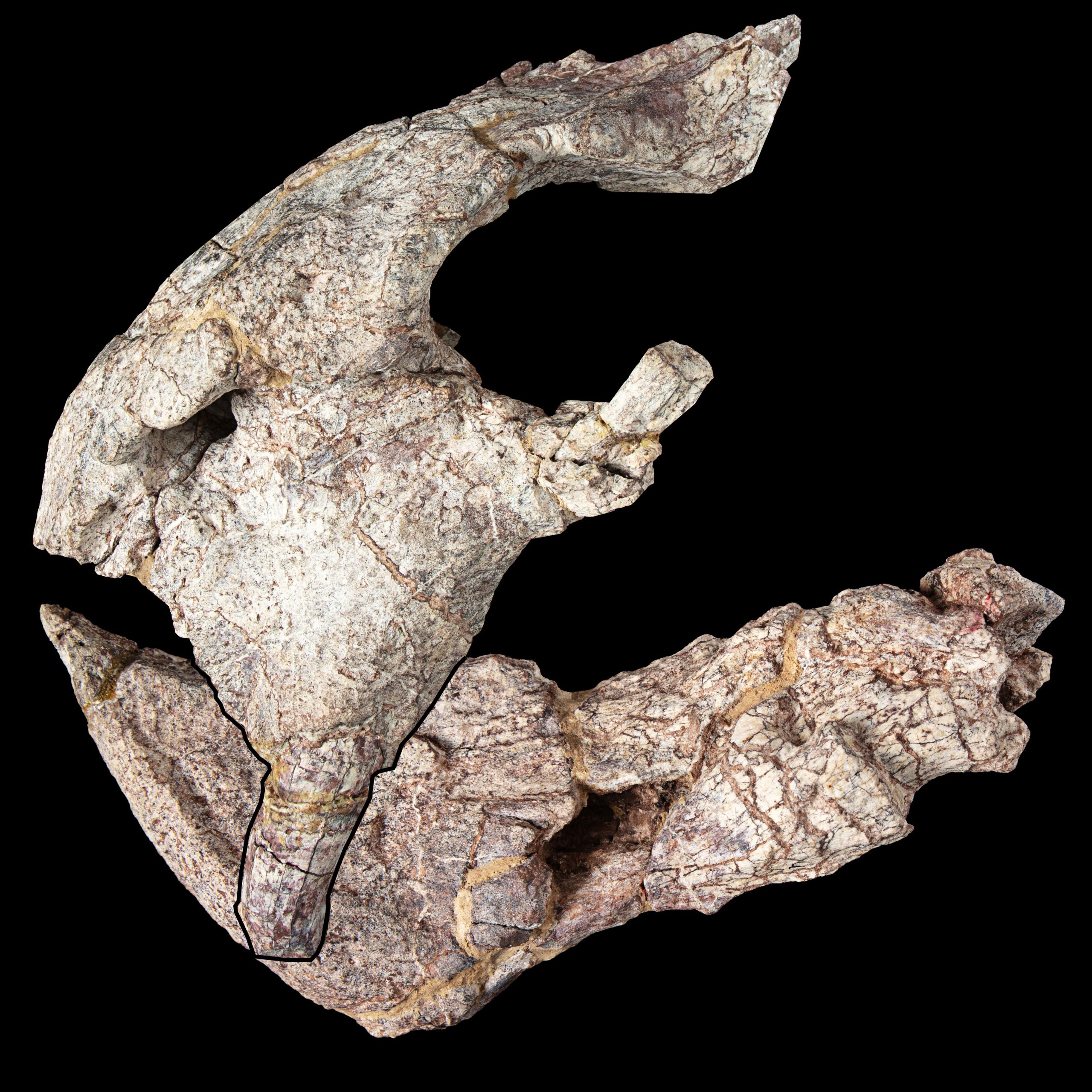
Museum fossils reveal Dinodontosaurus in Africa
The evidence behind that reassessment includes a skeleton collected more than six decades ago. A British expedition to what is now Tanzania brought back an extensive collection of synapsid fossils in 1963. Synapsids are vertebrates in the mammal lineage that flourished before the rise of dinosaurs. The fossils were housed at the Natural History Museum in London, but the collection remained only partly studied, leaving some specimens unidentified.
For the new study, published in the Journal of Vertebrate Paleontology, researchers examined a previously undescribed skeleton from that collection alongside a fragmentary skull discovered more recently. Both belonged to dicynodonts, a group of plant-eating synapsids.
The anatomical evidence placed the Tanzanian fossils within Dinodontosaurus, while differences showed that they represented a previously unknown species. The researchers named it Dinodontosaurus isiyavamanda in reference to the land of the Wamanda people, who inhabit the region where the fossils were found.
Dr. Mike Day, curator of non-mammalian tetrapods at the Natural History Museum in London, said: “This fossil specimen from Tanzania has been in our care for over 60 years, and it’s wonderful that its identity has now been brought to light. By revealing that Dinodontosaurus lived in South America and eastern Africa, it offers a glimpse of our planet 240 million years ago.
“It goes to show how revisiting museum collections can change our understanding of the past just as much as finding new fossils in the field, showing the importance of looking after these invaluable records of life on Earth.”
Paleontologist and study co-author Nigel Larkin, a visiting research fellow in the University of Reading’s School of Biological Sciences, said: “I studied this dicynodont skeleton for my MSc thesis at University College London back in 1994 and judged it to be a species new to science, but it took me nearly 30 years to start the process of writing it up for publication. I’m glad I waited, as the international team we put together, headed by Hady George, has done an amazing job of fleshing out this story in much more detail and depth than I could have achieved on my own.
“Techniques have improved vastly over the last 30 years too—we can do so much more with Micro CT scanning etc to examine such specimens than we ever could have imagined in the 1990s, and international collaboration is so much easier. And what’s 30 years? It’s the blink of an eye compared to the age of this prehistoric specimen.”
Much of the Tanzanian Dinodontosaurus material still awaits examination, particularly the postcranial skeleton, meaning the bones other than the skull. Researchers plan to study that anatomy and compare it with South American specimens. They will also investigate the biomechanics of Dinodontosaurus and related dicynodonts, examining how their bodies functioned to better understand how several large plant-eating species could coexist in Triassic ecosystems.
Reference: “Craniomandibular osteology of Dinodontosaurus isiyavamanda sp. nov. (Therapsida: Anomodontia) from the Manda Beds of Tanzania and new support for a younger age for the alleged oldest dinosaurs” by Hady George, Juan A. Escobar, Edmund R.R. Moody, Charles B. Saanane, Michael O. Day and Nigel R. Larkin, 15 September 2026, Journal of Vertebrate Paleontology.
DOI:10.1080/02724634.2026.2692542
Never miss a breakthrough: Join the SciTechDaily newsletter.
Follow us on Google and Google News.