
Close Menu
    Facebook X (Twitter) Instagram
    SciTechDaily
    • Biology
    • Chemistry
    • Earth
    • Health
    • Physics
    • Science
    • Space
    • Technology
    Facebook X (Twitter) Pinterest YouTube RSS
    SciTechDaily
    Home»Science»Xenoceratops, A New Species of Horned Dinosaur Discovered in Canada
    Science

    Xenoceratops, A New Species of Horned Dinosaur Discovered in Canada

    By SciTechDailyNovember 15, 2012No Comments2 Mins Read
    Facebook Twitter Pinterest Telegram LinkedIn WhatsApp Email Reddit
    Share
    Facebook Twitter LinkedIn Pinterest Telegram Email Reddit
    xenoceratops-wild
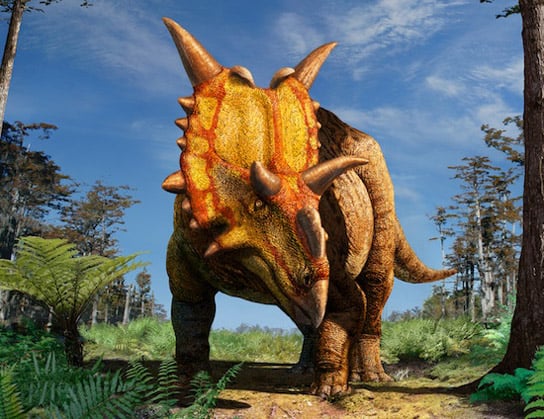
    The horned dinosaur Xenoceratops foremostensis was identified from fossils gathered in Alberta back in 1958.

    Scientists in Canada have named a newly found horned dinosaur (ceratopsian) and it’s called Xenoceratops foremostensis. It was identified from fossils originally collected in 1958 in Alberta.

    The researchers published their findings in the Canadian Journal of Earth Sciences. The dinosaur was about 20 feet (6 meters) in length and weighed more than 2 tons. It’s the oldest known large-bodied ceratopsian from Canada.

    80 million years ago, during the Late Cretaceous Period, cerotopsian dinosaurs in North America underwent an evolutionary explosion, states Michael Ryan, curator of vertebrate paleontology at The Cleveland Museum of Natural History and lead author. X. foremostensis shows that even the oldest ceratopsids had massive spikes on their head shields and that their cranial ornamentation would only become more elaborate as new species evolved.

    The name Xenoceratops means alien-horned face, referring to the strange pattern of horns on its head and the scarcity of horned dinosaur fossils from this part of the fossil record. Foremostensis honors the Village of Foremost, located close to where the dinosaur was discovered.

    X. foremonstensis had a parrot-like beak with long brow horns. There was a large frill protruding from the back of its skull featuring two big spikes.

    X. foremonstensis provides new information on the early evolution of ceratopsids, who aren’t that prevalent in the early fossil record. The new dinosaur was described from skull fragments from at least three individuals from the Foremost Formation. It’s currently housed in the Canadian Museum of Nature in Ottawa. The researchers stumbled upon the undescribed material more than a decade ago. They recognized a new type of horned dinosaur, and later discovered a 50-year-old plaster jacket at the museum containing more skull bones from the same fossil locality.

    Reference: “A new ceratopsid from the Foremost Formation (middle Campanian) of Alberta” by Michael J. Ryan, David C. Evans and Kieran M. Shepherd, 8 November 2012, Canadian Journal of Earth Sciences.
    DOI: 10.1139/e2012-056

    Never miss a breakthrough: Join the SciTechDaily newsletter.
    Follow us on Google and Google News.

    Canada Dinosaurs Fossils Paleontology Xenoceratops
    Share. Facebook Twitter Pinterest LinkedIn Email Reddit

    Related Articles

    New Species of Horned Dinosaur Discovered in Utah

    Research Reveals First Complete Chemical Analysis of ‘Dinobird’ Feathers

    World’s Oldest Dinosaur Bonebed Reveals How Dinosaur Embryos Grew and Developed

    Stubby-Tailed Oviraptors Had Tails for Courtship Displays

    How Tyrannosaurus Rex Ate Triceratops Horridus

    Fossils Reveal Headbutts May Have Been Used as a Dinosaur Courtship Behavior

    Cretaceous Period Sankofa Pyrenaica Fossilized Eggs Are Unusually Shaped

    Microraptor Feathers Were Black With Iridescent Sheen

    Jurassic Period Super-Sized Fleas Had Armored Mouthparts to Attack the Thick Hide of Dinosaurs

    Leave A Reply Cancel Reply

    • Facebook
    • Twitter
    • Pinterest
    • YouTube

    Don't Miss a Discovery

    Subscribe for the Latest in Science & Tech!

    Trending News

    This Copper Drug Clears Alzheimer’s Brain Toxins and Boosts Memory

    Adults Over 65 Lost Massive Amounts of Weight With Ozempic

    How Flocking Birds “Defy” One of Physics’ Most Fundamental Laws

    Physicists Create a New Kind of Schrödinger’s Cat State From Exotic Quantum Building Blocks

    Your Diet Could Be Missing the Key Ingredient for Heart Protection

    Researchers Warn Widely Prescribed Blood Pressure Drugs Could Be Harming Diabetic Kidneys

    James Webb Spots Something Strange Between Day and Night on an Alien Planet

    How Ancient People Moved a 6-Ton Stone 700 Kilometers to Stonehenge

    Follow SciTechDaily
    • Facebook
    • Twitter
    • YouTube
    • Pinterest
    • Newsletter
    • RSS
    SciTech News
    • Biology News
    • Chemistry News
    • Earth News
    • Health News
    • Physics News
    • Science News
    • Space News
    • Technology News
    Recent Posts
    • Scientists Uncover Cause of Inflammatory Bowel Disease Solving Decades-Old Mystery
    • The Surprising Reason Swimming Could Be Better for Your Heart Than Running
    • Could Vitamin C Be the Secret to Keeping Your Brain Younger?
    • The Surprising Fix for Robot Traffic Jams
    • Near Absolute Zero, This Transistor Starts Acting Like a Brain Cell
    Copyright © 1998 - 2026 SciTechDaily. All Rights Reserved.
    • Science News
    • About
    • Contact
    • Editorial Board
    • Privacy Policy
    • Terms of Use

    Type above and press Enter to search. Press Esc to cancel.