
Close Menu
    Facebook X (Twitter) Instagram
    SciTechDaily
    • Biology
    • Chemistry
    • Earth
    • Health
    • Physics
    • Science
    • Space
    • Technology
    Facebook X (Twitter) Pinterest YouTube RSS
    SciTechDaily
    Home»Science»Mount Vesuvius Buried These Scrolls for 2,000 Years – Now Scientists May Read Them
    Science

    Mount Vesuvius Buried These Scrolls for 2,000 Years – Now Scientists May Read Them

    By PLOSSeptember 20, 2026No Comments4 Mins Read
    Facebook Twitter Pinterest Telegram LinkedIn WhatsApp Email Reddit
    Share
    Facebook Twitter LinkedIn Pinterest Telegram Email Reddit
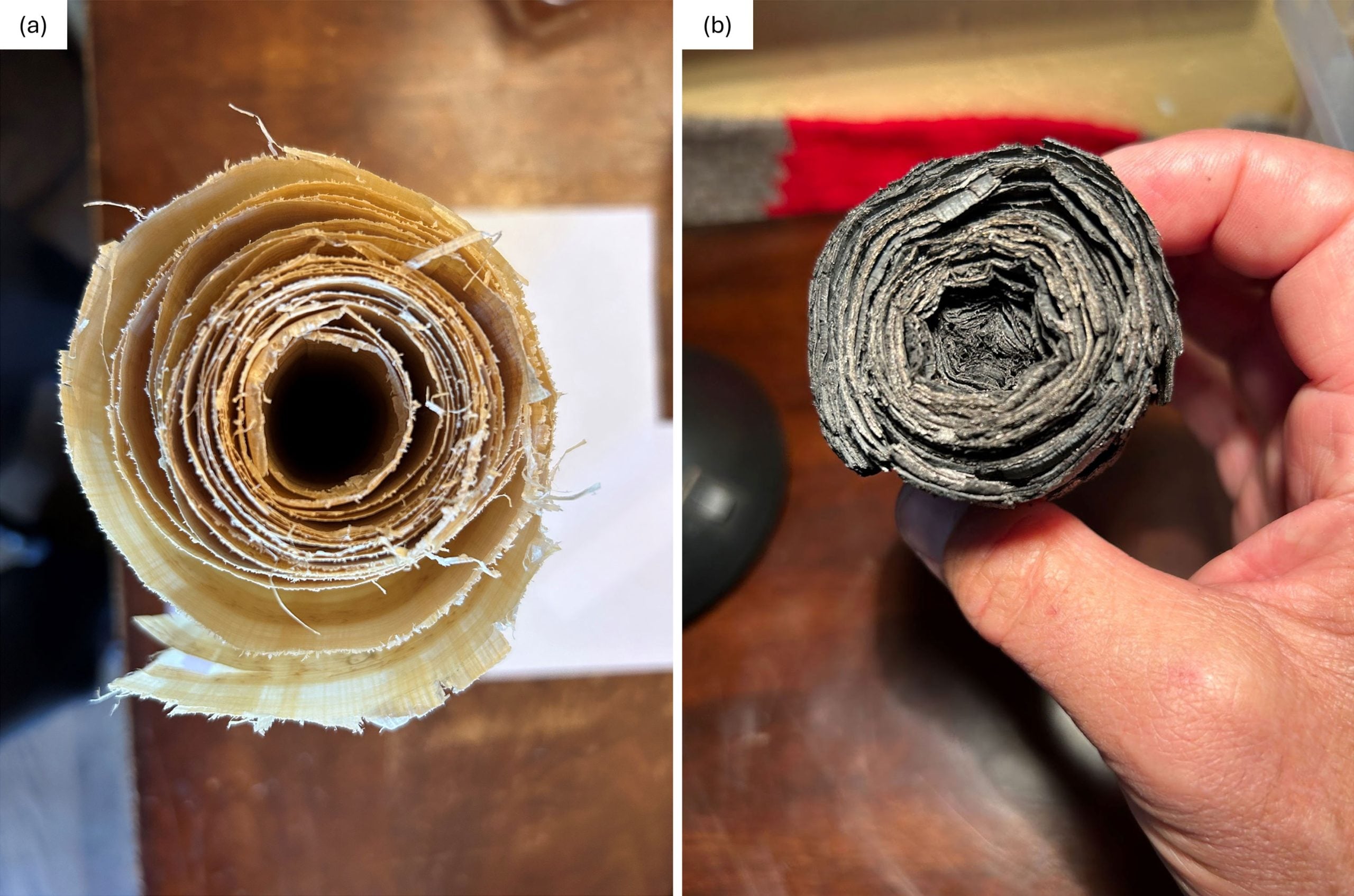
    Papyrus Scroll Before and After Carbonization
    One of several papyrus scrolls before carbonization and (b) after carbonization. Carbonized scroll produced with tight packing of layers and waviness that will challenge unrolling algorithms. Credit: Seiler et al., 2026, PLOS One, CC0

    Researchers recreated a damaged ancient scroll to test a new way to study the past.

    Lead in ancient ink could help researchers read the Herculaneum papyri, Roman scrolls buried when Mount Vesuvius erupted in 79 CE. Many are now too brittle to open, and reading them with X-rays poses its own problem. The ink and papyrus are both carbon-based, making the writing difficult to distinguish from the material beneath it.

    Researchers have found lead in some letters on fragments from the scroll collection. Because X-rays can distinguish lead from papyrus more easily, a team tested whether the metal could help reveal writing inside similarly damaged scrolls. They made their own versions, wrote on them with ink containing different concentrations of lead, and subjected them to intense heat. Scans then allowed them to recover some of the words.

    The findings appeared in the open access journal PLOS One. The study’s authors include Douglas Seiler, an affiliate of the University of California, Berkeley, Jacob Michael LaManna of the U.S. National Institute of Standards and Technology, David Kreimer of the University of California, Berkeley, and colleagues.
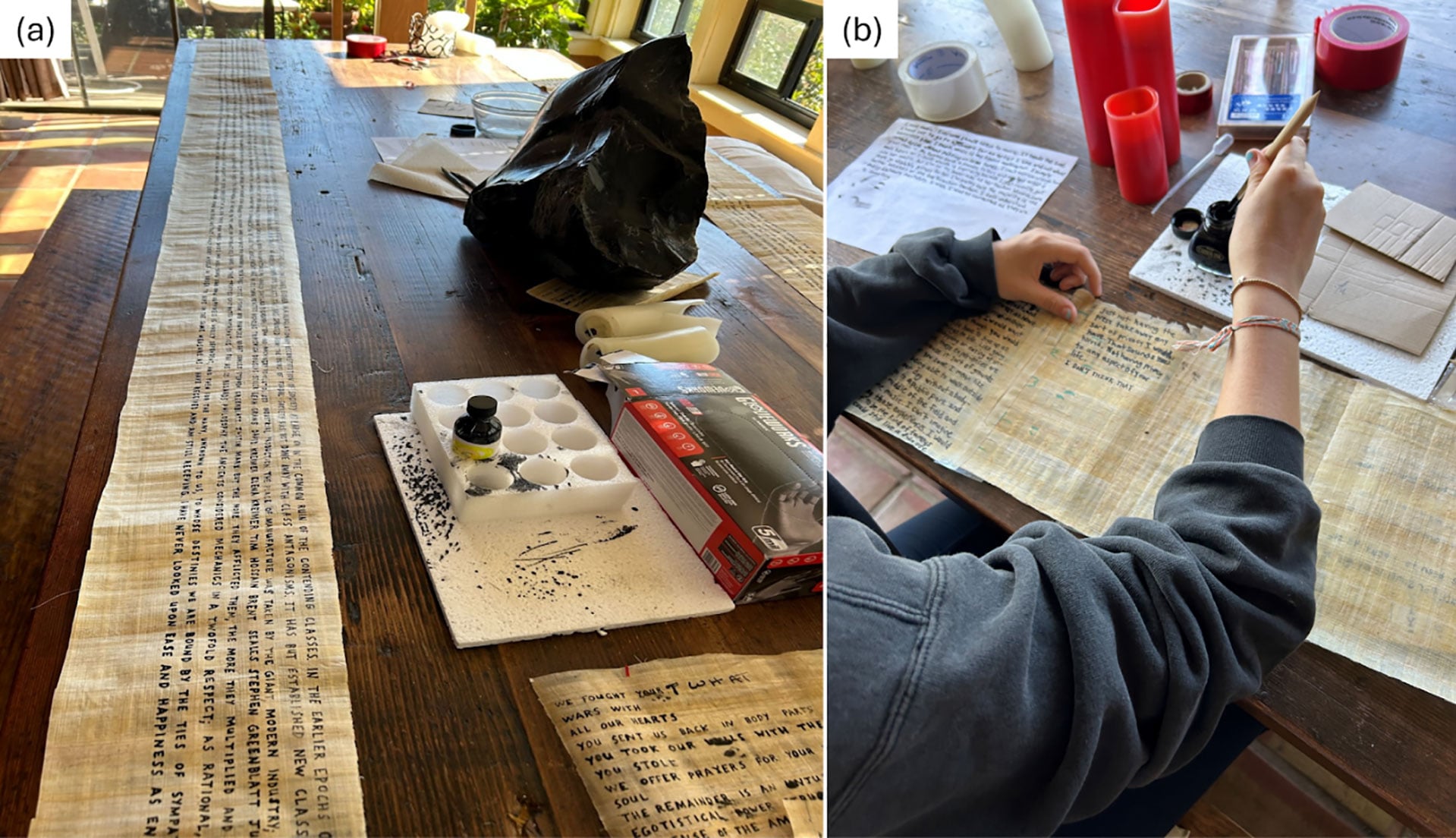
    Preparing Papyrus Scroll With Lead Based Inks
    Preparation of papyrus scroll with inks of varying lead concentrations. Credit: Seiler et al., 2026, PLOS One, CC0

    Reading scrolls too brittle to open

    The replicas mimicked the damage caused by the eruption that buried the ancient scrolls beneath 65 to 70 feet, or about 20 to 21 meters, of rock and ash. The extreme heat carbonized the papyrus, turning it into brittle, carbon-rich material. The originals were later discovered in the ruins of Herculaneum, near Naples, Italy. Some have been opened and read, revealing previously unknown writings by Epicurus and other ancient thinkers, while many remain too fragile to examine that way.

    Recent work combining artificial intelligence with X-ray tomography has allowed researchers to virtually unroll some scrolls and read portions of their text. Tomography uses X-ray measurements to build images of an object’s internal structure. Software can then digitally separate and flatten the papyrus layers, although distinguishing the ink remains a challenge.
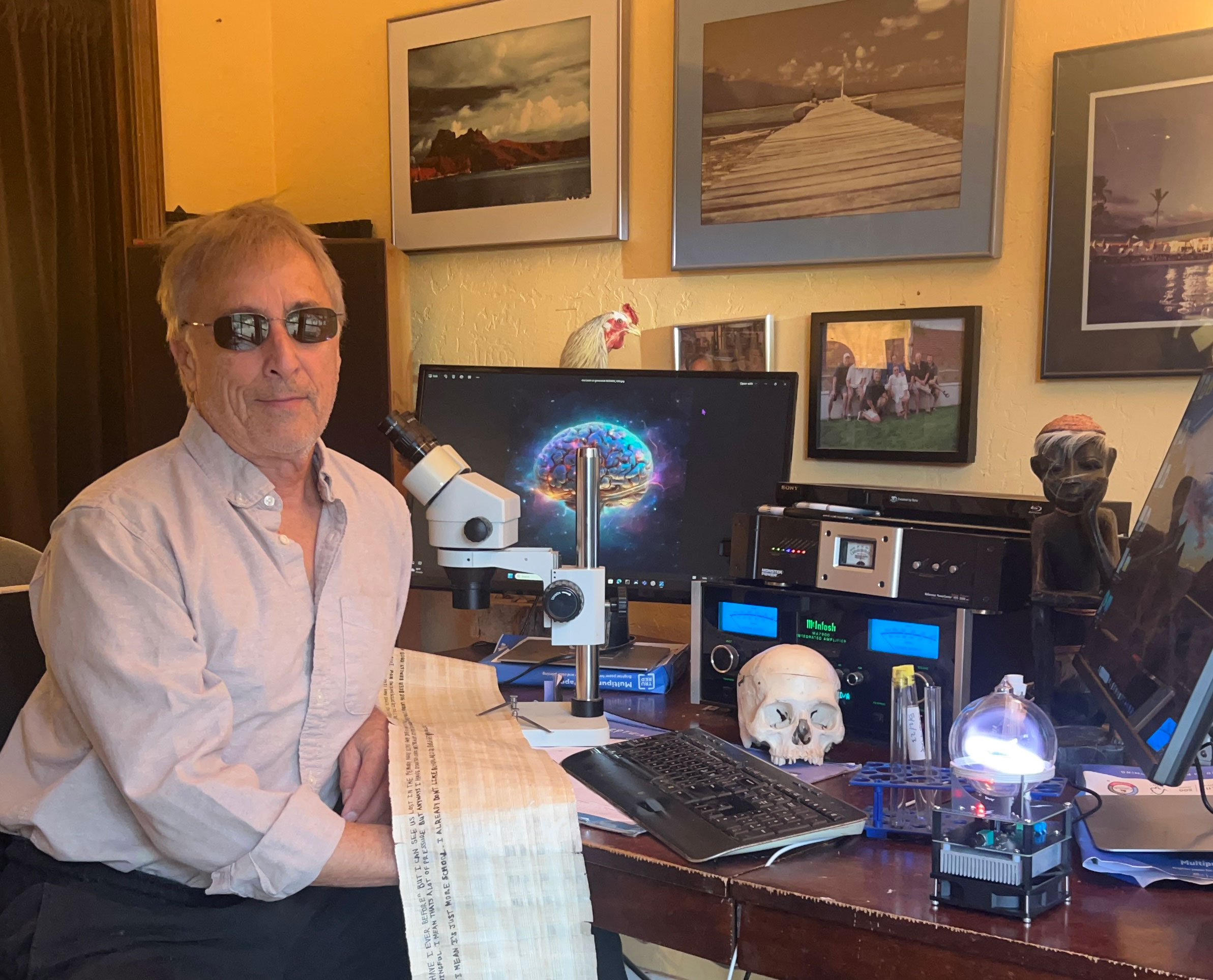
    Douglas Seiler
    Douglas Seiler in Lab #3. Credit: Douglas Seiler, CC-BY 4.0

    X-rays recover words from recreated scrolls

    To investigate how lead might help, the team wrote on new papyrus using inks with varying lead concentrations, rolled it into scrolls, and carbonized the replicas in a high-temperature furnace. They examined the resulting scrolls with X-ray fluorescence, a technique that can identify elements within a material. It detected lead at every concentration tested. X-ray tomography, paired with a custom software program, then enabled the researchers to reread some of their writing.

    Seiler said, “It’s amazing what you can get electrons to do.”

    The results support a proposed approach for the ancient collection. Researchers could first screen scrolls for lead, then attempt to virtually unroll those containing it. The replica experiments suggest this could offer a way to read some of the more complex Herculaneum scrolls, although they do not establish how much text the approach would recover from the originals.

    The recreated scrolls could also help researchers improve the software used to decipher hidden writing. Unlike an unread ancient scroll, each replica contains text the team already knows. That gives researchers a reference for training an algorithm to interpret the scans correctly, potentially improving its ability to read ancient texts.

    Reference: “A model carbonized papyrus scroll opens a novel path to identifying readable scrolls of the Herculaneum Library” by Douglas Seiler, Jacob Michael LaManna, Michael McOsker, David Kreimer, Michael Cyrus Daugherty and Jens Dopke, 16 September 2026, PLOS ONE.
    DOI: 10.1371/journal.pone.0353485

    The work conducted at NIST, was funded (just use of equipment & staff) by the Department of Commerce, Radiation Physics Division, and the Center for Neutron Research.

    Never miss a breakthrough: Join the SciTechDaily newsletter.
    Follow us on Google and Google News.

    Archaeology Artificial Intelligence Imaging PLOS Popular X-ray
    Share. Facebook Twitter Pinterest LinkedIn Email Reddit

    Related Articles

    Ancient Hawk-Sized Birds With Raptor-Like Feet Discovered in Montana

    Forgotten Fossils: Mysterious Tusked Creature Unearthed in Rock Art

    Ancient Engineering: Hydraulic Technology May Have Helped Build Egypt’s Step Pyramid of Djoser

    Child’s Grave Unearths Ancient Mystery: 9,000-Year-Old Necklace Redefines Neolithic Culture

    New Research Shatters the Myth of Men As Hunters and Women As Gatherers

    Archaeologists Discover That Ancient Islamic Tombs Cluster Like Galaxies

    Artificial Intelligence Helps Crack the Code of the Dead Sea Scrolls

    Jurassic Dinosaurs Turned to Scavenging – Maybe Even Cannibalism – In Stressed Ecosystems

    Neandertals Dove Underwater to Collect Clam Shells to Use as Tools

    Leave A Reply Cancel Reply

    • Facebook
    • Twitter
    • Pinterest
    • YouTube

    Don't Miss a Discovery

    Subscribe for the Latest in Science & Tech!

    Trending News

    A 50-Year-Old Mystery: Scientists Discover What May Have Killed Brazil’s Frogs

    Scientists Discover Exercise Changes the Body in Ways We Never Fully Understood

    Scientists Restore Memory in Mice With Alzheimer’s by Boosting a Single Brain Protein

    Scientists Create “Super Ice” That’s 10 Times Stronger and Rivals Concrete in Strength

    Not Getting Enough Daylight Could Be Linked to a Higher Risk of Dementia

    What Kills Schrödinger’s Cat? Scientists Just Ruled Out a 60-Year-Old Theory

    Scientists Discover Metals That Refuse To Crack at an Astonishing -424°F

    A 1,000-Year-Old DNA Mystery Links Hawaii and Easter Island and Reveals Hidden Genetic Dangers

    Follow SciTechDaily
    • Facebook
    • Twitter
    • YouTube
    • Pinterest
    • Newsletter
    • RSS
    SciTech News
    • Biology News
    • Chemistry News
    • Earth News
    • Health News
    • Physics News
    • Science News
    • Space News
    • Technology News
    Recent Posts
    • Scientists Discover “D-Rex,” a Giant Fungus Unlike Anything Seen Before
    • Scientists Develop a Remarkable New Coating for the Powerhouses of Our Cells
    • A Single Gene Could Hold the Key to Taming One of the Deadliest Cancers
    • Scientists Discover That One Common Protein Source Makes Gut Inflammation Much Worse
    • Forgotten Material From the 1960s Is Hiding Something Unexpected
    Copyright © 1998 - 2026 SciTechDaily. All Rights Reserved.
    • Science News
    • About
    • Contact
    • Editorial Board
    • Privacy Policy
    • Terms of Use

    Type above and press Enter to search. Press Esc to cancel.