
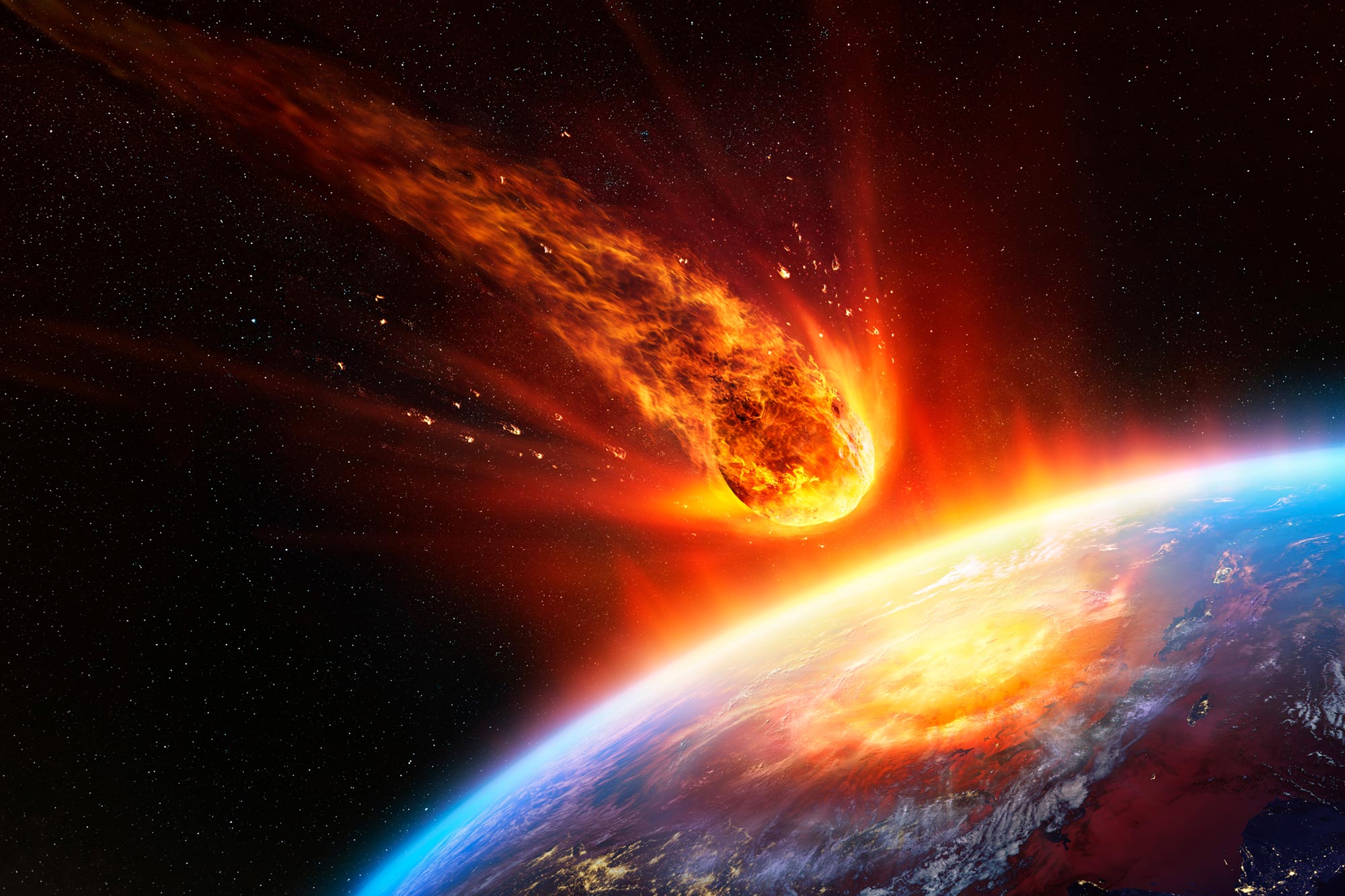
Scientists are narrowing down the type of space rock that caused the mass extinction at the end of the Cretaceous period, and new research suggests it was no ordinary rock.
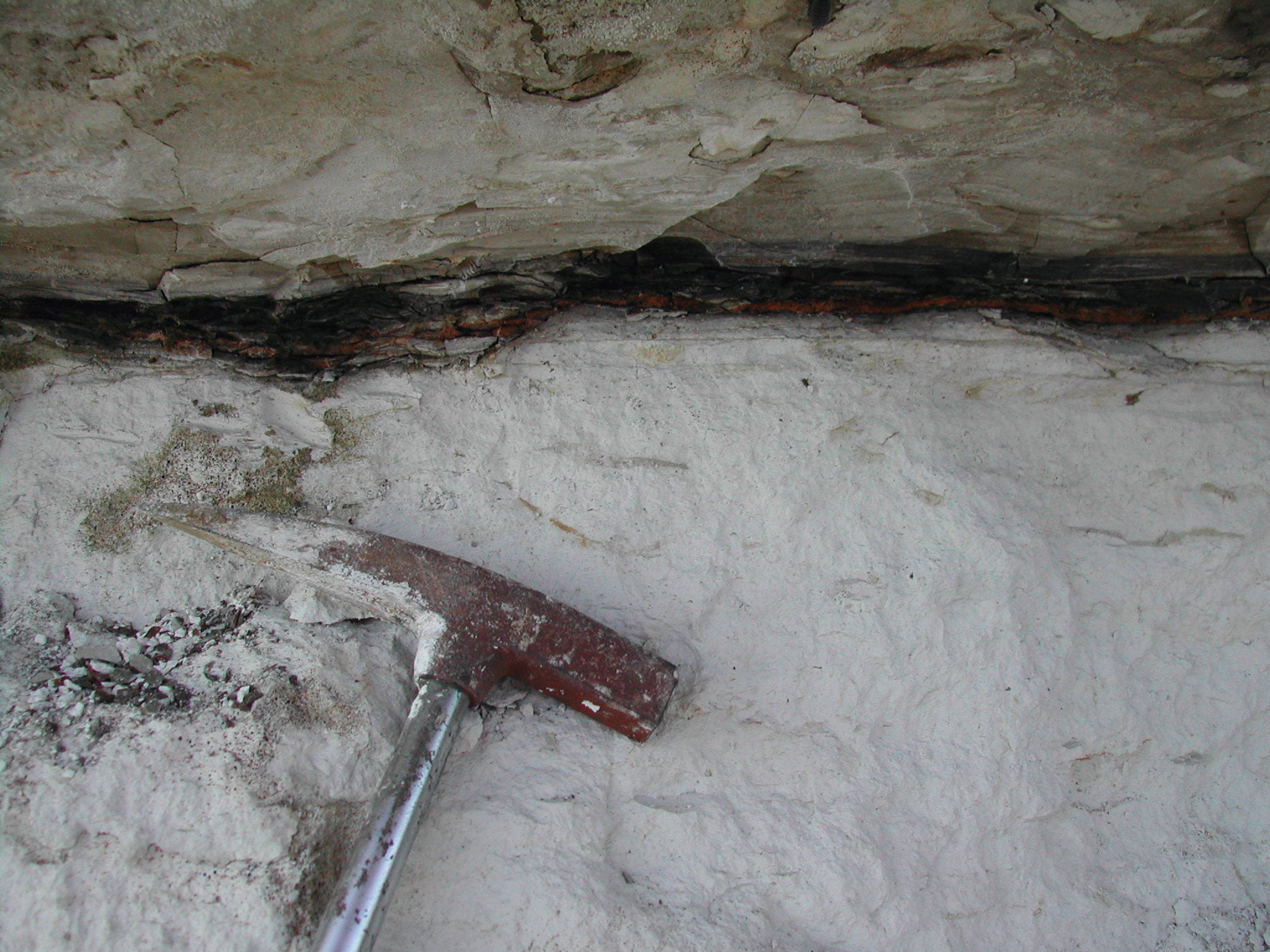
The Chicxulub impactor, the space rock that struck what is now Mexico 66 million years ago, left behind an enormous crater but almost nothing of itself. The collision vaporized the space rock and triggered a mass extinction that wiped out 75% of Earth’s species, including the non-avian dinosaurs. To work out what hit the planet, scientists have had to examine tiny traces preserved in a thin layer of clay around the world.
A new analysis of those traces points to an unusually rare culprit, a meteorite called a CO chondrite. It belongs to a broader family known as carbonaceous chondrites, which account for just 5% of meteorites sampled on Earth. CO chondrites make up only a tiny fraction of that family.
Identifying the rock also helps researchers investigate what made the impact so deadly. CO chondrites contain relatively little sulfur compared with other meteorite classes, making sulfur carried by the incoming object a less likely primary driver of the extinction. The researchers instead point to the fine debris thrown into the atmosphere by the collision.
Nickel traces narrow the impactor’s identity
The impactor was roughly 10 to 15 kilometers (6 to 9 miles) wide and struck at an estimated 64,000 kilometers per hour (40,000 mph). The resulting Chicxulub crater is now buried beneath Mexico’s Yucatán Peninsula, while the clay deposited by the impact provides a record of the collision far beyond the crater itself.
Researchers at the Institut de Physique du Globe and Université de Paris examined samples of that clay collected over years. They made high-precision measurements of nickel isotopes, forms of the element with different masses, to narrow down the impactor’s composition. The findings were published July 17, 2026, in Science Advances by a team involving the University of British Columbia (UBC) and researchers in Paris, Brussels, and Vienna.
“This is challenging work,” says Dr. Philippe Claeys, a professor at Vrije Universiteit Brussel who worked on the study as a visiting professor at UBC. “Only a minute fraction of the projectile is preserved in the planet’s KT clay layer because the entire meteorite vaporized upon impact.”
That KT clay layer marks the Cretaceous-Paleogene extinction event. Claeys is visiting the Pacific Centre for Isotopic and Geochemical Research within Earth, Ocean and Atmospheric Sciences at UBC.
Less sulfur shifts attention to debris
The measurements point specifically to carbonaceous chondrites of the Ornans class, the full name for CO chondrites. These meteorites are among the most primitive and untouched materials in the solar system.
“Carbonaceous chondrites of the Ornans class are definitely not like the typical meteors you find in museum collections,” says Claeys.
Their chemical makeup includes relatively small amounts of volatile materials, substances that readily turn into gas. Claeys explains how this affects his interpretation of the extinction.
“A CO contains much less volatile elements—like carbon, zinc, water, and particularly sulfur—than other classes of meteorites we’ve discovered so far on Earth. It doesn’t alter our theory of what caused the extinction event—but it makes it less likely that sulfur contained in the impactor was the smoking gun. The fine debris thrown into the atmosphere would have the primary factor.”
The impactor’s origins remain uncertain. Possible sources include distant regions of the outer solar system rich in debris or the outer part of the asteroid belt near Jupiter.
“Being impacted by such a rare, distant projectile really underscores how unlucky the dinosaurs were,” says Claeys.
Reference: “The origin of Cretaceous-Palaeogene impactor revealed by nickel isotopes” by Georgy V. Makhatadze, Frédéric Moynier, Leslie-Anne Brun, Steven Goderis, Philippe Claeys and Christian Koeberl, 17 July 2026, Science Advances.
DOI: 10.1126/sciadv.aef4858
Never miss a breakthrough: Join the SciTechDaily newsletter.
Follow us on Google and Google News.
11 Comments
I love learning about the dinosaurs, space and meteors! Please notify me some more about those three topics!!
But let’s be clear. Estimates of the size and speed of the asteroid are based on nothing but hypothetical values which would do the hypothetical damage.
If The asteroid vaporized, shouldn’t there be some dust in the clay?
Frankly, I’m still a believer in the Deccan Traps (and maybe the hypothetical Shiva asteroid) being the proximate cause of the dinosaurian extinction. Chicxulub was too small.
BTW: The drawings are just disingenuous artists’ fantasies.
Past Planetary impacts should have inexplicable implications for futures being told.
We mustn’t lose ourselves over what we deem to be knowledgeable.
Past Planetary impacts should have inexplicable implications for futures being told.
We mustn’t lose ourselves over what we deem to be knowledgeable.
I call it horsesh1t . I believe the earth gors thru climate cycles at the end of evety age . One of thsese climate cycle event killed the dinosaurs because they couldnt adapt to the climate change . Earth was getting coldsr becsuse of this earth climate cycle. We are already starting to see it now of one coming soon.
why are the dinosaurs dead?
Old…..too Old………like Cersei Lannister.
And yet it’s still just a guess…
Fascinating but all based on speculation and modelling. Dinosaurs, probably, lived all over the world, and the poisonous dust must have covered the atmosphere. If I understood it right, the avian dinosaurs were exempt; how does that work if the atmosphere was poisonous?
Unless time travel is perfected and we can travel back to the date this event took place, we will have to be open minded and evaluate the theories that these scientists develop! The biggest threat we face now is the refusal to accept climate change resulting from the actions of humans. There are no substitutes for air and water, plus we don’t have the technology for mass evacuations of humans and animals to another hospitable planet!
I love science. This article is fantastic only to leave me yearning to learn more.
Thank you