
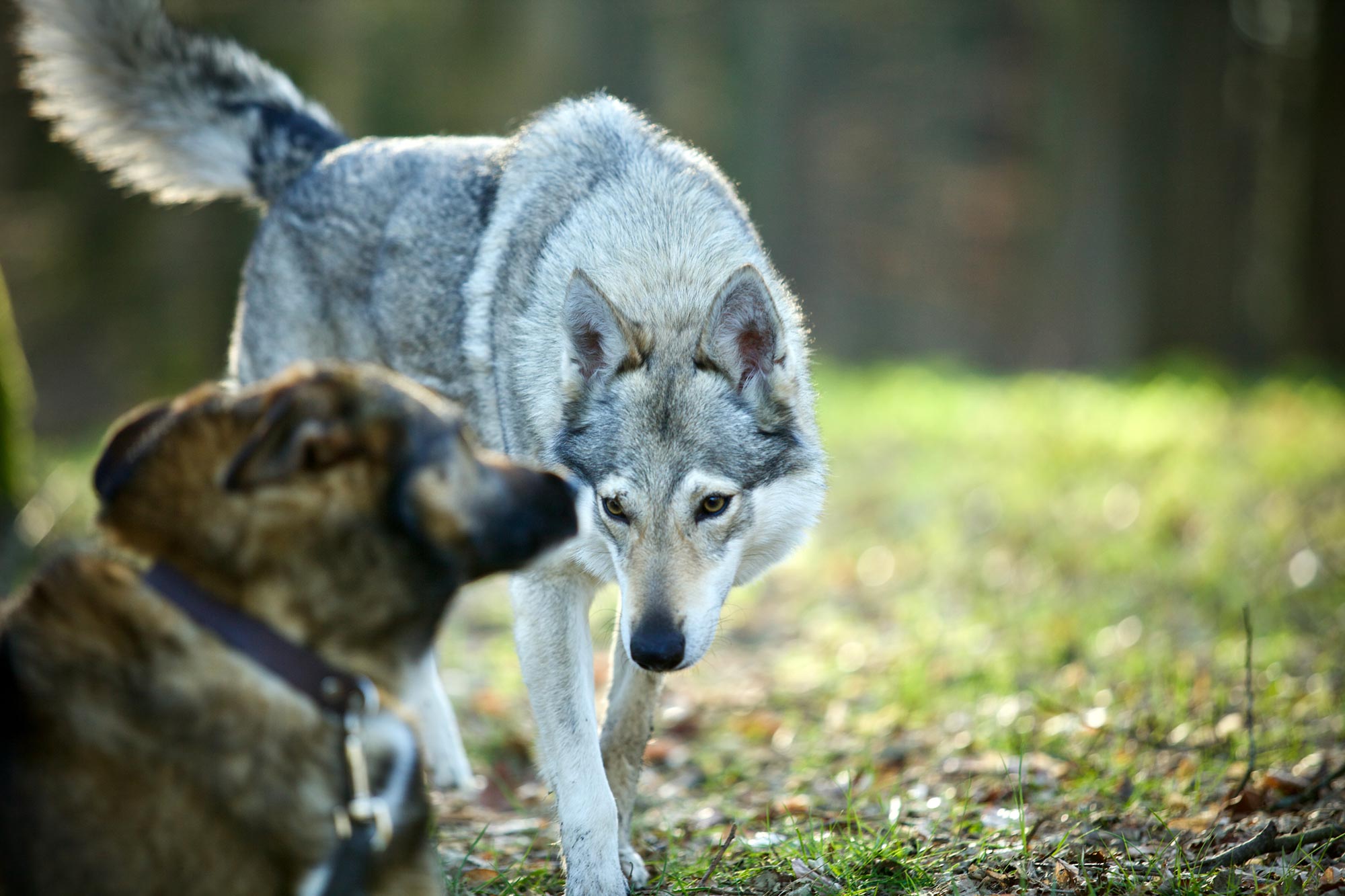
For 15,000 years, humans and dogs have been changing together, creating one of evolution’s most remarkable partnerships.
Dogs have long been known as “man’s best friend,” and archaeology suggests that bond reaches deep into prehistory. Dogs have been discovered buried beside humans in graves dating back 14,000 years. They also appear in ancient artwork from every continent and feature prominently in the mythology, religion, and folklore of cultures around the world.
Archaeological evidence shows that dogs have served people in many ways throughout recorded history. They helped humans hunt, guarded homes, carried loads, herded livestock, and provided companionship.
Today, more dogs live alongside humans than ever before. Over time, people have bred them into hundreds of specialized forms, ranging from chihuahuas small enough to fit in a handbag to Great Danes that can stand waist-high.
How Wolves and Humans Became Partners
But how did such extraordinary diversity emerge over roughly 15,000 years of co-evolution?
In his new book, “First Dogs: Hunter-Gatherers and their Canine Companions from Prehistory to the Present,” archaeologist Professor Peter Mitchell argues that dog domestication was far more complex than a simple story of humans taming wolves.
Instead, people and wolves may initially have participated in the process as relatively equal partners. Hunter-gatherer communities were central to that relationship long before humans began closely managing other animals or plants.
Over time, different patterns of interaction emerged. Dogs developed specialized traits that reflected the environments, lifestyles, and needs of the human societies they lived with.
As Professor Mitchell puts it: “The connections between dogs on the one paw and people dependent on wild plant and animal resources on the other are ancient, diverse, and profound.”
Dogs Adapted to Human Life Around the World
From Arctic tundra to tropical rainforest, dogs changed dramatically as they spread with people into different environments.
That parallel evolution produced strikingly different animals. In the far north, compact dogs with thick coats became well suited to cold conditions and sled pulling. Near the equator, leaner dogs developed traits better suited to heat and hunting.
On the Tibetan Plateau, dogs and their human companions even evolved similar genetic adaptations for life in oxygen-poor air. Researchers have identified genes in Tibetan dogs that help them survive at high elevations where lowland breeds would struggle. These adaptations resemble those found in human populations living in the same region.
“We do not know when dogs first joined them, and the genetic variants needed to thrive there may have been quickly acquired, but until that was achieved hypoxia presumably acted as a constraint on canine presence,” Professor Mitchell explains.
Arctic Dogs Became Essential for Survival
The partnership between dogs and humans became especially specialized in the Arctic, where Indigenous peoples developed highly sophisticated dog sledding cultures.
Archaeological evidence shows that Arctic dogs developed distinctive skeletal features linked to pulling heavy loads. Their remains reveal particular patterns of stress in the vertebrae as well as strong limb bones capable of handling the physical demands of hauling across frozen terrain.
These dogs were much more than a means of transportation. They became a central part of survival strategies that helped humans live in some of the harshest environments on Earth.
Ancient bone analysis also suggests that dogs and people in coastal Arctic regions often ate similar foods. Stable isotope studies indicate that both relied heavily on marine resources, highlighting how closely intertwined their lives had become.
Tropical Dogs Became Specialized Hunters
Dogs living with hunter-gatherer groups in tropical environments followed a very different evolutionary path.
In the rainforests of South America and Southeast Asia, dogs became highly specialized hunting companions. They developed abilities that helped them track animals through dense vegetation and move through difficult terrain.
These tropical dogs generally remained smaller and more agile than their Arctic counterparts, traits that offered clear advantages in forest environments.
Ethnographic accounts suggest that Indigenous communities carefully managed breeding to preserve strong hunting abilities. People selected promising puppies and may sometimes have crossed domestic dogs with wild canids to reintroduce desirable traits.
Dogs Were Also Bred for Culture and Ceremony
Environmental pressures were only part of the story. Human culture and specific practical needs also helped shape the extraordinary variety of dogs found around the world.
Along the Northwest Coast of North America, for example, some Indigenous communities bred small woolly dogs specifically for their hair. Their wool was woven into ceremonial blankets, giving these dogs a role very different from hunting, transport, or guarding.
Elsewhere, dogs became important in spiritual and ceremonial traditions. In those societies, people may have selected animals for physical traits or behaviors that carried particular cultural significance.
Disease May Have Limited Where Dogs Could Live
Disease also appears to have influenced how dog populations spread and evolved.
Researchers are increasingly examining the role of vector-borne diseases in limiting where dogs could survive. In sub-Saharan Africa, conditions such as trypanosomiasis and ehrlichiosis may have created serious barriers to dog populations.
That could help explain why dogs (a temperate to Arctic northern hemisphere species in origin) may have reached some tropical regions and areas farther south relatively late, or remained less common there than in temperate climates.
This adds another dimension to the global history of dogs. Their evolution was shaped not only by the conditions they adapted to, but also by biological threats that restricted where they could successfully live.
Ancient Dog Lineages Have Been Lost
Modern genetic research has revealed another major shift in canine history. Many ancient dog lineages no longer survive in their original form.
European breeds spread widely during colonial expansion and replaced numerous older populations. Even so, traces of ancient dog ancestry remain in some parts of the world, offering genetic clues to the much deeper history of human-dog co-evolution.
Together, archaeological, genetic, and ethnographic evidence reveals a remarkably flexible relationship. Dogs did not simply travel wherever humans went. They changed alongside them, developing specialized traits that made them valuable partners in very different ecological and cultural settings.
That shared evolutionary history also shows how humans and dogs influenced one another’s biology and behavior over thousands of years.
As Professor Mitchell explains: “The process whereby grey wolves became dogs is ongoing, not one marked by a single threshold event. It was likely both long and drawn out.
“The relationship thus constructed has been a joint effort, if one where, especially in the West and over recent centuries, humans have increasingly come to dominate in determining its shape and direction.
“Nevertheless, the way dogs and humans relate – and have related – to each other has value precisely because their mutual, complex entwinement with each other.”
Never miss a breakthrough: Join the SciTechDaily newsletter.
Follow us on Google and Google News.
1 Comment
Realistically, there would have been no need for humans to deliberately back breed to wild canids. A female in heat is unlikely to be ignored by a male of a wild species.