
Close Menu
    Facebook X (Twitter) Instagram
    SciTechDaily
    • Biology
    • Chemistry
    • Earth
    • Health
    • Physics
    • Science
    • Space
    • Technology
    Facebook X (Twitter) Pinterest YouTube RSS
    SciTechDaily
    Home»Space»Analysis of Organic Compounds Extracted From Ryugu Asteroid Opens New Possibilities in Extraterrestrial Life Search
    Space

    Analysis of Organic Compounds Extracted From Ryugu Asteroid Opens New Possibilities in Extraterrestrial Life Search

    By Curtin UniversityJanuary 31, 2024No Comments3 Mins Read
    Facebook Twitter Pinterest Telegram LinkedIn WhatsApp Email Reddit
    Share
    Facebook Twitter LinkedIn Pinterest Telegram Email Reddit
    Asteroid Ingredients of Life
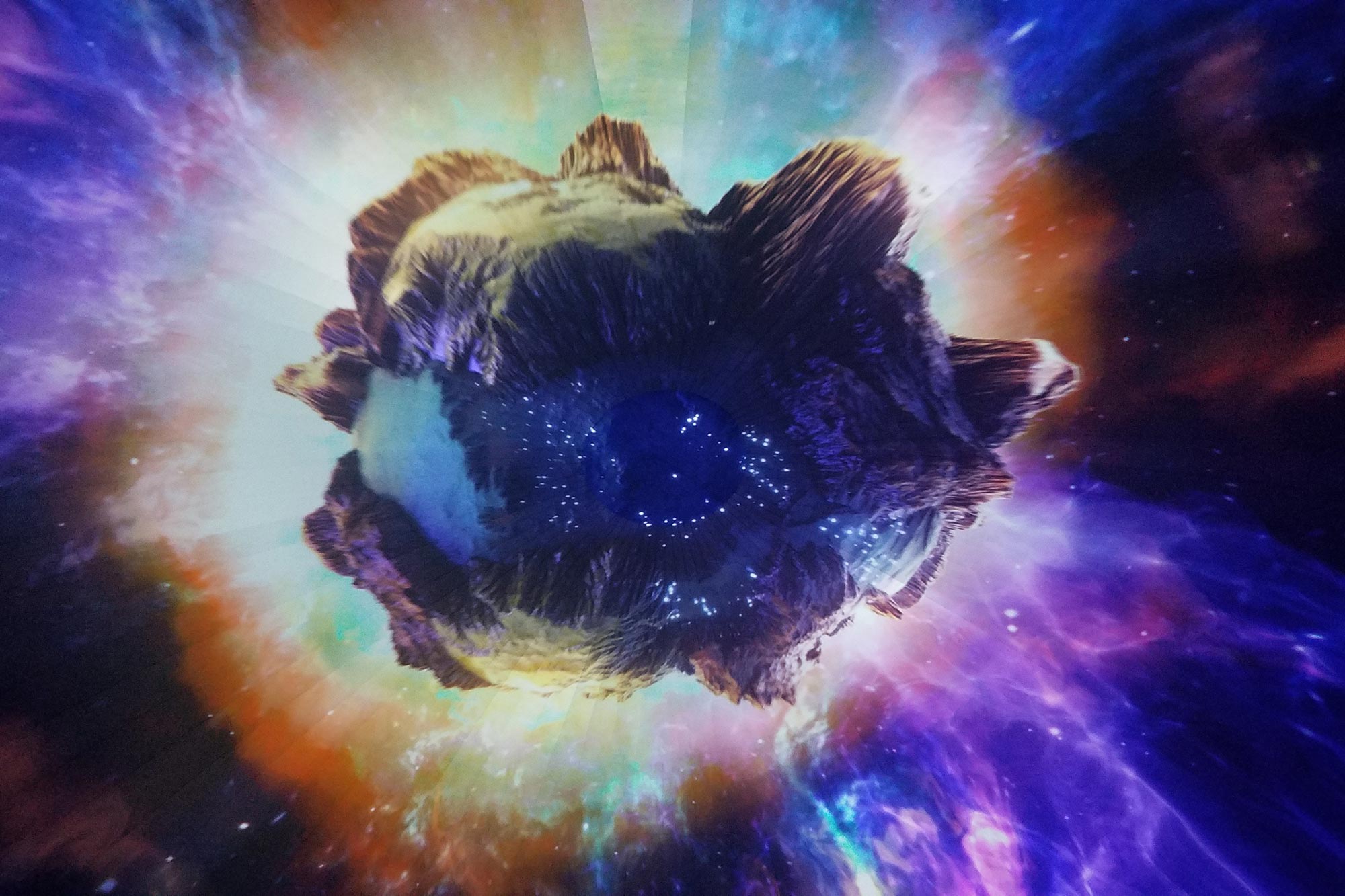
    An international study reveals that certain organic compounds (PAHs) found in the Ryugu asteroid and Murchison meteorite likely originated in the cold areas of space. This finding, derived from controlled burns of plants and comparative analysis, challenges previous beliefs and offers new insights into the chemistry of celestial bodies and the potential for extraterrestrial life.

    The examination of organic compounds known as polycyclic aromatic hydrocarbons (PAHs), obtained from the Ryugu asteroid and Murchison meteorite, reveals that some PAHs probably originated in the cold regions of space between stars, contrary to the earlier belief that they formed near hot star areas. These results open up new possibilities in exploring extraterrestrial life and the chemistry of objects in space.

    The only Australian members of an international research team, scientists from Curtin’s WA-Organic and Isotope Geochemistry Centre (WA-OIGC) carried out controlled burnings of plants to produce PAHs.

    ARC Laureate Fellow John Curtin Distinguished Professor Kliti Grice, director of WA-OIGC, said PAHs are organic compounds made up of carbon and hydrogen that are common on Earth but are also found in celestial bodies like asteroids and meteorites.

    Controlled Burn Experiments

    “We performed controlled burn experiments on Australian plants, which were isotopically compared to PAHs from fragments of the Ryugu asteroid that were returned to Earth by a Japanese spacecraft in 2020, and the Murchison meteorite that landed in Australia in 1969. The bonds between light and heavy carbon isotopes in the PAHs were analyzed to reveal the temperature at which they were formed,” Professor Grice said.

    “Select PAHs from Ryugu and Murchison were found to have different characteristics: the smaller ones likely in cold outer space, while bigger ones probably formed in warmer environments, like near a star or inside a celestial body.”

    Study co-author Dr Alex Holman, also from WA-OIGC, said understanding the isotopic composition of PAHs helps unravel the conditions and environments in which these molecules were created, offering insights into the history and chemistry of celestial bodies like asteroids and meteorites.

    “This research gives us valuable insights into how organic compounds form beyond Earth and where they come from in space,” Dr Holman said.

    “The use of high-tech methods and creative experiments has shown that select PAHs on asteroids can be formed in cold space.”

    Reference: “Polycyclic aromatic hydrocarbons in samples of Ryugu formed in the interstellar medium” by Sarah S. Zeichner, José C. Aponte, Surjyendu Bhattacharjee, Guannan Dong, Amy E. Hofmann, Jason P. Dworkin, Daniel P. Glavin, Jamie E. Elsila, Heather V. Graham, Hiroshi Naraoka, Yoshinori Takano, Shogo Tachibana, Allison T. Karp, Kliti Grice, Alex I. Holman, Katherine H. Freeman, Hisayoshi Yurimoto, Tomoki Nakamura, Takaaki Noguchi, Ryuji Okazaki, Hikaru Yabuta, Kanako Sakamoto, Toru Yada, Masahiro Nishimura, Aiko Nakato, Akiko Miyazaki, Kasumi Yogata, Masanao Abe, Tatsuaki Okada, Tomohiro Usui, Makoto Yoshikawa, Takanao Saiki, Satoshi Tanaka, Fuyuto Terui, Satoru Nakazawa, Sei-ichiro Watanabe, Yuichi Tsuda, Kenji Hamase, Kazuhiko Fukushima, Dan Aoki, Minako Hashiguchi, Hajime Mita, Yoshito Chikaraishi, Naohiko Ohkouchi, Nanako O. Ogawa, Saburo Sakai, Eric T. Parker, Hannah L. McLain, Francois-Regis Orthous-Daunay, Véronique Vuitton, Cédric Wolters, Philippe Schmitt-Kopplin, Norbert Hertkorn, Roland Thissen, Alexander Ruf, Junko Isa, Yasuhiro Oba, Toshiki Koga, Toshihiro Yoshimura, Daisuke Araoka, Haruna Sugahara, Aogu Furusho, Yoshihiro Furukawa, Junken Aoki, Kuniyuki Kano, Shin-ichiro M. Nomura, Kazunori Sasaki, Hajime Sato, Takaaki Yoshikawa, Satoru Tanaka, Mayu Morita, Morihiko Onose, Fumie Kabashima, Kosuke Fujishima, Tomoya Yamazaki, Yuki Kimura and John M. Eiler, 21 December 2023, Science.
    DOI: 10.1126/science.adg6304

    Never miss a breakthrough: Join the SciTechDaily newsletter.
    Follow us on Google and Google News.

    Asteroid Curtin University Geochemistry Meteorites Popular
    Share. Facebook Twitter Pinterest LinkedIn Email Reddit

    Related Articles

    Earth Asteroid Impacts Mirrored on Moon – Including the Dinosaur Killer

    Chelyabinsk Meteorite: Microscopic View on Asteroid Collisions Could Help Us Understand Planet Formation

    Black Beauty: Shock Damage in Martian Zircon a “One-Off Gift” From Mars

    Ancient Space Dust Analysis Could Solve Mystery of Origins of Earth’s Water

    Size Doesn’t Matter: How Deadly a Meteorite Impact Is Depends on Rock Composition

    We Asked a NASA Expert: When Was the Last Time an Asteroid Hit Earth? [Video]

    Earth’s Meteorite Impacts Tracked Over Past 500 Million Years

    Pristine Extraterrestrial Organic Compounds Discovered in “Fireball” Meteorite

    Vesta Meteorites Discovered on Asteroid Bennu by NASA’s OSIRIS-REx Spacecraft

    Leave A Reply Cancel Reply

    • Facebook
    • Twitter
    • Pinterest
    • YouTube

    Don't Miss a Discovery

    Subscribe for the Latest in Science & Tech!

    Trending News

    Scientists Discover Game-Changing New Way To Treat High Cholesterol

    This Small Change to Your Exercise Routine Could Be the Secret to Living Longer

    Scientists Discover 430,000-Year-Old Wooden Tools, Rewriting Human History

    AI Could Detect Early Signs of Alzheimer’s in Under a Minute – Far Before Traditional Tests

    What if Dark Matter Has Two Forms? Bold New Hypothesis Could Explain a Cosmic Mystery

    This Metal Melts in Your Hand – and Scientists Just Discovered Something Strange

    Beef vs. Chicken: Surprising Results From New Prediabetes Study

    Alzheimer’s Breakthrough: Scientists Discover Key Protein May Prevent Toxic Protein Clumps in the Brain

    Follow SciTechDaily
    • Facebook
    • Twitter
    • YouTube
    • Pinterest
    • Newsletter
    • RSS
    SciTech News
    • Biology News
    • Chemistry News
    • Earth News
    • Health News
    • Physics News
    • Science News
    • Space News
    • Technology News
    Recent Posts
    • Revolutionary Imaging Technique Unlocks Secrets of Matter at Extreme Speeds
    • Where Does Mass Come From? Scientists Find Evidence of a New Exotic Nuclear State
    • Quantum Breakthrough: Unhackable Keys Sent Over 120 km Using Quantum Dots
    • Researchers Discover Unknown Beetle Species Just Steps From Their Lab
    • Jellyfish Caught Feasting on Exploding Sea Worms for the First Time
    Copyright © 1998 - 2026 SciTechDaily. All Rights Reserved.
    • Science News
    • About
    • Contact
    • Editorial Board
    • Privacy Policy
    • Terms of Use

    Type above and press Enter to search. Press Esc to cancel.