
Close Menu
    Facebook X (Twitter) Instagram
    SciTechDaily
    • Biology
    • Chemistry
    • Earth
    • Health
    • Physics
    • Science
    • Space
    • Technology
    Facebook X (Twitter) Pinterest YouTube RSS
    SciTechDaily
    Home»Space»Hello Mercury! BepiColombo Spacecraft Captures Image During Gravity Assist Maneuver
    Space

    Hello Mercury! BepiColombo Spacecraft Captures Image During Gravity Assist Maneuver

    By European Space Agency (ESA)October 2, 2021No Comments2 Mins Read
    Facebook Twitter Pinterest Telegram LinkedIn WhatsApp Email Reddit
    Share
    Facebook Twitter LinkedIn Pinterest Telegram Email Reddit
    Hello Mercury
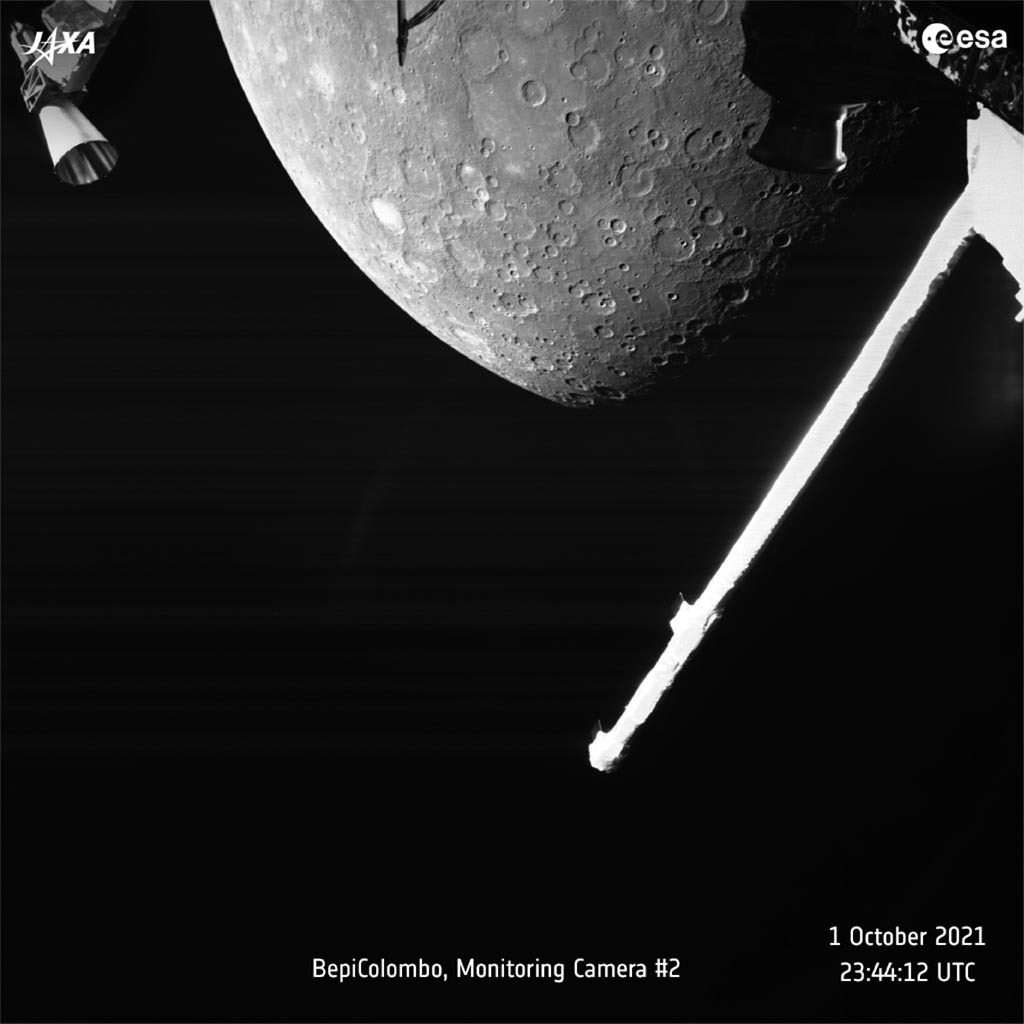
    BepiColombo captured this view of Mercury on October 1, 2021, as the spacecraft flew past the planet for a gravity assist maneuver. Credit: ESA/BepiColombo/MTM, CC BY-SA 3.0 IGO

    BepiColombo snapped a detailed image of Mercury during its first flyby, revealing volcanic plains and craters with rare features. 

    The joint European-Japanese BepiColombo mission captured this view of Mercury on October 1, 2021, as the spacecraft flew past the planet for a gravity assist maneuver.

    The image was taken at 23:44:12 UTC by the Mercury Transfer Module’s Monitoring Camera 2, when the spacecraft was about 2418 km from Mercury. Closest approach of about 199 km took place shortly before, at 23:34 UTC. In this view, north is towards the lower right. The cameras provide black-and-white snapshots in 1024 x 1024 pixel resolution.

    The region shown is part of Mercury’s northern hemisphere including Sihtu Planitia that has been flooded by lavas. A round area smoother and brighter than its surroundings characterizes the plains around the Calvino crater, which are called the Rudaki Plains. The 166 km-wide Lermontov crater is also seen, which looks bright because it contains features unique to Mercury called ‘hollows’ where volatile elements are escaping to space. It also contains a vent where volcanic explosions have occurred. BepiColombo will study these types of features once in orbit around the planet.

    More details and images will be provided later today.

    The gravity assist maneuver was the first at Mercury and the fourth of nine flybys overall. During its seven-year cruise to the smallest and innermost planet of the Solar System, BepiColombo makes one flyby at Earth, two at Venus and six at Mercury to help steer on course for Mercury orbit in 2025. The Mercury Transfer Module carries two science orbiters: ESA’s Mercury Planetary Orbiter and JAXA’s Mercury Magnetospheric Orbiter, which from complementary orbits will study all aspects of mysterious Mercury from its core to surface processes, magnetic field and exosphere, to better understand the origin and evolution of a planet close to its parent star.

    Never miss a breakthrough: Join the SciTechDaily newsletter.
    Follow us on Google and Google News.

    BepiColombo European Space Agency Mercury Planets Popular
    Share. Facebook Twitter Pinterest LinkedIn Email Reddit

    Related Articles

    Stunning Close-Up Images Reveal Mercury’s Icy Craters and Volcanic Plains

    BepiColombo’s Space Odyssey: Third Mercury Flyby Reveals Geological Wonders

    BepiColombo Spacecraft Makes Second Gravity Assist of Planet Mercury – Captures Spectacular Close-Ups

    BepiColombo Spacecraft Lines Up for Second Planet Mercury Flyby

    Hear and Feel BepiColombo Spacecraft’s First Tastes of Mercury Science

    BepiColombo Captures Stunning Mercury Images During Close Gravity Assist Flyby

    Double Venus Flyby! Solar Orbiter and BepiColombo Set To Make Space History

    Top Five Mysteries About the Planet Mercury That BepiColombo Will Solve

    See Last Stunning Snaps of Earth as Spacecraft Completes Flyby on Journey to Mercury

    Leave A Reply Cancel Reply

    • Facebook
    • Twitter
    • Pinterest
    • YouTube

    Don't Miss a Discovery

    Subscribe for the Latest in Science & Tech!

    Trending News

    This Alien Planet Has Rock Clouds That Vaporize Before Sunset

    The Simple Habit That Could Lower Your Cancer Risk

    146,000-Year-Old Discovery Rewrites the Story of Human Creativity

    The Type of Alcohol You Drink Could Affect How Long You Live

    This Common Vitamin May Help Stop Prediabetes From Turning Into Diabetes

    Scientists Finally Solve the Mystery of “Clockwork” Earthquakes

    Breakthrough Parkinson’s Drug Targets Disease at Its Genetic Roots

    Just 4 Weeks of Simple Diet Changes Reversed Signs of Aging in Older Adults

    Follow SciTechDaily
    • Facebook
    • Twitter
    • YouTube
    • Pinterest
    • Newsletter
    • RSS
    SciTech News
    • Biology News
    • Chemistry News
    • Earth News
    • Health News
    • Physics News
    • Science News
    • Space News
    • Technology News
    Recent Posts
    • Researchers Reveal the Surprisingly Easy Habit Linked to Longer Healthier Lives
    • Scientists Discover Grapes Can “Reprogram” Your Skin Against Sun Damage
    • Scientists Create “Trojan Horse” Weight Loss Drug That Supercharges Results
    • Cats Have a Unique Kidney Chemistry That Could Be Harming Their Health
    • Scientists Warn Himalayan Rivers Are Becoming Increasingly Unstable
    Copyright © 1998 - 2026 SciTechDaily. All Rights Reserved.
    • Science News
    • About
    • Contact
    • Editorial Board
    • Privacy Policy
    • Terms of Use

    Type above and press Enter to search. Press Esc to cancel.