
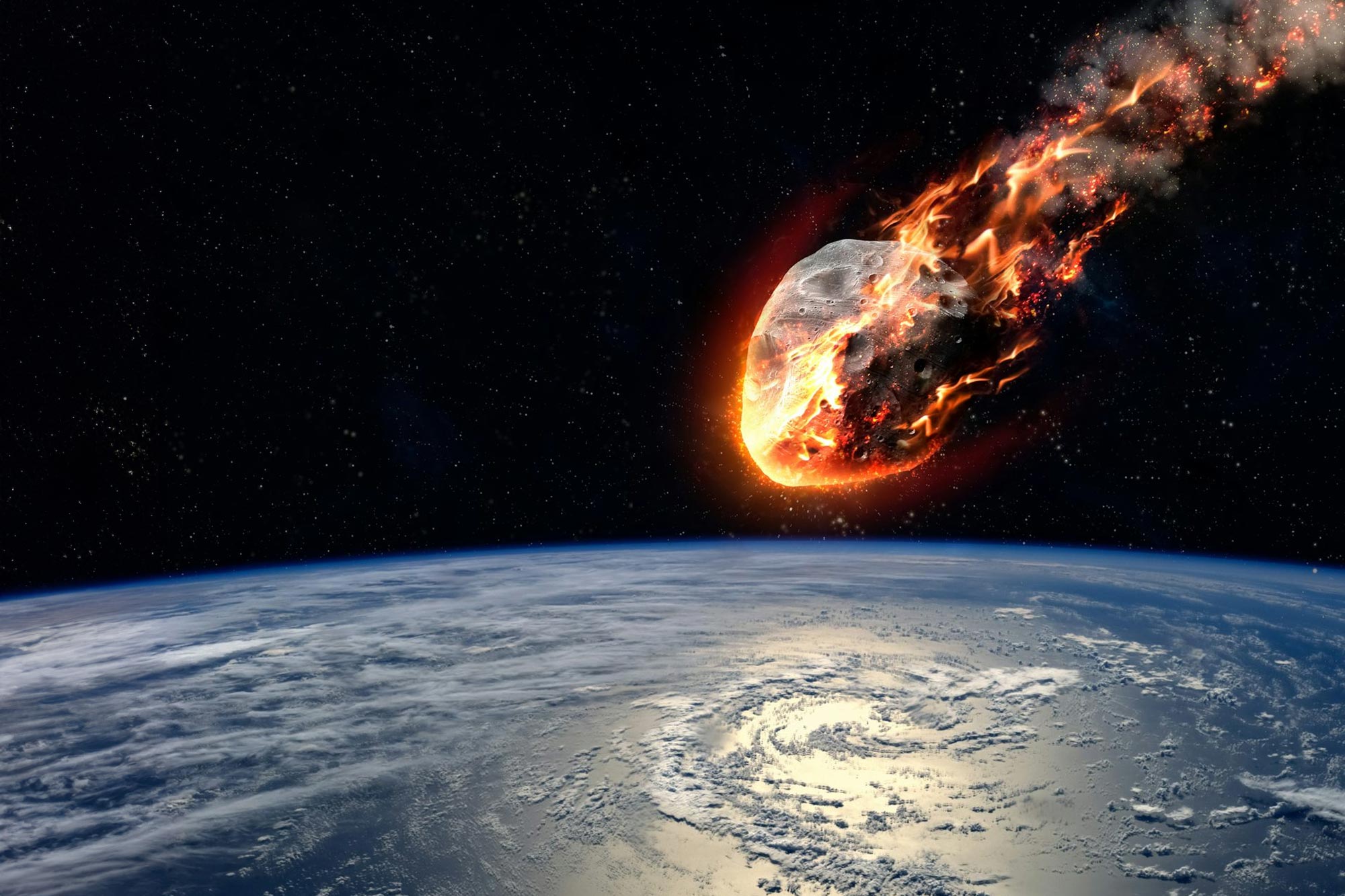
The asteroid that led to the extinction of the dinosaurs 66 million years ago probably came from the outer solar system.
Researchers discovered that the asteroid that wiped out the dinosaurs originated from beyond Jupiter’s orbit, shedding light on a rare cosmic event that caused massive changes on Earth about 66 million years ago.
Origin of the Dinosaur-Killing Asteroid
Geoscientists from the University of Cologne have led an international study to determine the origin of the huge piece of rock that hit the Earth around 66 million years ago and permanently changed the climate. The scientists analyzed samples of the rock layer that marks the boundary between the Cretaceous and Paleogene periods. This period also saw the last major mass extinction event on Earth, in which around 70 percent of all animal species became extinct. The results of the study published in Science indicate that the asteroid formed outside Jupiter’s orbit during the early development of our solar system.
Asteroid Impact and Mass Extinction
According to a widely accepted theory, the mass extinction at the Cretaceous-Paleogene boundary was triggered by the impact of an asteroid at least 10 kilometers in diameter near Chicxulub on the Yucatán Peninsula in Mexico. On impact, the asteroid and large quantities of earth rock vaporized. Fine dust particles spread into the stratosphere and obscured the sun. This led to dramatic changes in the living conditions on the planet and brought photosynthetic activity to a halt for several years.
Tracing Asteroid Origins Through Sediments
The dust particles released by the impact formed a layer of sediment around the entire globe. This is why the Cretaceous-Paleogene boundary can be identified and sampled in many places on Earth. It contains high concentrations of platinum-group metals, which come from the asteroid and are otherwise extremely rare in the rock that forms the Earth’s crust.
Isotopic Analysis Reveals Asteroid Origin
By analyzing the isotopic composition of the platinum metal ruthenium in the cleanroom laboratory of the University of Cologne’s Institute of Geology and Mineralogy, the scientists discovered that the asteroid originally came from the outer solar system.
“The asteroid’s composition is consistent with that of carbonaceous asteroids that formed outside of Jupiter’s orbit during the formation of the solar system,” said Dr. Mario Fischer-Gödde, first author of the study.
Comparison With Other Impact Structures
The ruthenium isotope compositions were also determined for other craters and impact structures of different ages on Earth for comparison. This data shows that within the last 500 million years, almost exclusively fragments of S-type asteroids have hit the Earth. In contrast to the impact at the Cretaceous-Paleogene boundary, these asteroids originate from the inner solar system. Well over 80 percent of all asteroid fragments that hit the Earth in the form of meteorites come from the inner solar system.
Professor Dr. Carsten Münker, co-author of the study, added: “We found that the impact of an asteroid like the one at Chicxulub is a very rare and unique event in geological time. The fate of the dinosaurs and many other species was sealed by this projectile from the outer reaches of the solar system.”
Reference: “Ruthenium isotopes show the Chicxulub impactor was a carbonaceous-type asteroid” by Mario Fischer-Gödde, Jonas Tusch, Steven Goderis, Alessandro Bragagni, Tanja Mohr-Westheide, Nils Messling, Bo-Magnus Elfers, Birger Schmitz, Wolf U. Reimold, Wolfgang D. Maier, Philippe Claeys, Christian Koeberl, François L. H. Tissot, Martin Bizzarro and Carsten Münker, 15 August 2024, Science.
DOI: 10.1126/science.adk4868
Never miss a breakthrough: Join the SciTechDaily newsletter.
Follow us on Google and Google News.
1 Comment
It came from space, right?