
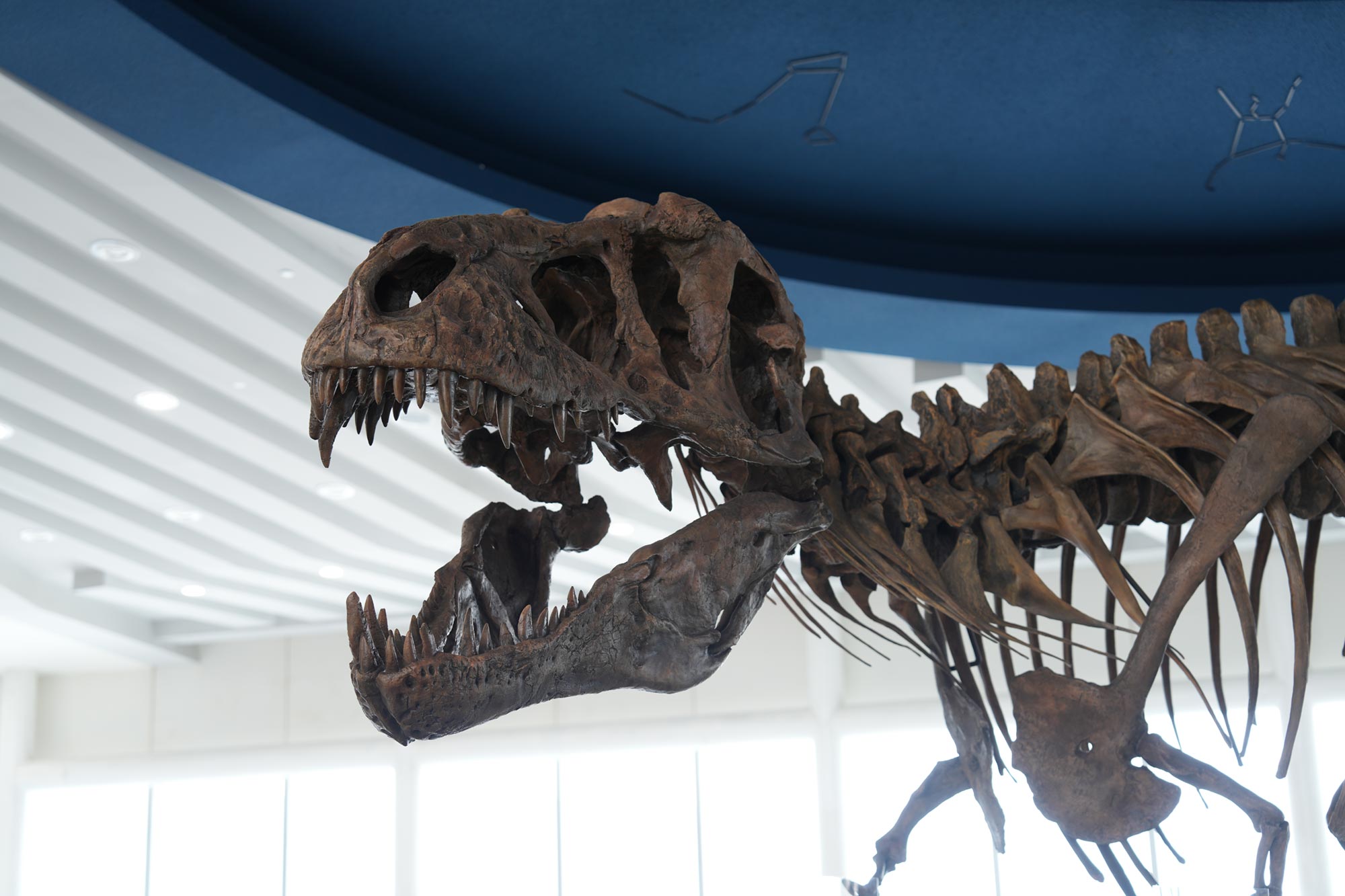
A snapped rib reveals that Scotty, the largest Tyrannosaurus rex skeleton ever found, survived long enough for his body to begin repairing the damage.
Scientists examining Scotty, the largest T. rex skeleton ever discovered, found an extraordinary network of mineralized blood vessels inside one of his fractured ribs. The discovery offers a rare look at how the enormous predator’s body responded to injury 66 million years ago.
At the Department of Energy’s Oak Ridge National Laboratory, the team used neutron imaging to peer deep inside the rib and generate detailed 3D views. The technique revealed signs of preserved soft tissue without damaging the valuable fossil.
A Rare Record of Dinosaur Healing
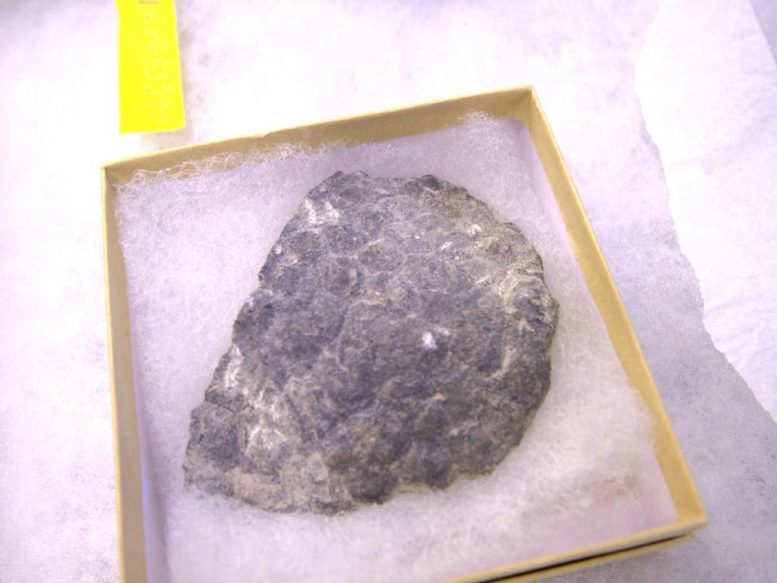
“It’s like winning the lottery,” said Mauricio Barbi, a physics professor at the University of Regina (U of R) in Saskatchewan, Canada. “Scotty’s rib contains a vast network of mineralized blood vessels that has never before been observed in a fossil.”
Fracture repair is an energy-intensive biological process. In a living animal, blood vessels grow around an injury to deliver oxygen, nutrients, and cells that rebuild damaged tissue. Scotty’s rib captured evidence of this response before healing was complete, creating a record of how a giant predatory dinosaur recovered from trauma.
Scotty died before the fracture had fully mended and was buried in a salty marsh. Those conditions slowed decomposition and helped preserve delicate structures that usually disappear long before bone becomes fossilized.
“Every fossil is a tiny snapshot of the past,” said Jerit Mitchell, a U of R doctoral candidate in physics who leads the project under Barbi’s supervision.
University of Regina scientists used neutrons at ORNL to map preserved soft tissue in an unhealed T. rex rib. Iron-rich blood and the salty marsh where the animal died helped preserve the delicate structures, and neutrons’ sensitivity to light elements made these long-hidden details visible. This animation contains an image published under CC BY 4.0 International Deed and altered in accordance with the license. Credit: Phoenix Pleasant/ORNL, U.S. Dept. of Energy
Fossils From the Final Dinosaur Era
Royal Saskatchewan Museum teams discovered Scotty in Saskatchewan’s Frenchman River Valley, one of North America’s richest dinosaur fossil regions. Its rocks date to the closing chapter of the Cretaceous Period and preserve ecosystems that existed shortly before the mass extinction that eliminated all nonavian dinosaurs.
Scotty is notable not only for his enormous size but also for the injuries preserved across his skeleton. He lived long enough for some wounds to begin healing, making his bones a valuable record of the hazards faced by an adult T. rex.
Researchers are also examining fossilized amber, dinosaur scales, and bones from other species. Together, these specimens can reveal details about ancient anatomy, disease, injury, and the environments in which dinosaurs lived.
“By piecing the clues together, we understand the past and how things could evolve in the future,” said Marcella Berg, a U of R assistant professor of physics and former ORNL postdoctoral researcher.
Why Scientists Combine X-Rays and Neutrons
The discovery emerged through several imaging methods that reveal different parts of a fossil. X-rays are especially effective at showing dense materials and heavier elements, while neutrons can detect light elements such as hydrogen with exceptional sensitivity.
The contrast resembles the difference between a medical X-ray, which clearly shows bone, and an MRI, which emphasizes muscles and other soft tissues. Combining these approaches gives researchers a more complete view than either method can provide alone.
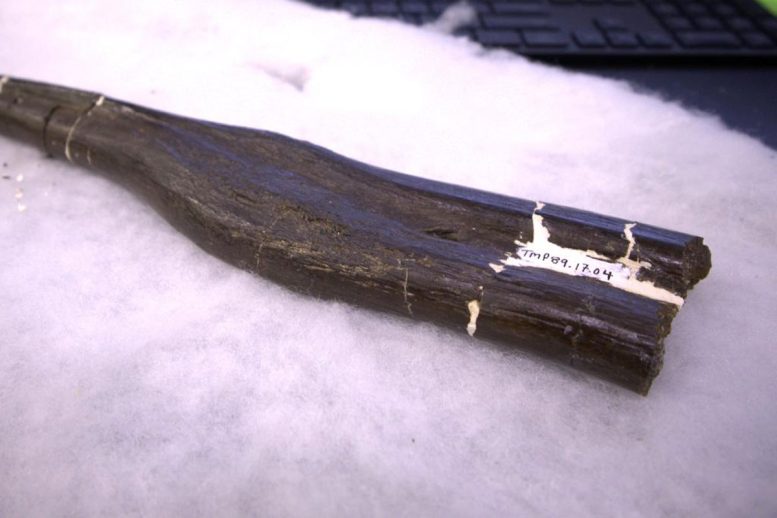
The project began in 2020, when Mitchell was an undergraduate at U of R and detected possible blood vessels in Scotty’s rib. Using micro-CT scanning at the Canadian Light Source, he examined slices taken from the fossil and confirmed the presence of fossilized soft tissue without further altering them.
The team later paired microscopy with additional X-ray methods, including synchrotron radiation at the Canadian Light Source. These studies exposed the healing injury and preserved tissues at the cellular level, but the researchers needed neutrons to search for further chemical and structural clues.
Scanning Scotty’s Rib in 3D
In April 2026, the scientists brought the fossils to two ORNL facilities. They used the MARS instrument at the High Flux Isotope Reactor and the VENUS instrument at the Spallation Neutron Source to test their earlier findings and examine specimens ranging from small scales to Scotty’s massive rib.
“Neutrons not only corroborated what we found with synchrotron radiation techniques that led to the discovery of blood vessels in Scotty’s rib, but they also proved to be a highly valuable addition to our current studies in search of soft tissue preservation in fossils,” Berg said. “This gives us an incredible amount of detail to better understand these properties without affecting the samples.”
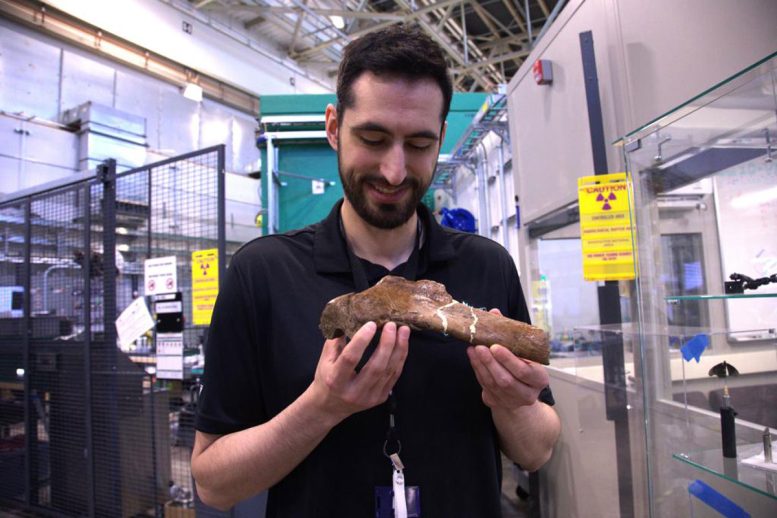
MARS produces cold neutrons that can reveal subtle contrasts, hydrogen-rich regions, and possible soft tissue signatures. The team used it to create high-resolution images of amber, fossilized scales, and smaller bones.
VENUS generates high-energy neutrons capable of penetrating much larger specimens. It allowed the researchers to look deep inside Scotty’s rib and construct high-resolution 3D views of features hidden beneath the surface.
A New Way to Examine Ancient Life
As neutrons pass through a specimen, they interact with its atoms, particularly hydrogen atoms. Scientists measure those interactions and convert the resulting data into images, exposing internal details that may remain invisible to conventional scanning methods.
“People often think of neutrons as tools for studying batteries or advanced materials, but they’re just as innovative for answering questions about ancient life,” said Hassina Bilheux, lead instrument scientist for VENUS.
The team will continue analyzing the MARS and VENUS data while expanding the research to other fossils. Comparing healed injuries across species could help scientists investigate dinosaur biology, identify signs of disease, and determine how ancient healing processes resemble those of animals alive today.
“There are more fossils than you think sitting in collections, hiding secrets from millions of years ago,” Mitchell said. “Putting them in a synchrotron or neutron source allows us to make new discoveries about ancient life like never before.”
Never miss a breakthrough: Join the SciTechDaily newsletter.
Follow us on Google and Google News.