
Close Menu
    Facebook X (Twitter) Instagram
    SciTechDaily
    • Biology
    • Chemistry
    • Earth
    • Health
    • Physics
    • Science
    • Space
    • Technology
    Facebook X (Twitter) Pinterest YouTube RSS
    SciTechDaily
    Home»Science»Jurassic Dinosaurs Turned to Scavenging – Maybe Even Cannibalism – In Stressed Ecosystems
    Science

    Jurassic Dinosaurs Turned to Scavenging – Maybe Even Cannibalism – In Stressed Ecosystems

    By PLOSMay 27, 2020No Comments3 Mins Read
    Facebook Twitter Pinterest Telegram LinkedIn WhatsApp Email Reddit
    Share
    Facebook Twitter LinkedIn Pinterest Telegram Email Reddit
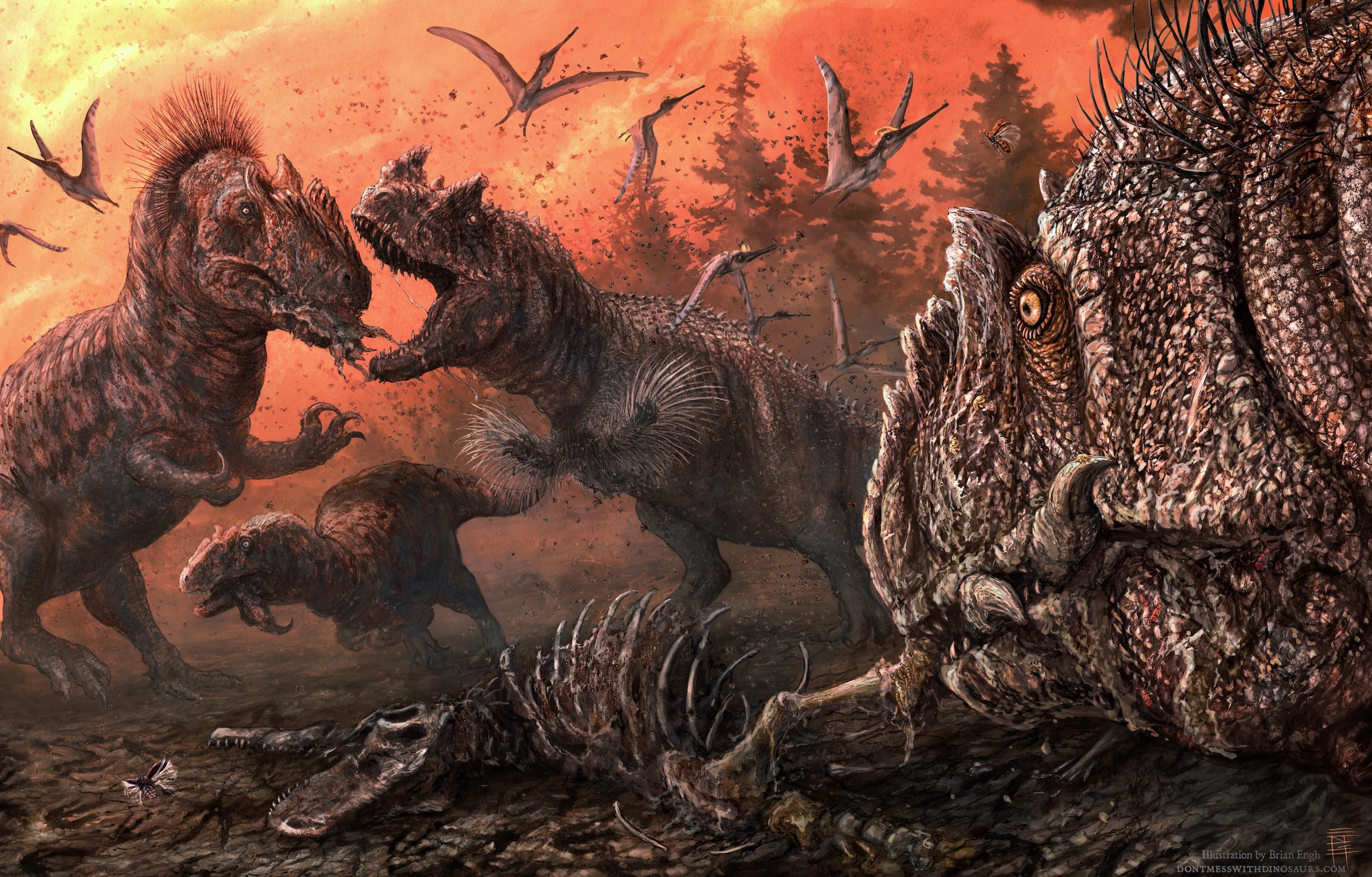
    Theropod Cannibals Late Jurassic
    Theropod cannibals in a stressed Late Jurassic ecosystem. Credit: Brian Engh

    In Colorado quarry: Oddly abundant scavenging and first evidence of Allosaurus cannibals.

    Among dinosaurs of ancient Colorado, scavenging and possibly cannibalism were responses to a resource-scarce environment, according to a study published May 27, 2020, in the open-access journal PLOS ONE by Stephanie Drumheller of the University of Tennessee, Knoxville, and colleagues.

    Tooth marks on fossil bones can be excellent evidence of ancient feeding habits, but such marks left by carnivorous dinosaurs (theropods) are typically very rare. The Mygatt-Moore Quarry of Colorado, dating back to the late Jurassic Period around 150 million years ago, is an exception. In this study, Drumheller and colleagues found that nearly 29% of 2,368 examined bones from the quarry bore the bites of theropod dinosaurs.

    Examining the damage left by the serrated edges of the dinosaurs’ teeth, the authors infer that the bulk of these bites were most likely made by the large predator Allosaurus, the most common theropod found in the quarry. While most of the bites were found on the bones of herbivorous dinosaurs, about 17% were bites that theropods had made on the bones of other theropods — and around half of these bites targeted less nutritious body parts, suggesting the action of scavengers who arrived after the best bits had decomposed or been eaten by earlier carnivores.

    The authors suggest this unusual assemblage is the result of an ancient environment where carcasses were buried slowly, providing ample time for scavengers to find them. The high incidence of scavenging may be the result of a stressed ecosystem whose large predators suffered a scarcity of food. Additionally, since many of the presumed Allosaurus bite marks were found on the bones of other Allosaurus, these might represent rare evidence of dinosaur cannibalism, and the first such evidence for the behavior in this famous Jurassic predator.

    Dr. Drumheller adds: “Big theropods like Allosaurus probably weren’t particularly picky eaters, especially if their environments were already strapped for resources. Scavenging and even cannibalism were definitely on the table.”

    Reference: “High frequencies of theropod bite marks provide evidence for feeding, scavenging, and possible cannibalism in a stressed Late Jurassic ecosystem” by Stephanie K. Drumheller, Julia B. McHugh, Miriam Kane, Anja Riedel and Domenic C. D’Amore, 27 May 2020, PLOS ONE.
    DOI: 10.1371/journal.pone.0233115

    This research was funded by the David B. Jones Foundation to JBM and SKD. The funders had no role in study design, data collection and analysis, decision to publish, or preparation of the manuscript.

    Never miss a breakthrough: Join the SciTechDaily newsletter.
    Follow us on Google and Google News.

    Archaeology Dinosaurs PLOS Popular
    Share. Facebook Twitter Pinterest LinkedIn Email Reddit

    Related Articles

    Ancient Hawk-Sized Birds With Raptor-Like Feet Discovered in Montana

    Tracking Gigantic Carnivorous Dinosaurs From Australia’s Jurassic Park

    Researchers Stunned to Discover Ancient Crocodiles That Walked on Two Legs

    Evidence T. Rex’s Long Legs Evolved for Distance, Not Speed Like Previously Thought

    Neandertals Dove Underwater to Collect Clam Shells to Use as Tools

    The ‘Firewalkers’ of Karoo: Dinosaurs Left Tracks in a ‘Land of Fire’ 183 Million Years Ago

    Growing Up Tyrannosaurus Rex: Researchers Learn More About Teen-Age T.Rex

    Researchers Discover Two New Chinese Dinosaurs: Bannykus and Xiyunykus

    Newly Discovered Fossils Reveal Man’s Earliest Ancestors

    Leave A Reply Cancel Reply

    • Facebook
    • Twitter
    • Pinterest
    • YouTube

    Don't Miss a Discovery

    Subscribe for the Latest in Science & Tech!

    Trending News

    The Universe Is Expanding Too Fast and Scientists Can’t Explain Why

    “Like Liquid Metal”: Scientists Create Strange Shape-Shifting Material

    Early Warning Signals of Esophageal Cancer May Be Hiding in Plain Sight

    Common Blood Pressure Drug Shows Surprising Power Against Deadly Antibiotic-Resistant Superbug

    Scientists Uncover Dangerous Connection Between Serotonin and Heart Valve Disease

    Scientists Discover a “Protector” Protein That Could Help Reverse Hair Loss

    Bone-Strengthening Discovery Could Reverse Osteoporosis

    Scientists Uncover Hidden Trigger Behind Stem Cell Aging

    Follow SciTechDaily
    • Facebook
    • Twitter
    • YouTube
    • Pinterest
    • Newsletter
    • RSS
    SciTech News
    • Biology News
    • Chemistry News
    • Earth News
    • Health News
    • Physics News
    • Science News
    • Space News
    • Technology News
    Recent Posts
    • Scientists Overcome Major Quantum Bottleneck, Potentially Transforming Teleportation and Computing
    • Quantum Physics’ Strangest Problem May Hold the Key to Time Itself
    • Scientists Create “Liquid Gears” That Spin Without Touching
    • The Simple Habit That Could Help Prevent Cancer
    • Forgotten Medicinal Plant Shows Promise in Fighting Dangerous Superbugs
    Copyright © 1998 - 2026 SciTechDaily. All Rights Reserved.
    • Science News
    • About
    • Contact
    • Editorial Board
    • Privacy Policy
    • Terms of Use

    Type above and press Enter to search. Press Esc to cancel.