
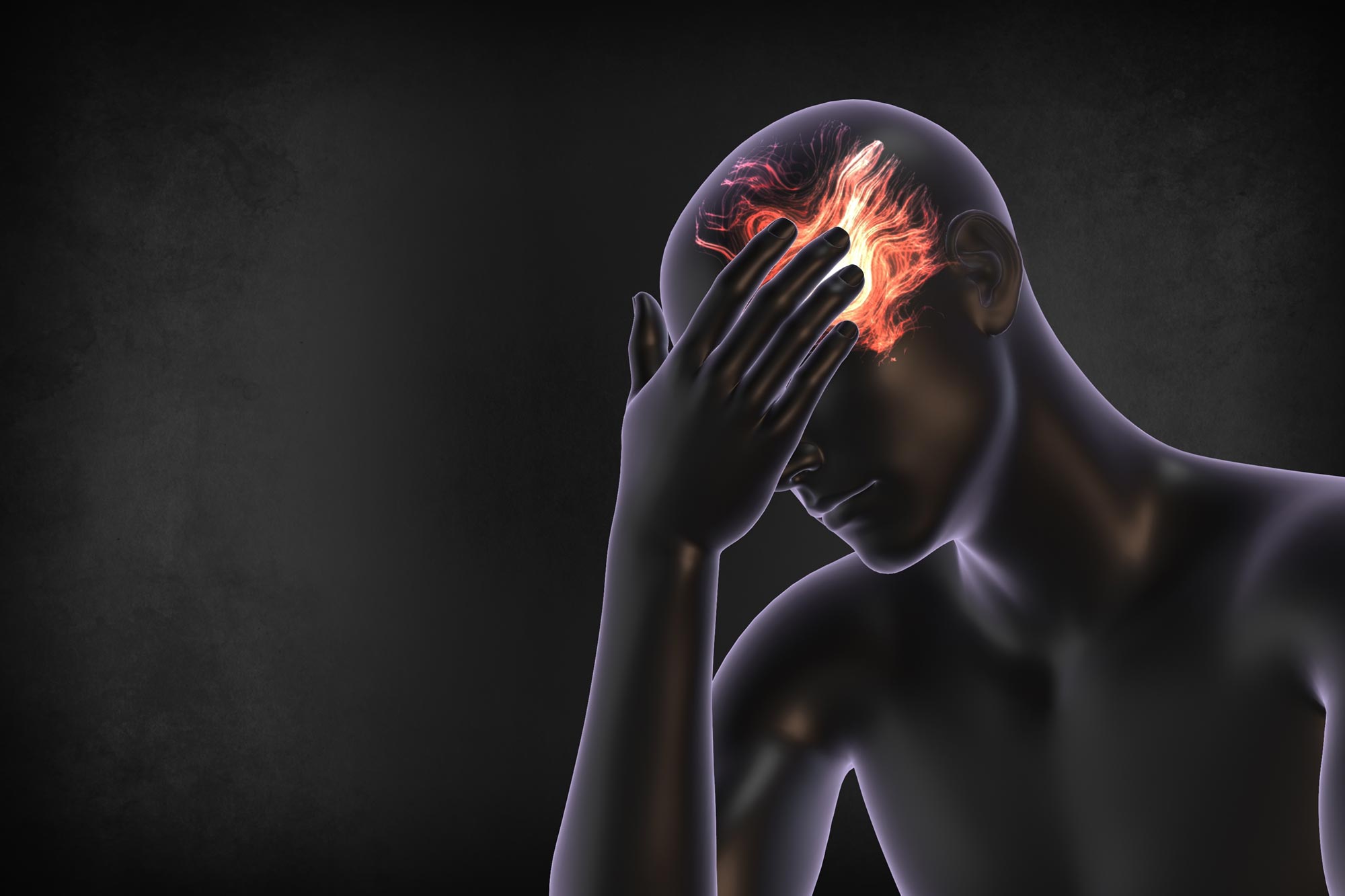
Cortisol strengthens emotional memories by reshaping how brain networks for emotion and memory work together.
Stress does not strengthen every memory equally. New research suggests that cortisol, a hormone released during stressful situations, changes brain activity in ways that strengthen memories of experiences a person finds emotionally intense.
Yale researchers found that cortisol affected two distinct brain networks, one associated with emotional intensity and another with memory formation. It also increased coordination between them, offering a more detailed explanation for how stress can strengthen emotional memories.
“We all experience stress, and my lab is interested in understanding how stress can be helpful,” said corresponding author Elizabeth Goldfarb, an assistant professor of psychiatry at Yale School of Medicine and of psychology in the Faculty of Arts and Sciences.
Scientists already knew that stress and cortisol can strengthen emotional memories in both humans and rodents. Brain regions such as the amygdala are necessary for some of these effects, but individual brain regions can participate in several mental processes at once. That has made it difficult to determine how cortisol separately affects the processes involved in experiencing something as emotional and storing it as a lasting memory.
“Forming memories for emotional experiences involves different processes in the brain: first, perceiving an experience as emotional or intense, and second, encoding that experience into long-term memory,” said Goldfarb, who is also a member of Yale’s Wu Tsai Institute, an interdisciplinary research initiative that explores cognition.
Five-second brain activity separates two processes
To separate those processes, the researchers gave participants either hydrocortisone, which mimics the effects of cortisol, or a placebo before they viewed pictures inside a functional MRI scanner. Participants rated how they felt about each image, and researchers tested their memory for the pictures the following day.
Each person completed the experiment twice, once with hydrocortisone and once with placebo. Neither the participants nor the experimenter knew which pill had been given during each session.
The researchers then analyzed how different parts of the brain worked together during each individual picture viewing, a period of about five seconds. Functional MRI measures changes in oxygenated blood flow to provide an indirect measure of brain activity.
Studies of functional connectivity typically use several minutes of brain scan data to examine how synchronized activity is across different regions. In this study, the researchers instead asked whether patterns of connectivity during a single trial could predict two separate outcomes: how emotionally intense a participant found an image and whether that image would be remembered the next day.
Both predictions were successful. This allowed the researchers to identify separate dynamic brain networks associated with emotional intensity and memory formation.
Cortisol reshapes emotion and memory differently
They then examined how cortisol affected each network.
Cortisol made the networks associated with emotional intensity more consistent and more strongly engaged. Its effect on memory networks was different: those networks became more specialized for emotional content.
Cortisol also increased coordination between the emotion and memory networks. Together, these changes helped explain how cortisol enhanced memory for emotionally intense experiences.
The findings suggest that cortisol does not simply increase activity in one particular brain region. Instead, it changes how multiple networks involved in emotion and memory operate and interact.
Stress favors emotionally intense memories
The results also help explain why stress can sometimes strengthen memory. The benefit was specific to experiences that people found emotionally intense or meaningful.
“Stress responses are fundamentally adaptive and can help you form strong memories — but this is specific to experiences that you find to be emotionally intense or meaningful,” Goldfarb said. “This is in part related to your brain increasing engagement of networks that track emotional intensity. So, if you are stressed out and trying to learn something new, it might help to think about exciting elements or strong feelings connected to what you are learning.”
Reference: “Dynamic brain mechanisms supporting salient memories under cortisol” by Yuye Huang, David O’Connor, Bailey B. Harris, Rajita Sinha, R. Todd Constable and Elizabeth V. Goldfarb, 10 December 2025, Science Advances.
DOI: 10.1126/sciadv.adz4143
This work was supported by the National Institutes of Health grants KL2TR001862 (to E.V.G.) and K01AA027832 (to E.V.G.).
Never miss a breakthrough: Join the SciTechDaily newsletter.
Follow us on Google and Google News.