
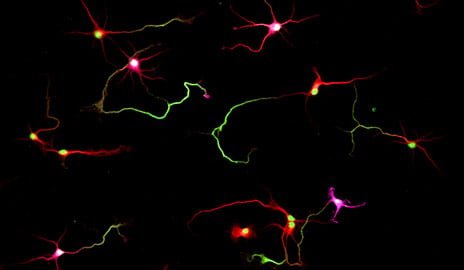
A team of researchers has uncovered a new pathway to help treat perinatal brain injuries, revealing that a synthetic molecule derived from the embryo called PreImplantation Factor (sPIF) protects against neuronal death and brain injury by targeting let-7.
Researchers at Yale School of Medicine and their colleagues have uncovered a new pathway to help treat perinatal brain injuries. This research could also lead to treatments for traumatic brain injuries and neurodegenerative disorders such as Alzheimer’s and Parkinson’s.
The findings will be published in the journal Proceedings of the National Academy of Science.
The MicroRNA molecule let-7 is known to cause the death of neurons in the central nervous system. The research team found that a synthetic molecule derived from the embryo called PreImplantation Factor (sPIF) protects against neuronal death and brain injury by targeting let-7.
“We would never have connected the dots between PIF and let-7 without prior knowledge and experience on let-7 and H19, a developmentally regulated gene that is highly expressed in the developing embryo,” said senior author Dr. Yingqun Huang, associate professor in the Department of Obstetrics, Gynecology & Reproductive Sciences at Yale School of Medicine.
Using a rat perinatal brain injury model, Huang and the team found that sPIF rescued damaged neurons and reduced inflammation. The team performed a series of in vivo and in vitro experiments and found that sPIF helped to stop the production of let-7. “We showed that sPIF works by destabilizing the key microRNA processing protein called KH-type splicing regulatory protein,” said Huang.
Lead author Martin Mueller, who helped develop the rat perinatal brain injury model, was surprised at the consistency of the results from both the in vivo and in vitro studies. “Collectively, our findings suggest that sPIF mitigates brain damage through a novel pathway,” said Mueller. “We saw more cortical brain volume and more neurons restored in brain damaged animals receiving sPIF.”
“For the first time, we have clear indication to pursue a new line of investigation in the treatment of perinatal brain injury, and possibly traumatic brain injury,” said co-author Dr. Michael Paidas, professor in the Department of Obstetrics, Gynecology & Reproductive Sciences at Yale School of Medicine.
Paidas, who is also vice chair of obstetrics at Yale, has helped to identify PIF’s effects with co-author Eytan R. Barnea, founder of the Society for the Investigation of Early Pregnancy (SIEP) and chief scientific officer of BioIncept, LLC. Barnea discovered and characterized PIF and described key elements of its mode of action.
Based on this promising data, the FDA has awarded sPIF fast-track designation and allowed a phase 1 sPIF clinical trial to treat patients with autoimmune liver disease at the University of Miami.
In addition to Huang, Paidas, Mueller, and Barnea, other authors on the study include Jichun Zhou, Lihua Yang, Yuan Gao, and Fuju Wu of Yale; and Andreina Schoeberlein and Daniel Surbek of the University of Bern, Switzerland.
Reference: “Preimplantation factor promotes neuroprotection by targeting microRNA let-7” by Martin Mueller, Jichun Zhou, Lihua Yang, Yuan Gao, Fuju Wu, Andreina Schoeberlein, Daniel Surbek, Eytan R. Barnea, Michael Paidas and Yingqun Huang, 9 September 2014, Proceedings of the National Academy of Sciences.
DOI: 10.1073/pnas.1411674111
Never miss a breakthrough: Join the SciTechDaily newsletter.
Follow us on Google and Google News.
1 Comment
Excellent, the QUANTUM-SPACE-EXPANDS to the next phase, the CEATION of the COSMIC EGG-SPACE, concave-convex are equal and rotate to form an egg from inside to-out-side, due to arc-rotational- degree difference .
‘ET’ ALIA