
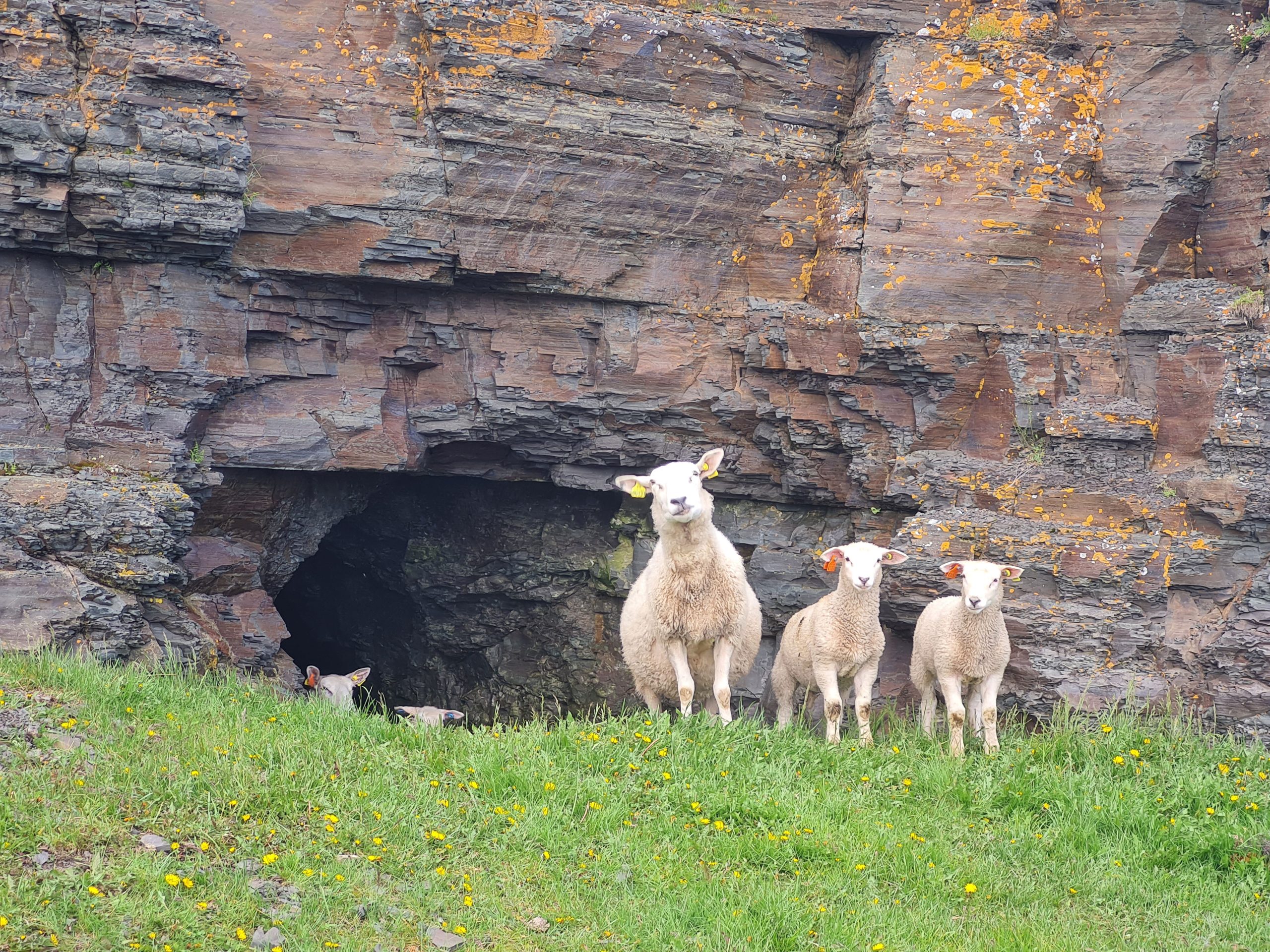
One of the oldest known animal fossils preserved in three dimensions has been discovered in a sheep field in the Norwegian Arctic, marking the first major new fossil site of its kind found in Europe in decades.
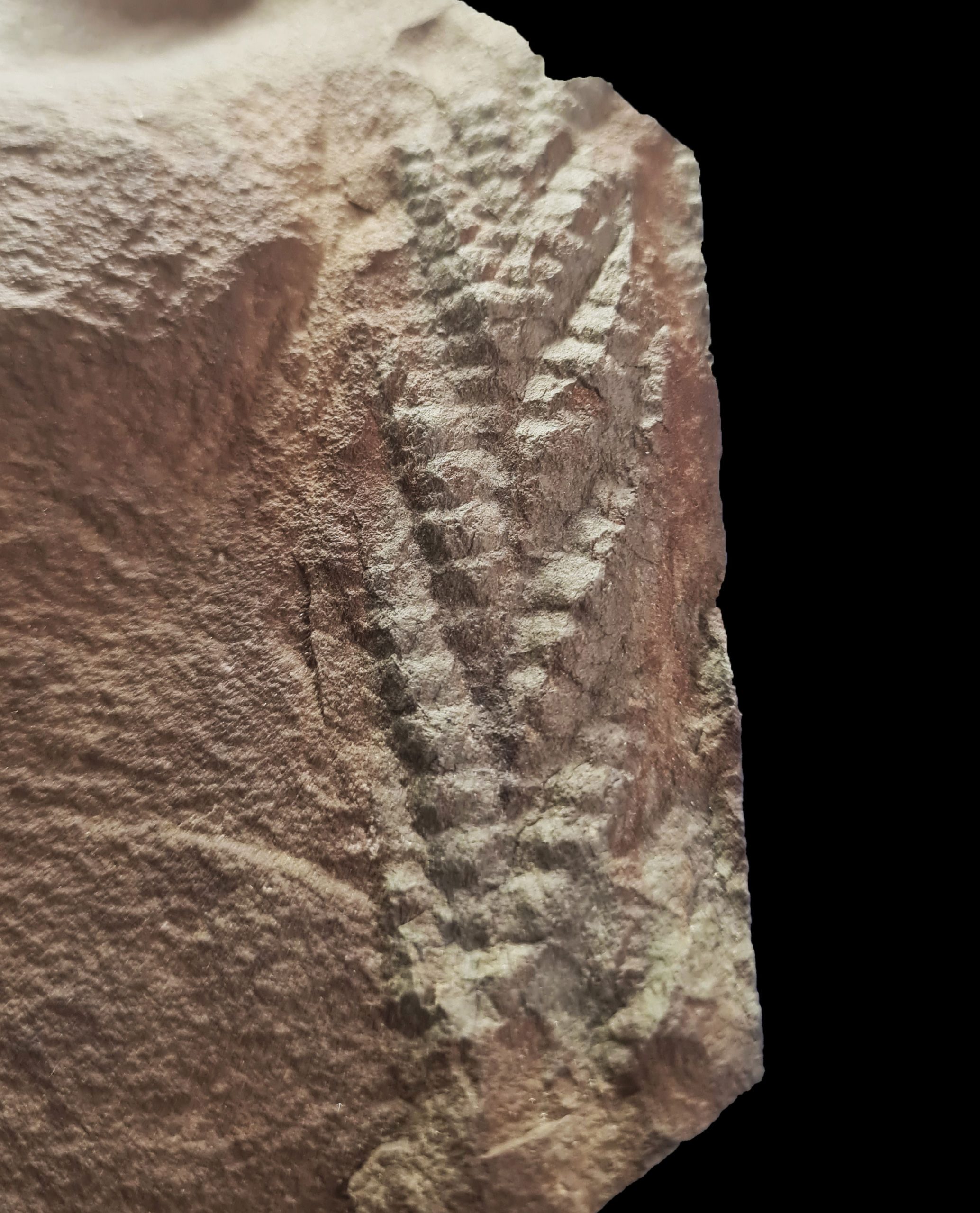
Rocks that fell from a cliff and split open in a sheep field in the Norwegian Arctic revealed a fern-shaped creature that lived 560 million years ago. Called Charnia, it is thought to be one of the earliest animals. This specimen preserved its shape in three dimensions, making it one of the oldest known animal fossils of its kind.
The discovery in Finnmark is the first confirmed Charnia find in Scandinavia and marks the first major new fossil site of this type in Europe in decades. Nearby rocks had previously yielded traces of organisms anchoring themselves to the ancient seafloor, but no fossils of the organisms themselves. The broken rocks in the sheep field exposed a much richer fossil record.
Soft bodies leave few fossils
These organisms lived during the Ediacaran Period, when complex life first appeared on Earth. Much of what scientists know about them comes from a small number of places, partly because the rocks that could preserve them are themselves difficult to find.
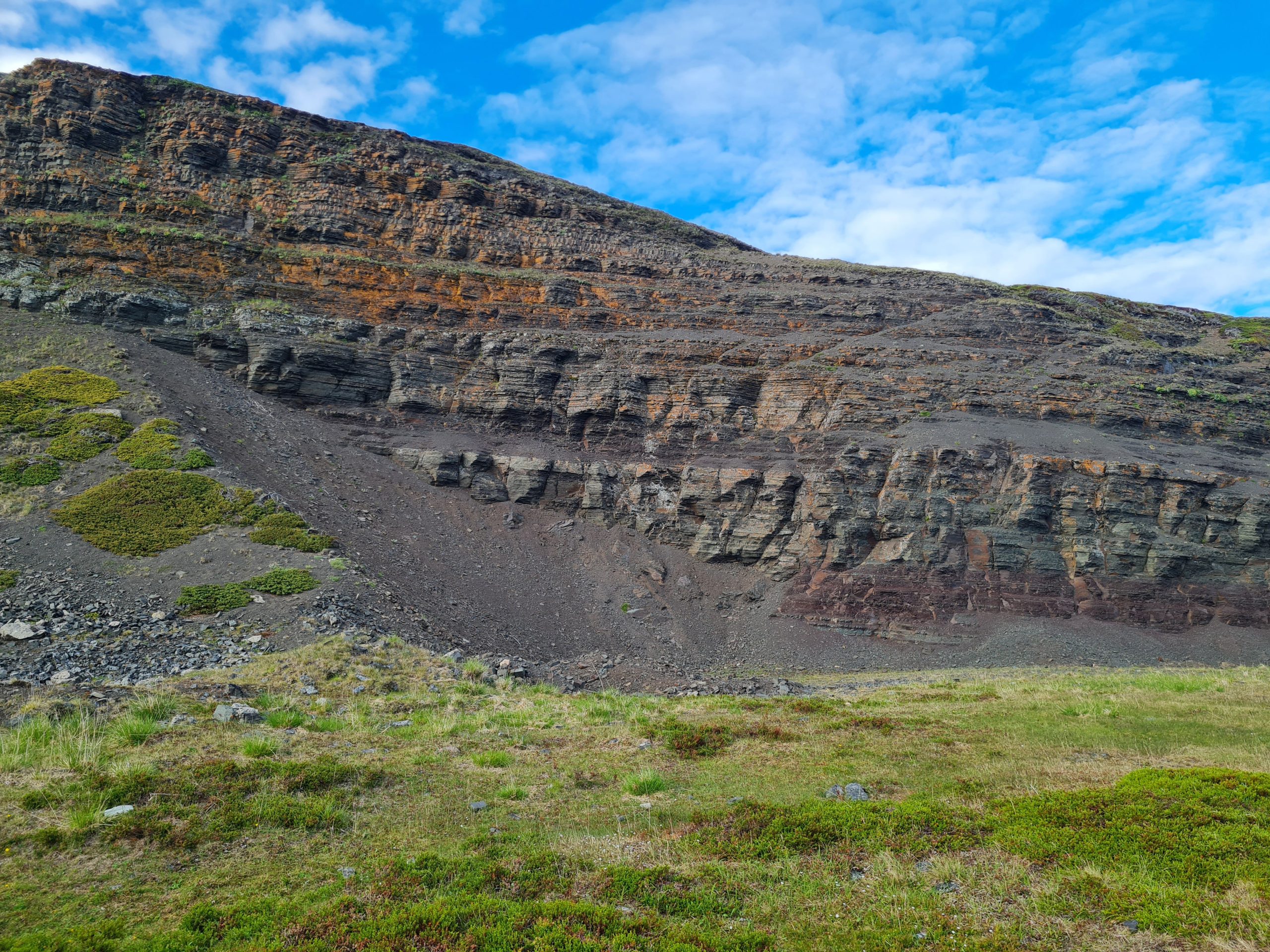
“This time period also does not have a widespread rock record,” said lead author Dr. Yorick Veenma, from the University of Cambridge’s Department of Earth Sciences. “Fossils need to be embedded within sedimentary rocks to be found, so if the rocks themselves are less common, then that makes the fossils harder to find. Most Ediacaran fossils come from just a handful of locations, which makes it exciting to find them somewhere new.”
The organisms’ bodies pose another challenge. Despite its fernlike appearance, Charnia had no mouth, organs, or visible means of movement. It was essentially a “goo-filled bag” resembling a jellyfish that stayed in one place.
“As a fossil record, the Ediacaran has several things working against it, primarily that most organisms were soft-bodied and skeletons hadn’t evolved yet, so that they are harder to preserve,” said co-author Professor Neil Davies, also from Cambridge’s Department of Earth Sciences. “A lot of fossils from the period occur as impressions where they’ve been squashed down under layers of rock.”
An avalanche preserved hidden details
An underwater avalanche gave the Norwegian specimen a different fate. The creature was swept up and rapidly buried in the seabed, where sediment filled its body and preserved its three-dimensional form. Such preservation is exceptionally rare for a soft-bodied organism, especially one this old.
That extra dimension allowed the Cambridge-led team to examine features that flattened specimens had not revealed. Along each branch, the researchers identified subtle ridges called keels. They reported their findings in the journal Palaeontology.
“When you see the same species preserved in a different way, you start noticing properties you hadn’t seen before,” Veenma said.
Finnmark expands the early animal map
The location adds to the discovery’s significance. Ediacaran fossils are known from several parts of the world, but finding them in Finnmark suggests that the earliest animals may have been more widely distributed than the known sites indicated. Other little-explored areas could also contain evidence of these organisms, including places where no fossils have yet been found.
“As scientists, we tend to go to the same well-known sites again and again to look for fossils like these,” said Veenma. “This find shows that there is still potential for discoveries in less familiar places.”
The team also identified several other components of the ancient ecosystem alongside Charnia, and the researchers hope further finds will reveal more of the life preserved there.
“There may be a whole undiscovered community of these very early organisms preserved up there,” said Davies. “Weird little umbrella-shaped blobs, things that don’t fit with what people know from elsewhere. There are a whole host of different things that were not known before.”
Reference: “Charnia and other late Ediacaran macrofossils preserved in turbiditic deposits of the Indreelva Member (Finnmark, Norway)” by Yorick P. Veenma, William J. McMahon, Alexander G. Liu, Jan Ove R. Ebbestad, Sten-Andreas Grundvåg, Anette E. S. Högström, Magne Høyberget, Sören Jensen and Neil S. Davies, 9 September 2026, Palaeontology.
DOI: 10.1111/pala.70082
The research was supported in part by the Leverhulme Trust, and the Natural Environment Research Council (NERC), part of UK Research and Innovation (UKRI).
Never miss a breakthrough: Join the SciTechDaily newsletter.
Follow us on Google and Google News.