
Researchers Identify Ancient Birds Behind Prehistoric Giant Eggs
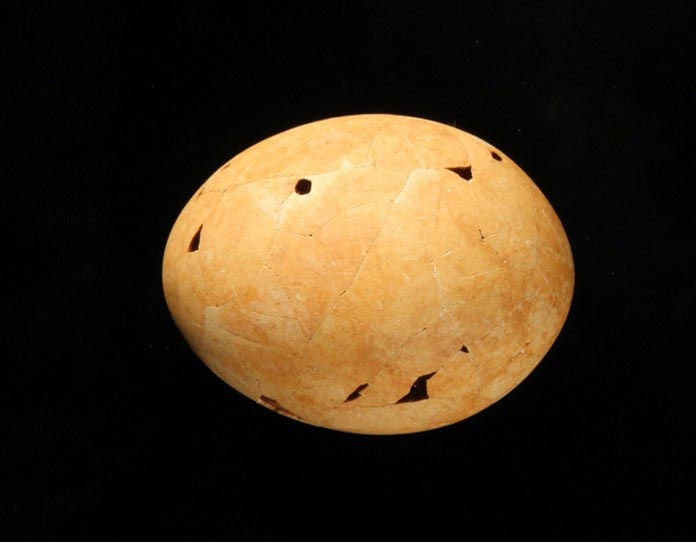
A years-long scientific controversy in Australia about what animal is the true mother of gigantic primordial eggs has been settled. In a recent study, scientists from the University of Copenhagen and their global counterparts showed that the eggs could only be the last of a rare line of megafauna known as the “Demon Ducks of Doom.”
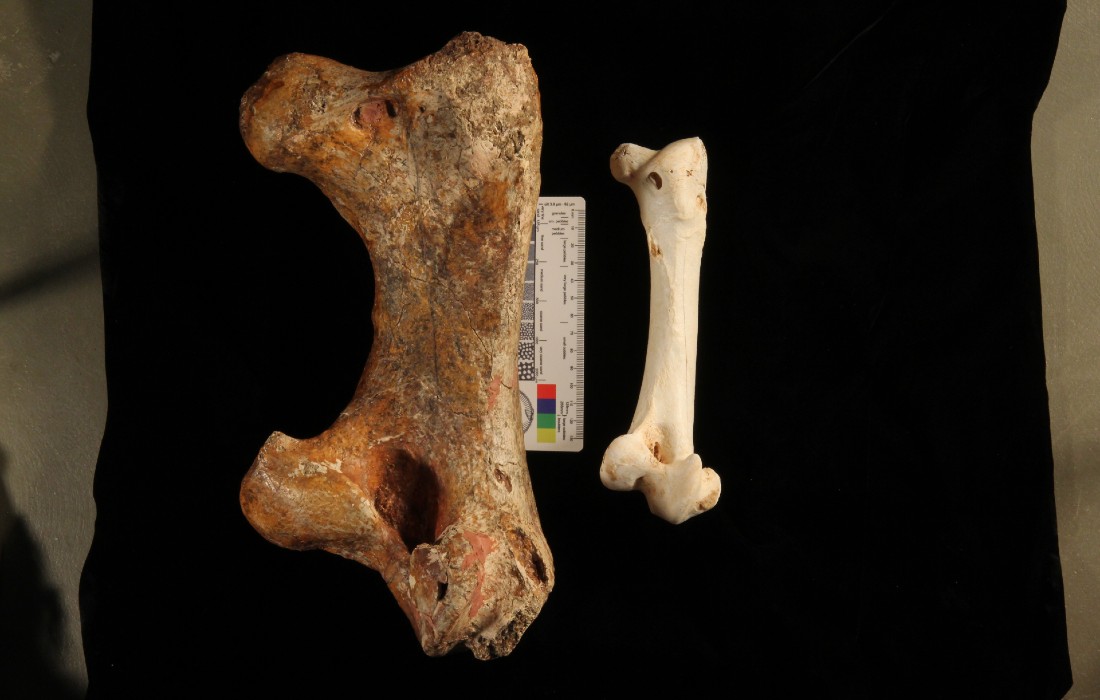
Consider living next to a 200 kg (440 lb), two-meter-tall bird with a huge beak. This was the situation for the first people who settled in Australia some 65,000 years ago.
Genyornis newtoni, the last members of the “Demon Ducks of Doom,” coexisted there with our ancestors as a species of a now-extinct family of duck-like birds.
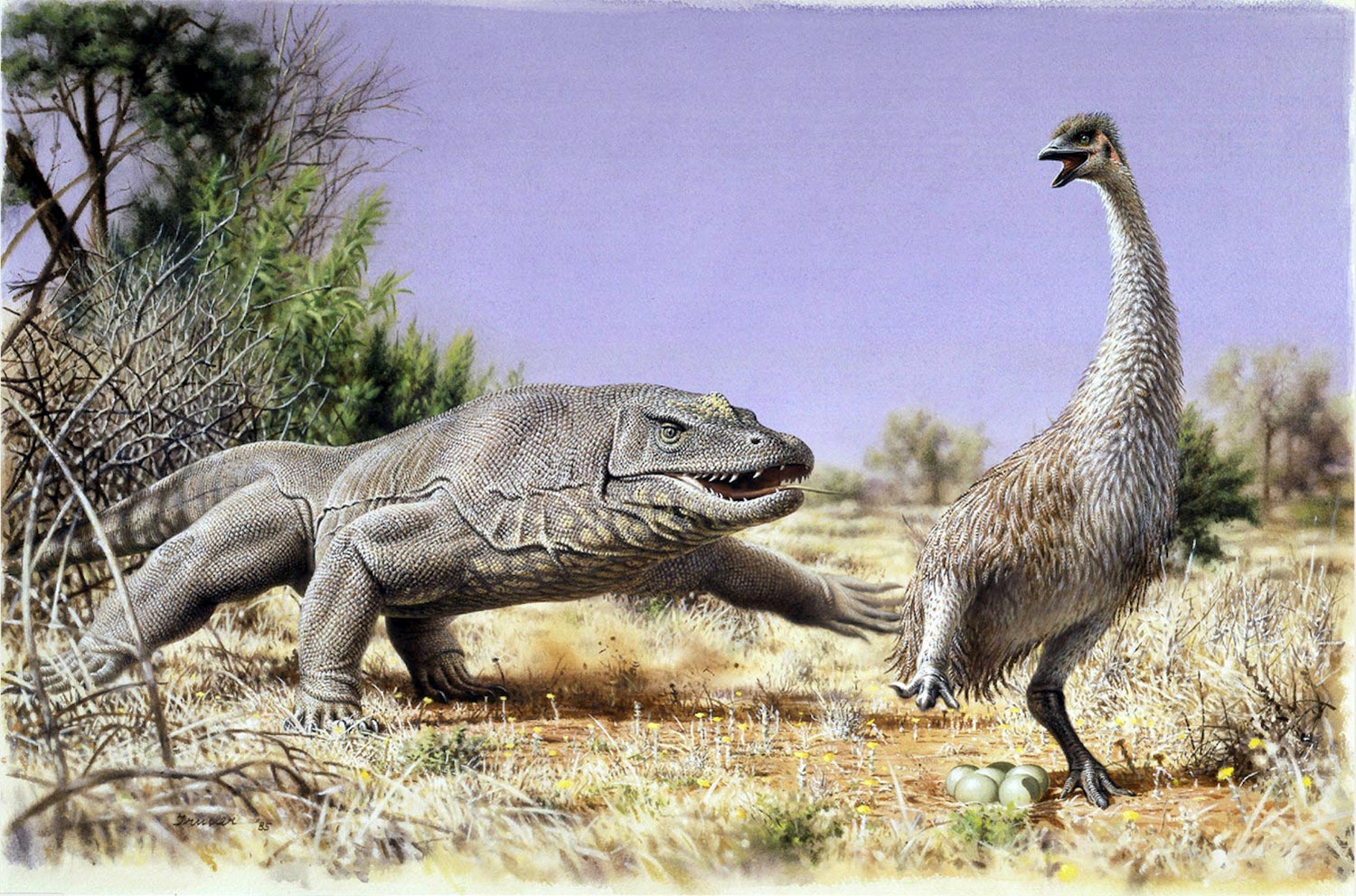
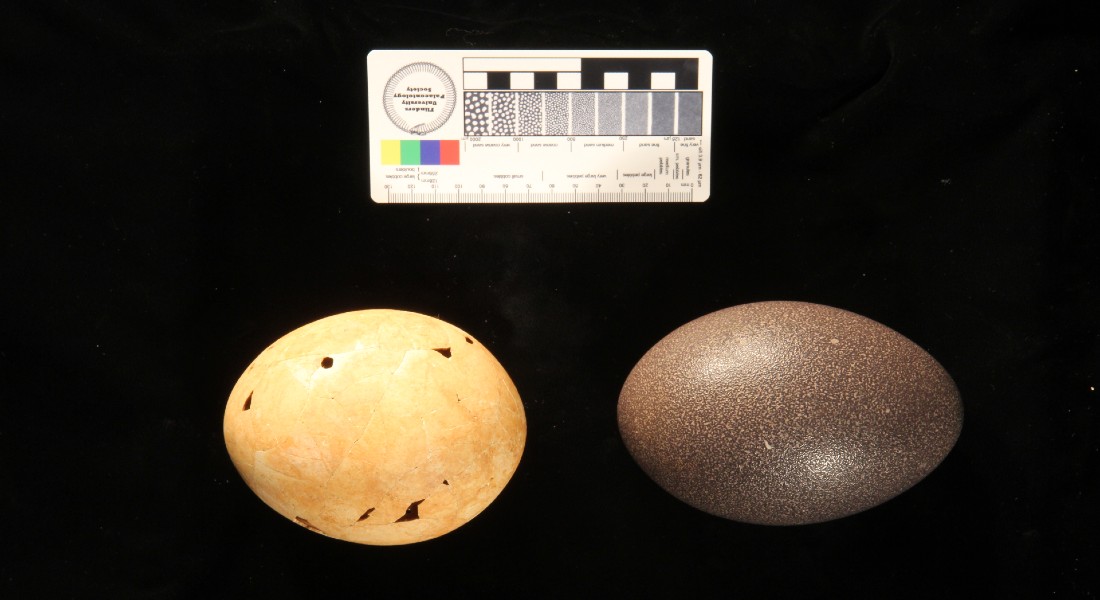
According to a recent study by experts from the University of Copenhagen and an international team of colleagues, the flightless bird lays eggs the size of cantaloupe melons, presumably to the delight of ancient humans who most likely gathered and consumed them as an essential protein source. The research was just released in the journal Proceedings of the National Academy of Sciences.
Since experts initially found the 50,000-year-old eggshell pieces 40 years ago, the huge eggs have been the subject of debate. It wasn’t known until recently if the eggs genuinely belonged to the family of “demon-ducks,” also known as dromornithids.
Since 1981, the identity of the bird that lays the eggs has been a source of controversy for scientists all across the globe. While some proposed Genyornis newtoni, others thought the shells were from Progura birds, an extinct member of the megapode group of species. Progura were “chicken-like birds” that only weighed between five and seven kilos and had huge feet.
The eggshells are too little, according to supporters of the Progura bird, for a bird the size of Genyornis newtoni to lay them.
“However, our analysis of protein sequences from the eggs clearly shows that the eggshells cannot come from megapodes and the Progura bird,” explains Josefin Stiller, an assistant professor at the University of Copenhagen’s Department of Biology and one of the researchers behind the new study.
“They can only be of the Genyornis. As such, we have laid to rest a very long and heated debate about the origin of these eggs,” adds co-author and University of Copenhagen professor Matthew Collins, whose area of research is evolutionary genetics.
Protein Analysis and a Gene Database Identified the Mother
In sand dunes in the southern Australian towns of Wallaroo and Woodpoint, the scientists examined the proteins from eggshells.
The proteins were broken down into little pieces by bleach before the researchers assembled the pieces in the correct sequence and used artificial intelligence to study their structure. The protein sequences gave them a collection of gene “codes” that they could compare to the genes of more than 350 species of currently existing bird species.
“We used our data from the B10K project, which currently contains genomes for all major bird lineages, to reconstruct which bird group the extinct bird likely belonged to. It became quite clear that the eggs were not laid by a megapode, and did therefore not belong to the Progura,” explains Josefin Stiller.
Thereby, the researchers have solved the mystery about the origin of the ancient Aussie eggs and have given us new knowledge on evolution.
“We are thrilled to have conducted an interdisciplinary study in which we used protein sequence analysis to shed light on animal evolution,” concludes Matthew Collins.
The Eggs Were Consumed by the First Humans in Australia
Previous research on the egg shards indicates that the shells were cooked and then discarded in fire pits. Charring on eggshell surfaces is confirmation of this, proving that the earliest Australian people devoured the eggs about 65,000 years ago.
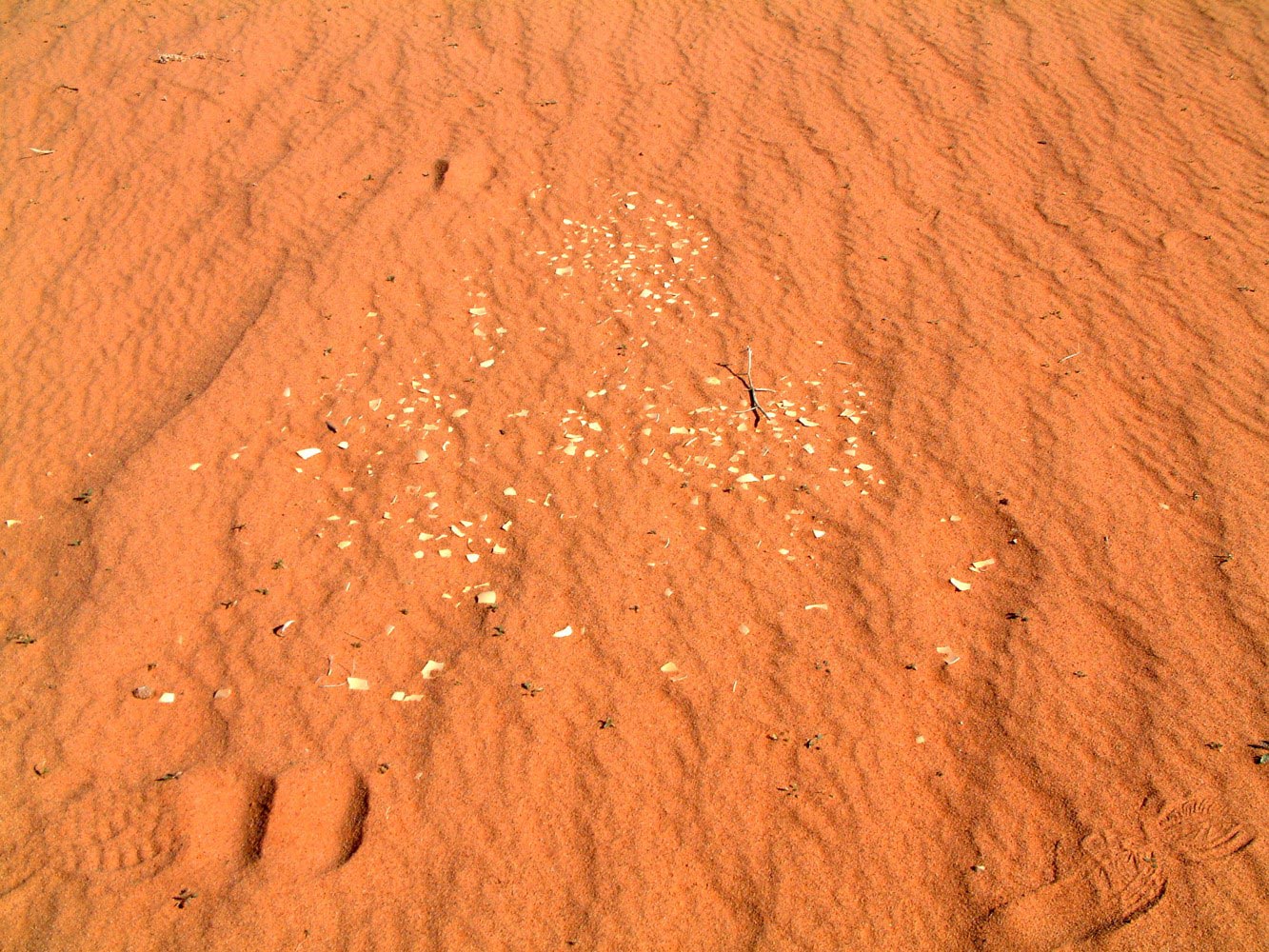
Australia’s first inhabitants probably harvested eggs from nests, which the hypothesis states, may have led to the extinction of the Genyornis bird 47,000 years ago.
For more on this research, see First Australian People Ate Giant Eggs of Huge Flightless Birds.
Reference: “Ancient proteins resolve controversy over the identity of Genyornis eggshell” by Beatrice Demarchi, Josefin Stiller, Alicia Grealy, Meaghan Mackie, Yuan Deng, Tom Gilbert, Julia Clarke, Lucas J. Legendre, Rosa Boano, Thomas Sicheritz-Pontén, John Magee, Guojie Zhang, Michael Bunce, Matthew James Collins and Gifford Miller, 24 May 2022, Proceedings of the National Academy of Sciences.
DOI: 10.1073/pnas.2109326119
Never miss a breakthrough: Join the SciTechDaily newsletter.
Follow us on Google and Google News.
4 Comments
Ddod sounds like a good metal band.
I have a prehistoric coral pulp, would like to find out from a Palentologist exactly what it is, found in Portsmouth, Ohio. Also, have a photo of a HUGE sharks tooth. Size of a hand found in Portsmouth, Ohio.
try contacting a local University.
These are fantastic articles, and I enjoy reading every single one of them to it’s very end! Kudos to the Authors, they are brilliant,