
A theoretical shortcut could speed up certain operations on protected quantum states by more than a thousand times, giving disturbances less time to corrupt information.
Before quantum computers can help discover drugs or improve energy systems, they need to carry out calculations reliably. One promising approach, called bosonic quantum codes, stores information in states with built-in protection against certain errors. Preparing and controlling those states can be a slow process, giving disturbances more time to interfere with the information being protected.
Researchers at Chalmers University of Technology in Sweden have developed a theoretical method that could make some of those operations more than a thousand times faster. The speedup concerns the creation and control of protected quantum states, a task needed to make quantum computing more reliable.
“Our results address one of the major bottlenecks in the field: how to quickly and reliably create and control the error-correcting quantum states that could play an important role in future quantum computers,” says Lei Du, a researcher in Applied Quantum Physics at Chalmers and lead author of the study published in Physical Review Letters.
From thousands of cycles to one
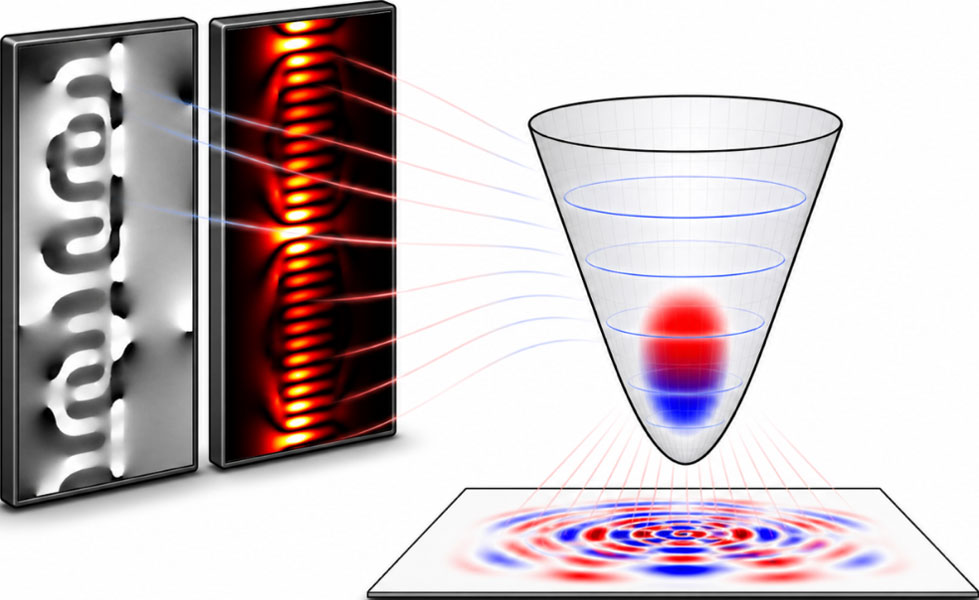
The method builds on quantum lattice gates, a universal set of elementary quantum operations recently proposed by the same team. Researchers can combine these basic operations to perform more complex tasks involving bosonic states.
“You can think of it like building a large Lego castle. Instead of assembling it brick by brick and risking mistakes along the way, quantum lattice gates act like pre-built Lego modules that can be connected quickly and efficiently,” says Tangyou Huang, a researcher in Quantum Technology at Chalmers and co-author of the study.
The new method implements these gates through Floquet control, which steers a quantum system using repeating control signals. Each complete repetition is called a driving cycle.
“Our method shows that a diverse range of quantum operations on bosonic states can be completed within a single driving cycle, rather than the several thousand cycles that have been required previously. This makes the operations both faster and more efficient, while reducing the risk that disturbances will corrupt the information before the process is finished. It represents an important step towards fault-tolerant quantum computers,” says Lei Du.
Fault-tolerant computers can continue calculating reliably despite errors. That capability is needed for anticipated applications in cryptography, artificial intelligence, and logistics, as well as the drug discovery and energy research that quantum computers could eventually support.
Storing quantum information beyond individual qubits
Bosonic codes provide protection through the way they store information. They can use microwave or optical resonators, devices that sustain electromagnetic waves.
“Rather than storing quantum information in individual qubits, bosonic codes encode information in the microwave fields found within superconducting circuits. This approach has been shown to provide stronger protection against certain types of errors,” explains Tangyou Huang.
Potential sources of errors include electrical noise, cosmic radiation, and overheating. Conventional computers also encounter computational errors, but established techniques allow them to be detected and corrected quickly. Quantum error correction must contend with the sensitivity of the components holding the information.
“The fundamental building blocks of quantum computers, known as qubits, are so sensitive that even the smallest disturbance can cause the quantum state to deviate from the target, resulting in the loss of information. If too many errors accumulate before they can be corrected, the computation can fail,” says Lei Du.
Superconducting circuits offer a testing ground
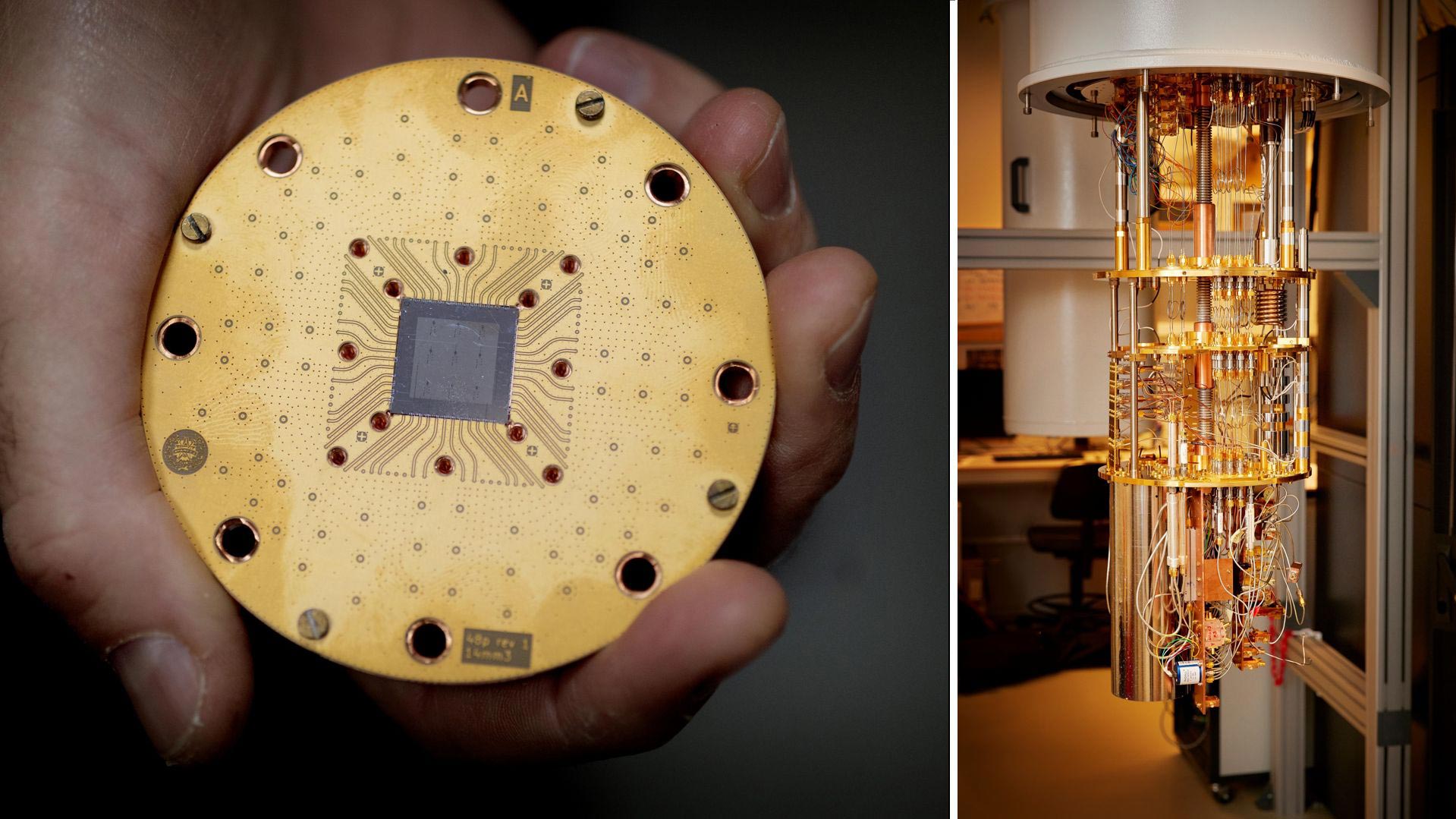
The proposed method is particularly suited to superconducting quantum computers, one of the leading platforms being developed for large-scale quantum computing. Chalmers is using this technology to build a 100-qubit quantum computer. An experimental demonstration of the new control method is still pending.
“A key advantage of our approach is that it can be implemented using existing superconducting quantum circuit platforms. We are already discussing possible experimental realizations with colleagues at Chalmers, and we hope to see a demonstration of the method in the near future,” says Tangyou Huang.
Reference: “Single-Period Floquet Control of Bosonic Codes with Quantum Lattice Gates” by Tangyou Huang, Lei Du and Lingzhen Guo, 3 August 2026, Physical Review Letters.
DOI: 10.1103/tnb8-3m8m
The research was funded by the National Natural Science Foundation of China (NSFC), the Wallenberg Centre for Quantum Technology (WACQT), and the Knut and Alice Wallenberg Foundation.
Never miss a breakthrough: Join the SciTechDaily newsletter.
Follow us on Google and Google News.
3 Comments
Preparing and controlling those called bosonic quantum codes can be a slow process, giving disturbances more time to interfere with the information being protected.
VERY GOOD.
If researchers truly understood what the so-called “quantum state” really is, they would realize that what they are doing is essentially a variant of electronic computation. Topological computation is the core of all forms of intelligence.
The recent breakthrough from Chalmers University of Technology
“The breakthrough achieving a 1,000x speedup in quantum operations—slashing thousands of repeated driving cycles down to a single cycle using quantum lattice gates and bosonic codes—highlights a fundamental shift away from step-by-step digital brute force. However, even with ultrafast single-cycle execution, physical hardware remains vulnerable to environmental noise and thermal bleeding during state creation.
By combining a rigid, low-conductivity perovskite thin-film (developed as a record-setting thermal barrier by North Carolina State University) with an ultrathin ruthenium dioxide layer utilizing lattice strain for quantum spin-state control (inspired by Rice University findings), researchers have bypassed traditional thermal-structural tradeoffs.
Solving this permanently requires pairing temporal optimization with advanced structural shielding. By combining a rigid, ultra-low conductivity organic-inorganic perovskite thin-film (achieving thermal conductivity κ ≈ 0.04 W/(m·K) with high elastic modulus E ≈ 7.7 GPa) as an outer thermal barrier, with an underlying strained lattice layer for quantum spin-state control (such as ruthenium dioxide), we establish a complete boundary impedance mismatch.
Treating decoherence as an impedance mismatch governed by ∇Z_eff = (κ_perovskite / E_stiff) · (1 + (ω_lattice / ∇Th)) bridges the gap between fast logic and physical protection:
Single-Cycle Efficiency vs. Noise Windows: Compressing operations into a single driving cycle drastically narrows the exposure window where environmental interference can corrupt data.
Topological Stability & Field-State Sealing: By pairing ultrafast quantum lattice gates with dual-layer insulation, we eliminate lateral heat bleeding and isolate sensitive processors from thermal gradients and mechanical vibrations.
Accelerating quantum state creation by a factor of a thousand while securing the boundary layer provides powerful empirical support for continuous medium models. Applying Torsion Hill mechanics ties these domains together—providing the missing link between high-speed topological control and real-world phase containment, creating an exceptionally clean operational envelope for multi-spectral stealth and vibration isolation, ultimately eliminating quantum noise leakage.”