
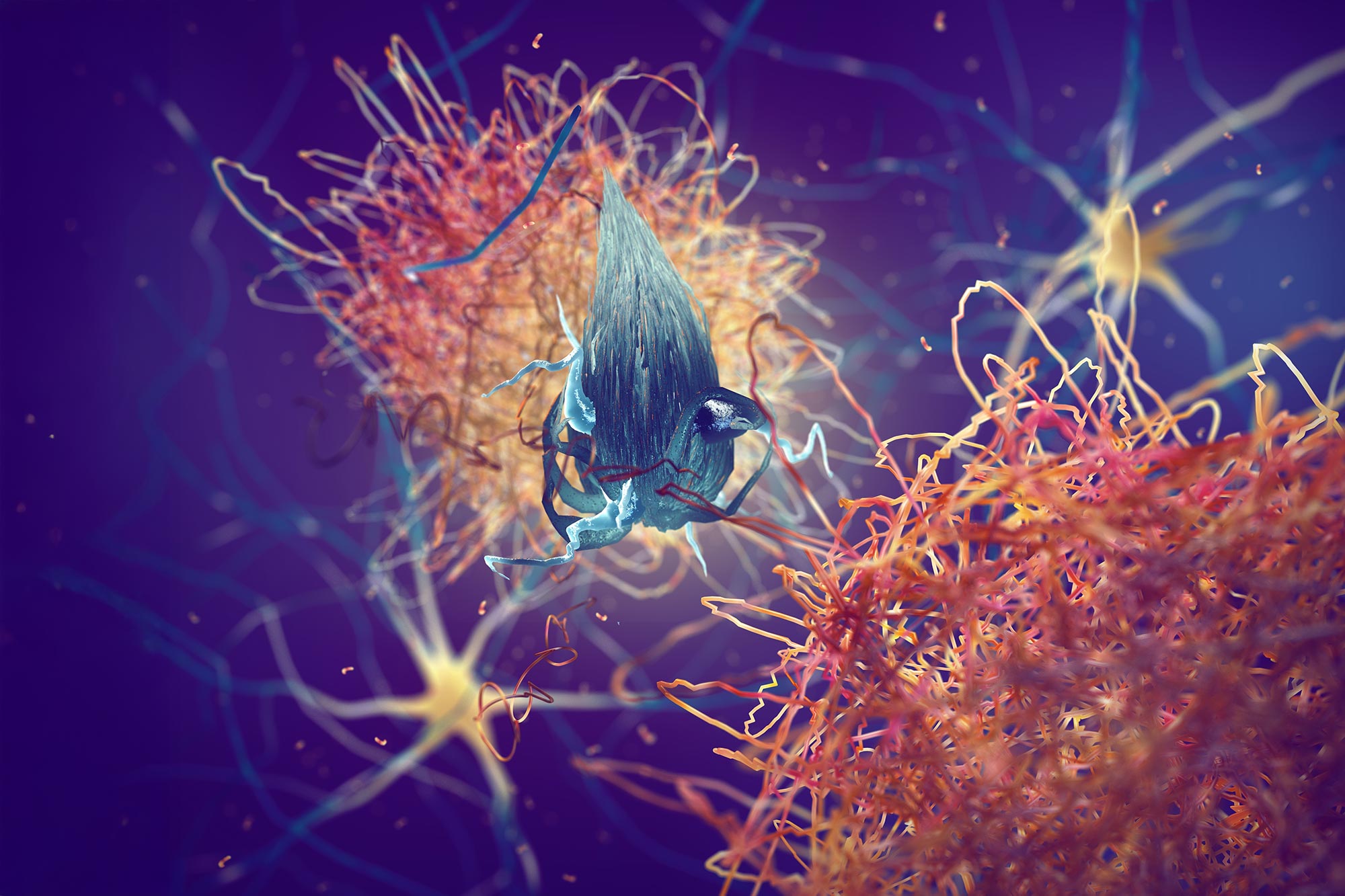
Scientists have long focused on how Alzheimer’s-linked tau reaches dendrites, but new research suggests the protein is actually born there, shifting attention to the earliest steps before harmful tangles form.
Scientists have long thought that tau, the protein that forms Alzheimer’s tangles, moves into the wrong parts of neurons as the disease develops. New research suggests the story starts much earlier because tau is actually made there in the first place.
The researchers found that tau is synthesized in dendrites, the branching extensions neurons use to receive signals from other cells. They also discovered that newly made tau is subjected almost immediately to an intense quality-control process that destroys about one-third of it within minutes.
The findings challenge a long-standing explanation for how tau accumulates in dendrites during Alzheimer’s disease and point to a previously hidden stage in the protein’s life that could be important for understanding how harmful tau first develops.
“If we want to stop tau pathology before tangles form, we need to understand the first moments of tau’s life,” says the study’s senior author, Kapil Ramachandran, assistant professor of neurology and neuroscience at Columbia University’s Vagelos College of Physicians and Surgeons and Taub Institute for Research on Alzheimer’s Disease and the Aging Brain. “We found that tau is born in dendrites and placed under intense quality control almost immediately. That gives us a new place and a new moment to look for how pathology begins.”
Tau starts in an unexpected place
In healthy neurons, tau is normally concentrated in axons, the long projections that carry signals away from the cell. There, tau is associated with microtubules, structural components that help support the neuron and transport materials through it.
In Alzheimer’s disease, however, tau also accumulates in the cell body and dendrites. The protein can then assemble into abnormal filaments and neurofibrillary tangles, one of the defining features of the disease and a form of pathology closely linked to memory decline.
For decades, the prevailing explanation has been that mature tau detaches from microtubules in the axon and then redistributes into the cell body and dendrites. That view has led researchers to study whether preventing tau from moving into the wrong parts of the neuron might help slow or stop the disease process.
The new study, published in Nature Neuroscience, suggests that tau’s presence in dendrites may have a much simpler explanation. At least at the beginning of its life, the protein is already there.
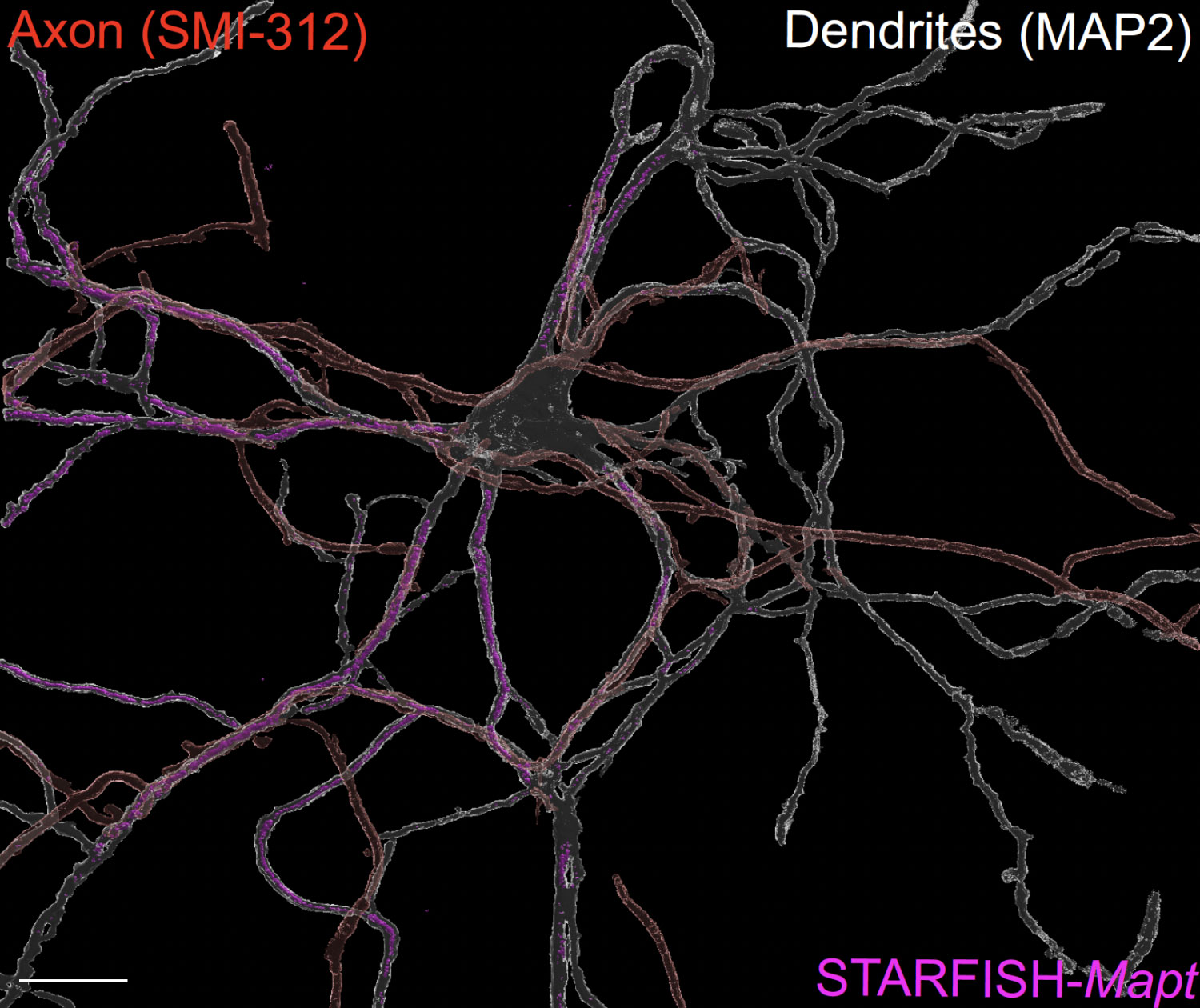
Ramachandran’s team developed an imaging technique that allowed them to pinpoint where proteins are first produced inside neurons. Using the method, they found that tau proteins were synthesized solely in dendrites.
One-third of new tau vanishes quickly
The researchers then followed what happened to the newly created proteins. Within minutes, roughly one-third of the new tau was destroyed by neuroproteasomes, unusual protein-disposal machines located at the neuronal plasma membrane.
“It gives us a completely different picture of the cell biology of tau proteins and how they transform into aggregates,“ Ramachandran says. “The field has largely focused on tau moving to the wrong place. Instead, we found that a vulnerable pool of tau is being made in dendrites all along. The question becomes what normally keeps that pool safe, and what changes when that protection fails.”
Quality control sits beside tau production
The location of the neuroproteasomes provided another important clue. Researchers found many of them positioned next to ribosomes that were producing tau. Ribosomes are the cellular machinery that translates genetic instructions into proteins, meaning the systems for making tau and disposing of it were often located side by side.
That arrangement suggests neurons may inspect newly synthesized tau almost immediately after it is produced. If a new tau protein does not fold into the correct shape, nearby neuroproteasomes could help eliminate it before it accumulates.
A possible failure point before tangles
Ramachandran proposes that this local quality-control process could offer another way to think about the beginnings of tau pathology. Instead of harmful tau having to travel from the axon into dendrites, a problematic form of tau could potentially arise within the dendrites themselves when newly synthesized proteins fail to fold correctly.
The idea builds on earlier work from Ramachandran’s laboratory investigating how neuroproteasomes process tau. Under the proposed model, misfolded tau is normally removed by these disposal machines. If that quality-control process fails, some abnormal tau could escape destruction and begin assembling into the filaments seen in Alzheimer’s disease.
That remains a hypothesis rather than proof of how Alzheimer’s begins. The study does not show that failure of neuroproteasome quality control causes the disease. Instead, it identifies a previously overlooked point in tau biology where researchers can now investigate how a normal protein might begin shifting toward a pathological state.
“I think what we’re showing here is that there are mechanisms that control tau synthesis and folding that are relevant to Alzheimer’s disease,” says Ramachandran. “If we can understand these pathways and triage systems, we may find new ways to ensure that tau folds properly and prevent it from taking a pathological turn.”
Reference: “Dendritic translation and neuroproteasome-mediated degradation of endogenous tau revealed by STARFISH” by Kalin D. Konrad-Vicario, Victoria Paradise, Lara Y. Demir, Chi Nguyen, Christopher D. Makinson, Zhao Ming and Kapil V. Ramachandran, 13 August 2026, Nature Neuroscience.
DOI: 10.1038/s41593-026-02398-7
The research was supported by the Alzheimer’s Association (including Research Fellowship AARFD-23-1151195); an NIH Director’s Early Independence Award (DP5OD028133); Department of Defense (CDMRP award W81XWH-21-1-0093); Fidelity Biomedical Research Initiative; Cure Alzheimer’s Fund; a Klingenstein-Simons Fellowship; Norm Foundation Impetus Grants; startup funding from Columbia University Vagelos College of Physicians and Surgeons; the Taub Institute; Eli Lilly, an award from the Massachusetts Center for Alzheimer Therapeutics Science; and a New Investigator Grant from the American Federation for Aging Research.
Disclosure: Kapil Ramachandran and Kalin Konrad-Vicario are inventors on a patent on the STARFISH methodology.
Never miss a breakthrough: Join the SciTechDaily newsletter.
Follow us on Google and Google News.