

An experimental blood test could help detect early pancreatic cancer and precancerous changes, guiding decisions about further testing.
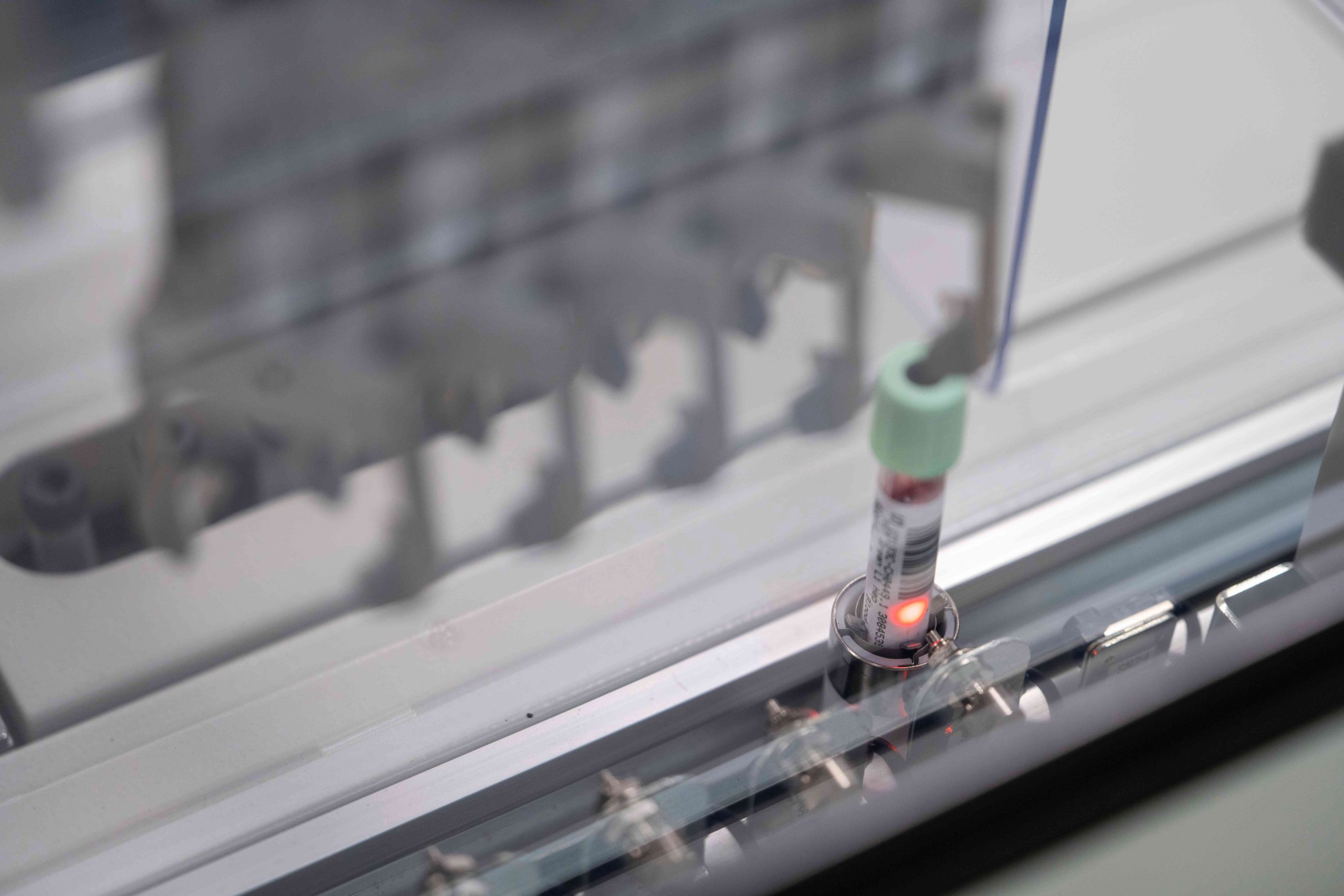
People at high risk of pancreatic cancer are often monitored with imaging and other tests that can be invasive, expensive, and limited in their ability to catch the disease early. An experimental blood test called PANXEON could give doctors another way to look for cancer while it is more treatable and potentially curable.
In an international study led by researchers at City of Hope, PANXEON correctly identified stage 1 and 2 pancreatic cancer 87% of the time. The study, published in Nature Medicine, evaluated the test in nearly 1,800 patients across the United States, Europe, and Asia to see whether earlier promising results would hold up across different clinical settings.
Finding pancreatic cancer early remains a major challenge. About 90% of patients are diagnosed at advanced stages, when their cancer has already spread. The disease has the lowest survival rate of any cancer, with just 14% of patients living five years after diagnosis.
Detecting precancerous changes in the pancreas
PANXEON also detected more than 64% of cases of high-grade dysplasia, an advanced precancerous condition of the pancreas often described as “stage 0” pancreatic cancer. Detecting these changes could help doctors determine which pancreatic cysts need active monitoring or intervention before invasive cancer develops.
“A stage shift is not just a statistic,” said senior author Ajay Goel, Ph.D., AGAF, chair of the Department of Molecular Diagnostics and Experimental Therapeutics at City of Hope. “The earlier we find pancreatic cancer, the greater the chance that meaningful intervention is still possible.”
More false positives in high-risk groups
The study included people with inherited genetic risk, a family history of pancreatic cancer, pancreatic cysts, or chronic pancreatitis, which is persistent inflammation of the pancreas. These are also the groups most likely to benefit from a blood test that helps guide further evaluation. Goel said testing PANXEON in these patients, rather than comparing cancer patients only with healthy controls, was a key distinction from earlier research.
The test’s rate of false positives depended on the group being tested. It incorrectly flagged cancer in 3% of people without cancer in low-risk groups and 16% of those in high-risk groups. Goel said PANXEON could help identify high-risk patients who need additional evaluation, alongside imaging and other diagnostic tests.
“Pancreatic cancer remains so deadly largely because we find it after the window for cure has begun to close,” Goel said. “For patients, these findings represent progress toward finding pancreatic cancer before symptoms appear and while more treatment options remain available.”
Three blood signals, one risk score
Previous efforts to develop blood tests for early pancreatic cancer detection have fallen short. PANXEON takes an approach that combines three biological signals, or biomarkers, in a blood sample.
Two involve microRNAs, small molecules that help regulate gene activity. The test measures both circulating microRNAs and exosomal microRNAs, which are carried inside tiny packages released by cells. It also measures a protein called CA19-9.
Artificial intelligence combines those measurements into a single score estimating the patient’s risk. PANXEON is the first investigational test to bring these three biomarkers together, an approach Goel identified as another feature that distinguishes it from earlier tests.
“Most biomarkers tell you one part of the story. Combining multiple biological signals gives us a clearer picture of what may be happening in the pancreas,” he said.
Reference: “Liquid biopsy for early detection of pancreatic ductal adenocarcinoma” by Caiming Xu, Alessandro Mannucci, Haiyong Han, Ruben M. Munoz, Derek Cridebring, Sourat Darabi, Yuji Toiyama, Yoshinaga Okugawa, Gagandeep Singh, Mustafa Raoof, Joon Oh Park, James Lin, Gregory Idos, Michael J. Demeure, Erkut Borazanci, Douglas B. Evans, Susan Tsai, Eunsung Jun, Carlos Becerra, Scott A. Celinski, Laleh Melstrom, Vincent Chung, Guixin Zhang, Dong Shang, David L. Bartlett, Mitsuro Kanda, Song Cheol Kim, Valsamo Anagnastou, Giulia Martina Cavestro, John S. Bolton, Ali H. Zaidi, Daniel Von Hoff and Ajay Goel, 16 September 2026, Nature Medicine.
DOI: 10.1038/s41591-026-04625-x
Supported by The National Institutes of Health / National Cancer Institute (CA72851, CA181572, CA184792, CA187956, CA202797, CA214254, CA271443), and the Italian Association for Cancer Research (start-up #32233).
Never miss a breakthrough: Join the SciTechDaily newsletter.
Follow us on Google and Google News.