
Close Menu
    Facebook X (Twitter) Instagram
    SciTechDaily
    • Biology
    • Chemistry
    • Earth
    • Health
    • Physics
    • Science
    • Space
    • Technology
    Facebook X (Twitter) Pinterest YouTube RSS
    SciTechDaily
    Home»Biology»Gene Discovery Sheds Light on How Fruit Flies Retreat from Heat
    Biology

    Gene Discovery Sheds Light on How Fruit Flies Retreat from Heat

    By SciTechDailyDecember 16, 2011No Comments2 Mins Read
    Facebook Twitter Pinterest Telegram LinkedIn WhatsApp Email Reddit
    Share
    Facebook Twitter LinkedIn Pinterest Telegram Email Reddit
    Gene Discovery Sheds Light On How Fruit Flies Retreat From Heat
    Researchers studied fruit flies and found variations in the TRPA1 gene, crucial for the function of pain-sensing neurons in animals.

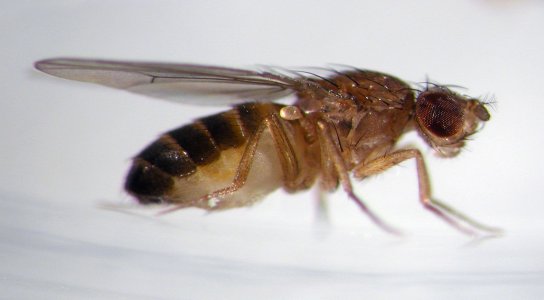
    Fruit flies. They can be downright annoying in your home, but they aren’t all bad. Here’s one way that they are helping us. A new discovery from researchers at Duke University Medical Center may be able to tell us more about how animals and humans sense potentially dangerous situations. The researchers looked at fruit flies and found naturally occurring variations of a gene named TRPA1 that is important for the function of pain-sensing neurons in animals.

    This gene creates an ion channel that floods sensory neurons with calcium ions when the fly is near a heat source. This in turn causes fruit fly larvae to move away from the heat in a rolling motion in an effort to protect themselves. The larvae start their roll at just over 100 degrees Fahrenheit (or 39 degrees Celsius.)

    This is big news for medicine; as it may help us better treat injured people with temperature sensitivity in damaged tissues. People with the condition known as allodynia, for instance, perceive even tiny changes in temperature as extremely painful. The study suggests that this could be explained by the human versions of these ion channels being open inappropriately at normal body temperature. If that turns out to be accurate, we are on our way toward helping these people.

    Never miss a breakthrough: Join the SciTechDaily newsletter.
    Follow us on Google and Google News.

    Duke University Fruit Flies Heat
    Share. Facebook Twitter Pinterest LinkedIn Email Reddit

    Related Articles

    Tiny Antennae, Big Discoveries: How Fruit Flies Use Less to Sense More

    Ocean’s Silent Plastic Invasion: Marine Mammals Now Carry Microplastics Within

    Simple Brain Hack Could Boost Learning and Improve Mental Health

    Why Does Temperature Determine the Sex of Turtles?

    When Carbon Sinks Sink: New Research Uncovers a Climate Change Time Bomb

    The “Sayonara” Gene: Flies Aren’t Freaks When It Comes to Cell Death

    Blood May Hold the Key to Reversing Aging

    Innovative Disease Control: Synthetic Compartments Stop Pathogens From Sharing Antibiotic Resistance Genes

    New RNA Tool Can Illuminate Brain Circuits and Edit Specific Cells

    Leave A Reply Cancel Reply

    • Facebook
    • Twitter
    • Pinterest
    • YouTube

    Don't Miss a Discovery

    Subscribe for the Latest in Science & Tech!

    Trending News

    Scientists May Have Discovered How To Heal Damaged Kidneys

    Interstellar Visitor 3I/ATLAS Is Bursting With an Unexpected Chemical

    Scientists Just Found All 5 Genetic “Letters” of DNA and RNA on an Asteroid

    The 4,000-Year-Old City That Defied History’s Rules on Wealth and Power

    The World’s Biggest Population Fear Has Flipped – and It Could Change Everything

    This “Fake” Pill Improved Memory and Physical Performance in Just 3 Weeks

    Scientists Say Frequent Ejaculation May Improve Sperm Quality and Fertility

    Scientists Have Found “The Heaven Sword” After Years of Looking

    Follow SciTechDaily
    • Facebook
    • Twitter
    • YouTube
    • Pinterest
    • Newsletter
    • RSS
    SciTech News
    • Biology News
    • Chemistry News
    • Earth News
    • Health News
    • Physics News
    • Science News
    • Space News
    • Technology News
    Recent Posts
    • Scientists Uncover a Previously Unknown Lineage of Ancient Marsupials
    • Critically Endangered Monkey Defies the Odds With New Baby After Surgery
    • 17-Million-Year-Old Ape Fossil in Egypt Could Change What We Know About Human Origins
    • NASA’s Orbiting Quantum Lab Pushes Deeper Into the Unknown
    • NASA’s James Webb Discovers Bizarre Salt Clouds on the Pink Planet
    Copyright © 1998 - 2026 SciTechDaily. All Rights Reserved.
    • Science News
    • About
    • Contact
    • Editorial Board
    • Privacy Policy
    • Terms of Use

    Type above and press Enter to search. Press Esc to cancel.