
Close Menu
    Facebook X (Twitter) Instagram
    SciTechDaily
    • Biology
    • Chemistry
    • Earth
    • Health
    • Physics
    • Science
    • Space
    • Technology
    Facebook X (Twitter) Pinterest YouTube RSS
    SciTechDaily
    Home»Health»First Complete DNA Sequencing of Monkeypox Virus in Switzerland
    Health

    First Complete DNA Sequencing of Monkeypox Virus in Switzerland

    By University of GenevaJune 4, 2022No Comments2 Mins Read
    Facebook Twitter Pinterest Telegram LinkedIn WhatsApp Email Reddit
    Share
    Facebook Twitter LinkedIn Pinterest Telegram Email Reddit
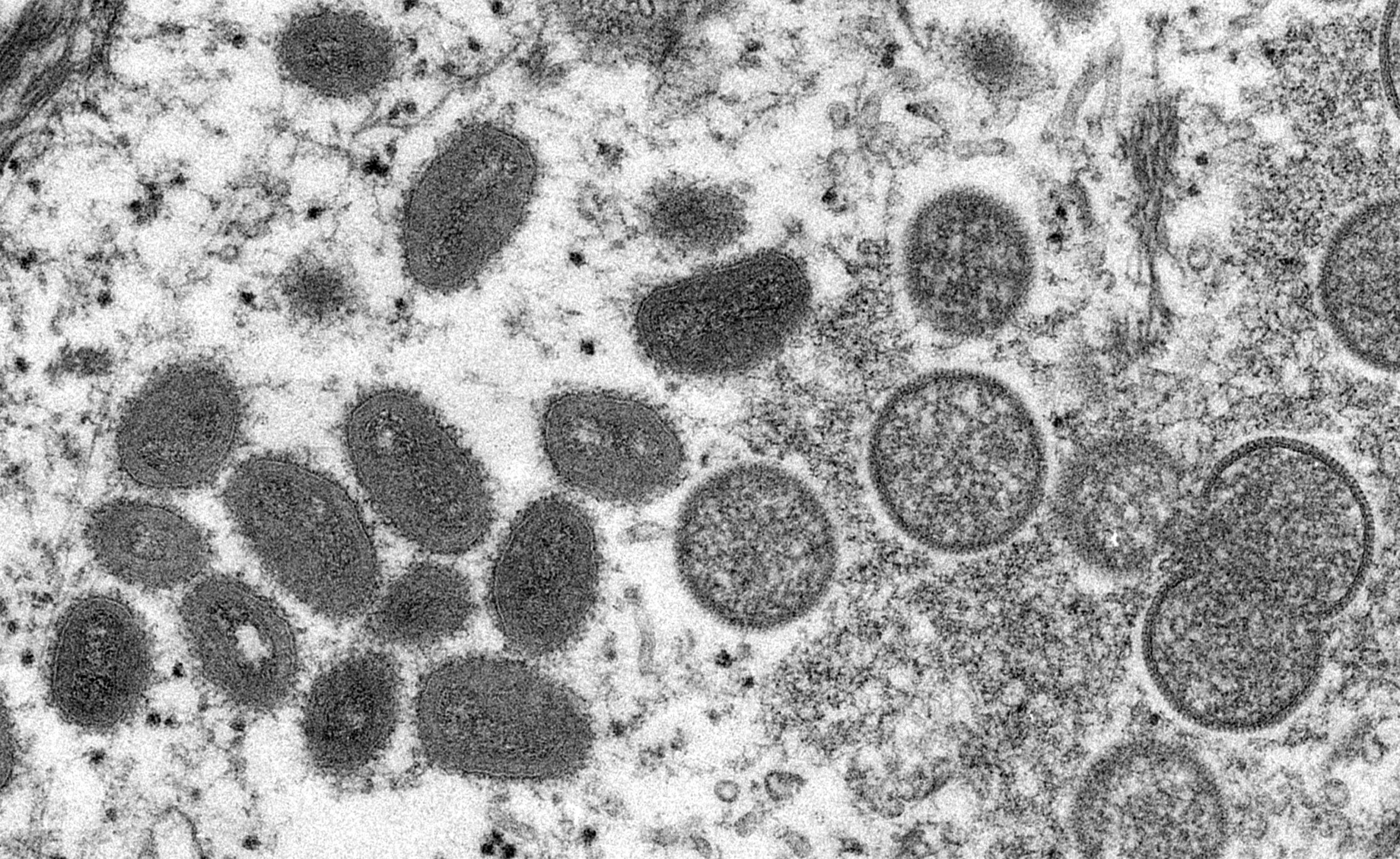
    Monkeypox Virus
    The virus can be identified with a PCR test, especially from affected lesions and other samples. Credit: HUG

    The Geneva Center for Emerging Viral Diseases (UNIGE / HUG) shares the first sequencing results of the monkeypox genome from Switzerland.

    The full monkeypox virus DNA sequence from the two first cases identified in Switzerland, on the 21st and 24th of May 2022. has been made available publicly by the Geneva Center for Emerging Viral Diseases of the Geneva University Hospitals (HUG) and the University of Geneva (UNIGE).

    Monkeypox was first identified in 1958 after two outbreaks of a pox-like disease in colonies of monkeys held for study, thus the name “monkeypox.”

    The Geneva Centre for Emerging Viral Diseases shares the first sequencing results of the monkeypox genome from Switzerland. This important step will enable further analysis and comparison with genome sequences from other countries. According to preliminary results, the virus sequence of the first two cases in Switzerland is genomically linked to cases reported in several other countries in the context of the current outbreak. The National Reference Laboratory for Emerging Viruses (CRIVE) team shares its genome with the scientific community, via the Platform Genbank.

    Four cases of monkeypox have been confirmed by PCR test in Switzerland by the Virology Laboratory at HUG, part of the CRIVE, which is mandated by the Swiss Federal Office of Public Health (FOPH) to monitor that type of event. Those cases are part of a larger and unusual outbreak that is ongoing in multiple countries in Europe, South and North America and Australia with more than 400 confirmed cases, according to World Health Organization (WHO), since the reporting of the first case in the United Kingdom on the 7th of May 2022.

    The first human case of monkeypox was discovered in the Democratic Republic of the Congo in 1970, at a period of increased effort to eradicate smallpox.

    The virus can be identified with a PCR test, especially from affected lesions and other samples. Diagnosis is based to date on tests developed by specialized laboratories such as the one in Geneva. To enable other laboratories in Switzerland and around the world to integrate this test into their portfolio of Orthopoxvirus tests, CRIVE is sharing its protocol.

    The CRIVE is closely monitoring the situation and is available for all diagnostic requests related to this outbreak.

    Never miss a breakthrough: Join the SciTechDaily newsletter.
    Follow us on Google and Google News.

    Infectious Diseases Monkeypox University of Geneva Virology
    Share. Facebook Twitter Pinterest LinkedIn Email Reddit

    Related Articles

    Mpox Crisis Deepens: Scientist Warns “We Need To Get Things Under Control”

    Mpox Mutation Sparks Global Alarm: Are We Facing the Next Pandemic?

    The Curious Case of Mpox: The “Sexual Network” Theory on Why the Monkeypox Epidemic Waned

    Monkeypox Mutations Cause Virus To Spread Rapidly – Evading Treatments and Vaccines

    WHO Experts Agree on New Names for Monkeypox Virus Variants

    What Scientists Just Discovered About Monkeypox Virus on Surfaces

    Monkeypox FAQ: Where Did It Come From? How Is It Transmitted? What Are the Symptoms?

    Infection Researchers Identify How Coronaviruses From Animals Need to Change to Spread to Humans

    Progress on AAVCOVID, A Gene-Based Experimental COVID-19 Vaccine

    Leave A Reply Cancel Reply

    • Facebook
    • Twitter
    • Pinterest
    • YouTube

    Don't Miss a Discovery

    Subscribe for the Latest in Science & Tech!

    Trending News

    Aging’s “Zombie Cell” Problem May Have a Solution, Scientists Discover

    Scientists Discover a Surprising Dental Benefit of Cranberry Juice

    Scientists Discover That Eating Peanuts Every Day May Help Protect the Aging Brain

    Scientists Discover Mysterious 150,000-Year-Old Bone From an Extinct Human Relative in Chinese Cave

    Why Do We Have Necks? Scientists Uncover a 380-Million-Year-Old Evolutionary Twist

    “Strangest of Its Kind”: Scientists Uncover a Bizarre Bacterial Self-Destruct Switch

    Scientists Reverse 60 Years of Aging in Human Cells, Turning 80-Year-Old Cells Into 20-Year-Olds

    A Solar Storm Heading Toward Earth Suddenly Changed in Ways Scientists Didn’t Predict

    Follow SciTechDaily
    • Facebook
    • Twitter
    • YouTube
    • Pinterest
    • Newsletter
    • RSS
    SciTech News
    • Biology News
    • Chemistry News
    • Earth News
    • Health News
    • Physics News
    • Science News
    • Space News
    • Technology News
    Recent Posts
    • Scientists Challenge a Long-Held Belief About Artificial Sweeteners
    • These Tiny Magnetic Waves Could Unlock a New Era of Ultra-Efficient Computers
    • Astronauts Just Installed a Powerful New Solar Array High Above Earth
    • Did Venus Eat Its Own Moon? Scientists Uncover a Shocking Possibility
    • New Microscope Technology Captures the Hidden World Inside Living Cells Like Never Before
    Copyright © 1998 - 2026 SciTechDaily. All Rights Reserved.
    • Science News
    • About
    • Contact
    • Editorial Board
    • Privacy Policy
    • Terms of Use

    Type above and press Enter to search. Press Esc to cancel.