
Close Menu
    Facebook X (Twitter) Instagram
    SciTechDaily
    • Biology
    • Chemistry
    • Earth
    • Health
    • Physics
    • Science
    • Space
    • Technology
    Facebook X (Twitter) Pinterest YouTube RSS
    SciTechDaily
    Home»Earth»Heat and Fires Scorch Northern Canada: Hundreds of Fires Raging in Northwest Territories and Yukon
    Earth

    Heat and Fires Scorch Northern Canada: Hundreds of Fires Raging in Northwest Territories and Yukon

    By Adam Voiland, NASA Earth ObservatoryJuly 10, 2022No Comments3 Mins Read
    Facebook Twitter Pinterest Telegram LinkedIn WhatsApp Email Reddit
    Share
    Facebook Twitter LinkedIn Pinterest Telegram Email Reddit
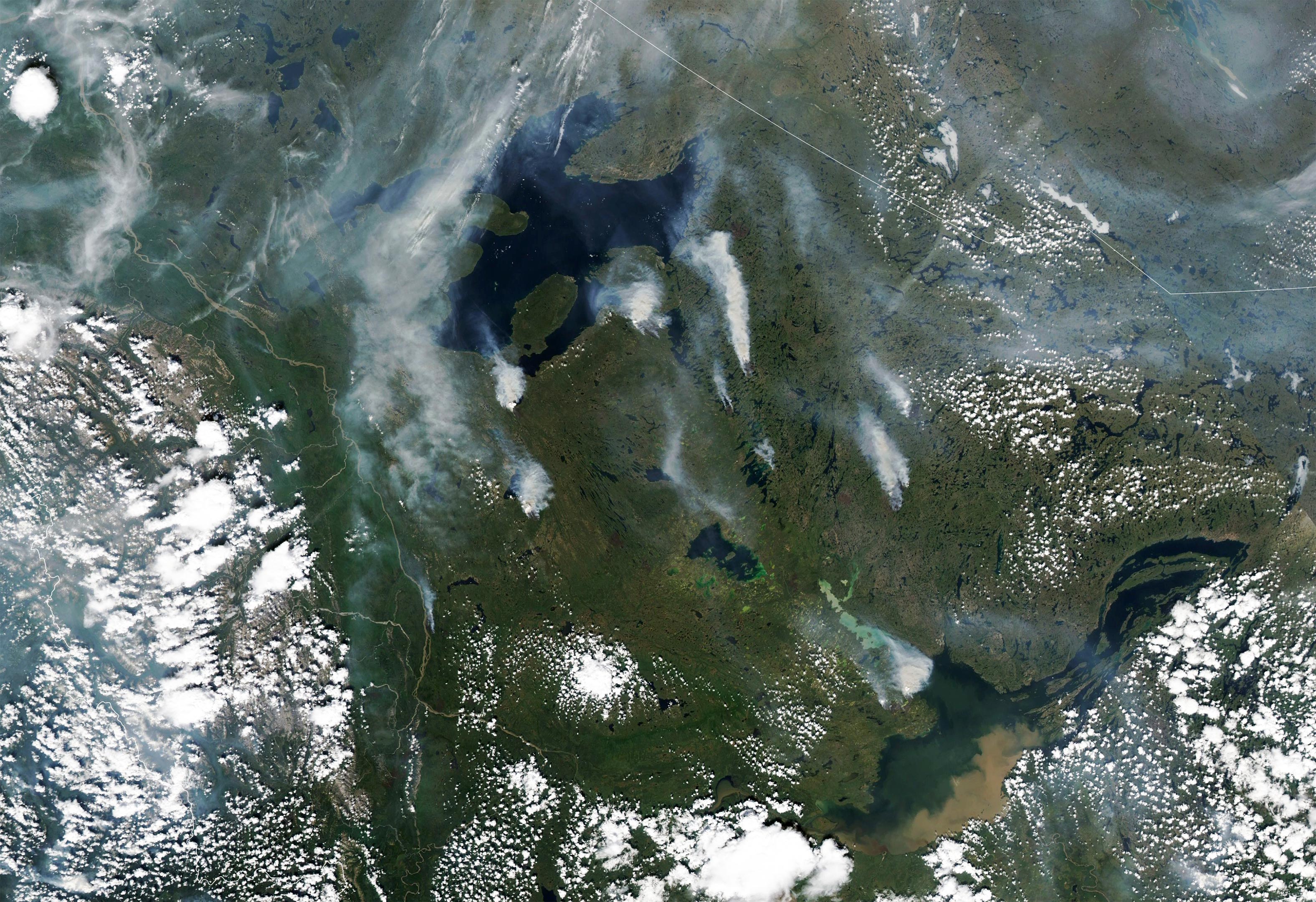
    Northern Canada Fires July 2022 Annotated
    Northern Canada fires, July 6, 2022

    In early July 2022, a combination of dry weather, lightning, and unusual heat fueled hundreds of wildland fires in northern Canada. 136 fires were burning in The Yukon and 65 in the Northwest Territories on July 6, according to the Canadian government.

    The image above was captured on July 6, 2022, by the  Moderate Resolution Imaging Spectroradiometer (MODIS) on NASA’s Aqua satellite. Thick plumes of dense smoke billowed from several of the largest fires, sometimes sending smoke streaming north toward the Beaufort Sea and Canadian Arctic. In addition, Environment Canada has posted heat and air quality warnings for several communities in the Northwest Territories.

    The second image (below), from the Operational Land Imager (OLI) on Landsat 8, is a closer view of fires burning near Great Bear Lake, a lake in the boreal forest of Canada. At least 96 fires have been reported in the Northwest Territories this year, and 131,380 hectares (507 square miles, 1,313 square kilometers) have burned. Fires in The Yukon have charred another 62,336 hectares (241 square miles, 623 square kilometers).
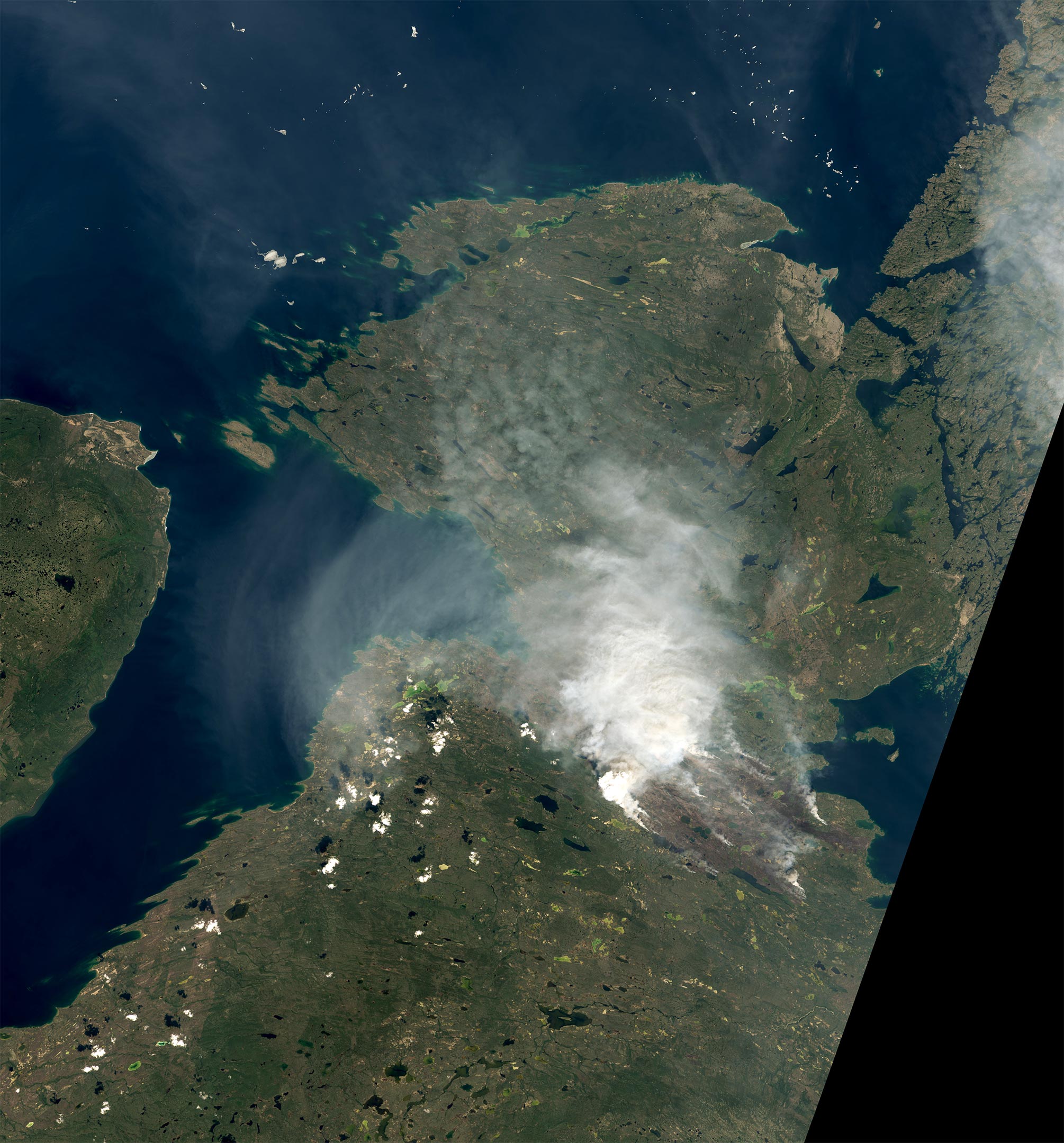
    Great Bear Lake Canada Fires July 2022 Annotated
    July 6, 2022

    Many parts of The Yukon and Northwest Territories have experienced record-breaking temperatures in recent weeks. The extreme heat dries out vegetation and makes it easier for fires to ignite and burn.

    Research also indicates that hot weather has made thunderstorms and lightning more likely in this region. In a research study published in 2017, scientists found connections between temperatures, lightning strikes, fire size, and burned area since 1975. “We expect an increasing number of thunderstorms, and hence fires, across the high latitudes in the coming decades as a result of climate change,” said study co-author Brendan Rogers of the Woodwell Climate Research Center.

    Despite notable fire activity in northern Canada, Alaska, and the U.S. Southwest, overall emissions from global fire activity have been low in recent months, according to data shared by Mark Parrington, an atmospheric scientist with the European Centre for Medium-Range Weather Forecasts (ECMWF). Parrington tracks fires for the Copernicus Atmosphere Monitoring Service (CAMS) using a satellite-based data record that began in 2003. CAMS estimates near-real-time wildfire emissions using its Global Fire Assimilation System (GFAS), which aggregates observations of fires made by NASA’s Aqua and Terra satellites.

    NASA Earth Observatory images by Lauren Dauphin, using Landsat data from the U.S. Geological Survey and MODIS data from NASA EOSDIS LANCE and GIBS/Worldview.

    Never miss a breakthrough: Join the SciTechDaily newsletter.
    Follow us on Google and Google News.

    Geography NASA NASA Earth Observatory Weather Wildfires
    Share. Facebook Twitter Pinterest LinkedIn Email Reddit

    Related Articles

    Extreme Record-Breaking Heat: Heatwaves and Fires Scorch Europe, Africa, and Asia

    Hundreds of Wildland Fires Darken Skies Over Alaska

    A Summer of Fire-Breathing Smoke Storms: Extreme Heat, Intense Wildfires, and a “Monster pyroCb”

    Trading Surfboards for Snowboards: Storms Have Left Abundant Snow Atop Hawaii’s Tallest Volcanic Mountains

    Massive Snowfall Blankets Spain – Heaviest Snowfall in the Region in 50 Years

    California Cool Yule Tule

    A Meeting of Black Carbon Smoke and Tropical Storms

    NASA/NOAA Satellites Observe Surprisingly Rapid Increase in Scale and Intensity of Fires in Siberia

    Incredible Rare Peek at Patagonia in Winter

    Leave A Reply Cancel Reply

    • Facebook
    • Twitter
    • Pinterest
    • YouTube

    Don't Miss a Discovery

    Subscribe for the Latest in Science & Tech!

    Trending News

    Common Laxative May Help Reverse Depression-Related Brain Fog

    Younger Generations Are Aging Faster – and It May Be Fueling a Surge in Cancer

    New Discovery Could Unlock Quantum Computers the Size of a Coin

    Shingles Vaccine Linked to 24% Lower Dementia Risk in Older Adults

    Scientists Found a Wordle Trick That Solves 99% of Puzzles

    A Hidden Galaxy Called Shadow Blaster May Explain One of Astronomy’s Biggest Mysteries

    These 3 Common Sleep Habits May Be Aging Your Brain Faster

    Rare Goblin Shark Spotted Alive in Its Natural Habitat for the First Time

    Follow SciTechDaily
    • Facebook
    • Twitter
    • YouTube
    • Pinterest
    • Newsletter
    • RSS
    SciTech News
    • Biology News
    • Chemistry News
    • Earth News
    • Health News
    • Physics News
    • Science News
    • Space News
    • Technology News
    Recent Posts
    • This Extraordinary Desert Mouse Defies Aging – and It Could Change Human Longevity
    • A Simple Blood Test Can Reveal the True Age of Your Brain, Heart, and Other Organs
    • This Popular Workout Supplement May Give Cancer Immunotherapy a Big Boost
    • Scientists Built a Mars Rover That “Swims” Through Sand
    • This Strange New Magnet Could Transform Future Electronics
    Copyright © 1998 - 2026 SciTechDaily. All Rights Reserved.
    • Science News
    • About
    • Contact
    • Editorial Board
    • Privacy Policy
    • Terms of Use

    Type above and press Enter to search. Press Esc to cancel.