
Close Menu
    Facebook X (Twitter) Instagram
    SciTechDaily
    • Biology
    • Chemistry
    • Earth
    • Health
    • Physics
    • Science
    • Space
    • Technology
    Facebook X (Twitter) Pinterest YouTube RSS
    SciTechDaily
    Home»Earth»Hundreds of Wildland Fires Darken Skies Over Alaska
    Earth

    Hundreds of Wildland Fires Darken Skies Over Alaska

    By NASA Earth ObservatoryJuly 10, 2022No Comments2 Mins Read
    Facebook Twitter Pinterest Telegram LinkedIn WhatsApp Email Reddit
    Share
    Facebook Twitter LinkedIn Pinterest Telegram Email Reddit
    Alaska Smoke July 2022 Annotated
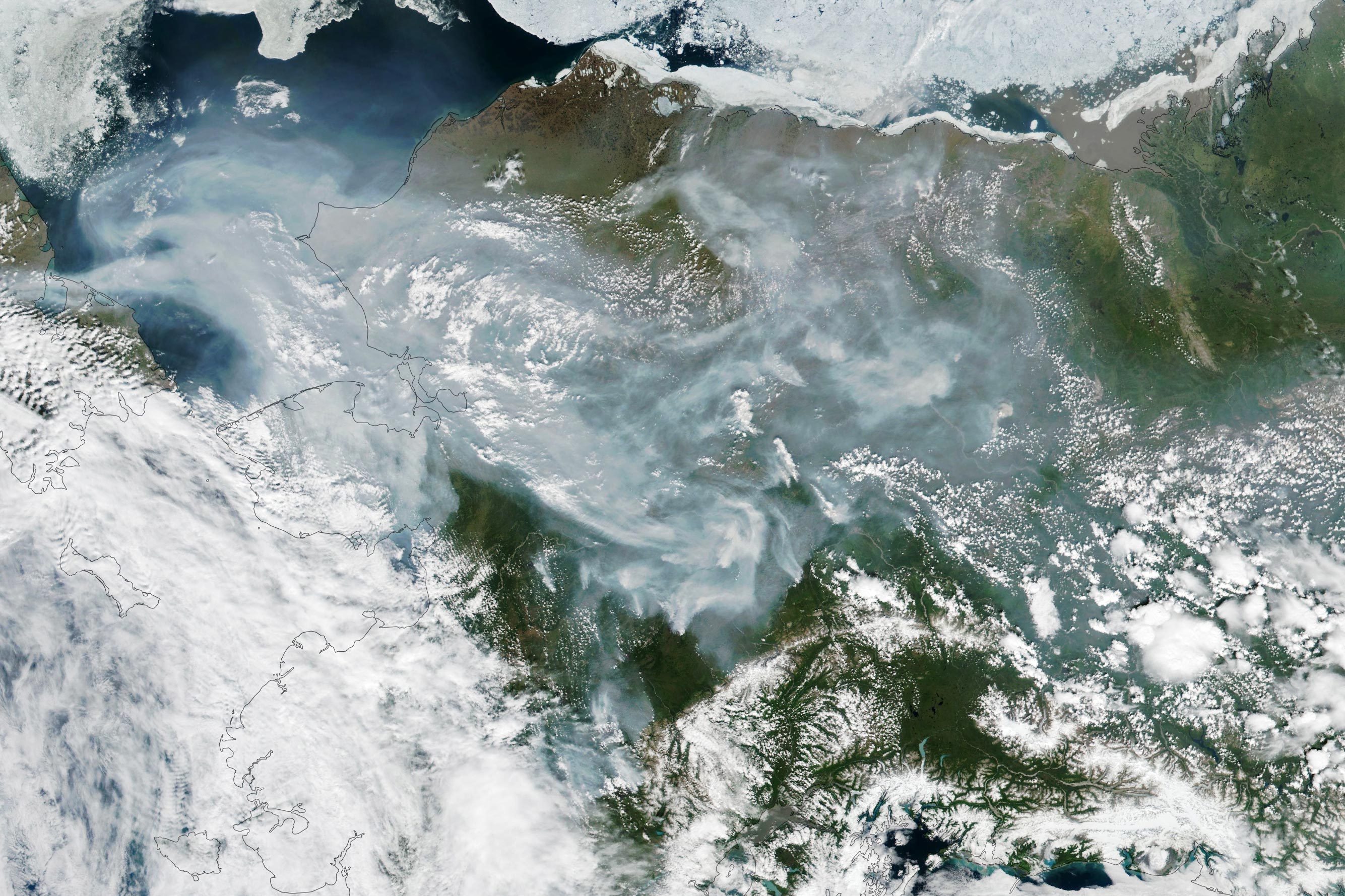
    Alaska smoke, July 1, 2022

    Satellite images show smoke from hundreds of wildland fires darkening Alaskan skies.

    Alaskan summers are usually described as brief and mild. In the early summer of 2022, the word that stood out as most descriptive was “smoky.”

    In a smoldering scene that was repeated several times in June and early July, the Visible Infrared Imaging Radiometer Suite (VIIRS) on the NASA-NOAA Suomi NPP satellite observed smoke spreading throughout large portions of Alaska. On July 1, 2022, intense fires were located in the southern and interior regions of the state, but strong southeasterly winds pushed smoke into the far north as well.

    Smoke from one particularly smoky fire northwest of Iliamna Lake (southwest Alaska) obscured visibility on the Seward Peninsula, more than 400 miles (600 kilometers) to the northwest. The influx of smoke led to extremely high particulate matter readings (AQI above 700 at times) in the city of Nome, according to University of Alaska Fairbanks climatologist Rick Thoman.

    Alaska surpassed 2 million acres (8,000 square kilometers, 3,000 square miles) burned on July 2, 2022, matching the earliest date for the milestone in the past 20 years. On July 5, 2022, the Alaska Interagency Coordination Center reported 210 active fires in the state. Forty-two were large fires with firefighters working on them, according to the National Interagency Fire Center. Wildfires are a regular feature of Alaskan summers, but this year’s fires have been exacerbated by drought, unusual heat, and several intense lightning storms. According to Thoman, in early July, the area burned was on track to be among the largest on record.

    NASA Earth Observatory image by Lauren Dauphin, using VIIRS data from NASA EOSDIS LANCE, GIBS/Worldview, and the Suomi National Polar-orbiting Partnership.

    Never miss a breakthrough: Join the SciTechDaily newsletter.
    Follow us on Google and Google News.

    Geography NASA NASA Earth Observatory Weather Wildfires
    Share. Facebook Twitter Pinterest LinkedIn Email Reddit

    Related Articles

    Extreme Record-Breaking Heat: Heatwaves and Fires Scorch Europe, Africa, and Asia

    Heat and Fires Scorch Northern Canada: Hundreds of Fires Raging in Northwest Territories and Yukon

    A Summer of Fire-Breathing Smoke Storms: Extreme Heat, Intense Wildfires, and a “Monster pyroCb”

    Trading Surfboards for Snowboards: Storms Have Left Abundant Snow Atop Hawaii’s Tallest Volcanic Mountains

    Massive Snowfall Blankets Spain – Heaviest Snowfall in the Region in 50 Years

    California Cool Yule Tule

    A Meeting of Black Carbon Smoke and Tropical Storms

    NASA/NOAA Satellites Observe Surprisingly Rapid Increase in Scale and Intensity of Fires in Siberia

    Incredible Rare Peek at Patagonia in Winter

    Leave A Reply Cancel Reply

    • Facebook
    • Twitter
    • Pinterest
    • YouTube

    Don't Miss a Discovery

    Subscribe for the Latest in Science & Tech!

    Trending News

    Breakthrough Bowel Cancer Trial Leaves Patients Cancer-Free for Nearly 3 Years

    Natural Compound Shows Powerful Potential Against Rheumatoid Arthritis

    100,000-Year-Old Neanderthal Fossils in Poland Reveal Unexpected Genetic Connections

    Simple “Gut Reset” May Prevent Weight Gain After Ozempic or Wegovy

    2.8 Days to Disaster: Scientists Warn Low Earth Orbit Could Suddenly Collapse

    Common Food Compound Shows Surprising Power Against Superbugs

    5 Simple Ways To Remember More and Forget Less

    The Atomic Gap That Could Cost the Semiconductor Industry Billions

    Follow SciTechDaily
    • Facebook
    • Twitter
    • YouTube
    • Pinterest
    • Newsletter
    • RSS
    SciTech News
    • Biology News
    • Chemistry News
    • Earth News
    • Health News
    • Physics News
    • Science News
    • Space News
    • Technology News
    Recent Posts
    • Scientists Print Artificial Neurons That Can Talk to the Brain
    • Bowel and Ovarian Cancers Are Dramatically Rising in Young Adults and Scientists Aren’t Sure Why
    • Alzheimer’s May Begin Decades Earlier Than You Think, New Mayo Clinic Study Finds
    • The Hidden Risk of Taking Breaks From Weight-Loss Drugs Like Ozempic
    • Total Solar Eclipse Made Cities Go Eerily Quiet Beneath the Surface
    Copyright © 1998 - 2026 SciTechDaily. All Rights Reserved.
    • Science News
    • About
    • Contact
    • Editorial Board
    • Privacy Policy
    • Terms of Use

    Type above and press Enter to search. Press Esc to cancel.