
Close Menu
    Facebook X (Twitter) Instagram
    SciTechDaily
    • Biology
    • Chemistry
    • Earth
    • Health
    • Physics
    • Science
    • Space
    • Technology
    Facebook X (Twitter) Pinterest YouTube RSS
    SciTechDaily
    Home»Space»Ride Along With Artemis Around the Moon [Official NASA Video]
    Space

    Ride Along With Artemis Around the Moon [Official NASA Video]

    By NASADecember 3, 20221 Comment2 Mins Read
    Facebook Twitter Pinterest Telegram LinkedIn WhatsApp Email Reddit
    Share
    Facebook Twitter LinkedIn Pinterest Telegram Email Reddit
    Ride Along With Artemis Around the Moon
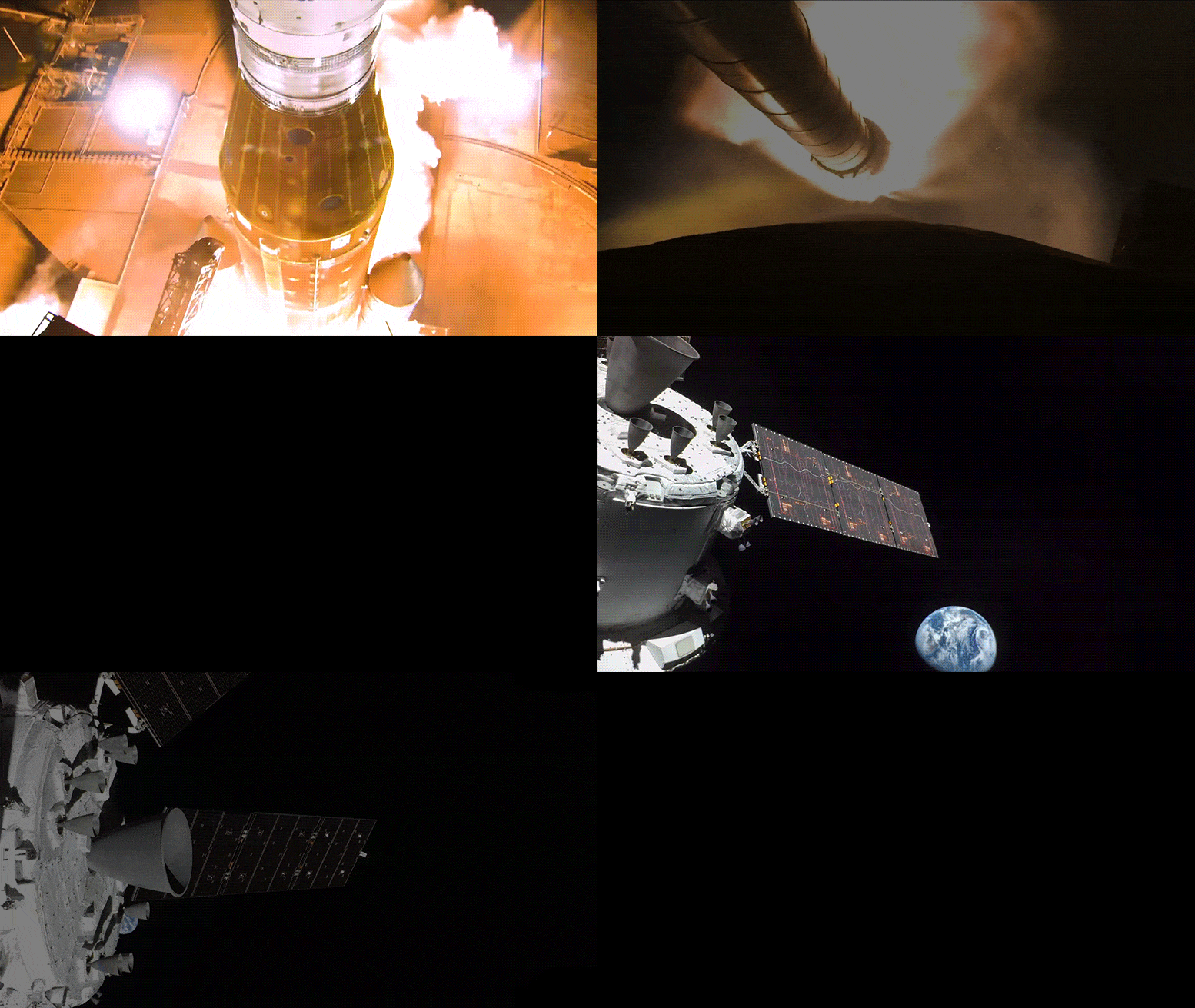
    Launched on November 16, 2022, from Launch Complex 39B at NASA’s Kennedy Space Center in Florida, Artemis I is the first in a series of increasingly complex missions that will enable human exploration to the Moon and Mars.

    Cameras on NASA’s Space Launch System (SLS) rocket and Orion spacecraft give us amazing views of this amazing adventure around the Moon. See up-close views of the Moon from external cameras as well as the view from inside the capsule.

    Orion is the only spacecraft capable of carrying humans from Earth on Artemis missions to deep space and bringing them back to Earth from the vicinity of the Moon. More than just a crew module, Orion has a launch abort system to keep astronauts safe if an emergency happens during launch, and a European-built service module that is the powerhouse that fuels and propels Orion and keeps astronauts alive with water, oxygen, power, and temperature control, as well as a heat shield that can handle high-speed returns from deep space. SLS is the most powerful rocket in the world and the only rocket capable of launching Orion with astronauts and their supplies on Artemis missions to the Moon.

    Orion launched on the SLS rocket from Launch Pad 39B at NASA’s Kennedy Space Center in Florida Wednesday, November 16, 2022. Artemis I is an uncrewed flight test of NASA’s SLS rocket, Orion spacecraft, and exploration ground systems for future Artemis missions—which will provide the foundation to send humans to the lunar surface, develop a long-term presence on and around the Moon, and pave the way for humanity to set foot on Mars.


    Cameras on NASA’s Space Launch System (SLS) rocket and Orion spacecraft give us amazing views of our adventure around the Moon. See up-close views of the Moon from external cameras as well as the view from inside the capsule.

    Never miss a breakthrough: Join the SciTechDaily newsletter.
    Follow us on Google and Google News.

    ARTEMIS Mission NASA Orion Spacecraft Rocket Space Launch System
    Share. Facebook Twitter Pinterest LinkedIn Email Reddit

    Related Articles

    Fired Up: A Look at the 55 Engines and Motors That Power NASA’s Artemis Mission

    NASA Conducts Check-outs, Preparations Ahead of Next Artemis I Moon Rocket Launch Attempt

    NASA’s Artemis I Moon Rocket Arrives at Launch Pad Ahead of Historic Mission

    NASA’s Artemis I Mega Moon Rocket Begins Roll To Launch Pad

    NASA’s Additional Artemis I Test Objectives for Space Launch System Rocket and Orion Spacecraft

    NASA Artemis I Space Launch System (SLS) Rocket and Orion Spacecraft Integrated Testing Update

    One Step Closer: Orion Spacecraft Stacked on Top SLS Rocket for NASA’s Artemis I Mission

    Final Piece of Rocket Hardware Added to Artemis I Stack

    NASA Readies for Future Artemis Moon Missions With SLS Rocket Engine Test Series

    1 Comment

    1. Dan Benthall on December 8, 2022 9:45 pm

      Female astronauts have fewer opportunities in space than men because of strict lifetime radiation exposure restrictions, A six-month mission on the International Space Station exposes astronauts to 40 times the average yearly dose of background radiation that a person would receive living on Earth,
      A six-month mission on the International Space Station exposes astronauts to 40 times yearly dose of background radiation that a person would receive on Earth,

      While the level of risk allowed for women becouse they have a lower threshold for space radiation exposure than men,
      “Depending on when you fly a space mission, a female will fly only 45 to 50 percent of the missions that a male can fly,”
      And what happened to putting the best candidates in space like we did in the ’60s when we had a head-to-head competition to determine who had the best ability for which Mission instead of trying to fill political agendas to put a person of color and a female on the moon!

      Reply
    Leave A Reply Cancel Reply

    • Facebook
    • Twitter
    • Pinterest
    • YouTube

    Don't Miss a Discovery

    Subscribe for the Latest in Science & Tech!

    Trending News

    JWST Finds a “Star” 100 Billion Times Brighter Than Any Star Should Be

    Scientists Find a Hidden Biological Link Across Different Forms of Autism

    Astronomers Discover a Ghostly River of Stars That Could Reveal Dark Matter

    Why Is Colorectal Cancer Rising in People Under 50? New Clues Point to the Environment

    Quantum Fluctuations Break a Crystal’s Symmetry Rules

    Why Does an Irregular Heartbeat Strike 40 Years Early in Some People?

    Scientists Reveal How ADHD Could Fuel Creative Thinking

    Scientists Find Just 3 Minutes of Sprinting Can Transform Blood Chemistry

    Follow SciTechDaily
    • Facebook
    • Twitter
    • YouTube
    • Pinterest
    • Newsletter
    • RSS
    SciTech News
    • Biology News
    • Chemistry News
    • Earth News
    • Health News
    • Physics News
    • Science News
    • Space News
    • Technology News
    Recent Posts
    • A Vast Clean Energy Source May Be Hiding Beneath Australia’s Red Soil
    • Scientists Uncover Signs of an Ancient Climate “Tipping Point”
    • Cleaner Cars May Be Hiding a New Pollution Problem
    • Common Plant Chemical Linked to Widespread Organ Damage in Aquatic Animals
    • Scientists Discover a Hidden Baobab Species in Madagascar
    Copyright © 1998 - 2026 SciTechDaily. All Rights Reserved.
    • Science News
    • About
    • Contact
    • Editorial Board
    • Privacy Policy
    • Terms of Use

    Type above and press Enter to search. Press Esc to cancel.