
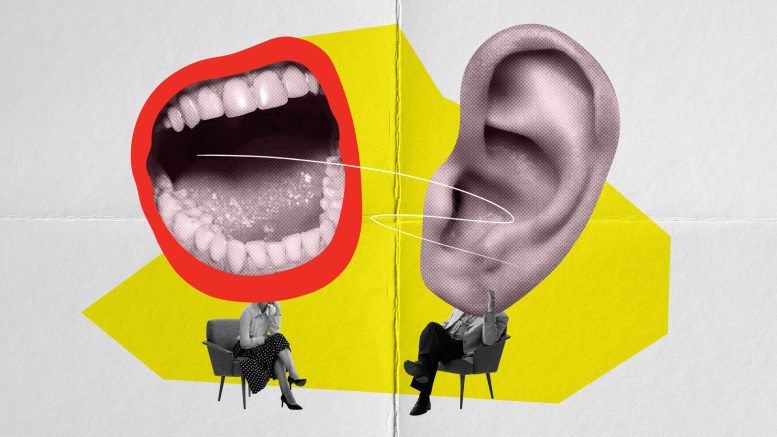
A survey found non-native English-speaking scientists face major disadvantages, slowing research and career growth. Researchers urge institutions and journals to provide better language support and revise evaluation practices.
An international survey led by the University of Queensland has quantified the cost of a “clear and significant” language barrier encountered by scientists who are not native English speakers.
The research, led by Dr. Tatsuya Amano from UQ, involved a survey of 908 environmental science researchers. It explored scientific activities in five areas – reading, writing, publication, dissemination, and conference participation. The findings revealed significant disadvantages for individuals for whom English is not a native language in every category.
“Compared to native English speakers, non-native English speakers need up to twice as much time to conduct each of these activities,” Dr Amano said. “Their papers are also rejected two-and-a-half times more and requested to be revised twelve-and-a-half times more. These challenges put non-native English speakers at a particularly significant disadvantage, as paper publication is already quite a stressful process for many. We were also surprised to find one-third give up attending, and half give up presenting at, international conferences just because they aren’t confident in English communication. Conferences provide important opportunities to develop your research network, so this language barrier is causing many promising careers to stagnate.”
Researchers are concerned that these barriers have been driving many non-native English speakers to drop out of scientific careers at an early stage.
“This is a serious problem in academia in terms of equity, but also an immense loss to scientific communities,” Dr Amano said. “We are potentially losing a huge contribution to science from a massive number of people, simply because their first language isn’t English.”
Researchers say unlocking the potential of disadvantaged communities is one of the urgent challenges in science today.
The Need for Diversity in Scientific Collaboration
“We already know that collaboration involving a diverse group of people can better solve problems and deliver higher levels of scientific innovation and impacts,” Dr Amano said. “As we face down several global issues, such as biodiversity and climate crises, the need to tap into a diversity of people, views, knowledge systems, and solutions is more important than ever.”
As part of the study, the internationally collaborative project outlined several ways the scientific community can help resolve the mounting problem.
“Anyone can do a wide range of things to support non-native English speakers – if you’re a supervisor, you should acknowledge these disadvantages and provide financial, logistical, and mental support,” Dr Amano said. “While many institutions provide training opportunities, they should be more diligent in accounting for these disadvantages when evaluating the performance of non-native English speakers. As the gatekeepers of science, many journals should also be doing more to proactively tackle this issue, for example, by providing free language editing support and more broadly supporting the multilingualisation of science. For ages, being fluent in English has been the ticket to the world of academia. We need to move away from this old view so that anyone, anywhere in the world can thrive and shine in academia.”
Reference: “The manifold costs of being a non-native English speaker in science” by Tatsuya Amano, Valeria Ramírez-Castañeda, Violeta Berdejo-Espinola, Israel Borokini, Shawan Chowdhury, Marina Golivets, Juan David González-Trujillo, Flavia Montaño-Centellas, Kumar Paudel, Rachel Louise White and Diogo Veríssimo, 18 July 2023, PLOS Biology.
DOI: 10.1371/journal.pbio.3002184
Never miss a breakthrough: Join the SciTechDaily newsletter.
Follow us on Google and Google News.