
Close Menu
    Facebook X (Twitter) Instagram
    SciTechDaily
    • Biology
    • Chemistry
    • Earth
    • Health
    • Physics
    • Science
    • Space
    • Technology
    Facebook X (Twitter) Pinterest YouTube RSS
    SciTechDaily
    Home»Science»What Makes a Voice Attractive? Researchers Find Surprising Differences Between Genders
    Science

    What Makes a Voice Attractive? Researchers Find Surprising Differences Between Genders

    By American Institute of PhysicsSeptember 3, 2021No Comments3 Mins Read
    Facebook Twitter Pinterest Telegram LinkedIn WhatsApp Email Reddit
    Share
    Facebook Twitter LinkedIn Pinterest Telegram Email Reddit
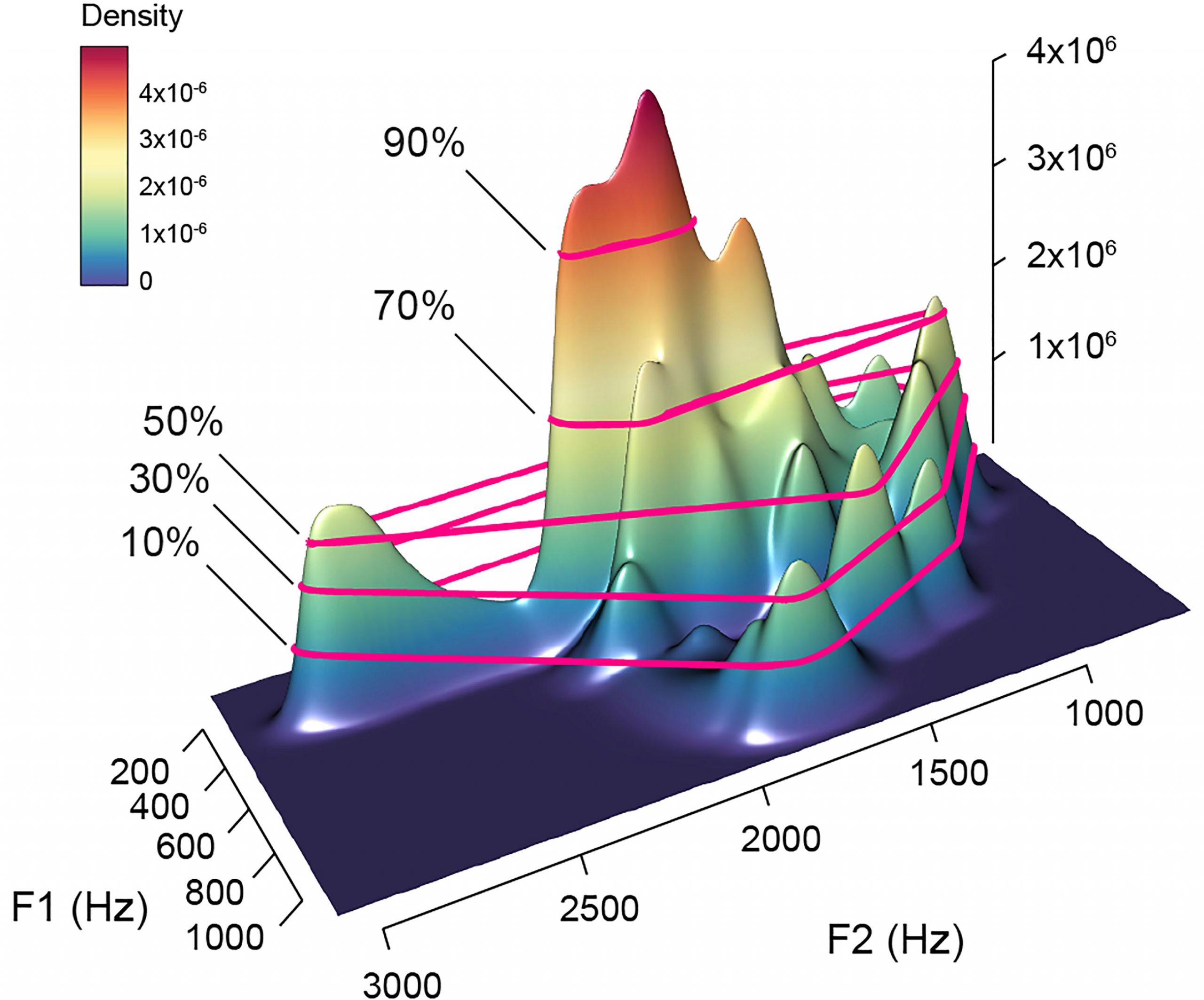
    Single Talker Vowel Space Area
    This graphic illustrates the vowel space area from a single talker. Each peak corresponds to different vowel nuclei, and as speech increases in clarity, on average, the total area enclosed by these peaks becomes larger. Credit: University of California, Irvine; University of Utah

    Voices of Reason? Study Links Acoustic Correlations, Gender to Vocal Appeal

    What makes a voice attractive? The question is a subject of broad interest, with far-reaching implications in our personal lives, the workplace, and society.

    In The Journal of the Acoustical Society of America, published by the Acoustical Society of America through AIP Publishing, scientists from the University of California, Irvine and the University of Utah describe research that explores the interactions between gender and articulatory precision to gauge vocal attractiveness.

    “Much received wisdom and many vocal coaches would encourage people to slow down and carefully enunciate to make a better impression on their audience,” said co-author Daniel Stehr. “However, when it comes to empirical studies of how attractiveness of the human voice is judged, we couldn’t find previous work investigating whether an actual link exists between perceived attractiveness and overall clarity of articulation.”

    Gender Differences in Speech Intelligibility

    Stehr and his peers were surprised to find, however, a sizable gender difference in speech intelligibility. In previous studies, people asked to transcribe recorded sentences made fewer mistakes with female talking samples. 

    Usually, a strong difference between genders, known as sexual dimorphism, is an indication that vocal traits can serve as relevant cues to attractiveness, a likely outcome of the forces of sexual selection. Even within genders, variability in acoustic parameters related to speech clarity makes it a fertile area for vocal attractiveness research.

    To gauge this variability, the researchers recorded 42 individuals performing various speech tasks and used separate pools of participants to rate the vocal attractiveness of the recorded talkers. They investigated how successfully acoustic correlates of clear speech may predict attractiveness ratings, focusing on the concept of “vowel space area” — a quantitative index of intelligibility — as a main acoustic feature.

    The researchers found this feature, among others, is strongly predictive of vocal attractiveness ratings, accounting for a remarkable 73% of the variance in ratings. But these results were true only for female talkers. 

    Evolutionary Theories and Male Voice Perceptions

    The researchers conjecture the lack of relationship between male vocal attractiveness and acoustic correlates of clearly produced speech is linked to compelling yet paradoxical evolutionary hypotheses.

    “From a sexual selection standpoint, males with traits that are slightly more masculine than average are typically preferred, which in this context would make males with less clear speech more attractive,” said Stehr. “At the same time, constricted vowel space area and lower perceived clarity is associated with a range of speech motor disorders, suggesting a lack of clarity may also have indicated the presence of disease to our ancestors.”

    Reference: “Examining vocal attractiveness through articulatory working space” by Daniel A. Stehr, Gregory Hickok, Sarah Hargus Ferguson and Emily D. Grossman, 31 August 2021, The Journal of the Acoustical Society of America.
    DOI: 10.1121/10.0005730

    Never miss a breakthrough: Join the SciTechDaily newsletter.
    Follow us on Google and Google News.

    Acoustics American Institute of Physics Communication Language Speech
    Share. Facebook Twitter Pinterest LinkedIn Email Reddit

    Related Articles

    AI Cracks the Ocean’s Acoustic Code to Reveal Hidden Marine Life

    From “Ouch” To “Wow”: The Universal Sounds of Human Emotion

    Scientists Uncover Mysterious Long-Distance Whale Synchronization

    Hidden Complexity: Unlocking the Mysteries of Orangutan Communication

    Rhythm Over Alphabet: Why Babies Need Nursery Rhymes for Language Mastery

    The Battle of Tongues: When Languages Collide, Which Survives?

    Stifled Success: “Significant” Language Barrier in Science Could Cost Countless Careers

    Why Do British People Sound So Smart?

    Killer Whales Engage in Cross-Species Vocal Learning

    Leave A Reply Cancel Reply

    • Facebook
    • Twitter
    • Pinterest
    • YouTube

    Don't Miss a Discovery

    Subscribe for the Latest in Science & Tech!

    Trending News

    Scientists Say This Natural Hormone Reverses Obesity by Targeting the Brain

    35-Million-Year-Old Mystery: Strange Arachnid Discovered Preserved in Amber

    Is AI Really Just a Tool? It Could Be Altering How You See Reality

    JWST Reveals a “Forbidden” Planet With a Baffling Composition

    The Protein “Sabotaging” Aging Muscle Recovery Could Be Key to Surviving Aging

    This Diet–Gut Interaction Could Transform Fat Into a Calorie-Burning Machine

    Scientists Discover Hidden Virus Linked to Colorectal Cancer

    Scientists Discover 132-Million-Year-Old Dinosaur Tracks on South Africa’s Coast

    Follow SciTechDaily
    • Facebook
    • Twitter
    • YouTube
    • Pinterest
    • Newsletter
    • RSS
    SciTech News
    • Biology News
    • Chemistry News
    • Earth News
    • Health News
    • Physics News
    • Science News
    • Space News
    • Technology News
    Recent Posts
    • Scientists Can Now Read Your Body Clock From a Single Hair
    • Beyond “Safe Levels”: Study Challenges What We Know About Pesticides and Cancer
    • Researchers Have Found a Dietary Compound That Increases Longevity
    • 5 Things Experts Say You’re Getting Wrong About Protein
    • Scientists Create “Optical Tornadoes” That Twist Light Into a Swirling Vortex
    Copyright © 1998 - 2026 SciTechDaily. All Rights Reserved.
    • Science News
    • About
    • Contact
    • Editorial Board
    • Privacy Policy
    • Terms of Use

    Type above and press Enter to search. Press Esc to cancel.