

Close Menu
    Facebook X (Twitter) Instagram
    SciTechDaily
    • Biology
    • Chemistry
    • Earth
    • Health
    • Physics
    • Science
    • Space
    • Technology
    Facebook X (Twitter) Pinterest YouTube RSS
    SciTechDaily
    Home»Health»In the Near Future, a Little Saliva May Be Enough To Detect Cancer
    Health

    In the Near Future, a Little Saliva May Be Enough To Detect Cancer

    By University of GothenburgFebruary 8, 2024No Comments3 Mins Read
    Facebook Twitter Pinterest Telegram LinkedIn WhatsApp Email Reddit
    Share
    Facebook Twitter LinkedIn Pinterest Telegram Email Reddit
    Saliva Test Dentist
    Researchers at the University of Gothenburg have developed an AI-enhanced method to analyze sugar molecule structures (glycans) in cells, identifying cancer-specific changes. This breakthrough could lead to simple saliva or blood tests for early cancer detection and type identification.

    In the future, a little saliva may be enough to detect an incipient cancer. Researchers at the University of Gothenburg have developed an effective way to interpret the changes in sugar molecules that occur in cancer cells.

    Glycans are a type of sugar molecule structures that is linked to the proteins in our cells. The structure of the glycan determines the function of the protein. It has been known for a while that changes in glycan structure can indicate inflammation or disease in the body. Now, researchers at the University of Gothenburg have developed a way to distinguish different types of structural changes, which may provide a precise answer to what will change for a specific disease.
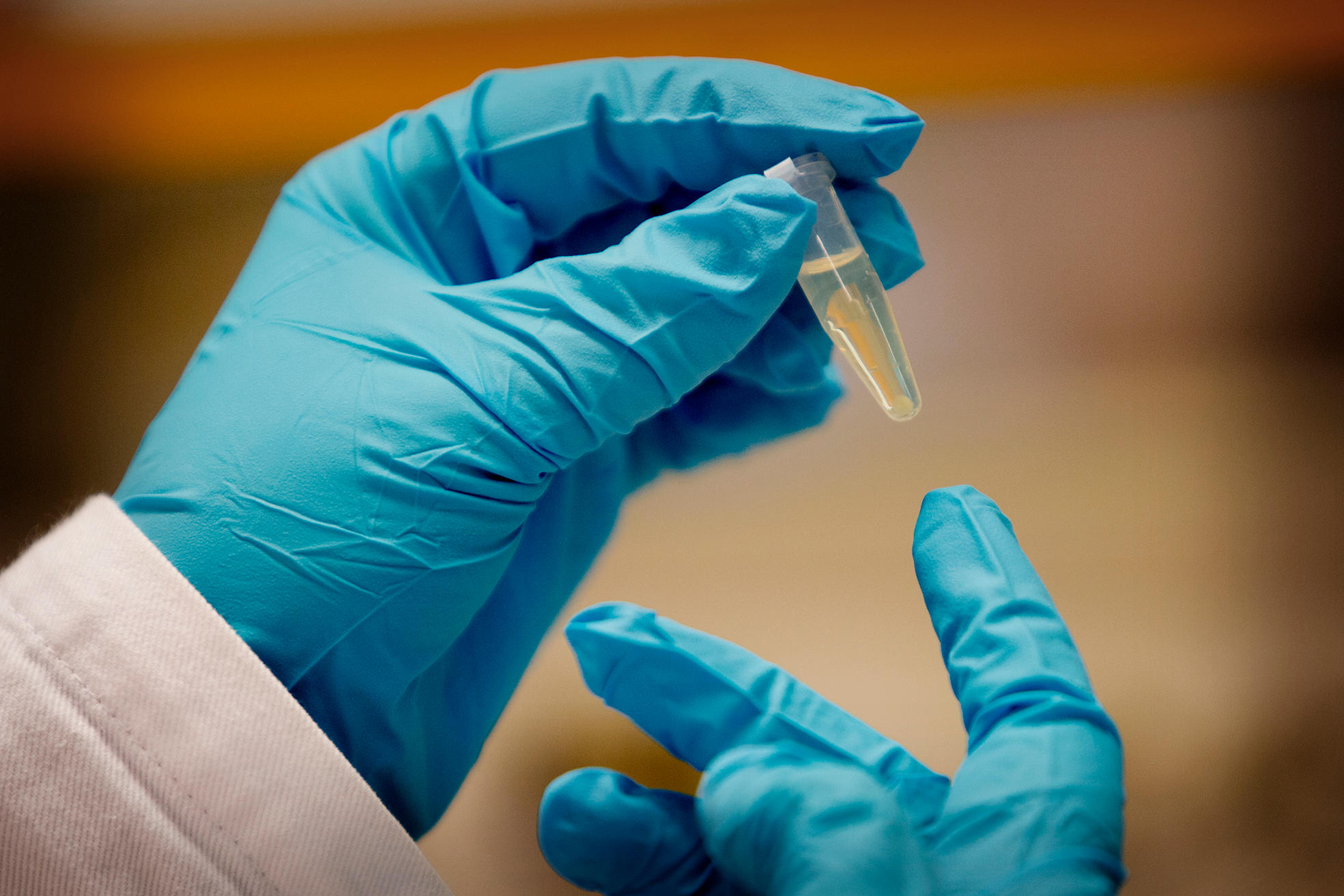
    Glycan Structures Sugar Analysis
    By analyzing changes in glycan structures in the cell, researchers can detect different types of cancer. Credit: Malin Arnesson

    “We have analyzed data from about 220 patients with 11 differently diagnosed cancers and have identified differences in the substructure of the glycan depending on the type of cancer. By letting our newly developed method, enhanced by AI, work through large amounts of data, we were able to find these connections,” says Daniel Bojar, associate senior lecturer in bioinformatics at the University of Gothenburg and lead author of the study published in Cell Reports Methods.

    Daniel Bojar
    Daniel Bojar, researcher at the University of Gothenburg. Credit: Johan Wingborg

    AI-enhanced method found the patterns

    There are also other research groups that study the substructures of the glycan in search of so-called biomarkers that describe what is wrong. This often involves statistical tests using mass spectroscopy to find out whether the level of individual sugars is significantly higher or lower in cancer. These tests have too low sensitivity and are not reliable because different sugars are structurally related and therefore not independent of each other.

    Daniel Bojar’s research team uses a new method that includes AI, which takes these problems into account and can find the patterns in the data sets where others fail.

    “We can rely on our results; they are statistically significant. If we know what we are looking for, it is easier to find the correct result. Now we will take these biomarkers and develop test methods,” says Daniel Bojar.

    New mass spectrometer

    During the fall, his research group received SEK 4 million from the Lundberg Foundation to purchase a state-of-the-art mass spectrometer. This instrument will serve as an AI platform to support researchers in the study of glycans, for example in lung cancer samples. The aim is to detect the cancer earlier to improve the chances of recovery.

    “We want to develop a reliable and rapid analytical method to detect cancer, and also the type of cancer, through a blood sample or saliva. I think we might be able to perform clinical tests on human samples in 4-5 years,” says Daniel Bojar.

    Reference: “Decoding glycomics with a suite of methods for differential expression analysis” by Jon Lundstrøm, James Urban and Daniel Bojar, 21 November 2023, Cell Reports Methods.
    DOI: 10.1016/j.crmeth.2023.100652

    Never miss a breakthrough: Join the SciTechDaily newsletter.
    Follow us on Google and Google News.

    Artificial Intelligence Cancer University of Gothenburg
    Share. Facebook Twitter Pinterest LinkedIn Email Reddit

    Related Articles

    New AI Model Can Detect Cancer Clues at Lightning Speed

    Artificial Intelligence Classifies Brain Tumors With Single MRI Scan

    AI Outperforms Humans in Creating Cancer Treatments – But Do Doctors Trust It?

    New Blood Test Detects Childhood Tumors Based on Their Epigenetic Profiles

    Artificial Intelligence Program Accurately Predicts Lung Cancer Risk

    MIT Mirai: Robust Artificial Intelligence Tools To Predict Future Cancer

    Artificial Intelligence Predicts Drug Combinations That Kill Cancer Cells More Effectively

    New Artificial Intelligence Tool Improves Breast Cancer Detection on Mammography

    Artificial Intelligence Identifies Prostate Cancer With Near-Perfect Accuracy

    Leave A Reply Cancel Reply

    • Facebook
    • Twitter
    • Pinterest
    • YouTube

    Don't Miss a Discovery

    Subscribe for the Latest in Science & Tech!

    Trending News

    Invisible Black Holes Could Be Triggering Supernovae

    Scientists Discover the First Contagious Cancer in a Freshwater Animal

    THC-CBD Treatment Dramatically Reduces Agitation in Dementia Trial

    Scientists Say Love Follows Mathematical Patterns

    “Zombie Cells” Reveal a Hidden Weakness That Could Help Fight Aging

    Alien Signals May Be Hiding in a Radio Band SETI Has Barely Explored

    Earth’s Hidden Thermostat Has Regulated Climate for 60 Million Years

    This 518-Million-Year-Old Creature Reveals How Spiders Got Their Bite

    Follow SciTechDaily
    • Facebook
    • Twitter
    • YouTube
    • Pinterest
    • Newsletter
    • RSS
    SciTech News
    • Biology News
    • Chemistry News
    • Earth News
    • Health News
    • Physics News
    • Science News
    • Space News
    • Technology News
    Recent Posts
    • Archaeology Students Discover Rare 400-Year-Old Intact Pot
    • Killer Whales Filmed Smashing Giant Sunfish Into Thousands of Pieces, Possibly for Fun
    • New Strategy Shows Promise Against the Deadliest Brain Cancer
    • Teen Walks Independently After Treatment Targets the Genetic Root of Epilepsy
    • Hair Loss May Be an Overlooked Side Effect of Ozempic and Mounjaro
    Copyright © 1998 - 2026 SciTechDaily. All Rights Reserved.
    • Science News
    • About
    • Contact
    • Editorial Board
    • Privacy Policy
    • Terms of Use

    Type above and press Enter to search. Press Esc to cancel.