
Close Menu
    Facebook X (Twitter) Instagram
    SciTechDaily
    • Biology
    • Chemistry
    • Earth
    • Health
    • Physics
    • Science
    • Space
    • Technology
    Facebook X (Twitter) Pinterest YouTube RSS
    SciTechDaily
    Home»Technology»Soaring to Sustainability: NASA and Boeing’s X-66 Pioneers Net-Zero Emissions
    Technology

    Soaring to Sustainability: NASA and Boeing’s X-66 Pioneers Net-Zero Emissions

    By NASAMarch 9, 2024No Comments2 Mins Read
    Facebook Twitter Pinterest Telegram LinkedIn WhatsApp Email Reddit
    Share
    Facebook Twitter LinkedIn Pinterest Telegram Email Reddit
    NASA Boeing X-66 Aircraft
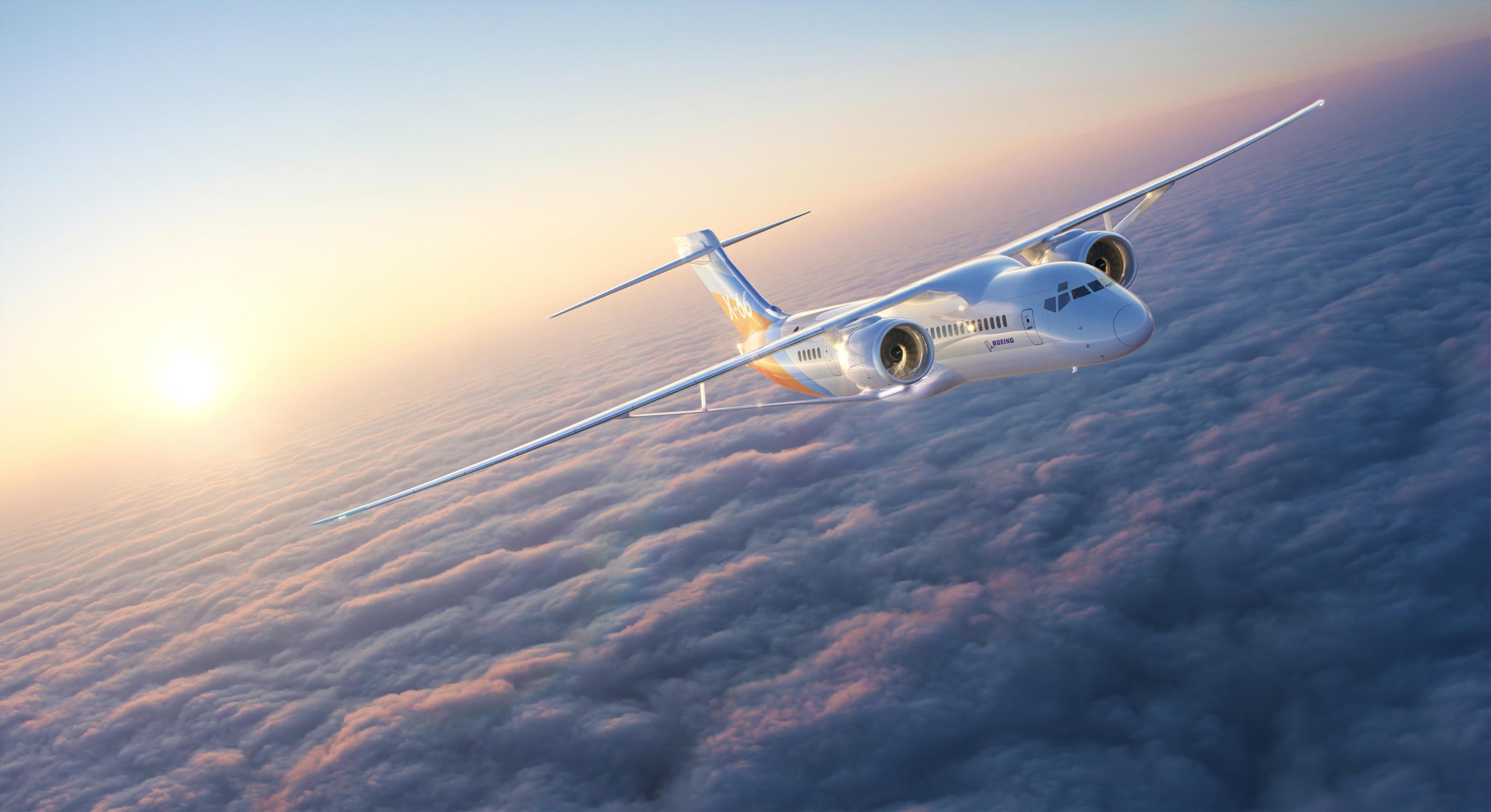
    Artist’s concept of the X-66 aircraft that Boeing will produce through NASA’s Sustainable Flight Demonstrator project. Credit: NASA

    NASA and Boeing are developing the X-66, an innovative aircraft designed to advance net-zero aviation emissions by 2050. Featuring the Transonic Truss-Braced Wing concept, it promises significant fuel and emissions reductions.

    As NASA and Boeing enter the early stages of producing the X-66, the first X-plane specifically focused on helping the United States achieve net-zero aviation emissions by 2050, the team is already picturing what the aircraft will look like soaring above the clouds.

    A new rendering of the X-66 from Boeing demonstrates the aircraft’s signature extra-long, thin wings stabilized by diagonal struts, known as the Transonic Truss-Braced Wing concept. When combined with other advancements in propulsion systems, materials, and systems architecture, this configuration could result in up to 30% less fuel consumption and reduced emissions when compared with today’s best-in-class aircraft.

    Under the Sustainable Flight Demonstrator project, Boeing will work with NASA to build, test, and fly the full-scale X-66 demonstrator aircraft. The project seeks to inform a new generation of more sustainable single-aisle aircraft – the workhorse of passenger airlines around the world. Boeing transported the MD-90 aircraft that will be turned into the X-66 to its Palmdale, California facility last year, and has removed its engines as the modifications started.

    The X-66 is a key part of NASA’s Sustainable Flight National Partnership, through which the agency seeks to protect the environment, grow the U.S. economy, and provide new innovations for the traveling public.

    Never miss a breakthrough: Join the SciTechDaily newsletter.
    Follow us on Google and Google News.

    NASA Plane
    Share. Facebook Twitter Pinterest LinkedIn Email Reddit

    Related Articles

    High Flyers Go Green: NASA’s Trailblazing Study on Aircraft Contrails and Sustainable Fuel

    NASA’s X-59: A Supersonic Aircraft’s Patriotic Paint Transformation

    Sustainable Skies: NASA and Boeing Unveil the X-66A Aircraft

    This One Weird Trick by NASA Is Saving Billions of Gallons of Fuel

    Mission Accomplished: NASA’s X-57, the Pioneering Electric Aircraft That Never Took Off

    NASA’s Newest X-Plane: Next Generation Experimental Aircraft X-66A “Will Help Shape the Future of Aviation”

    Jet Engine Installed on NASA’s X-59 QueSST Quiet Supersonic Aircraft

    Major Milestone As NASA’s X-59 QueSST Quiet SuperSonic Technology Aircraft Comes Together

    NASA to Test Jet Engine With a Helping of Cereal and Crayons

    Leave A Reply Cancel Reply

    • Facebook
    • Twitter
    • Pinterest
    • YouTube

    Don't Miss a Discovery

    Subscribe for the Latest in Science & Tech!

    Trending News

    The Strange “Spacetime Crystal” That Can Suddenly Turn Into a Black Hole

    The Surprising Way Asteroids May Have Helped Life Begin on Earth

    Vast Hidden Structure Discovered Under Miles of Ice in East Antarctica

    A Surprising Discovery Suggests Autism Is Not One Condition

    New Alzheimer’s Discovery Could Change How Scientists Fight the Disease

    Yale Discovery Overturns Long-Held “Evolutionary Dead End” Theory

    UCLA Scientists Uncover a “Hidden Weakness” in Some of the World’s Deadliest Cancers

    Humpback Whale Stuns Scientists With 15,000 Kilometer Journey Across Oceans

    Follow SciTechDaily
    • Facebook
    • Twitter
    • YouTube
    • Pinterest
    • Newsletter
    • RSS
    SciTech News
    • Biology News
    • Chemistry News
    • Earth News
    • Health News
    • Physics News
    • Science News
    • Space News
    • Technology News
    Recent Posts
    • Food Waste Becomes a Powerful Carbon Trap in Climate Breakthrough
    • Battery-Free Artificial Photosynthesis Turns Sunlight, Water, and CO2 Into Fuel
    • How Ancient People Moved a 6-Ton Stone 700 Kilometers to Stonehenge
    • Scientists Finally See How Antibodies Really Attack Viruses
    • The Unexpected Gut Health Risk of Cutting Out Sugar
    Copyright © 1998 - 2026 SciTechDaily. All Rights Reserved.
    • Science News
    • About
    • Contact
    • Editorial Board
    • Privacy Policy
    • Terms of Use

    Type above and press Enter to search. Press Esc to cancel.