
Close Menu
    Facebook X (Twitter) Instagram
    SciTechDaily
    • Biology
    • Chemistry
    • Earth
    • Health
    • Physics
    • Science
    • Space
    • Technology
    Facebook X (Twitter) Pinterest YouTube RSS
    SciTechDaily
    Home»Technology»Jet Engine Installed on NASA’s X-59 QueSST Quiet Supersonic Aircraft
    Technology

    Jet Engine Installed on NASA’s X-59 QueSST Quiet Supersonic Aircraft

    By Matt Kamlet, NASA Armstrong Flight Research CenterNovember 19, 20222 Comments2 Mins Read
    Facebook Twitter Pinterest Telegram LinkedIn WhatsApp Email Reddit
    Share
    Facebook Twitter LinkedIn Pinterest Telegram Email Reddit
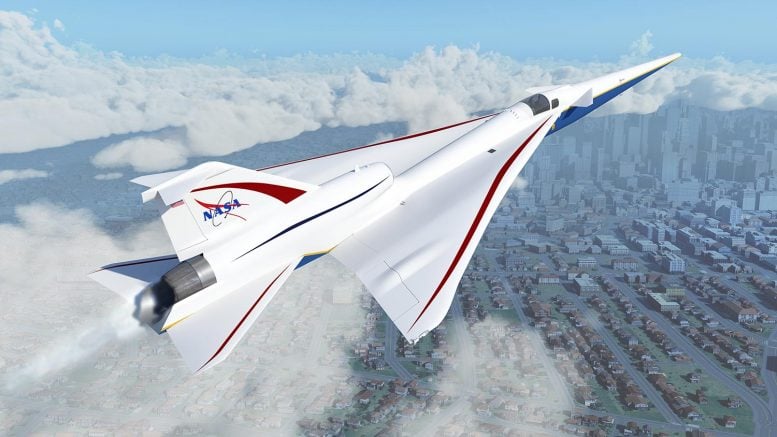
    NASA X-59 Quiet SuperSonic Technology Aircraft
    NASA’s X-59 Quiet SuperSonic Technology aircraft, or QueSST, is designed to fly faster than the speed of sound without producing a loud, disruptive sonic boom, which is typically heard on the ground below aircraft flying at such speeds. Instead, with the X-59, people on the ground will hear nothing more than a quiet sonic thump – if they hear anything at all. Credit: NASA / Joey Ponthieux

    NASA’s quiet supersonic X-59 aircraft now has the jet engine that will power it in flight.

    Earlier this month, at Lockheed Martin’s Skunk Works facility in Palmdale, California, the F414-GE-100 engine was installed. This marks a major milestone as the X-59 approaches the completion of its assembly.

    The F414-GE-100 engine from General Electric Aviation measures 13-foot-long and packs 22,000 pounds of propulsion energy and will power the X-59 as it flies at speeds up to Mach 1.4 and altitudes around 55,000 feet.
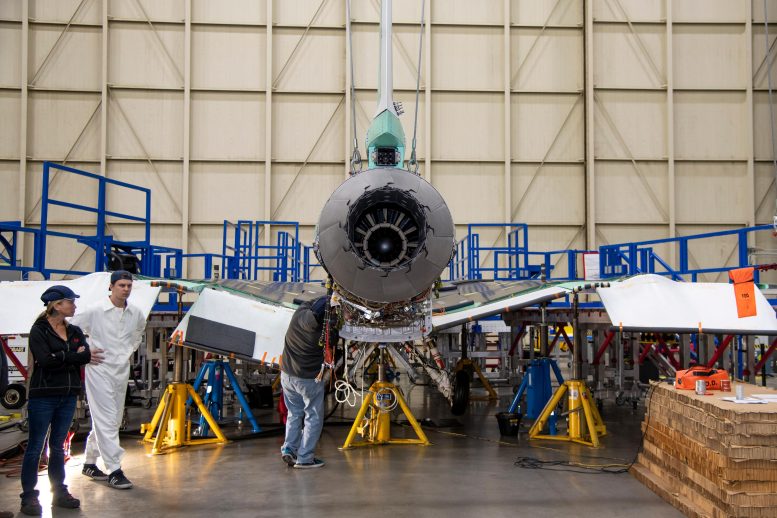
    Jet Engine Installed in NASA’s Quiet Supersonic X-59 Aircraft
    A GE Aviation F414-GE-100 engine is installed in NASA’s quiet supersonic X-59 aircraft, at Lockheed Martin’s Skunk Works facility in Palmdale, California. The 13-foot-long engine packs 22,000 pounds of propulsion energy and will power the X-59 to speeds up to Mach 1.4. Installation of the engine marks a major milestone as the X-59 nears assembly completion, taxi tests, and first flight. Credit: NASA/Carla Thomas

    “The engine installation is the culmination of years of design and planning by the NASA, Lockheed Martin, and General Electric Aviation teams,” said Ray Castner, NASA’s propulsion performance lead for the X-59. “I am both impressed with and proud of this combined team that’s spent the past few months developing the key procedures, which allowed for a smooth installation.”

    The X-59 team will follow the aircraft’s assembly with a series of ground tests and ultimately, first flight in 2023.

    NASA’s X-59 is the centerpiece of the agency’s Quesst mission. The aircraft is designed to reduce the sound of sonic booms, which occur when an aircraft flies at supersonic speeds, to a quiet sonic “thump.” This will be demonstrated when NASA flies the X-59 over communities around the U.S. starting in 2025, with the goal of providing the data necessary to open the future to commercial supersonic flight over land, greatly reducing flight times.

    Never miss a breakthrough: Join the SciTechDaily newsletter.
    Follow us on Google and Google News.

    NASA NASA X-59 Quesst Plane Transportation
    Share. Facebook Twitter Pinterest LinkedIn Email Reddit

    Related Articles

    On the Brink of Revolution: NASA’s Quiet Supersonic X-59 Moves Toward Maiden Flight

    Silencing Sonic Booms: NASA’s X-59 Quiet Supersonic Aircraft Passes Critical Milestone

    NASA X-59 Experimental Aircraft’s Quiet Revolution in Supersonic Flight

    High Flyers Go Green: NASA’s Trailblazing Study on Aircraft Contrails and Sustainable Fuel

    NASA’s X-59: A Supersonic Aircraft’s Patriotic Paint Transformation

    This One Weird Trick by NASA Is Saving Billions of Gallons of Fuel

    NASA’s Newest X-Plane: Next Generation Experimental Aircraft X-66A “Will Help Shape the Future of Aviation”

    Major Milestone As NASA’s X-59 QueSST Quiet SuperSonic Technology Aircraft Comes Together

    NASA to Test Jet Engine With a Helping of Cereal and Crayons

    2 Comments

    1. Daniel Farley on November 19, 2022 2:05 pm

      Awesome. I wish that I could ride it.

      Reply
    2. Włodzimierz K. Kordylewski on December 26, 2024 12:43 am

      Impressive.

      Reply
    Leave A Reply Cancel Reply

    • Facebook
    • Twitter
    • Pinterest
    • YouTube

    Don't Miss a Discovery

    Subscribe for the Latest in Science & Tech!

    Trending News

    Mezcal “Worm” in a Bottle Mystery: DNA Testing Reveals a Surprise

    New Research Reveals That Your Morning Coffee Activates an Ancient Longevity Switch

    This Is What Makes You Irresistible to Mosquitoes

    Shockingly Powerful Giant Octopuses Ruled the Seas 100 Million Years Ago

    Scientists Stunned by New Organic Molecules Found on Mars

    Rewriting Dinosaur Evolution: Scientists Unearth Remarkable 150-Million-Year-Old Stegosaur Skull

    Omega-3 Supplements Linked to Cognitive Decline in Surprising New Study

    First-of-Its-Kind Discovery: Homer’s Iliad Found Embedded in a 1,600-Year-Old Egyptian Mummy

    Follow SciTechDaily
    • Facebook
    • Twitter
    • YouTube
    • Pinterest
    • Newsletter
    • RSS
    SciTech News
    • Biology News
    • Chemistry News
    • Earth News
    • Health News
    • Physics News
    • Science News
    • Space News
    • Technology News
    Recent Posts
    • Male Birth Control Breakthrough: Scientists Find Way To Turn Sperm Production Off and Back On
    • A Common Vitamin Could Hold the Key to Treating Fatty Liver Disease
    • New Research Shows Vitamin B12 May Hold the Key to Healthy Aging
    • Scientists Map Thousands of Brain Connections With RNA Barcodes
    • This Gene Tweak Turns Strawberries Into Healthier, Tastier Superfruit
    Copyright © 1998 - 2026 SciTechDaily. All Rights Reserved.
    • Science News
    • About
    • Contact
    • Editorial Board
    • Privacy Policy
    • Terms of Use

    Type above and press Enter to search. Press Esc to cancel.