
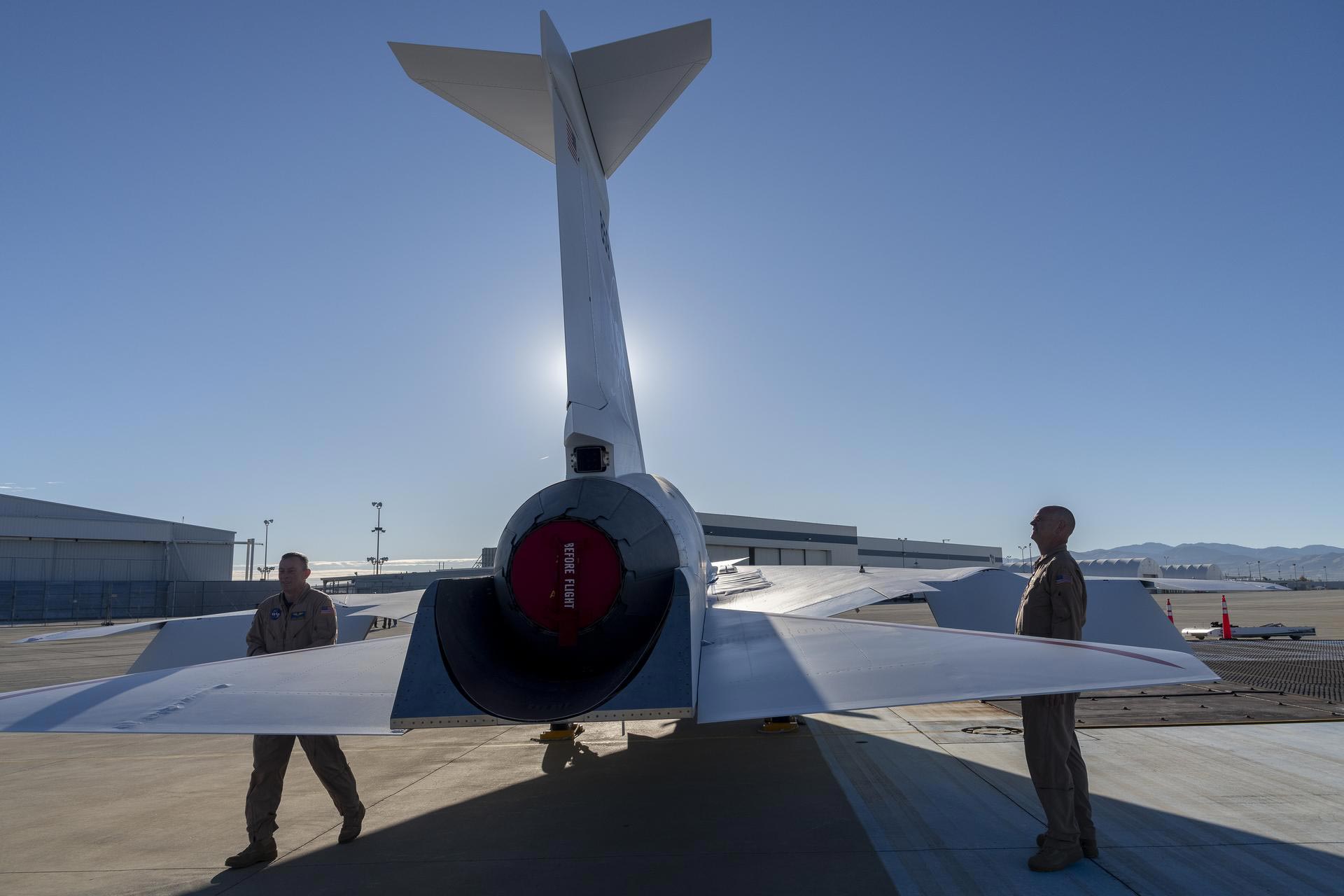
NASA’s X-59 quiet supersonic aircraft project has reached a critical milestone with the completion of the Flight Readiness Review, paving the way for future flight testing.
NASA has advanced the airworthiness verification of its quiet supersonic X-59 aircraft with the completion of a milestone review that will allow it to progress toward flight.
An independent Flight Readiness Review board comprising experts from throughout NASA has concluded a detailed evaluation of the X-59 project team’s safety strategies for the public and staff during both ground and flight testing. The board meticulously examined the team’s assessment of potential hazards, focusing on safety and risk identification.
Insights and Next Steps for Flight Readiness
The Flight Readiness Review is the first step in the flight approval process. The board’s work will provide the X-59 team with insights and recommendations toward systems checkouts on the ground and first flight.
“It’s not a pass-fail,” said Cathy Bahm, NASA’s Low Boom Flight Demonstrator project manager. “We’ll be getting actions from the board and will work with them to resolve those and work toward the Airworthiness and Flight Safety Review.”
Reducing Sonic Booms
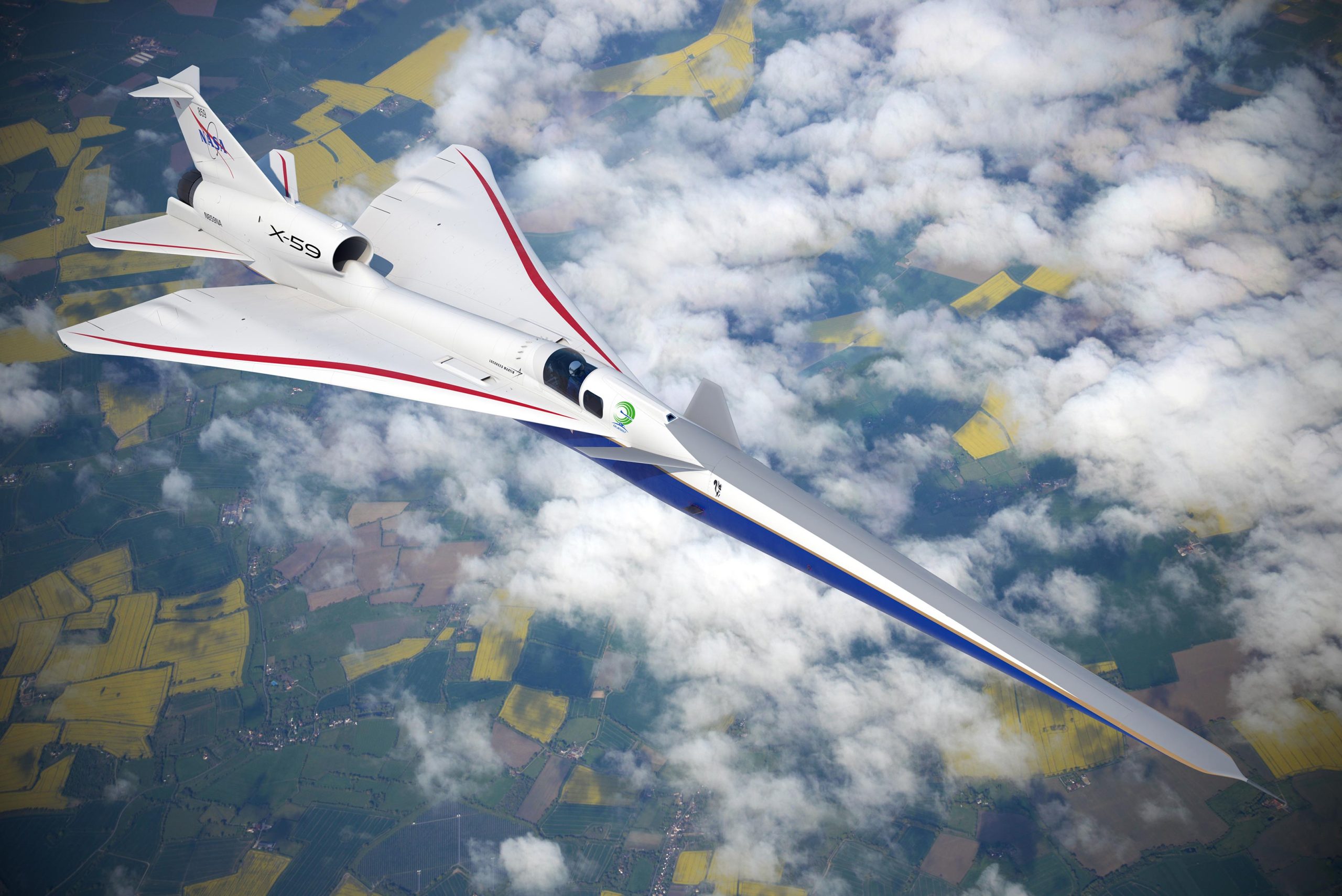
NASA and prime contractor Lockheed Martin are developing the X-59 to reduce the sound of a sonic boom to a quieter “thump.” The aircraft is at the center of NASA’s Quesst mission, which will use it to gather data that could revolutionize air travel, potentially paving the way for a new generation of commercial aircraft that can travel faster than the speed of sound.
Commercial supersonic flight over land has been banned for more than 50 years because of the noise of sonic booms.
X-59 Team Update
“The Flight Readiness Review focused on specific aspects of the X-59 team’s work on the aircraft, but also served as an overview and update on the entire project,” said Jay Brandon, chief engineer for the Low Boom Flight Demonstrator project.
“It gave us the opportunity to stop working for a minute and gather what we’ve done so we could tell our story, not just to the board, but to the whole project team,” Brandon said.
With the Flight Readiness Review complete, the upcoming Airworthiness and Flight Safety Review will be the next safety milestone.
The Airworthiness and Flight Safety Review board includes senior leaders from several NASA centers and Lockheed Martin. It will review findings from the Flight Readiness Review, as well as the project team’s response to those filings. The board will send a recommendation to NASA Armstrong Flight Research Center’s director, who signs the airworthiness certificate.
Finally, the team will provide a technical brief to another review board based on test objectives, how the tests are being carried out, the risks involved, and the risk-mitigation actions the team has taken. The X-59 team would have to address any issues raised in the brief before the board, led by NASA Armstrong chief engineer Cynthia J. “CJ” Bixby, will sign a flight request.
“It’s really an exciting time on the project,” Bahm said. “It’s not an easy road, but there’s a finite set of activities that are in front of us.”
The Path Forward
There are significant steps to be completed before flights can begin. The X-59 team is preparing for upcoming major ground tests focused on systems integration engine runs, and electromagnetic interference.
The X-59 aircraft is a bold, new design, but many of its components are from well-established aircraft, including landing gear from an Air Force F-16 fighter, a cockpit canopy from a NASA T-38 trainer, and a control stick from an Air Force F-117 stealth fighter are among those parts.
“None of these systems have ever worked and played together before,” said Brad Neal, chairman for the X-59 Airworthiness and Flight Safety Review board. “It’s a brand-new thing that we are developing, even though they’re components that have been on different legacy aircraft. As we get into integration testing here, it’s going to be a great opportunity to learn.’’
Never miss a breakthrough: Join the SciTechDaily newsletter.
Follow us on Google and Google News.
6 Comments
Just because thumps are milder and not initially frequent doesn’t mean they might not have serious health consequences for those affected by them.
Can thumps startle drivers causing distraction or risky reactions?
Can pressure waves upset smaller aircraft or throw off auto-pilots, at critical times?
Can thumps wake up light sleepers or those not in deep sleep, ruining sleep, health and life, increasing sleepy people on the road, at work and producing other sleep deprivation consequences?
Tom, life is full of risks. You can hide in a bunker if you’re that worried. Empirically, thumps from other sources have not brought the end to humanity so most of us consider this low risk.
Why did I just read an article that taught me absolutely nothing about HOW this aircraft is theoretically supposed to suppress the sound of a sonic boom? I read this whole thing wanting to learn about some new badass technology and was given nothing. Not to mention nothing about the crafts eventual top speed potential and passenger capacity and a number of other questions I have. No I gotta go research this craft cuz this article didn’t tell me a damn thing except of the x-59’s existence. And btw.. I agree with Ben… Tom, you don’t even know how loud or quiet these thumps will be so just cool your panicky jets for a moment lol it’ll be ok.. hope thunder doesn’t cause societies collapse as we wait for this aircraft to cause it ehh?? Smh..
Everything will be fine until the pilot forgets to put their cell phone on Airplane Mode.
OK, but the X-59 is almost 60, and that’s somewhat over the hill in age altho I’m nearly 70… I force myself to eat & do things that improve my overall health. Anyway, I believe X goes with Out, as in X’d Out, which kind’a sounds like it might be over before it gets off the ground. So, I just have to say what I’ve seen with my own 2 👁👁 🛸 durung the day, and like nothing I’ve seen before, it told me a great deal about what & where we are in time,,, Biologically of course,, as in Dinosaurs!
The nose looks like a spear tip or dagger. A name could be the “X-59 Dagger”