
Close Menu
    Facebook X (Twitter) Instagram
    SciTechDaily
    • Biology
    • Chemistry
    • Earth
    • Health
    • Physics
    • Science
    • Space
    • Technology
    Facebook X (Twitter) Pinterest YouTube RSS
    SciTechDaily
    Home»Technology»On the Brink of Revolution: NASA’s Quiet Supersonic X-59 Moves Toward Maiden Flight
    Technology

    On the Brink of Revolution: NASA’s Quiet Supersonic X-59 Moves Toward Maiden Flight

    By NASAAugust 18, 20244 Comments4 Mins Read
    Facebook Twitter Pinterest Telegram LinkedIn WhatsApp Email Reddit
    Share
    Facebook Twitter LinkedIn Pinterest Telegram Email Reddit
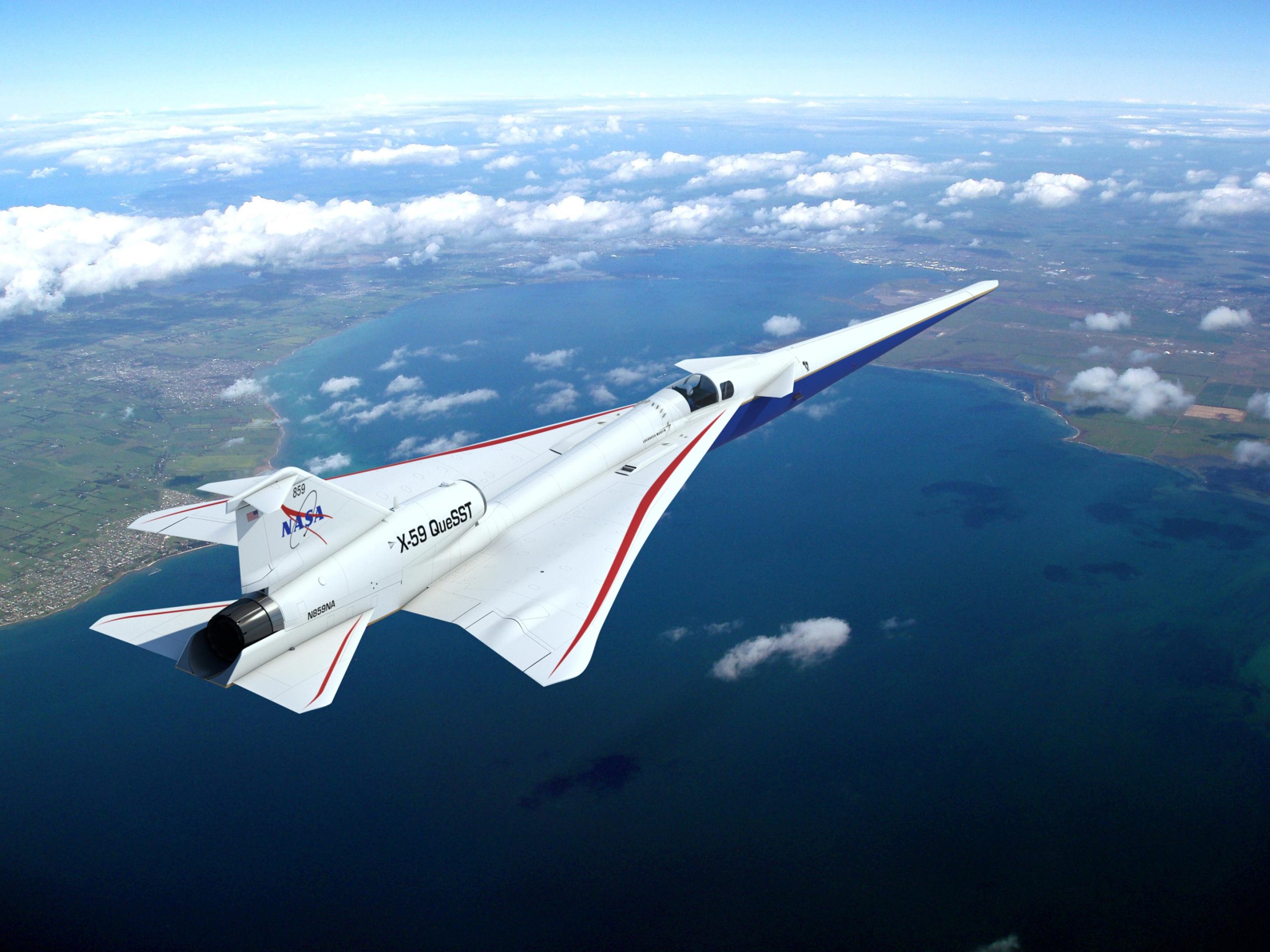
    NASA’s X-59 QueSST
    The X-59 supersonic aircraft is nearing its first flight, with extensive testing to ensure it meets safety and performance standards for quieter, faster travel. This includes critical structural and avionics tests. Credit: Lockheed Martin

    NASA’s experimental X-59 aircraft is in the final stages of testing before its first flight, focusing on ensuring it can surpass the speed of sound without the disruptive sonic boom.

    The tests range from structural integrity assessments to control system evaluations, setting the stage for a new era in quiet supersonic travel.

    NASA’s X-59 Testing

    The team preparing NASA’s X-59 continues through testing in preparation for the quiet supersonic aircraft to make its first flight. This includes a trio of important structural tests and critical inspections on the path to flight.

    The X-59 is an experimental plane that will fly faster than the speed of sound without a loud sonic boom. It will be the first of its kind to fly, with the goal of gathering sound data for NASA’s Quesst mission, which could open the door to commercial supersonic overland flight in the future.
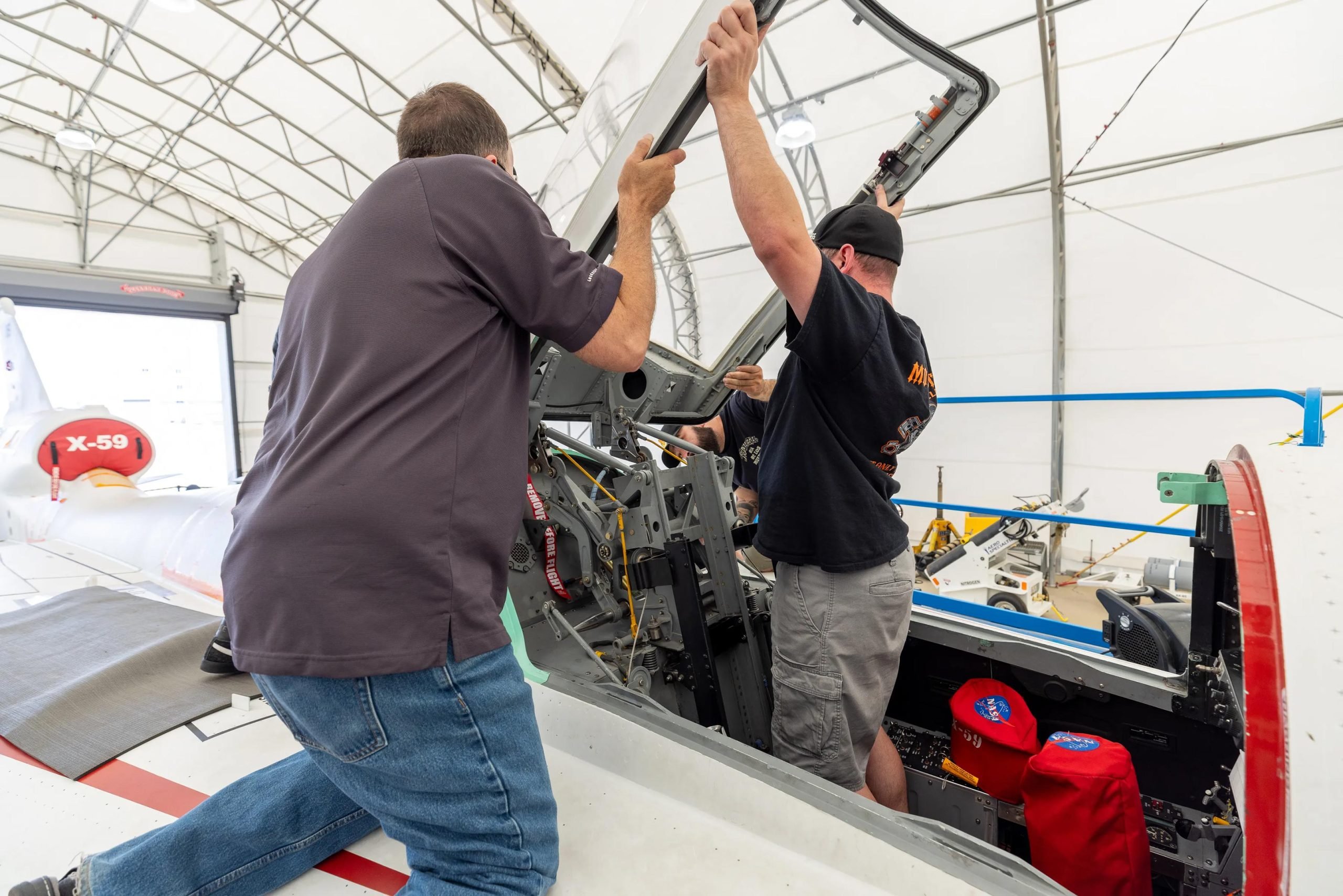
    X-59 Canopy Removal
    Lockheed Martin technicians temporarily remove the canopy from the X-59 in preparation for final installation of the ejection seat into the aircraft. Credit: Lockheed Martin

    Engineering Challenges and Ground Testing

    Because of its unique design, the X-59’s engineering team must do all it can to predict every aspect of it before it ever takes off, including how its fuselage, wings, and the control surfaces will behave together in flight. That means testing on the ground to give the team the data it needs to validate the models they’ve developed.

    “The testing not only tells us how structurally sound the aircraft is, but also what kind of forces it can take once it is in the air.”

    Walt Silva, Senior Research Scientist at NASA Langley Research Center in Hampton, Virginia, who serves as structures lead for the X-59.

    Data Collection and Structural Analysis

    The X-59’s structural tests provide the team with valuable feedback. From 2022 to –2024 the engineers collected data on the forces that the aircraft will experience in flight and the potential effects of vibrations on the plane.

    “You do these tests, you get the data, and things compare well in some areas and in other areas you want to improve them,” Silva said. “So, you figure that all out and then you work towards making it better.”
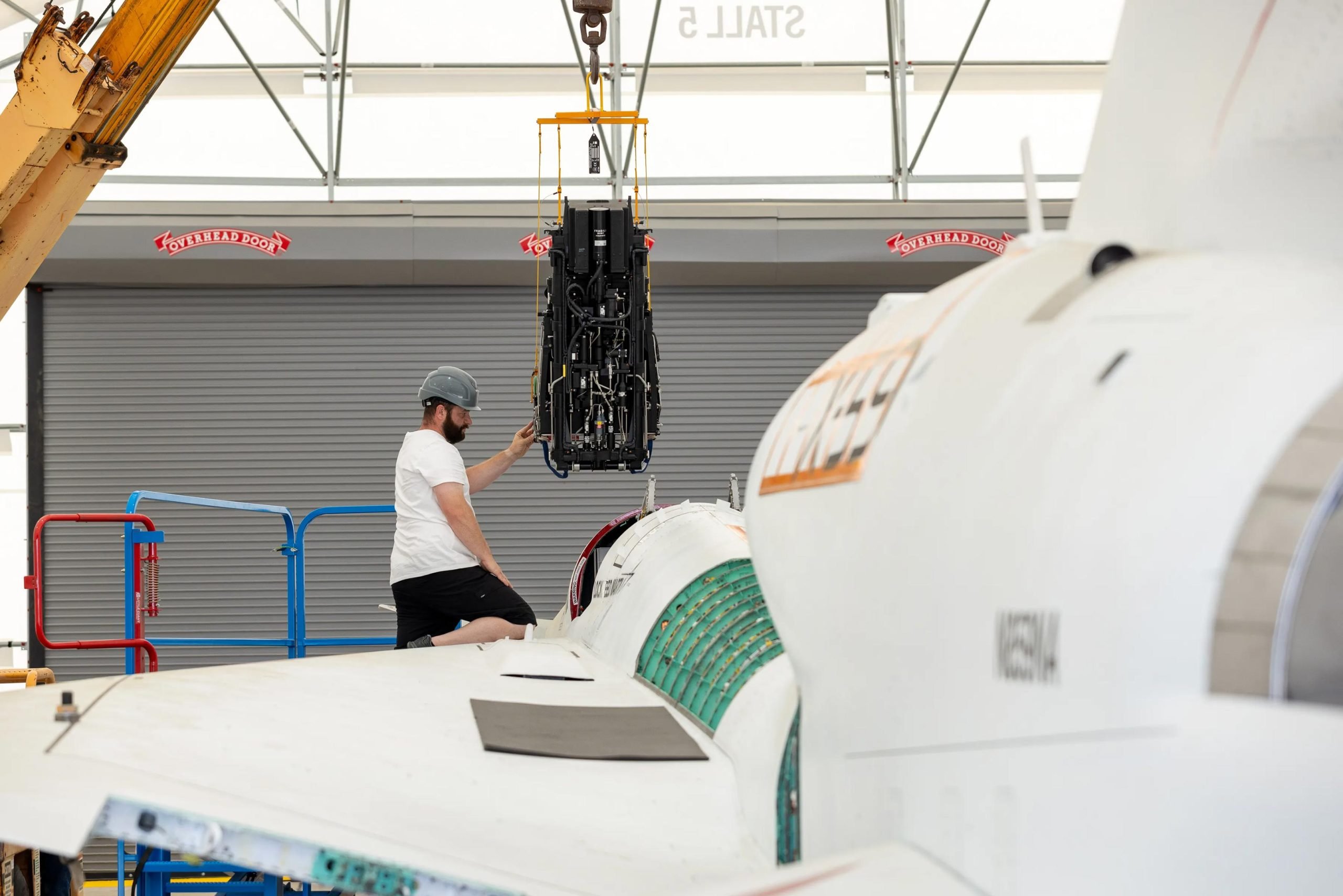
    X-59 Ejection Seat Installed Into the Aircraft
    NASA Life Support Technician Mathew Sechler provides support as the X-59’s ejection seat is installed into the aircraft at Lockheed Martin Skunk Works’ facilities in Palmdale, California. Completion of the seat’s installation marks an integration milestone for the aircraft as it prepares for final ground tests. Credit: Lockheed Martin

    Final Preparations and Anticipation

    Earlier this year, the X-59 underwent structural coupling tests that saw its control surfaces, including its ailerons, flaps and rudder, moved by computer. It was the last of three vital structural tests. In 2023, engineers applied “shakers” to parts of the plane to evaluate its response to vibrations, and in early 2022 they conducted a proof test to ensure the aircraft would absorb the forces it will experience during flight. This year the X-59 ejection seat was installed and passed inspection. The ejection seat is an additional safety measure that is critical for pilot safety during all aspects of flight.

    With structural tests and ejection seat installation complete, the aircraft will advance toward a new milestone, starting up its engines for a series of test runs on the ground.

    Also ahead for the X-59 is testing the airplane’s avionics and extensive wiring for potential electromagnetic interference, imitating flight conditions in a ground test environment, and finally, completing taxi tests to validate ground mobility before first flight.

    “First flights are always very intense,” said Natalie Spivey, aerospace engineer at NASA’s Armstrong Flight Research Center in Edwards, California. “There’s lots of anticipation, but we’re ready to get there and see how the aircraft responds in the air. It’ll be very exciting.”

    Never miss a breakthrough: Join the SciTechDaily newsletter.
    Follow us on Google and Google News.

    NASA NASA X-59 Quesst Plane Popular Transportation
    Share. Facebook Twitter Pinterest LinkedIn Email Reddit

    Related Articles

    NASA’s X-59 Quesst: Overturning the 50-Year-Old Supersonic Speed Limit

    Silencing Sonic Booms: NASA’s X-59 Quiet Supersonic Aircraft Passes Critical Milestone

    NASA X-59 Experimental Aircraft’s Quiet Revolution in Supersonic Flight

    NASA’s Newest X-Plane: Next Generation Experimental Aircraft X-66A “Will Help Shape the Future of Aviation”

    NASA’s Quesst Mission: X-59 Quiet Supersonic Technology Aircraft Gets Its Tail

    Jet Engine Installed on NASA’s X-59 QueSST Quiet Supersonic Aircraft

    NASA’s X-59 Quiet Supersonic Experimental Aircraft Arrives Back in California Following Critical Ground Tests

    Major Milestone As NASA’s X-59 QueSST Quiet SuperSonic Technology Aircraft Comes Together

    NASA to Test Jet Engine With a Helping of Cereal and Crayons

    4 Comments

    1. Eric M. Jones on August 18, 2024 11:20 am

      The best news is that an accident will only affect billionaires.

      Reply
    2. eski delpuerto on August 18, 2024 3:51 pm

      fu_ck a sonic boom. think of it as thunder.

      Reply
      • Jerseyman on August 18, 2024 5:39 pm

        Did you see the Chinese knockoff? Walz X69!

        Reply
    3. Boba on August 18, 2024 6:15 pm

      As quiet as Oklahoma car bomb.

      Reply
    Leave A Reply Cancel Reply

    • Facebook
    • Twitter
    • Pinterest
    • YouTube

    Don't Miss a Discovery

    Subscribe for the Latest in Science & Tech!

    Trending News

    Breakthrough Bowel Cancer Trial Leaves Patients Cancer-Free for Nearly 3 Years

    Natural Compound Shows Powerful Potential Against Rheumatoid Arthritis

    100,000-Year-Old Neanderthal Fossils in Poland Reveal Unexpected Genetic Connections

    Simple “Gut Reset” May Prevent Weight Gain After Ozempic or Wegovy

    2.8 Days to Disaster: Scientists Warn Low Earth Orbit Could Suddenly Collapse

    Common Food Compound Shows Surprising Power Against Superbugs

    5 Simple Ways To Remember More and Forget Less

    The Atomic Gap That Could Cost the Semiconductor Industry Billions

    Follow SciTechDaily
    • Facebook
    • Twitter
    • YouTube
    • Pinterest
    • Newsletter
    • RSS
    SciTech News
    • Biology News
    • Chemistry News
    • Earth News
    • Health News
    • Physics News
    • Science News
    • Space News
    • Technology News
    Recent Posts
    • After 37 Years, the World’s Longest-Running Soil Warming Experiment Uncovers a Startling Climate Secret
    • NASA Satellite Captures First-Ever High-Res View of Massive Pacific Tsunami
    • ADHD Isn’t Just a Deficit: Study Reveals Powerful Hidden Strengths
    • Scientists Uncover “Astonishing” Hidden Property of Light
    • Scientists Discover Stem Cells That Could Regrow Teeth and Bone
    Copyright © 1998 - 2026 SciTechDaily. All Rights Reserved.
    • Science News
    • About
    • Contact
    • Editorial Board
    • Privacy Policy
    • Terms of Use

    Type above and press Enter to search. Press Esc to cancel.