
Close Menu
    Facebook X (Twitter) Instagram
    SciTechDaily
    • Biology
    • Chemistry
    • Earth
    • Health
    • Physics
    • Science
    • Space
    • Technology
    Facebook X (Twitter) Pinterest YouTube RSS
    SciTechDaily
    Home»Space»NASA Solves Mystery: Identifies Object That Crashed Into Florida Home
    Space

    NASA Solves Mystery: Identifies Object That Crashed Into Florida Home

    By NASAApril 17, 20241 Comment3 Mins Read
    Facebook Twitter Pinterest Telegram LinkedIn WhatsApp Email Reddit
    Share
    Facebook Twitter LinkedIn Pinterest Telegram Email Reddit
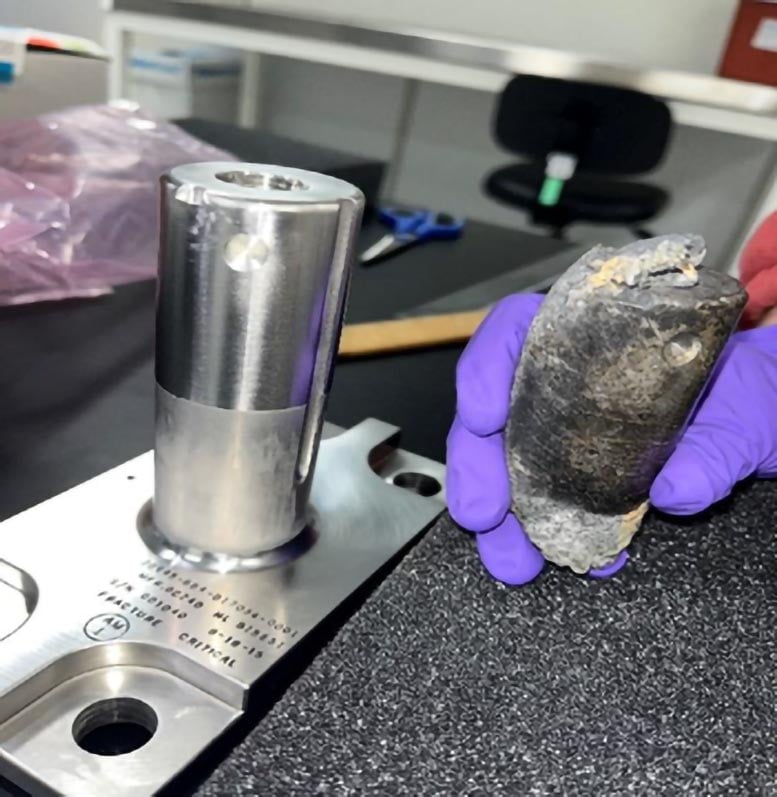
    NASA Flight Support Equipment Recovered Stanchion
    Recovered stanchion from the NASA flight support equipment used to mount International Space Station batteries on a cargo pallet. The stanchion survived re-entry through Earth’s atmosphere on March 8, 2024, and impacted a home in Naples, Florida. Credit: NASA

    Following the unexpected crash of space debris into a Florida residence, NASA conducted an investigation that identified the debris as discarded battery equipment from the ISS. The agency is now focused on understanding how such incidents can be prevented.

    In March 2021, NASA ground controllers used the International Space Station’s robotic arm to release a cargo pallet containing aging nickel hydride batteries from the space station following the delivery and installation of new lithium-ion batteries as part of power upgrades on the orbital outpost. The total mass of the hardware released from space station was about 5,800 pounds.

    The hardware was expected to fully burn up during entry through Earth’s atmosphere on March 8, 2024. However, a piece of hardware survived re-entry and impacted a home in Naples, Florida. NASA collected the item in cooperation with the homeowner and analyzed the object at the agency’s Kennedy Space Center in Florida.
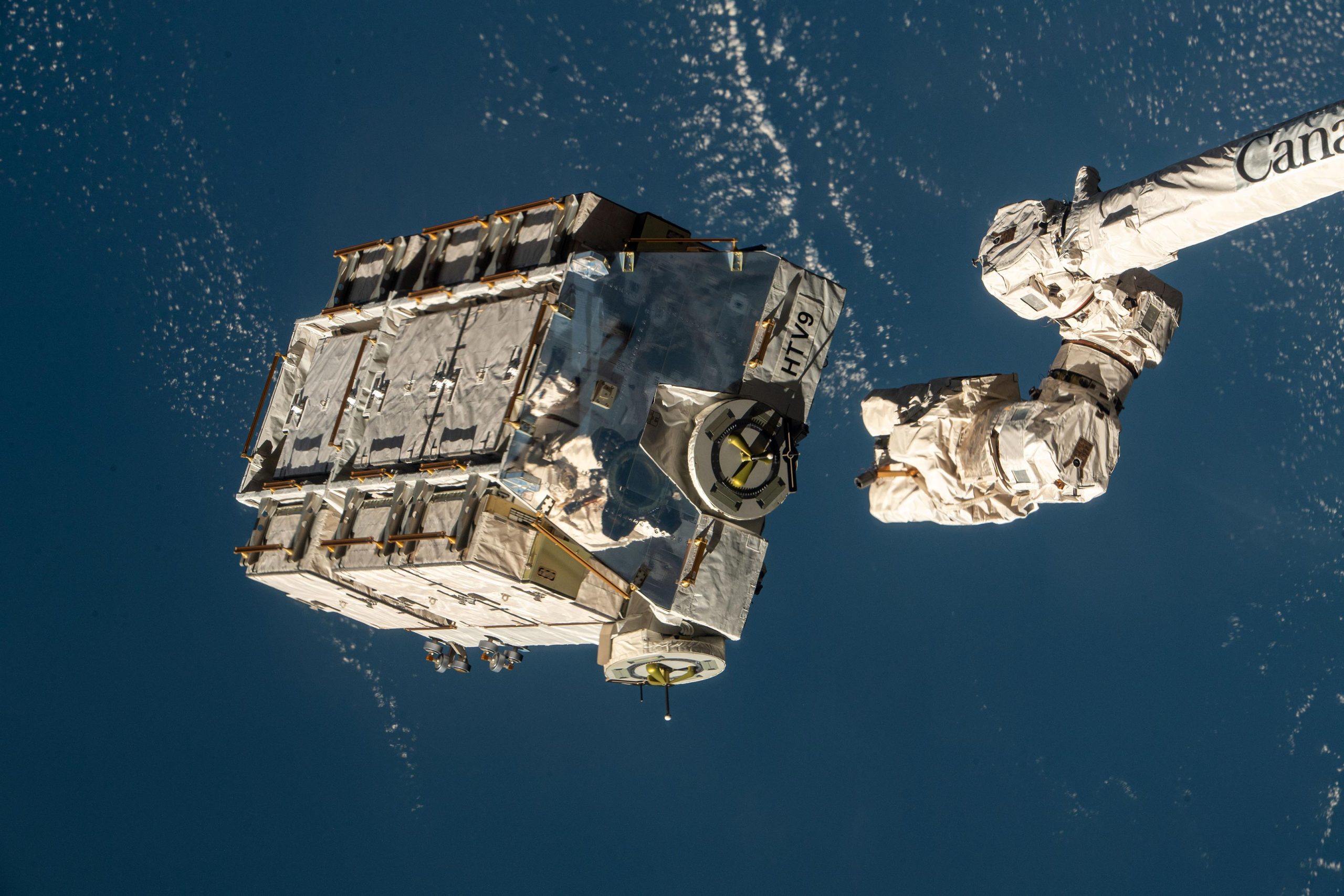
    External Pallet Packed With Old Nickel-Hydrogen Batteries
    An external pallet packed with old nickel-hydrogen batteries is released from the Canadarm2 robotic arm as the International Space Station orbited 260 miles above the Pacific Ocean west of Central America. Mission controllers in Houston commanded the Canadarm2 to release the external pallet into space where it was expected to orbit Earth between two to four years before burning up harmlessly in the atmosphere. The batteries were removed during previous spacewalks and replaced with newer lithium-ion batteries to continue powering the station’s systems. Credit: NASA

    As part of the analysis, NASA completed an assessment of the object’s dimensions and features compared to the released hardware and performed a materials analysis. Based on the examination, the agency determined the debris to be a stanchion from the NASA flight support equipment used to mount the batteries on the cargo pallet. The object is made of the metal alloy Inconel, weighs 1.6 pounds, is 4 inches in height and 1.6 inches in diameter.

    The International Space Station will perform a detailed investigation of the jettison and re-entry analysis to determine the cause of the debris survival and to update modeling and analysis, as needed. NASA specialists use engineering models to estimate how objects heat up and break apart during atmospheric re-entry. These models require detailed input parameters and are regularly updated when debris is found to have survived atmospheric re-entry to the ground.

    NASA remains committed to responsibly operating in low Earth orbit, and mitigating as much risk as possible to protect people on Earth when space hardware must be released.

    Never miss a breakthrough: Join the SciTechDaily newsletter.
    Follow us on Google and Google News.

    International Space Station NASA Popular Space Debris
    Share. Facebook Twitter Pinterest LinkedIn Email Reddit

    Related Articles

    Debris Avoidance Maneuver: Space Station Thrusters Fire To Avoid Russian Space Junk

    Splashdown! NASA’s SpaceX Crew-4 Safely Returns to Earth

    NASA’s SpaceX Crew-5 Picture-Perfect Launch to International Space Station

    Boeing’s Starliner Successfully Docks to International Space Station for the First Time

    Boeing Starliner Launches to Space Station on NASA Uncrewed Flight Test

    Splashdown! NASA SpaceX Crew-3 Astronauts Safely Return to Earth

    LIFTOFF! NASA SpaceX Crew-4 Astronauts Begin Their Journey to the Space Station

    Axiom Mission 1 Private Astronaut Crew Safely Splashes Down Near Florida

    Dragon Endeavour Departs Space Station – Axiom Astronauts Finally Returning to Earth

    1 Comment

    1. Nah Suh on April 17, 2024 7:51 pm

      NASA remains committed to burning millions of gallons of fossil fuel launching things and then dropping them back down a few tons at a time. It should burn into metal vapor for you to breathe in, unless it crashes into your house or anyone or anything else on the surface of Earth. But would you mind breathing out less? NASA remains very concerned about how your carbon dioxide is ruining their planet.

      Reply
    Leave A Reply Cancel Reply

    • Facebook
    • Twitter
    • Pinterest
    • YouTube

    Don't Miss a Discovery

    Subscribe for the Latest in Science & Tech!

    Trending News

    Researchers Warn Widely Prescribed Blood Pressure Drugs Could Be Harming Diabetic Kidneys

    James Webb Spots Something Strange Between Day and Night on an Alien Planet

    How Ancient People Moved a 6-Ton Stone 700 Kilometers to Stonehenge

    The Unexpected Gut Health Risk of Cutting Out Sugar

    Popular Weight-Loss Drugs Like Ozempic Linked to Lower Breast Cancer Risk

    AI Learned the Rules of the Universe and That Became a Problem

    Scientists Found a Hidden Brain Signal That Predicts Social Behavior

    Even GPT-5 Failed This Human Attention Test

    Follow SciTechDaily
    • Facebook
    • Twitter
    • YouTube
    • Pinterest
    • Newsletter
    • RSS
    SciTech News
    • Biology News
    • Chemistry News
    • Earth News
    • Health News
    • Physics News
    • Science News
    • Space News
    • Technology News
    Recent Posts
    • A Fatal Deer Disease May Be Spreading in Ways No One Expected
    • 68 Quadrillion Miles: Scientists Map Earth’s Vast Hidden Fungal Network for the First Time
    • Breakthrough Fentanyl Vaccine Could Neutralize Designer Drugs and Prevent Overdoses
    • Researchers Expected Ozempic Weight Loss to Boost Exercise. It Didn’t
    • Hidden Damage From Youth May Explode Into Disease Later in Life
    Copyright © 1998 - 2026 SciTechDaily. All Rights Reserved.
    • Science News
    • About
    • Contact
    • Editorial Board
    • Privacy Policy
    • Terms of Use

    Type above and press Enter to search. Press Esc to cancel.