
Scientists say aging may expose decades of hidden damage, helping trigger diseases that seem to appear out of nowhere in later life.
A recent review published in Aging-US explores a fresh way of understanding why aging is so closely linked to chronic disease.
In the paper, “Aging as a multifactorial disorder with two stages,” researchers David Gems and Alexander Carver of University College London, along with Yuan Zhao of Queen Mary University of London, propose a new model that explains how aging contributes to diseases later in life. Drawing from evolutionary biology and other areas of research, they suggest that aging results from a combination of damage accumulated earlier in life and genetic processes that become harmful as people grow older. According to the authors, this interaction may help explain why conditions such as cancer, arthritis, and certain infections become more common with age.
A Two-Stage View of Aging
Aging is considered the strongest risk factor for most chronic illnesses, yet scientists still debate exactly why growing older increases disease risk. To address this question, the researchers introduce a two-stage framework.
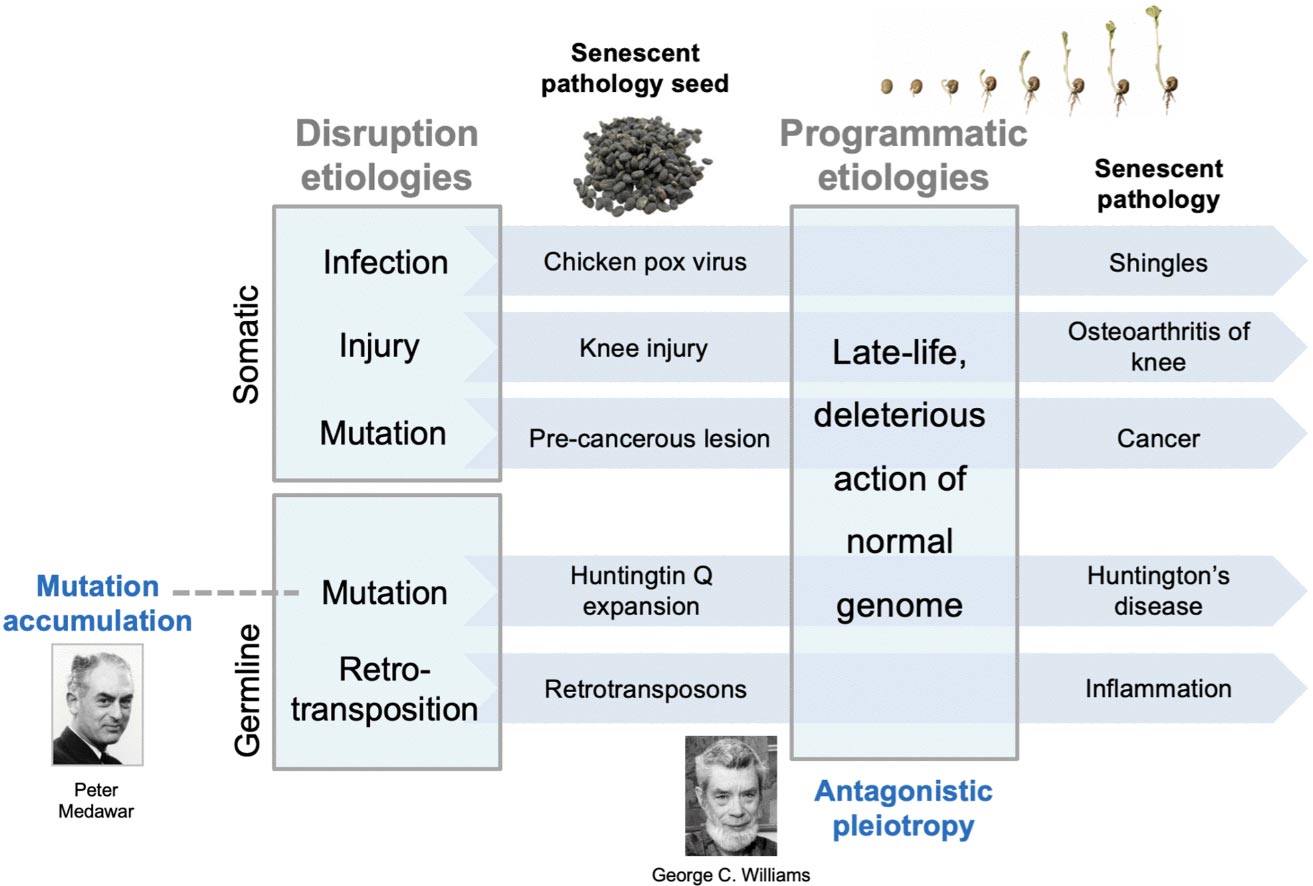
The first stage occurs earlier in life and involves events such as infections, injuries, and genetic mutations. While the body is often able to repair or control much of this damage, some of it remains. Over time, these lingering effects can persist beneath the surface without causing immediate illness.
The second stage begins later in life. During this period, biological processes that once served useful functions start producing unintended consequences. These age-related changes reduce the body’s ability to keep earlier damage under control. As a result, previously contained problems can progress and eventually contribute to disease.
How Early Damage and Aging Work Together
The review argues that aging is not driven by a single cause. Instead, it is a multifactorial process involving many interacting factors.
Under the proposed model, early-life damage and later-life genetic activity combine to increase the likelihood of age-related disease. The authors point to several examples. Dormant viruses that remain inactive for years can reactivate when immune defenses weaken in older age, leading to illnesses such as shingles. Joint injuries sustained earlier in life may contribute to osteoarthritis decades later as aging tissues become less resilient. Likewise, inherited genetic mutations can remain silent for many years before eventually playing a role in diseases including cancer and fibrosis.
Evolutionary Biology and Aging Research
The researchers base their model in part on established ideas from evolutionary biology. One key concept is that natural selection becomes less effective later in life, allowing biological processes that are harmless or beneficial earlier on to have negative effects as people age.
The review also draws on studies of the roundworm Caenorhabditis elegans. In these animals, early mechanical damage can eventually lead to fatal infections during old age. The authors suggest that comparable patterns may occur in humans, where damage accumulated over time can interact with age-related biological changes to promote disease.
A New Framework for Healthier Aging
Overall, the review offers a new perspective on how aging and disease become linked over the course of a lifetime. By highlighting the combined roles of early-life damage and late-life genetic activity, the two-stage model provides a framework for understanding why many diseases emerge in older age. The authors say this approach could help guide future efforts aimed at disease prevention, targeted interventions, and healthier aging.
Reference: “Aging as a multifactorial disorder with two stages” by David Gems, Alexander Carver and Yuan Zhao, 30 December 2025, Aging.
DOI: 10.18632/aging.206339
Never miss a breakthrough: Join the SciTechDaily newsletter.
Follow us on Google and Google News.
4 Comments
Once a person reaches past their reproductive years, Nature has little reason to keep them alive. Indeed, it may be advantageous to cull the older individuals to provide more resources for the younger generation that might be carrying desirable mutations.
Then why am I still alive at 82? There must be some benefit to my genome for my advanced years. Could it be cash infusions to my children from what would be their inheritance? Could it be advice based on “I’ve seen this idiot mistake play out before?” Um, no – I get ignored when I tell them about the 300 car freight train barreling down the tracks they just decided to take. It must be something….
Of course, I am fighting what watching this zoo for 8 decades and more has be figuring that intelligence is a mutation for a species that plans to go extinct RSN – in geological terms.
{^_-}
Couldn’t have said it better myself.
Good research money used to state the bleeding obvious, anyone over the age of 60 could have told them this.