
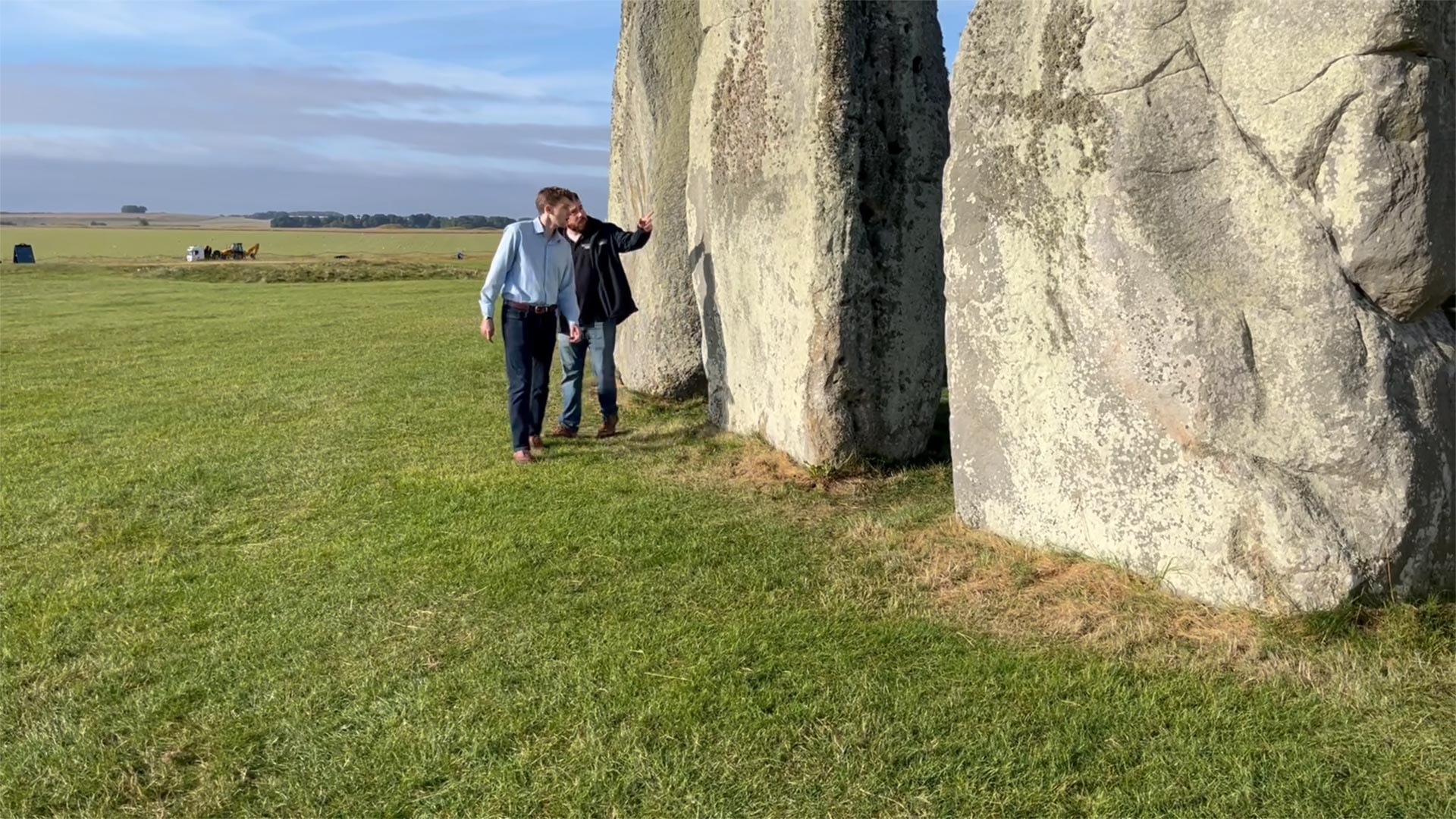
Stonehenge’s giant Altar Stone likely traveled about 700 kilometers from Scotland through a carefully planned human effort.
New research from Curtin University is shedding new light on one of Stonehenge’s biggest mysteries: how a massive stone weighing around six tons made its way across Britain thousands of years ago.
The focus of the study is Stonehenge’s central Altar Stone, a sandstone megalith that researchers now believe originated in northeast Scotland, roughly 700 kilometers (435 miles) from Salisbury Plain. That enormous distance highlights the remarkable scale of the journey and raises new questions about the capabilities of ancient communities.
The findings build on previous research that challenged the idea that glaciers alone transported the stone. The latest evidence further supports the conclusion that people, rather than natural Ice Age processes, were responsible for moving it through difficult terrain.
Tracing the Origin of Stonehenge’s Altar Stone
To better understand how the Altar Stone reached Stonehenge, researchers combined mineral grain dating with computer models that reconstructed the movement of ancient ice sheets. Their goal was to identify the stone’s source and determine whether glaciers could have carried it south.
According to the results, glaciers may have transported rocks from northeast Scotland during the last Ice Age, potentially reaching Dogger Bank in what is now the North Sea. However, the modeling showed no realistic glacial route that could have delivered the Altar Stone all the way to southern England.
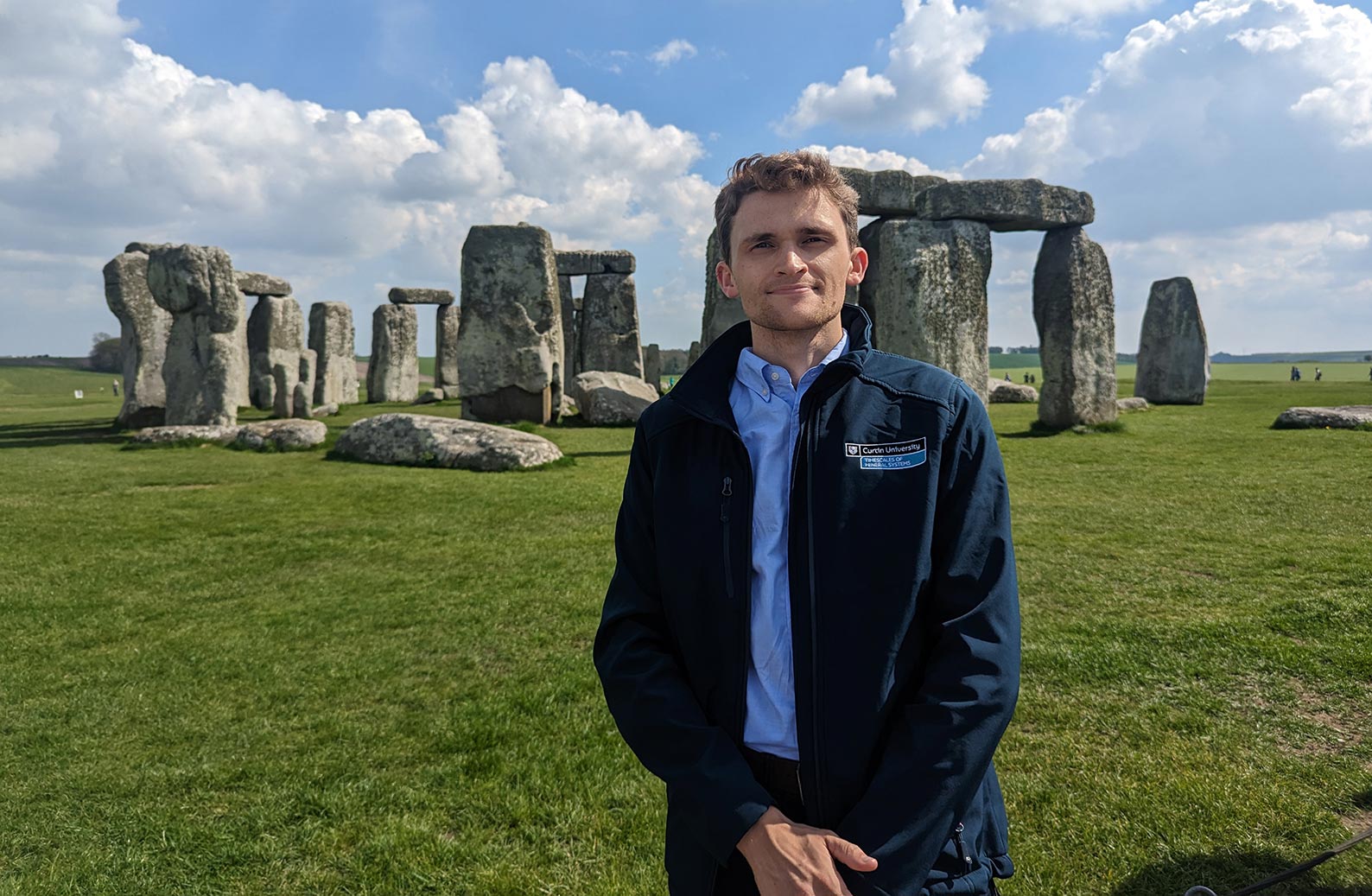
Co-lead author Dr. Anthony Clarke, from the Timescales of Minerals Systems Group within Curtin’s School of Earth and Planetary Sciences, said the evidence points to a far more deliberate process.
“Rather than being carried naturally by ice, the evidence points to a deliberate, carefully planned movement across a challenging and varied landscape,” Dr. Clarke said.
Evidence Points to Human Transport
The researchers found no viable glacial pathways connecting the stone’s source region directly to Stonehenge. As a result, they conclude that people would have had to move the stone over hundreds of kilometers.
“Our modeling shows glaciers may have transported rocks part of the way during the last Ice Age — potentially as far as Dogger Bank in the North Sea — but not into southern England, meaning the stone would still have needed to be moved hundreds of kilometers by people.
“The research indicates there were no viable glacial pathways linking the source region directly to Stonehenge, reinforcing the conclusion that human transport was required.
“Instead, this suggests the stone was likely moved in stages, potentially combining overland hauling with river or coastal transport where possible.”
The study suggests that moving the giant stone was not a single undertaking but a complex journey involving multiple phases. Ancient people may have dragged the stone over land and also taken advantage of rivers or coastal routes to ease parts of the trip.
What the Journey Reveals About Neolithic Britain
Dr. Clarke said the findings highlight a level of planning, cooperation, and knowledge that is not always associated with Neolithic societies.
“Transporting a stone of this size over such a long distance would have required planning, coordination and a deep understanding of the landscape – not to mention tremendous determination,” Dr. Clarke said.
“The study demonstrates how combining geological analysis with computer modeling can help resolve long-standing questions about how Stonehenge was built.”
Researchers plan to continue investigating the Altar Stone’s origins by narrowing down its exact source location in northeast Scotland. Future studies will also explore the routes prehistoric communities may have used to transport the stone across Britain.
Reference: “From Highlands to Henge: Refining the Provenance and Transport Pathways of Stonehenge’s Altar Stone” by Anthony J. I. Clarke, Remy L. J. Veness, Christopher L. Kirkland, Chris D. Clark, Niall Gandy, Andy Emery, Sarah L. Bradley, Jeremy C. Ely and Ignéczi Ádám, 4 June 2026, Journal of Quaternary Science.
DOI: 10.1002/jqs.70080
The project involved researchers from Curtin University as well as experts from Sheffield Hallam University, the University of Sheffield, Wessex Archaeology, and the University of Bristol in the United Kingdom.
Never miss a breakthrough: Join the SciTechDaily newsletter.
Follow us on Google and Google News.
19 Comments
The question comes to mind now is why did they feel the stones needed to be placed where they were rather than where they were from. What makes their current location special?
Stonehenge
Stonehenge….we only think of how it could be made in using our present knowledge + technology…..let’s think outside the box….they moved 1stone from Scotland to do a job…because they could + it was easy with their technology….far beyond us…as with the great pyramid….you only do things that are possible…maybe they we able to make the stone weightless….
We can go to the moon + back but we couldn’t build the great pyramid nowadays…..dont tell me we are clever……we have gone backwards.. we now need ai…to help us ?
The Nephilim moved the stones.
Stonehenge
The Nephilim moved the stones.
Intriguing hypothesis. One that deserved exploration.
“Dr. Clarke said the findings highlight a level of planning, cooperation, and knowledge that is not always associated with Neolithic societies.”
—
This is what I find fascinating! I would love to discover the story behind how they discussed the project, rallied people to help (were they hired or slaves?), communicated over distances without the telephone or internet and WHY they chose Stonehenge as the perfect spot to build on.
My problem is this. If the stones were not transported by glaciers during the ice age what is so special about a field in wiltshire that led ancient Britons to transport the stones from Wales to a field in Wiltshire. Makes no sense at all
Makes no sense to YOU, you mean?
This was likely a holy site for some reason. A king or hero born/ruled/died there. Or it could have had good energies. They didn’t leave a record, so we will not know.
Are you trying to say you haven’t got a clue ?
Look at the giant blocks of stone that they moved thousands of years ago around the world….they have left us clues but we are not intelligent enough now to work this all out….they didn’t have the wheel and diamond cutters ect…and we still think they had only primitive technology…….2.6 million blocks in the great pyramid…and not all the same size…yet fit perfectly without mortar joints….this was NOT their first attempt at this…..we couldn’t do this now ….question….what have we built that equals this in our lifetime?
lol 😂 No one knows what he was saying
Let’s return to Stonehenge……imagine in this present time you are asked to create this stone circle….not local stone…1 stone from Scotland…..no wheel…no roads..no mobile phone ect……get it from the ground, cut accurate shape, move, erect with twine+ wood ect…no hard metals….basic stuff…we cant put the top stone on now without a JCB…….where has all this technology + knowledge gone ? We have gone backwards…
Dude, What the hell have you been smokin’?!
(And how about dialing back the all-caps?…
no more caffeine for you.)
A question for you…..what have we built in our and our parents lifetime that a future race would admire as clever and good engineering? Dont ask ai for a answer…….we are unable now…..we ain’t clever….look at HS2…….says it all
Hasn’t anyone here heard of Wally Wallington, the Michigan carpenter who demonstrated the solution to thee Stonehenge-moving problem 20 years and more ago? Look him up in Wikipedia. Videos on the web.
Yes. Have seen Wally moving the blocks years ago…..well done to him and his persistence …….BUT….here are some points not even considered….. .how did they know where to quarry the blocks for the great pyramid, how did they get them out the ground + shape them with perfect precision that didn’t need mortar. Wally is working on perfectly level ground…..no slope or river or valley to go over with his technique….if whoever’s built these structures worked like this, they would still be laying the last 2.5 million blocks now !
We are getting away from Stonehenge again… why did they want a stone moving 435 miles to this location ? ….the truth is we haven’t a clue……dont tell me it was for a astrological event….any stone would line up …….its far beyond us …thousands of years ahead…it did a job for a civilisation that we have no knowledge of…yet left us clues that make us look primitive….look at the Balbek megalithic stones…..the size of a house…..moved on logs….your having a laugh….