
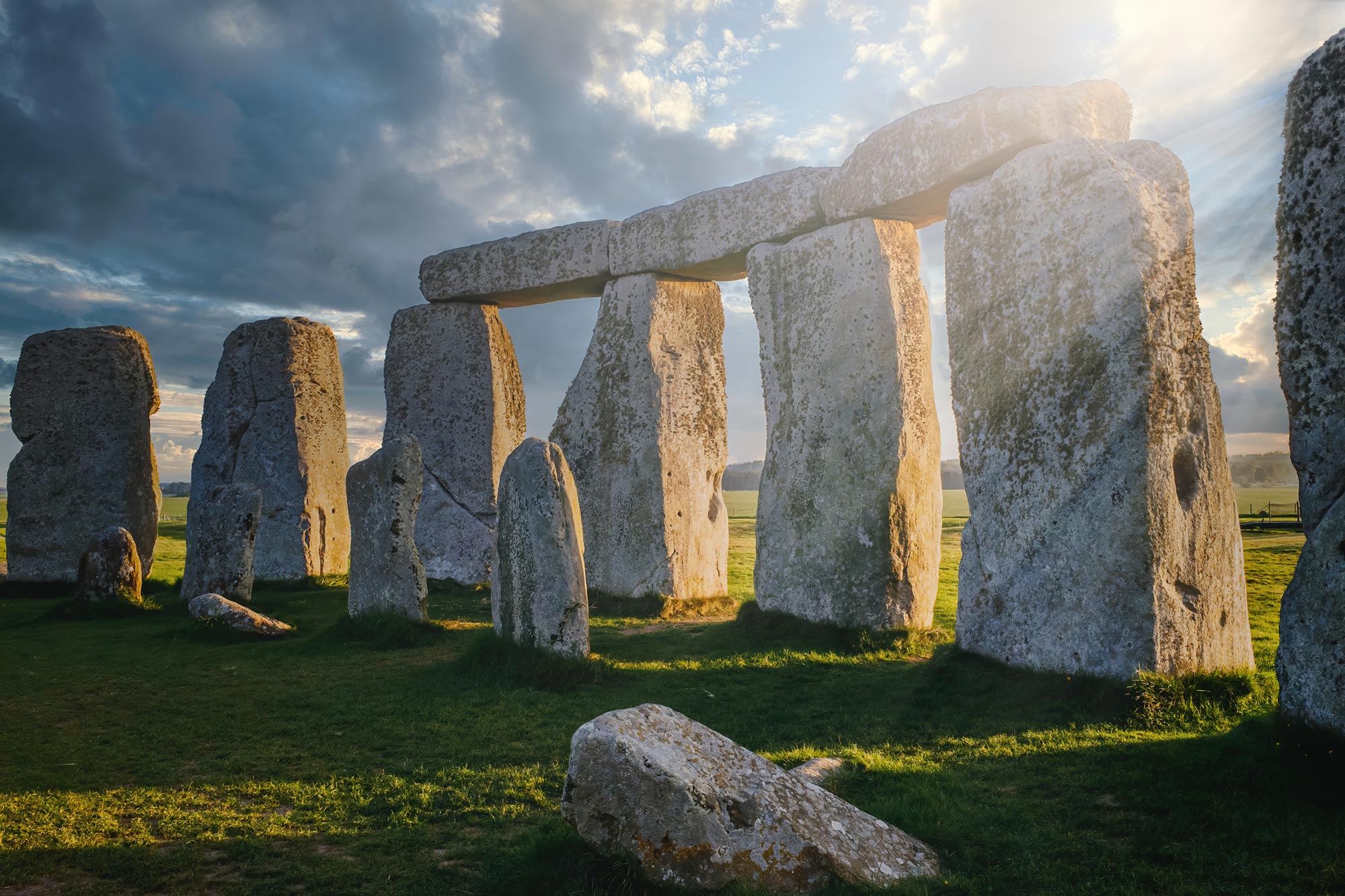
New research sheds light on one of archaeology’s longest-running debates: how Stonehenge’s massive bluestones reached their final resting place.
A new study from Curtin University is reshaping how scientists understand the origins of Stonehenge’s iconic bluestones, offering the most convincing evidence yet that they were carried to the site by people rather than by moving ice.
For decades, researchers have debated whether glaciers could have transported the Altar Stone and other large rocks to Salisbury Plain. The latest findings tip the balance toward intentional human movement, suggesting the stones were deliberately brought to the monument instead of being deposited by natural forces.
To test this idea, Curtin scientists turned to a technique known as mineral “fingerprinting.” They analyzed microscopic mineral grains preserved in river sediments surrounding Stonehenge in southern England. These grains record the long journeys of sediments across Britain and provide clues about which regions they once passed through.
If glaciers had swept across the area, they would have left behind a distinctive mix of minerals eroded from distant landscapes. Over thousands of years, those rocks would have broken down, releasing tiny particles that could still be detected and dated today.
World-Leading Analysis of Zircon Crystals
Using advanced instruments at Curtin’s John de Laeter Centre, the research team studied more than 500 zircon crystals, one of the toughest minerals on Earth and a reliable indicator of geological history.
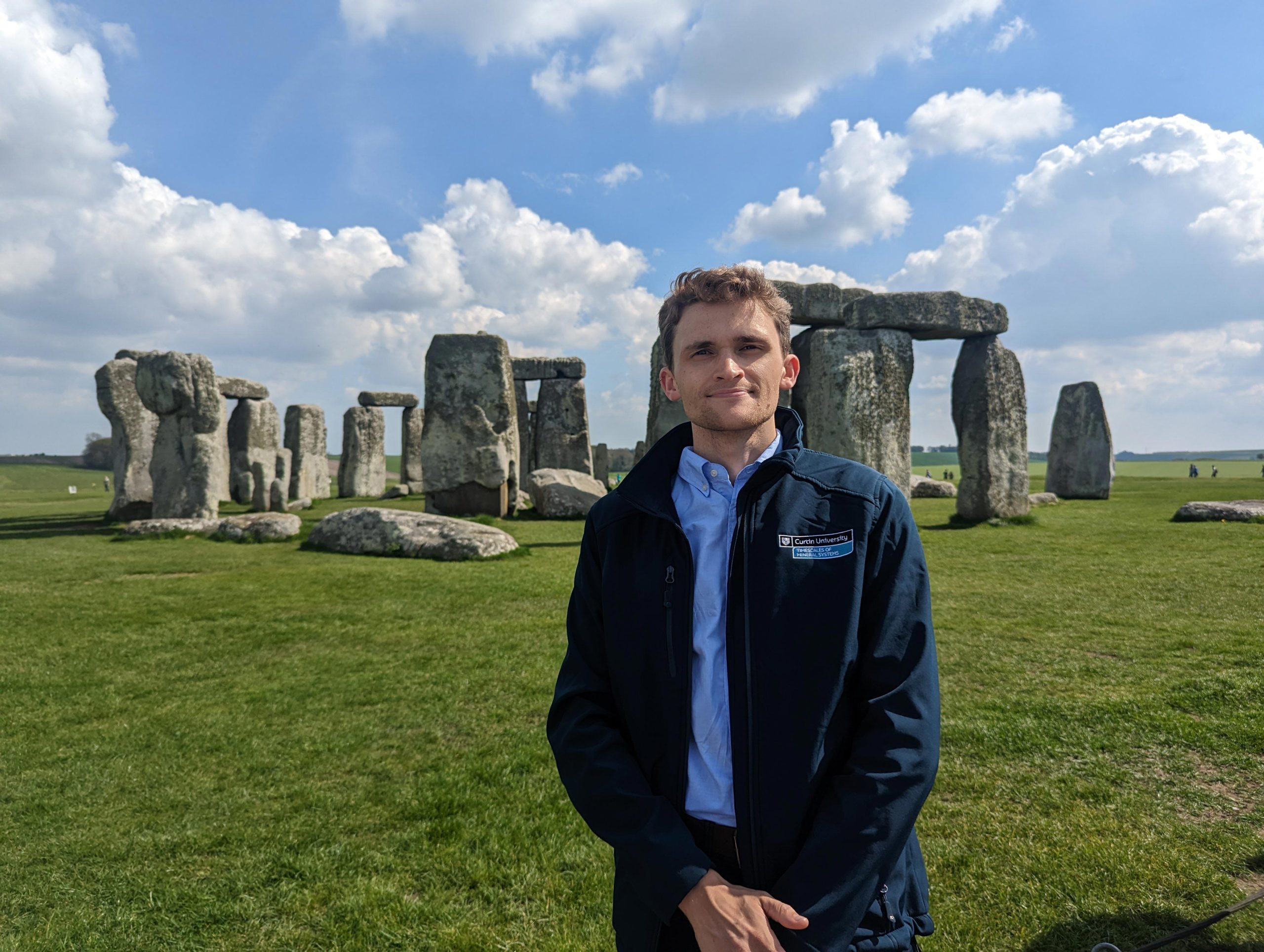
Lead author Dr Anthony Clarke from the Timescales of Minerals Systems Group within Curtin’s School of Earth and Planetary Sciences said the results revealed no mineral evidence that ice sheets ever reached the Stonehenge site.
“If glaciers had carried rocks all the way from Scotland or Wales to Stonehenge, they would have left a clear mineral signature on the Salisbury Plain,” Dr Clarke said.
“Those rocks would have eroded over time, releasing tiny grains that we could date to understand their ages and where they came from.
“We looked at the river sands near Stonehenge for some of those grains the glaciers might have carried and we did not find any. That makes the alternative explanation – that humans moved the stones – far more plausible.”
How Were the Stones Moved?
Dr Clarke said how humans may have moved the stones remained a mystery.
“Some people say the stones might have been sailed down from Scotland or Wales, or they might have been transported over land using rolling logs, but really we might never know,” Dr Clarke said. “But what we do know is ice almost certainly didn’t move the stones.”
Study co-author Professor Chris Kirkland, also from the Timescales of Mineral Systems Group at Curtin, said the findings highlight the power of modern geochemical tools to resolve long-standing historical questions.
“Stonehenge continues to surprise us,” Professor Kirkland said. “By analyzing minerals smaller than a grain of sand, we have been able to test theories that have persisted for more than a century.
“There are so many questions that can be asked about this iconic monument — for example, why was Stonehenge built in the first place?
“It was probably used for a wide variety of different purposes, like a calendar, an ancient temple, a feasting site.
“So asking and then answering these sorts of questions requires different sorts of data sets and this study adds an important piece to that bigger picture.”
The findings follow another major Curtin-led discovery in 2024, identifying a Scottish origin for the central six-tonne ‘Altar Stone’ rock at the heart of Stonehenge, further reinforcing the view Neolithic builders sourced and transported the iconic stones deliberately and over vast distances.
Reference: “Detrital zircon–apatite fingerprinting challenges glacial transport of Stonehenge’s megaliths” by Anthony J. I. Clarke, and Christopher L. Kirkland, 21 January 2026, Communications Earth & Environment.
DOI: 10.1038/s43247-025-03105-3
Never miss a breakthrough: Join the SciTechDaily newsletter.
Follow us on Google and Google News.
4 Comments
What we do know is that ancient cultures were far more advanced that we would like to give credit for.
The pertinent issue is that the real truth about history is suppressed and hidden because it goes against the narrative and what the “common consensus” believes in, and wants the public to believe in.
Almost laughable that glaciers and ice were ever even considered as a possibility.
These are massive stone structures weighing several tons so what kind of crane did they use?
They used the same type of ‘cranes’ that the Egyptians used to transport and assemble the pyramids.
The actual quarries from which the bluestones were obtained have been known for decades. Meanwhile, where are the glacial striations, polish, and chatter marks that one would expect on random glacial erratics? However, even if these were glacial erratics, humans would have had to gather them up, transport them, turn them upright, and place some of them as capstones. Therefore, their original origin is a moot point because it is obvious that humans assembled them. There is no conceivable way that a glacier could have left them in their current positions.