
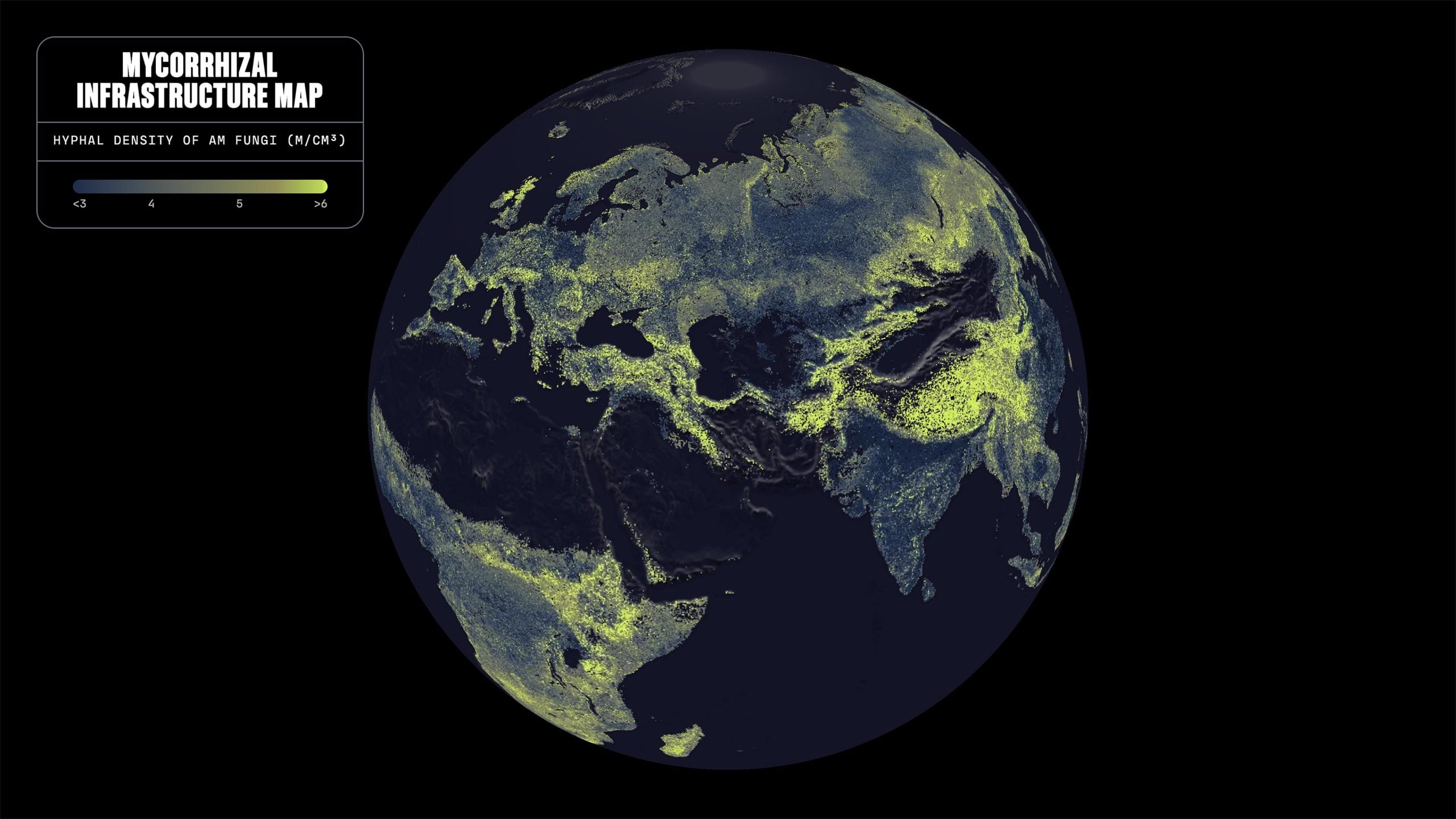
The first global map of underground fungal networks reveals a hidden 68 quadrillion-mile superhighway that helps sustain life on Earth and store carbon in the soil.
Beneath forests, grasslands, wetlands, and even many agricultural fields lies a vast underground fungal network that supports plant life and plays an important role in the global carbon cycle. Scientists have now created the first global maps showing where these networks are located and how much of them exist across the planet.
The research, published in the journal Science, focuses on arbuscular mycorrhizal fungi, commonly known as AM fungi. Alongside the study, researchers released an interactive visualization that reveals the immense scale of this hidden biological infrastructure. The new maps are expected to help scientists and policymakers identify regions where these fungal networks are flourishing and where they may be at risk.
Among the study’s key findings:
- Global topsoils contain about ~110 quadrillion kilometers of arbuscular mycorrhizal fungal network, which is composed of microscopic tubular structures called hyphae. That distance is nearly a billion times the distance from Earth to the Sun.
- Grassland ecosystems contain an estimated ~40% of Earth’s arbuscular mycorrhizal fungal infrastructure.
- Areas predicted to have especially dense networks include the flooded grasslands of South Sudan, Florida’s Everglades, and the Tibetan plateau.
- AM fungal networks move an estimated ~4 billion tons of CO2e into soils each year (equivalent to 11% of all human-related carbon dioxide emissions).
- Large-scale croplands are predicted to have network densities that are roughly ~50% lower on average. Researchers note that additional work is needed to understand how specific farming practices affect fungal health, but reduced network density may limit a soil’s ability to store carbon, recycle nutrients, and withstand environmental stress.
Mapping Earth’s Hidden Fungal Infrastructure
Arbuscular mycorrhizal fungi form mutually beneficial partnerships with ~70% of plant species worldwide. Plants supply the fungi with carbon produced through photosynthesis, while the fungi provide water and nutrients in return.
These underground networks function as living infrastructure that supports ecosystems and helps transfer carbon into soils. Although researchers previously mapped global patterns of underground fungal biodiversity and created a digital resource called the Underground Atlas to identify likely biodiversity hotspots, no study had attempted to estimate and visualize the physical density and global distribution of AM fungal networks themselves.
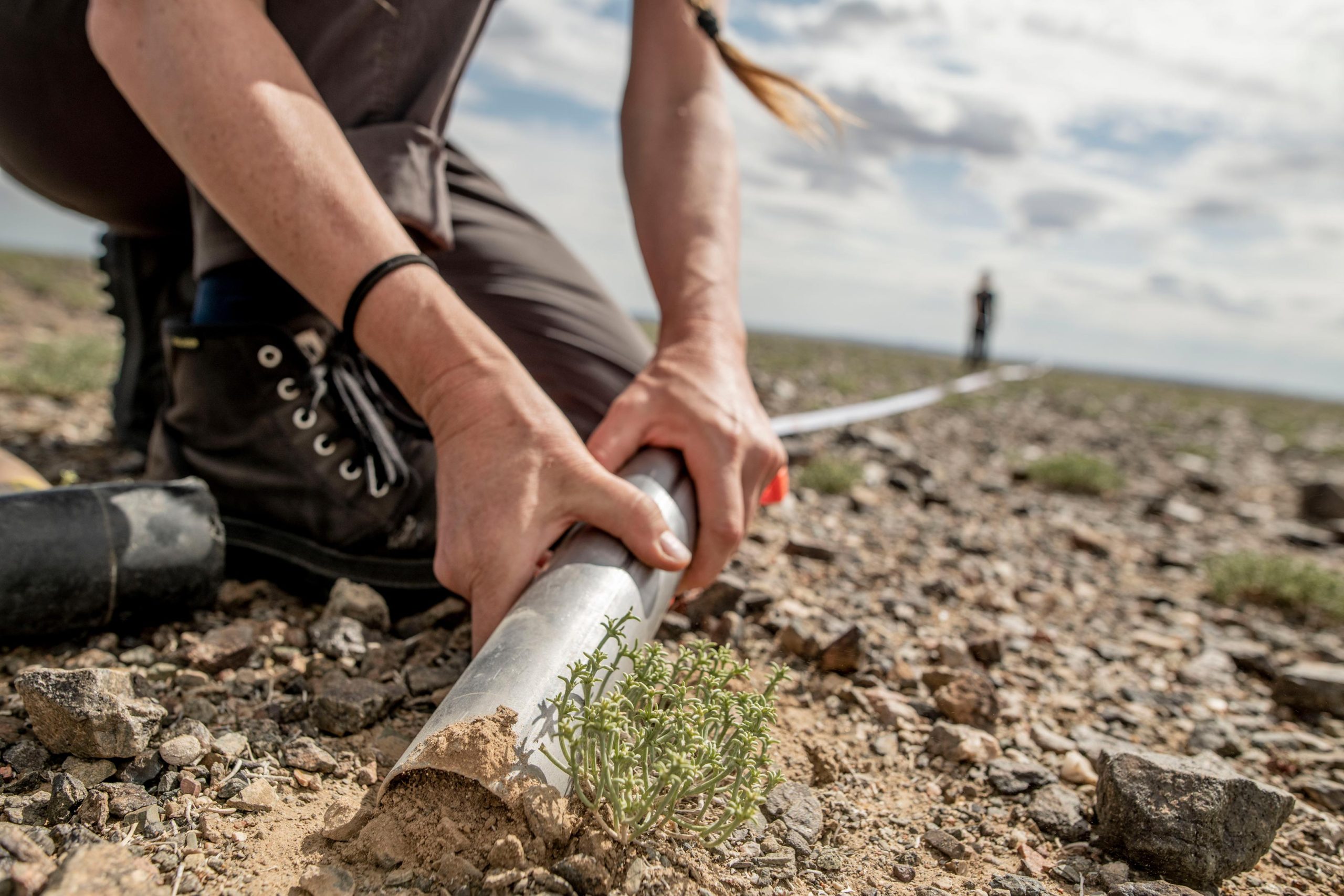
To build the new maps, scientists compiled data from more than 16,000 soil cores collected around the world. They then used machine-learning models that incorporated environmental information from deserts, forests, tundra, and other ecosystems to estimate network density in regions that had not been directly sampled.
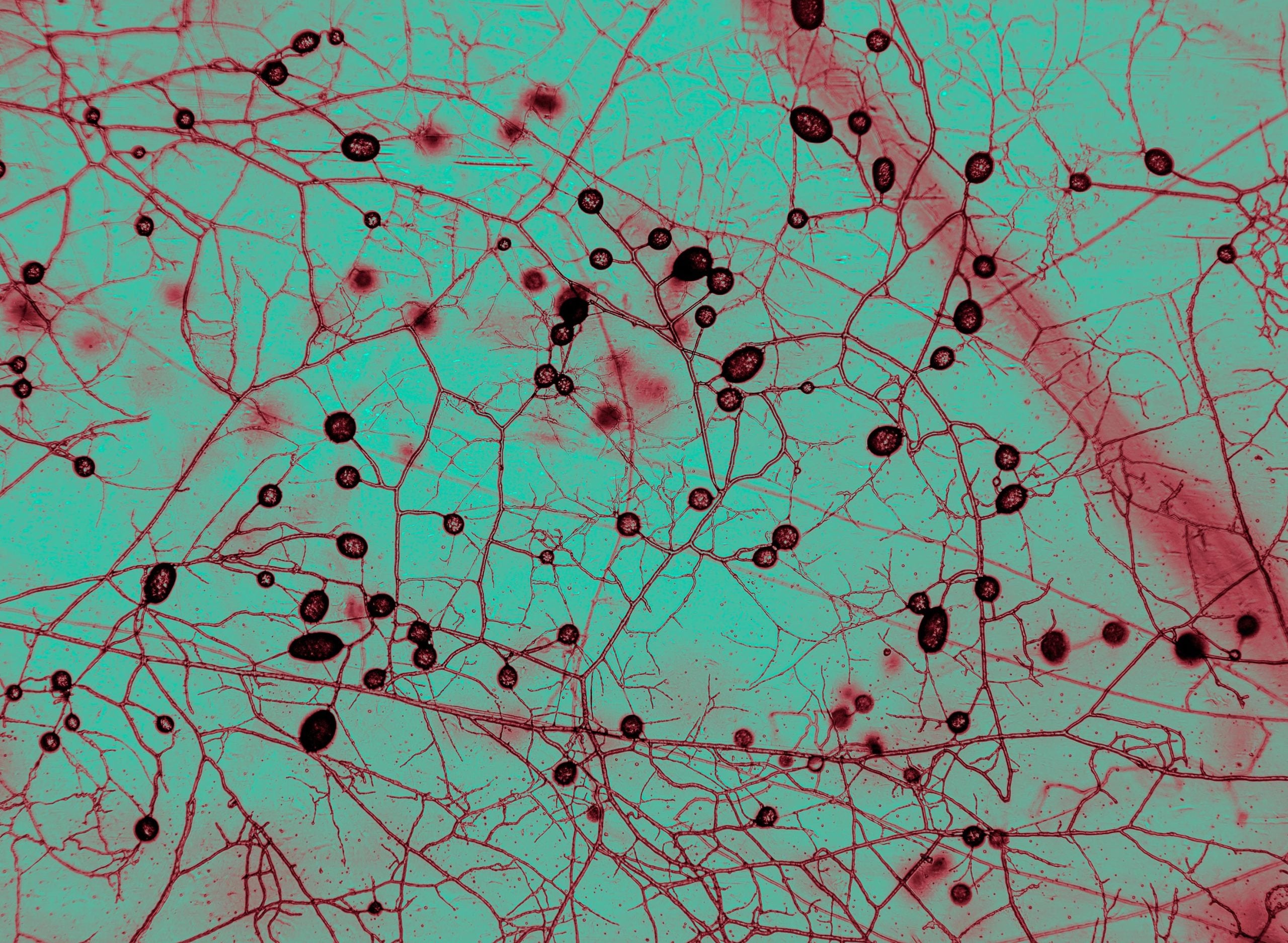
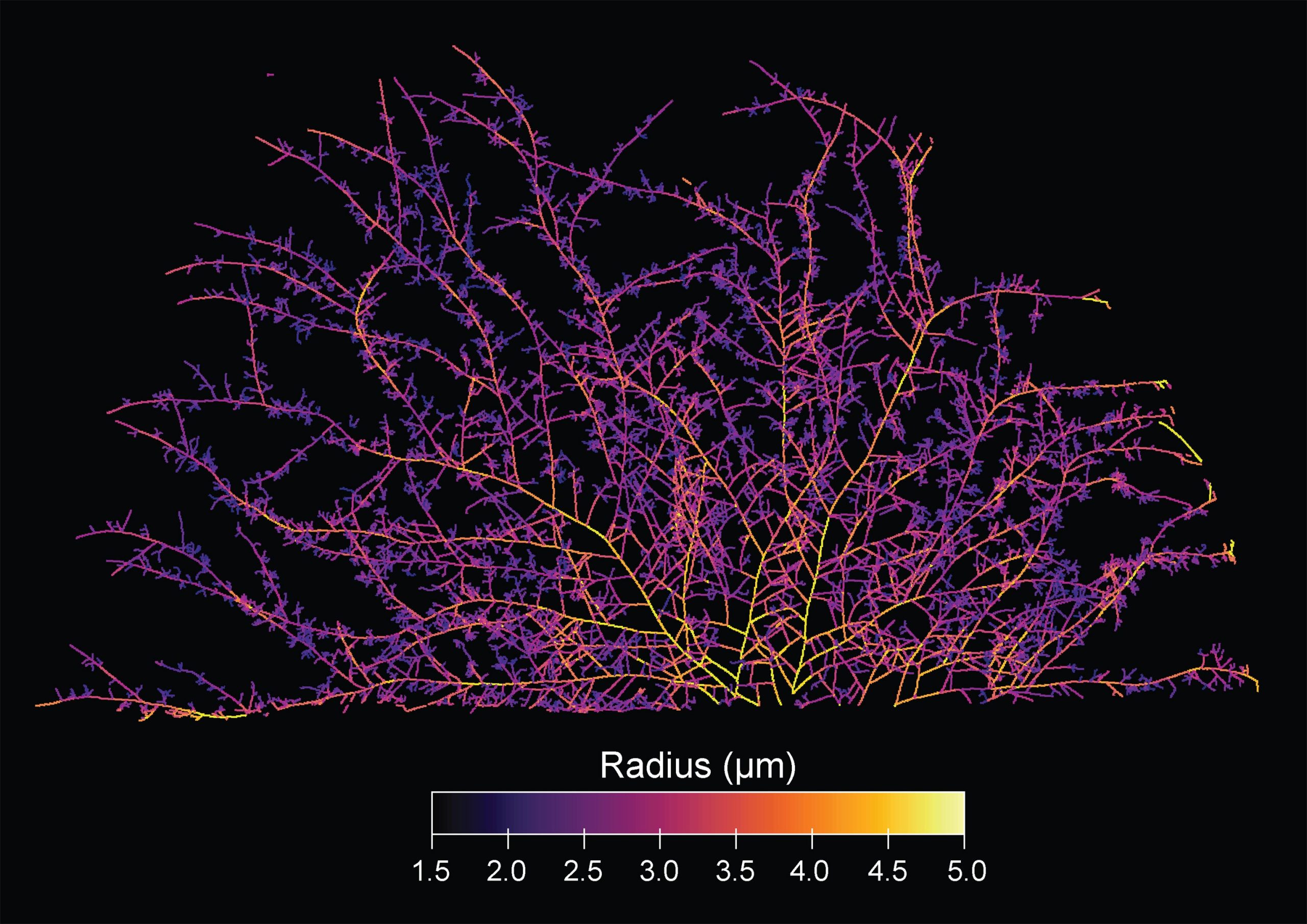
The team also collaborated with the Physics of Behavior group at the research institute AMOLF. Using robotic imaging, researchers analyzed more than 300,000 living AM fungal hyphae grown in laboratory conditions to help calibrate their models.
Based on these combined datasets, the researchers estimate that AM fungal networks span ~110 quadrillion kilometers globally and contain about 300 megatons of carbon (4-6x the mass of all living humans).
“It is hard to overstate the importance and enormity of these fungi,” said lead author Dr. Justin Stewart, with the Society for the Protection of Underground Networks (SPUN). “There could be up to 10 meters (32 feet) of mycorrhizal network in just a teaspoon of soil.”
A Hidden System Moving Carbon and Nutrients
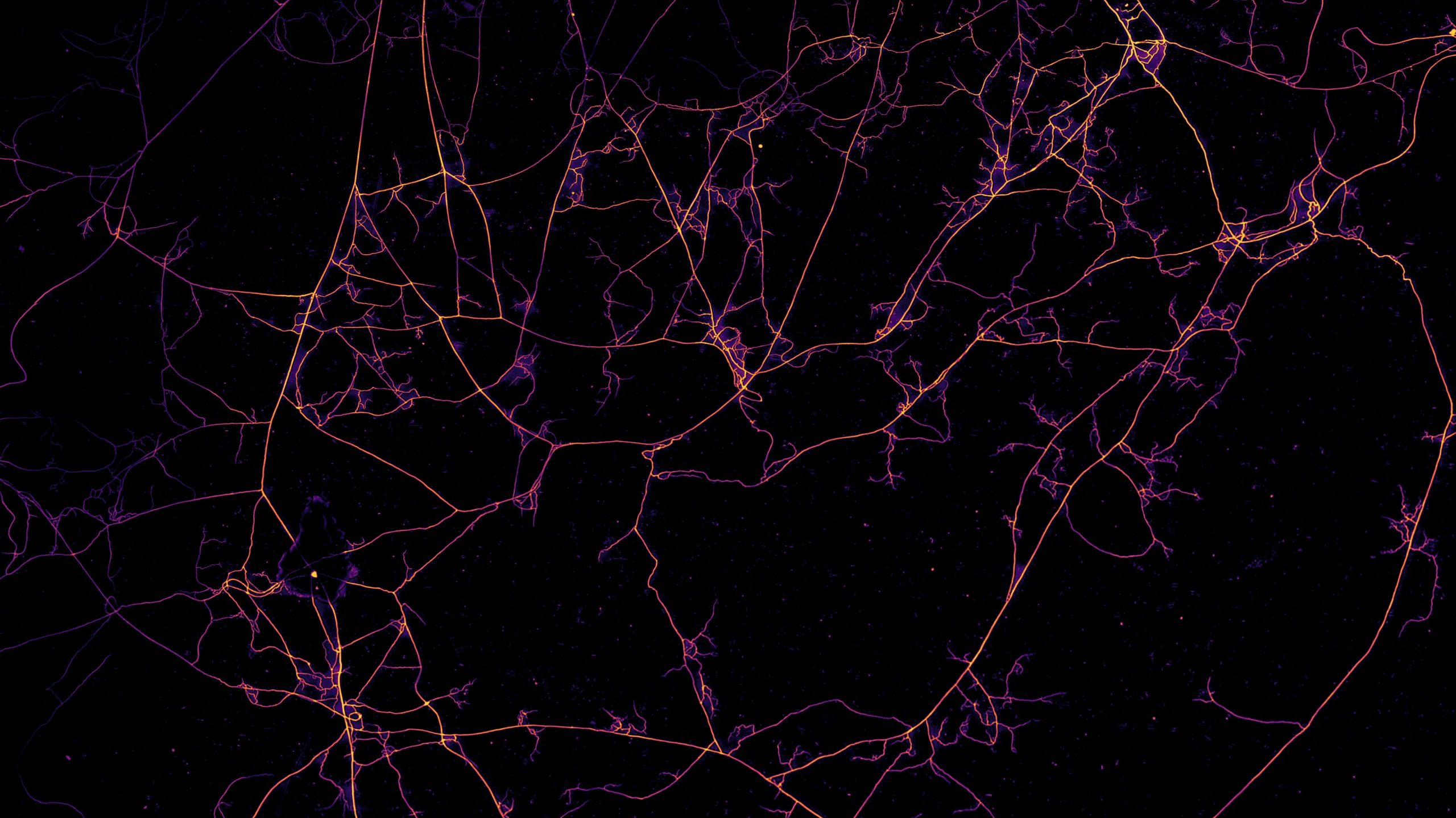
Scientists often compare mycorrhizal networks to a planetary circulatory system because they transport carbon, water, and nutrients through underground ecosystems.
In healthy soils, these fungal networks can expand the effective reach of plant roots by as much as 100 times and supply more than 80 percent of a plant’s phosphorus needs.
“With the emergence of new technologies in high-resolution imaging, machine-learning and robotics, we are starting to reveal what has long been hidden under our feet,” said co-lead author, Dr. Corentin Bisot, an AMOLF biophysicist. “We are learning how the complex bodies of network-forming fungi transport nutrients and help regulate the climate.”
To help communicate the findings, the researchers partnered with award-winning data visualization designer Moritz Stefaner to create the Mycorrhizal Infrastructure Map.
The project offers the most detailed view yet of Earth’s fungal infrastructure, with estimates calculated for every 1 km2 of terrestrial land where sufficient data were available (excluding ice caps and areas lacking enough data to predict). The underlying data have also been made publicly available so governments and other decision-makers can begin monitoring the health of these critical underground communities.
Following Carbon Through Underground Networks
Several members of the research team previously published a Nature cover story examining how mycorrhizal fungi and plants form highly efficient biological trading networks that exchange carbon and nutrients.
That earlier work measured carbon movement through fungal transport systems at speeds reaching 120 um/sec (if one were inside the network, these speeds would feel like ~400km/hr).
The new study expands that work by helping researchers understand how these flows of carbon and nutrients operate at a planetary scale.
Threats to Fungal Networks
The findings also highlight potential risks to these underground systems.
The study predicts that mycorrhizal network densities in croplands are roughly half those found in wild ecosystems. Researchers also found that wild grasslands contain approximately ~40% of the world’s arbuscular mycorrhizal biomass.
At the same time, grasslands remain among the least-protected ecosystems on Earth and are being converted to agricultural land at four times the rate of forests.
The results support previous research by SPUN scientists showing that 95% of biodiversity hotspots for arbuscular mycorrhizal fungi lie outside protected areas.
For evolutionary biologist Dr. Toby Kiers, Executive Director of SPUN, these findings could help improve climate policy.
“Fungi have been ignored in climate and conservation for too long. Now is the time to change that trajectory.”
Kiers was recently named a MacArthur Fellow and received the Tyler Prize, often referred to as the “Nobel Prize for the Environment,” for her work on plant-fungal systems.
A Vast Underground World Still Largely Unknown
Despite revealing the extraordinary scale of Earth’s fungal networks, the researchers emphasize that much remains to be discovered.
“Mycorrhizal fungi have shaped life on Earth for hundreds of millions of years, but we still understand too little about how the infrastructure of these living transport systems is distributed across the planet,” added co-author and biologist Dr. Merlin Sheldrake. “This study is an exciting step towards understanding how this planetary circulatory system operates and suggests ways that we can better work with fungi to help address many of the unfolding challenges of our times, from food security to climate change.”
The study provides the most comprehensive estimate yet of the extent of AM fungal networks worldwide. At the same time, it highlights large regions that have not yet been sampled, underscoring how much of this vast underground world remains unexplored.
Reference: “Global density and biomass of arbuscular mycorrhizal fungal networks” by Justin D. Stewart, Corentin Bisot, Rachael I. M. Cargill, Michael E. Van Nuland, Heidi-Jayne Hawkins, Loreto Oyarte Galvez, Malin Klein, Marije van Son, Victoria Terry, Louis Paré, Claudia Banchini, Franck Stefani, Felix Kahane, Kai-Kai Lin, Renato K. Braghiere, Katie J. Field, Nadejda A. Soudzilovskaia, Jinsu Elhance, Vasilis Kokkoris, Merlin Sheldrake, James T. Weedon, Thomas S. Shimizu, Stuart West and E. Toby Kiers, 11 June 2026, Science.
DOI: 10.1126/science.adu4373
Never miss a breakthrough: Join the SciTechDaily newsletter.
Follow us on Google and Google News.
2 Comments
This sounds very far fetched and impossible to me. I do a lot of gardening. Why have I never seen these fungal structures ever? Why has no one ever mentioned them when digging/excavating large areas for building large buildings and structures, or digging graves or mining, etc. etc. Why is this the first time I’m hearing about this? How can they possibly have all these fungal structures mapped all over the world. It all sounds ridiculous to me. The structures are microscopic so how could they possibly be connected like a circulatory system all over the planet. How can a fungus provide water to plants? I don’t believe a word of this. I’m suspecting AI played a huge role in the extrapolation and interpretation of the data and the formation of this ludicrous “discovery”.
Yes, the earth is a living organism. We are as “dust mites” on her skin. This is well known in India lore.