
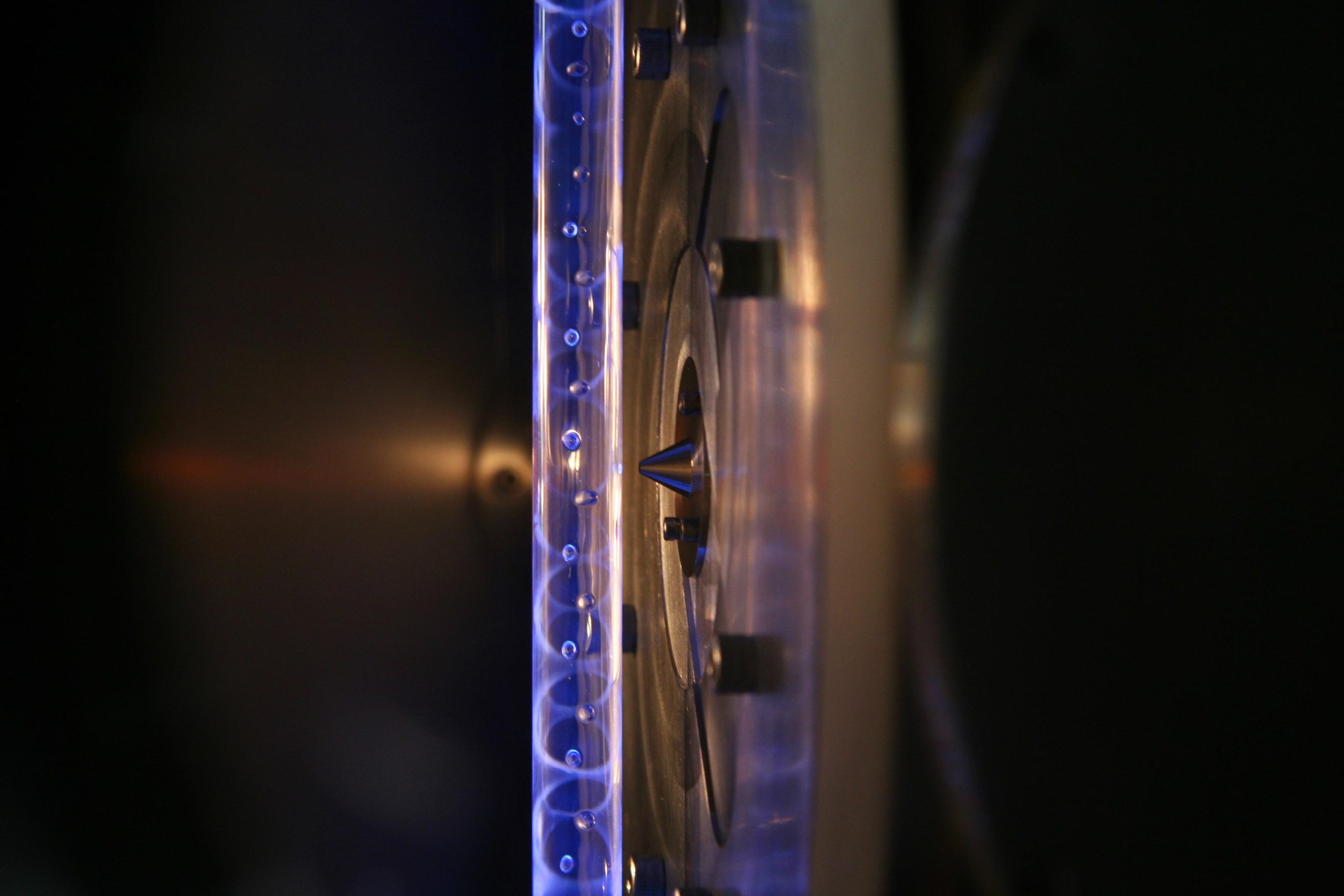
According to a new paper, Criegee biradicals can clean up the atmosphere naturally by reacting with pollutants produced by combustion, such as nitrogen dioxide and sulfur dioxide. Further, these oxidation reactions can generate nitrate and sulfate in the atmosphere, which can lead to more cloud formation and thus a cooling effect on planet Earth.
Scientists have shown that a new molecule in the earth’s atmosphere has the potential to play a significant role in offsetting global warming by cooling the planet.
In a breakthrough paper published in Science, researchers from The University of Manchester, The University of Bristol, and Sandia National Laboratories report the potentially revolutionary effects of Criegee biradicals.
These invisible chemical intermediates are powerful oxidizers of pollutants such as nitrogen dioxide and sulfur dioxide, produced by combustion, and can naturally clean up the atmosphere.
Although these chemical intermediates were hypothesized in the 1950s, it is only now that they have been detected. Scientists now believe that, with further research, these species could play a major role in offsetting climate change.
The detection of the Criegee biradical and measurement of how fast it reacts was made possible by a unique apparatus, designed by Sandia researchers, that uses light from a third-generation synchrotron facility, at the Lawrence Berkeley National Laboratory’s Advanced Light Source.
The intense, tunable light from the synchrotron allowed researchers to discern the formation and removal of different isomeric species – molecules that contain the same atoms but arranged in different combinations.
The researchers found that the Criegee biradicals react more rapidly than first thought and will accelerate the formation of sulfate and nitrate in the atmosphere. These compounds will lead to aerosol formation and ultimately to cloud formation with the potential to cool the planet.
The formation of Criegee biradicals was first postulated by Rudolf Criegee in the 1950s. However, despite their importance, it has not been possible to directly study these important species in the laboratory.
In the last 100 years, Earth’s average surface temperature increased by about 0.8 °C with about two-thirds of the increase occurring over just the last three decades.
Most countries have agreed that drastic cuts in greenhouse gas emissions are required, and that future global warming should be limited to below 2.0 °C (3.6 °F).
Dr. Carl Percival, Reader in Atmospheric Chemistry at The University of Manchester and one of the authors of the paper, believes there could be significant research possibilities arising from the discovery of the Criegee biradicals.
He said: “Criegee radicals have been impossible to measure until this work carried out at the Advanced Light Source. We have been able to quantify how fast Criegee radicals react for the first time.
“Our results will have a significant impact on our understanding of the oxidizing capacity of the atmosphere and have wide ranging implications for pollution and climate change.
“The main source of these Criegee biradicals does not depend on sunlight and so these processes take place throughout the day and night.”
Professor Dudley Shallcross, Professor in Atmospheric Chemistry at The University of Bristol, added: “A significant ingredient required for the production of these Criegee biradicals comes from chemicals released quite naturally by plants, so natural ecosystems could be playing a significant role in off-setting warming.”
For more on this research, see Criegee Intermediate Reactions Detected and Measured by Researchers.
Never miss a breakthrough: Join the SciTechDaily newsletter.
Follow us on Google and Google News.
7 Comments
no problem w/ the resulting acid rain – no problem at all
Curious… Where do you get the acid rain from? These are released by plants?
Every one have to do something for our planet
little work mark a deep mark
Nice post. I was checking continuously this site and I’m impressed! Extremely useful info specifically the last part I care for such info much. I was looking for this specific information for a long time. Thank you and best of luck.
finally a chance to keep the planet blue after all the horror-stories.
The earth continues to reveal itself quite sufficient at adaptation and self regulation within a set of parameters without the assistance of Climatology alarmists.
Normal cyclic events beyond our feeble ability to detect much less account for all the variables involved.
okay boomer.